
Iran has issued a stern warning that any future military aggression initiated by the United States will prompt an unprecedented operational response, with senior military leadership threatening to fundamentally alter the "geography of the war" and introduce newly developed weapon systems to the battlefield. The declaration, delivered by the Islamic Revolutionary Guard Corps (IRGC), signals a notable escalation in Tehran’s deterrence posture amid persistent regional friction involving Washington and its allies.
Speaking during a national television broadcast, IRGC spokesperson Hossein Mohebbi outlined Tehran’s assessment of the security landscape, addressing the prospect of renewed military confrontations with the United States and Israel. Mohebbi asserted that should another direct attack against Iranian territory or interests materialize, the country’s armed forces would radically shift both their defensive architecture and offensive tactical doctrines. Rather than relying on familiar retaliatory measures, the IRGC indicated that its operational plans for any forthcoming confrontation would involve structural changes to how, where, and with what means the conflict is waged.
According to Mohebbi, Iranian military planning has transitioned beyond historical paradigms of containment or limited tactical exchanges. He emphasized that the Islamic Republic does not view potential hostilities as localized incidents, but rather as conflicts whose operational theaters and technical parameters can be redefined at will by Iranian command structures.
Unveiling Advanced Capabilities and New Strategic Targets
In his televised address, Mohebbi delivered an explicit warning regarding the operational consequences that would follow any military miscalculation by the United States or Israel. He stressed that Iran’s response would not be bounded by the parameters of previous confrontations, warning that Tehran is prepared to unveil advanced hardware that has remained outside the public eye.
"If there is a new attack, our defense and our strikes will change significantly," Mohebbi stated. "If a new attack takes place, we will change the weapons and the geography of the war. We will deploy new weapons equipped with new capabilities onto the field, and the world will be stunned. Our targets will not be the targets of the past. We have designated new targets that have not yet been struck."
The spokesperson’s remarks point toward a deliberate shift in Iran’s targeting methodology. In earlier episodes of heightened military friction in the region, retaliatory strikes were frequently directed against specific installations or tactical positions directly associated with immediate threats. Mohebbi’s declaration suggests that Iranian military planners have compiled a revised, expanded inventory of prospective targets, signaling an intent to strike higher-value or broader strategic assets if provoked.
Mohebbi also focused extensively on Iran’s preparedness for a protracted, multi-layered military engagement. Rejecting the notion that a military clash would remain confined to a brief exchange of strikes, the IRGC spokesperson asserted that Tehran is fully organized to sustain military operations across extended periods.
"In our view, war consists of various stages," Mohebbi remarked. "War does not end; it continues. The Revolutionary Guards were already prepared for war, and now they are even more prepared."
This perspective reflects the broader doctrinal framework of the IRGC, which historically emphasizes asymmetric warfare, strategic resilience, and the capacity to wage prolonged campaigns of attrition. By framing conflict as an enduring process composed of successive operational stages, the Iranian military apparatus seeks to convey to potential adversaries that short, decisive surgical strikes will neither neutralize Tehran’s operational capabilities nor deter its willingness to escalate.
U.S. Hegemony Has Ended
A central theme of Mohebbi’s evaluation was the status of American power across the Middle East. The IRGC spokesperson declared that the era of uncontested United States dominance in regional affairs has drawn to a definitive close, arguing that the structural balance of power has tilted away from Washington.

Addressing the division between Iran’s diplomatic channels and its defense apparatus, Mohebbi affirmed that the Revolutionary Guards have maintained zero direct contact with the United States. He emphasized that the armed forces do not participate in diplomatic outreach or political negotiations, underscoring that their institutional mandate remains strictly dedicated to national defense and deterrence. In Mohebbi’s formulation, the task of setting strategic terms in the region no longer belongs to Western powers, asserting instead that Iran is now determining the dynamics of the emerging regional order.
Mohebbi turned his critique directly toward the decades-long presence of American military installations distributed across neighboring Middle Eastern countries. He argued that Washington had established this sprawling network of forward operating bases by projecting an aura of unmatched defense readiness and high-technology superiority. However, the spokesperson maintained that this perceived invulnerability has been thoroughly shattered.
According to Mohebbi, these regional outposts—long viewed as the anchors of American military deterrence and power projection in the Gulf and wider region—have been effectively challenged by Iranian strike capabilities. He stated that past Iranian operations had demonstrated the ability to target these installations directly, contending that such actions had rendered facilities unusable and exposed deep vulnerabilities in American defensive envelopes.
Doctrinal Implications of ‘Changing the Geography’
The assertion that Iran possesses the capability and intent to "change the geography of war" carries significant implications for regional security analysts and military observers. In strategic terminology, altering the geographical scope of a conflict typically denotes expanding hostilities beyond the immediate border zones or standard confrontation corridors, potentially opening secondary operational fronts, threatening critical maritime transit routes, or widening the perimeter of retaliatory action across the broader regional theater.
Iran’s military capabilities have evolved substantially over the past several decades, driven largely by self-sufficiency programs initiated in response to extensive international arms embargoes and sanctions. The IRGC in particular has prioritized the development of an extensive, domestically engineered missile arsenal, including precision-guided ballistic missiles, long-range land-attack cruise missiles, and an expansive inventory of unmanned aerial vehicles (UAVs). In parallel, the Guards have developed specialized maritime tactics centered on fast attack craft, coastal defense missile batteries, naval mining capabilities, and aerial surveillance designed to monitor and contest foreign naval movements in the Strait of Hormuz and the Persian Gulf.

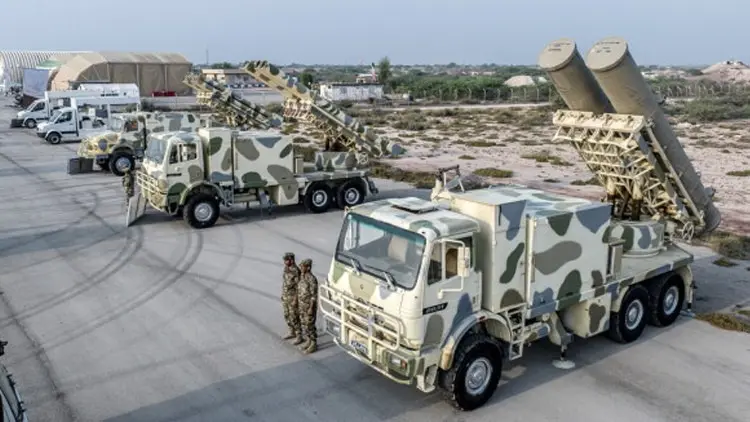
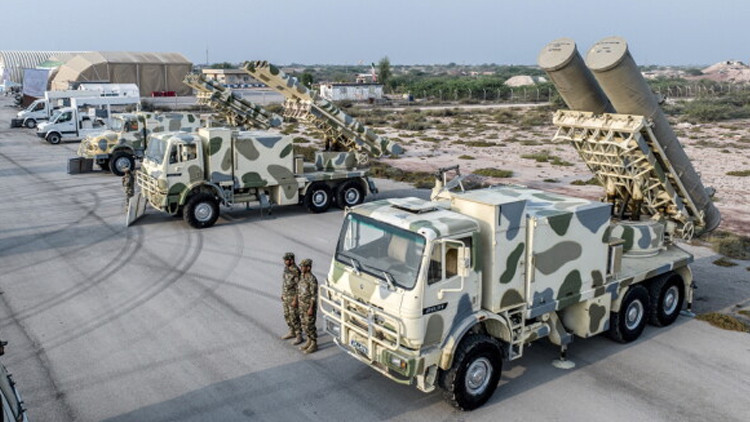
Mohebbi’s reference to deploying new weapons with previously unseen capabilities aligns with recurring statements from Iranian defense industry officials regarding advancements in solid-fuel propulsion, hypersonic glide concepts, enhanced electronic warfare countermeasures, and coordinated swarm technologies. While the spokesperson refrained from detailing the specific technical specifications of the hardware referenced in his remarks, the declaration was clearly calibrated to reinforce the credibility of Iran’s deterrence posture by injecting strategic ambiguity regarding the nature and scale of any future counterstrike.
Heightened Tensions and Strategic Signaling
Mohebbi’s public statements come against a backdrop of persistently fraught relations between Tehran, Washington, and regional capitals. Disputes surrounding regional maritime security, foreign military deployments, and broad geopolitical alignment have repeatedly brought the opposing sides to the precipice of direct confrontation.
By explicitly stating that the IRGC is "now even more prepared" than in prior periods, the spokesperson sought to dismiss any assessment that economic pressures, political isolation, or intelligence operations have compromised the operational readiness of Iran’s defense forces. Instead, the narrative presented to domestic and international audiences is one of enhanced technical readiness, organizational cohesion, and tactical innovation.
The strategic messaging delivered during the broadcast underscores a refusal to accept foreign military deterrence within what Tehran considers its sphere of national security. Mohebbi’s insistence that regional security frameworks will no longer be dictated by Washington reflects an established Iranian foreign policy objective: compelling the eventual withdrawal, or at least the operational drawdown, of American military assets throughout the Middle East.
As regional stakeholders and international observers monitor the evolving posture of the Islamic Republic, Mohebbi’s remarks emphasize that any future direct engagement will likely bear little resemblance to previous military crises. With the IRGC openly warning of new operational theaters, redesigned targets, and novel armaments, the threshold for miscalculation in the Middle East remains exceptionally high, with both conventional and asymmetric battlegrounds poised to expand rapidly should the prevailing deterrence break down.