Diplomatic Representatives Detail Staggering Long-Term Rebuilding Needs of Over $71 Billion Alongside Immediate Administrative Framework
NEW YORK — Representatives of the Peace Board convened on the sidelines of the 81st United Nations General Assembly in New York to unveil a comprehensive six-month transitional framework valued at $2.45 billion, aimed directly at the initial reconstruction and administrative governance of the Gaza Strip. The proposal, presented during a series of high-level multilateral briefings, marks an ambitious attempt to coordinate international resources and establish institutional oversight in an enclave facing unprecedented physical, economic, and humanitarian devastation.
The rollout of the six-month plan represents the opening operational phase of a significantly broader, long-term stabilization agenda. According to detailed presentations delivered to international stakeholders during the New York summit, full-scale reconstruction across the devastated territory will demand capital on an extraordinary scale. Experts and officials participating in the briefings projected that medium-term recovery efforts will require approximately $35.2 billion, while the cumulative cost of rebuilding over the next decade is expected to reach $71.4 billion.
The immediate $2.45 billion framework is designed to bridge the critical gap between emergency humanitarian relief and long-range structural revitalization, establishing both the foundational physical conditions and the administrative architecture necessary to manage subsequent rebuilding phases.
A Phased Architectural Plan: The Immediate Six-Month Horizon
At the core of the Peace Board’s presentation in New York is an operational schedule structured around an initial portfolio of 66 draft projects. These initiatives, scheduled for implementation during the first six months, are calibrated to restore basic public order, restart essential public services, and establish the technical baseline required for massive capital inflows.
The projects are formulated under the broader umbrella of United States President Donald Trump’s 20-point "Gaza Plan." This framework prioritizes rapid-impact stabilization measures alongside the establishment of robust, vetted administrative oversight to supervise municipal functions and capital deployment. Rather than treating reconstruction purely as a technical engineering challenge, the Peace Board’s program explicitly couples physical rebuilding with civil governance, operating on the premise that capital investment cannot succeed without an organized, functioning governing apparatus on the ground.
The 66 preliminary projects focus heavily on three critical, interconnected sectors:
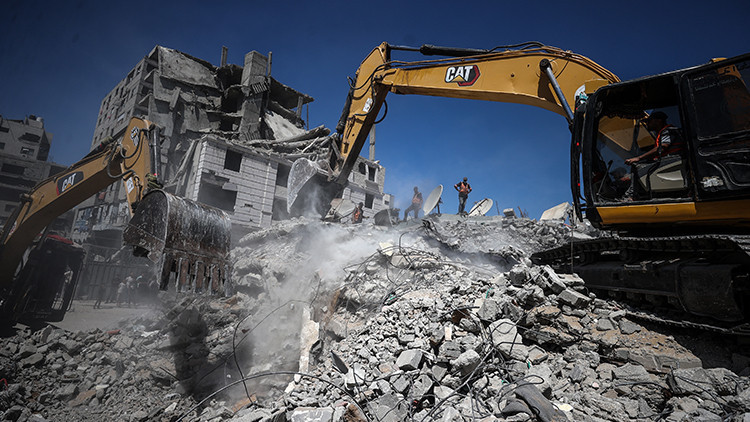
- Critical Municipal Infrastructure: Immediate clearance of rubble, restoration of essential arterial roadways, emergency stabilization of power networks, water desalination and supply facilities, and wastewater management networks to avert catastrophic public health outbreaks.
- Emergency Healthcare Rehabilitation: Re-establishing operational capacity within damaged clinics, stabilizing primary hospitals, securing reliable international pharmaceutical and medical supply lines, and creating temporary triage and outpatient facilities.
- Educational Continuity: Erecting transitional learning spaces, rehabilitating structurally viable school buildings, and restoring civil education systems to bring displaced youth back into structured environments.
By directing the initial $2.45 billion toward these key areas, planners intend to lay down an operational footprint capable of absorbing the much larger financing tranches anticipated in subsequent phases.
The Staggering Financial Trajectory: From Emergency Stabilization to a $71.4 Billion Recovery
While the immediate six-month allocation represents a substantial financial commitment, the presentations delivered on the margins of the General Assembly made clear that short-term funding addresses only the most urgent survival needs. The financial projections outlined by the Peace Board underscore the generational magnitude of rebuilding the territory:
+-------------------------------------------------------------+
| PROJECTED RECONSTRUCTION FINANCING FOR THE GAZA STRIP       |
+-------------------------------------------------------------+
| Phase 1: Immediate Stabilization (Initial 6 Months)         |
| Cost: $2.45 Billion                                         |
| Focus: 66 initial projects; governance, water, health, power |
+-------------------------------------------------------------+
| Phase 2: Medium-Term Structural Recovery                    |
| Cost: ~$35.2 Billion                                        |
| Focus: Permanent housing, industrial grids, civic facilities|
+-------------------------------------------------------------+
| Phase 3: Comprehensive Decade-Long Reconstruction (10 Years)|
| Cost: $71.4 Billion                                         |
| Focus: Complete economic transformation & modern infrastructure|
+-------------------------------------------------------------+
The medium-term estimate of $35.2 billion reflects the anticipated cost of transitioning from temporary, emergency shelters to permanent housing solutions, rebuilding collapsed economic and commercial districts, and constructing modernized municipal grids. Planners noted that the physical destruction across residential sectors, public institutions, and utility corridors requires an overhaul of virtually all modern urban systems rather than standard post-conflict repair.
The long-term ten-year forecast of $71.4 billion captures the full scope of transforming an enclave that has suffered near-total economic paralysis into a functioning, self-sustaining coastal economy. This long-range figure takes into account the complex logistics of cross-border material transportation, heavy debris processing, land decontamination, extensive coastal infrastructure development, and the long-term capitalization of domestic institutions.

Securing such monumental capital poses an unprecedented challenge for global multilateral institutions and international donor states. Convening during the 81st UN General Assembly provided the Peace Board with a high-profile platform to engage potential donor nations, international financial institutions, and regional partners whose sustained fiscal contributions will be vital if these targets are to be met.
The Governance Mandate: Administering Recovery
A defining element of the Peace Board’s briefing in New York was the explicit inclusion of governance within the scope of the $2.45 billion budget. International aid operations have frequently struggled when financial resources are injected into regions lacking stable, legitimate, and technically competent governing bodies.
The strategy laid out in the 20-point plan emphasizes that the successful execution of the 66 initial projects depends entirely on the creation of transparent administrative mechanisms. These mechanisms are expected to oversee everything from payroll for civil service personnel and municipal laborers to customs clearances, auditing of procurement contracts, and on-the-ground project monitoring.
By embedding governance directly into the transitional strategy, the plan attempts to reassure international donors that funds will be managed under rigorous fiduciary controls. Establishing an effective local administrative framework is also viewed as an essential prerequisite for attracting private-sector capital, which planners acknowledge will be indispensable once public donor commitments reach their limits during the medium- and long-term phases.
The dual focus on governance and physical reconstruction highlights a strategic shift toward institutional institution-building. Under this model, the initial six-month phase will serve as a testing ground for wider administrative systems that can eventually assume responsibility for the multi-billion-dollar initiatives planned for the remainder of the decade.

Implementation Realities and Diplomatic Coordination
The setting of the announcement—amid the diplomatic gatherings of the UN General Assembly in New York—underscored the multilateral coordination required to advance an initiative of this scale. Delegations at the summit engaged in intensive discussions regarding the legal, logistical, and political conditions necessary to begin field operations.
Translating 66 draft initiatives into physical operations on the ground presents profound logistical challenges. Moving heavy machinery, construction aggregates, piping, electrical equipment, and specialized medical apparatus into the territory requires clear international access agreements, robust security guarantees, and uninterrupted logistics pipelines. Furthermore, the procurement processes governing a $2.45 billion initial budget demand rigorous anti-corruption safeguards and transparent international oversight to ensure that resources reach their designated infrastructure, health, and education targets.
Discussions held in New York also reflected broader diplomatic debates surrounding the 20-point plan, particularly regarding how local civil administration will interface with international bodies, regional donor governments, and existing international aid structures.
The Path Forward
The Peace Board’s presentation at the 81st UN General Assembly has formally established the financial and operational scale required for the reconstruction and administrative stabilization of the Gaza Strip. By laying out clear metrics—$2.45 billion for an initial six-month rollout of 66 projects, progressing toward an estimated $35.2 billion medium-term recovery and an ultimate $71.4 billion ten-year horizon—the board has provided international stakeholders with a concrete operational blueprint.
As discussions conclude in New York, the focus of international diplomacy shifts from high-level projections to the practical mobilization of capital and the establishment of operational mechanisms on the ground. The coming months will determine whether global donors and regional actors can forge the political consensus and financial commitments necessary to transform these draft frameworks into functional schools, operating clinics, restored infrastructure grids, and viable governance institutions.