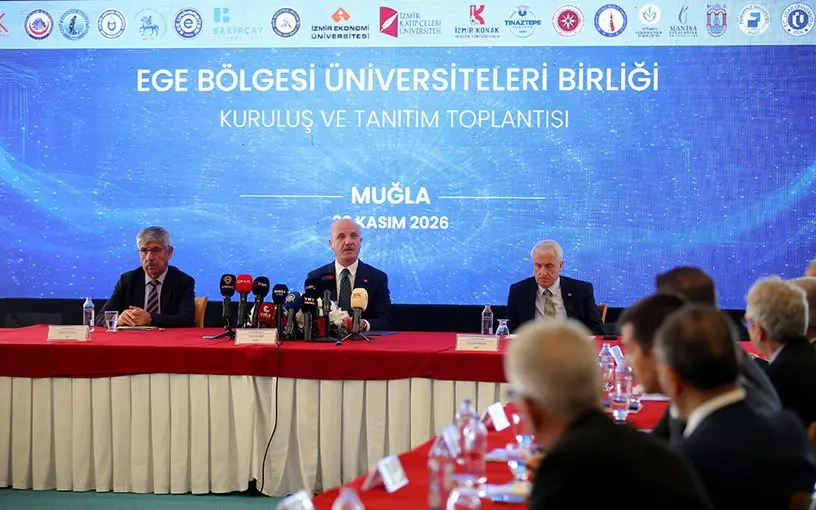
MUĞLA, Turkey — Muğla Sıtkı Koçman University (MSKÜ) has played host to the foundational launch and promotional gathering of the newly established Aegean Region Universities Union, marking the start of a coordinated effort among higher education institutions across western Turkey to consolidate academic resources, align strategic research objectives, and pool advanced scientific infrastructure.
The alliance creates a formal framework for member universities to systematically collaborate on critical societal and technological challenges while allowing each participating institution to maintain its own identity, structural independence, and core operational priorities. Under this newly inaugurated initiative, higher education institutions throughout the Aegean region will combine their research capabilities and institutional expertise to jointly address key focus areas, including climate change mitigation, energy transition strategies, food security assurance, public health advancements, and the integration of digital technologies across various sectors.
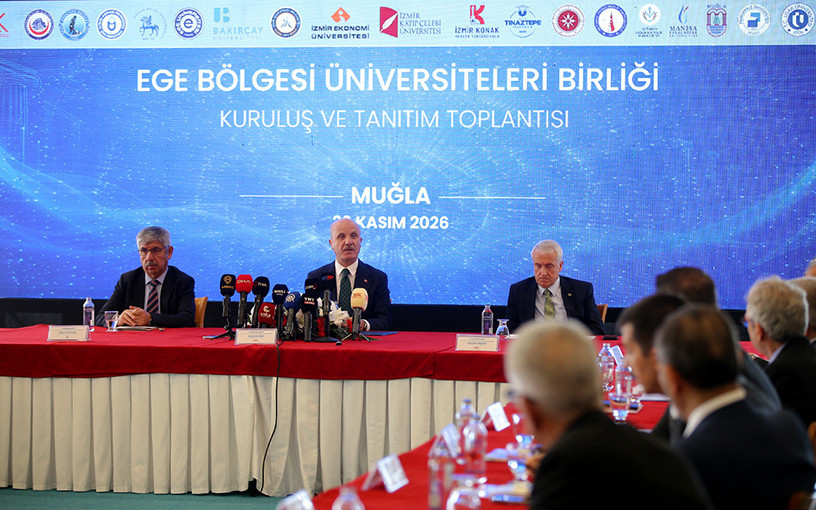
The inaugural meeting, organized on the MSKÜ campus, brought together university leaders, prominent academics, and official representatives from across the region to outline the operational scope, governance philosophy, and practical mechanisms of the union. Central to the alliance is the commitment to transform isolated academic endeavors into an integrated network that enhances regional competitiveness, elevates scientific output, and delivers tangible benefits to both academia and the broader public.
Strategic Focus on Shared Regional and Technological Challenges
The creation of the Aegean Region Universities Union comes in response to an increasing need for inter-institutional synergy when confronting complex, multi-faceted problems that extend beyond the scope of a single university or academic discipline. By bringing together diverse faculties, research departments, and academic traditions, the union aims to construct a shared scientific front capable of tackling high-priority global and regional issues.
Among the primary domain areas identified for collaborative initiative is climate change. The Aegean region, characterized by unique ecological systems, extensive coastlines, and vital agricultural lands, faces distinct environmental pressures. Through joint research projects and coordinated academic endeavors, member universities intend to evaluate environmental vulnerabilities, monitor ecological indicators, and formulate science-backed policies to build regional resilience against climate impacts.
Parallel to environmental concerns, energy transition represents another critical field of focus for the alliance. As the global economy increasingly moves toward renewable sources, clean technology, and sustainable power management, the union’s member institutions plan to leverage their combined technological expertise to accelerate research into alternative energy solutions, smart grid systems, and energy-efficient practices tailored to the geographic and industrial profile of western Turkey.
Food security and public health also form foundational pillars of the newly established cooperative network. Member universities will pool their expertise in agricultural sciences, biotechnology, nutrition, and medical research to safeguard regional food supply chains, enhance crop resilience, and address pressing healthcare needs. Furthermore, the integration of digital technologies—ranging from artificial intelligence and data analytics to cyber infrastructure and advanced automation—will serve as a cross-cutting domain designed to modernize scientific methodology across all participating campuses.
Crucially, the foundational framework of the union explicitly preserves the individual autonomy, unique institutional character, and distinct mission statements of each member university. Rather than imposing a standardized institutional model, the alliance establishes a collaborative ecosystem where each university contributes its distinct strengths to shared initiatives while continuing to pursue its independent institutional goals.
Unifying Research Infrastructure and Laboratory Access
One of the most concrete and immediate applications of the new union involves the systematic integration and shared utilization of research infrastructure across all member campuses. Recognizing that high-level scientific inquiry requires access to sophisticated, capital-intensive equipment and specialized facilities, the alliance has prioritized the creation of an open-access resource model for scientific hardware.
Under this framework, member institutions will compile a comprehensive, region-wide inventory detailing the scientific assets housed across their respective laboratories, specialized research centers, and technology development facilities. This inventory will serve as a centralized catalog of high-tech instrumentation, analytical tools, and technical testing facilities available across the Aegean academic landscape.
To facilitate seamless collaboration, the union will establish an integrated digital mapping system displaying the technical capabilities, operational specifications, and exact availability criteria of advanced research tools located at participating universities. Researchers, faculty members, and post-graduate scholars across the alliance will be able to consult this centralized system to identify specialized equipment required for their studies, ascertain the technical requirements for operation, and review the standardized conditions under which researchers from sister institutions may utilize these resources.
By opening laboratory doors to cross-institutional usage, the alliance aims to eliminate redundant expenditures on costly technological infrastructure, optimize the operational capacity of existing equipment, and grant researchers across the region access to advanced tools that might not be available within their home institutions. This shared infrastructure network is expected to significantly reduce barriers to empirical scientific inquiry and accelerate the pace of joint research publications and technological innovation.
Mutual Benefits for Students and Researchers
The collaborative scope of the Aegean Region Universities Union extends beyond physical laboratories and technological apparatus, encompassing pedagogical models, administrative structures, and human resource development. The framework provides structured pathways for member institutions to share effective teaching methodologies, innovative applied education practices, and student guidance and counseling systems for mutual benefit.
By observing and adapting successful educational frameworks across member campuses, participating institutions seek to elevate overall instructional quality and standardize best practices in higher education. Applied learning models, experiential training modules, and modern curriculum structures refined at one university can be shared across the network, broadening educational opportunities for thousands of students enrolled throughout the region.

The alliance places a particularly heavy emphasis on supporting early-career academics and postgraduate scholars through specialized developmental mechanisms. Recognizing that the future of academic progress depends on the growth of young researchers, the union plans to launch joint academic initiatives specifically designed for doctoral students and early-stage scholars.
Under these proposed joint frameworks, PhD candidates enrolled at any member university will be granted expanded access to research seminars, specialized laboratories, and subject-matter expertise across all participating institutions. Doctoral researchers will have the opportunity to engage with leading experts outside their immediate academic departments, participate in cross-institutional academic panels, and conduct critical experimental work using specialized equipment across multiple campuses.
This inter-university academic mobility is designed to offer young researchers a broader academic perspective, foster interdisciplinary connections, and provide comprehensive mentorship opportunities. By providing doctoral candidates with access to a broader scholarly network, the alliance aims to cultivate a new generation of researchers equipped to navigate complex scientific challenges and drive high-impact academic output.
Leadership Vision: Streamlining Administrative Processes and Fulfilling Higher Education’s Core Mission
Addressing delegates and academic leaders during the establishment and promotional event, the President of the Council of Higher Education (YÖK), Erol Özvar, emphasized that the fundamental purpose of the Aegean Region Universities Union is to streamline institutional cooperation without burdening universities with unnecessary bureaucratic hurdles.
Özvar outlined the operational philosophy governing the union, highlighting that the initiative focuses on maximizing administrative and academic efficiency through voluntary, mutually beneficial coordination rather than creating rigid institutional hierarchies.
“The essential principle here is not to add new bureaucratic processes to the existing responsibilities of our universities,” Özvar stated during his address. “Rather, it is to establish a working system that enables a more effective utilization of our current academic and administrative capacity, directly addresses the specific needs of our institutions, and actively encourages mutual participation across all levels.”
The YÖK President noted that modern higher education systems thrive when institutions build collaborative networks capable of dynamically responding to societal needs, technological shifts, and scientific developments. By eliminating operational silos and fostering direct lines of communication between academic faculties across different campuses, the union creates a flexible environment where shared challenges can be resolved efficiently.

Hosting the foundational gathering, Muğla Sıtkı Koçman University Rector Prof. Dr. Turhan Kaçar echoed these sentiments, highlighting the essential obligations of higher education institutions within modern society and reflecting on how the newly established union aligns with those core responsibilities.
Kaçar stressed that universities must remain grounded in their foundational purpose while adapting their operational strategies to serve contemporary needs. He pointed out that the alliance reinforces the core commitments shared by all higher education institutions across the region.
“The fundamental mission of our universities is to provide high-quality education, lead scientific research and development activities, and transform the knowledge produced on our campuses into tangible public benefit,” Kaçar remarked during his speech.
He noted that by linking the regional university network together, member institutions would be far better equipped to translate scholarly findings into actionable solutions that support economic development, social well-being, and regional progress. The alignment of educational standards, combined research power, and shared infrastructure will serve as a catalyst for converting academic research into practical, real-world solutions.
With the promotional meeting concluding the formal announcement of the union’s establishment, participating institutions will now begin the practical implementation phase. Working groups comprising academic and administrative personnel from across the member universities are set to convene to finalize the shared laboratory inventory system, establish guidelines for inter-institutional research access, and formulate joint academic programming for the upcoming academic cycles.