In contemporary industrial manufacturing, energy efficiency, operational dependability, and uninterrupted performance have become decisive benchmarks for commercial viability and environmental compliance. Manufacturing facilities across diverse sectors are continually confronted with the challenge of sustaining rigorous production schedules while mitigating mounting energy expenditures and minimizing unplanned downtime. Because thermal energy represents one of the largest single operational overheads in primary manufacturing, industrial plants require robust, precisely engineered boiler infrastructures capable of meeting intense and variable heat loads. Within this demanding industrial landscape, thermal engineering specialist Artı Kazan has consolidated its market position by delivering customized industrial steam boiler systems developed to address the technical and operational requirements of modern processing facilities.
Industrial production relies heavily on steam as an indispensable medium for energy conveyance. From bulk chemical synthesizing to fine textile finishing, steam offers thermodynamic advantages that few alternative heat-transfer fluids can match. Its high latent heat content allows massive quantities of thermal energy to be transported through relatively compact piping systems under its own pressure, delivering heat at constant temperatures precisely where it is required. However, capitalizing on these physical advantages requires boiler systems manufactured to exacting engineering standards. Recognizing these operating conditions, Artı Kazan focuses on engineering and supplying steam boiler systems that provide stable thermal outputs while maintaining rigorous safety tolerances and fuel-to-steam conversion efficiency.
The practical deployment of industrial steam spans a broad spectrum of fundamental manufacturing sectors. In the food and beverage industry, steam is the cornerstone of pasteurization, sterilization, cooking, evaporation, and packaging hygiene, where even marginal fluctuations in steam quality or pressure can compromise food safety protocols and destroy entire production batches. Similarly, within the pharmaceutical and medical manufacturing spheres, clean and consistent steam is essential for driving autoclaves, sustaining formulation blending, and sanitizing processing vessels under strict regulatory oversight. In these environments, boiler systems must demonstrate sustained operational stability, preventing the thermal drops that disrupt batch processing cycles.
Beyond consumer and healthcare goods, steam boilers serve as vital workhorses in heavy and intermediate manufacturing. In textile mills, steam drives desizing, scouring, bleaching, dyeing, and fabric drying lines, where steam demand fluctuates rapidly depending on the active stage of the finishing process. The chemical and plastics processing sectors similarly depend on steady heat generation to facilitate endothermic reactions, sustain polymerization, warm storage tanks, and heat hydraulic presses and curing molds. In packaging and paperboard plants, corrugators demand sustained high-pressure steam to activate starches and bond paper plies at high linear speeds. In each of these operational environments, the steam boiler functions not merely as an auxiliary utility, but as the critical heart of the facility’s productive capacity.
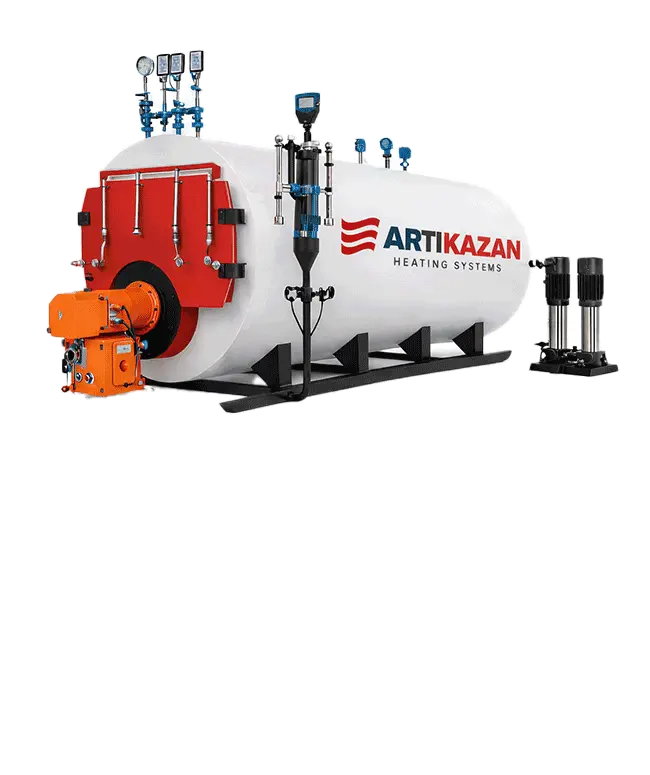
To accommodate the varying infrastructural environments of modern manufacturing plants, Artı Kazan has structured its product offerings around adaptable fuel architectures, enabling plant operators to align their boiler choices with local utility availability, pricing dynamics, and logistical frameworks. A central pillar of this engineering approach is the development of gas-fired steam boilers. Designed to operate on natural gas or comparable gaseous fuels, these installations have emerged as a preferred solution for industrial facilities situated within reach of municipal or industrial gas distribution grids.
Gas-fired steam boiler systems offer notable operational benefits, combining clean combustion characteristics with advanced automated control mechanisms. Because natural gas burns with minimal particulate matter and virtually no soot formation, heat exchanger surfaces remain cleaner for extended operating periods, sustaining high heat transfer rates and reducing the frequency of mechanical cleaning and descaling interventions. Artı Kazan’s gas-fired installations incorporate controlled combustion technology, pairing advanced burners with calibrated air-fuel ratio controls to achieve complete combustion across varying firing rates. This regulated combustion framework not only stabilizes steam output during abrupt surges in plant demand but also assists industrial operations in adhering to stringent atmospheric emissions thresholds by controlling nitrogen oxide and carbon monoxide formation.
While natural gas remains an attractive fuel option, many industrial installations operate in geographical locations where gas pipeline connections are either unavailable, capacity-constrained, or economically impractical. Furthermore, certain facilities prioritize fuel independence or require alternative thermal solutions to mitigate risks associated with pipeline interruptions. For these operational profiles, Artı Kazan delivers liquid-fueled steam boiler solutions engineered to operate reliably on light or heavy fuel oils and specialized liquid distillates.
Liquid-fueled steam boilers require specialized thermodynamic and mechanical engineering due to the physical behavior of liquid fuels. Unlike gaseous fuels, liquid hydrocarbons must be atomized into
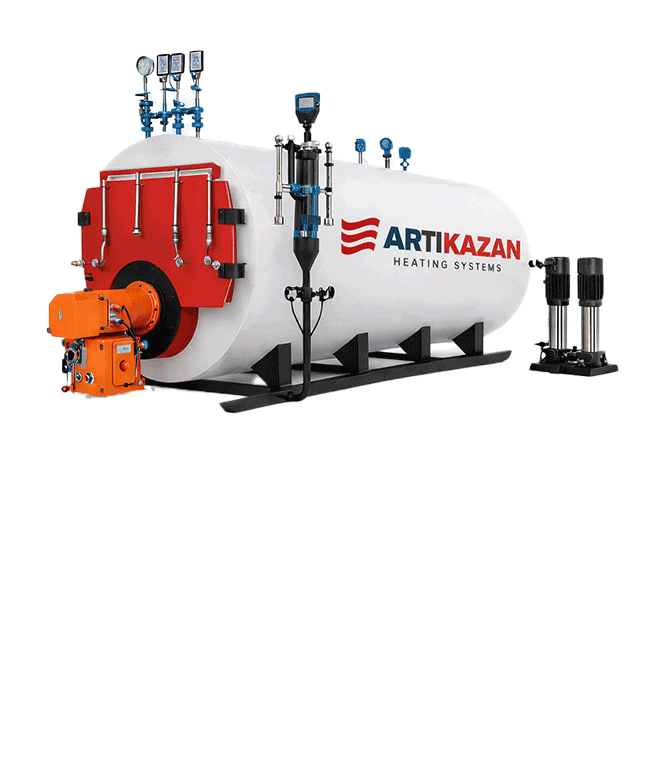
microscopic droplets and, in many cases, preheated to achieve optimal viscosity before combustion. Artı Kazan designs these systems with durable combustion chambers and heat exchange configurations capable of managing the higher flame radiation characteristics and soot deposition risks associated with liquid fuels. By offering customizable engineering options tailored to local fuel supply dynamics, the company ensures that manufacturing enterprises can sustain continuous thermal operations regardless of local infrastructural constraints.
A recurring deficiency in the industrial equipment supply chain is the reliance on standard, catalog-based equipment selection, which frequently results in boilers that are either inadequately sized or over-dimensioned for the host facility’s actual load profile. Oversized boilers incur heavy capital expenditures and operate at diminished seasonal efficiency due to excessive cycling, standby heat radiation losses, and low-load burner instability. Conversely, undersized units operate under continuous strain, experiencing thermal stress, accelerated component wear, and steam pressure collapse during simultaneous production cycles.
To counteract these operational hazards, Artı Kazan emphasizes a project-centric, consultative engineering methodology rather than transactional equipment sales. The company collaborates with plant engineers and operational directors to analyze exact manufacturing parameters before finalizing system specifications. This diagnostic phase evaluates essential operational variables, including baseline and peak steam consumption rates, cyclic demand patterns, required operating pressures, condensate recovery percentages, and the chemical composition of raw feed water. By aligning boiler dimensions and internal volume with the true thermodynamic demands of the production facility, the company ensures balanced equipment sizing, optimizing capital expenditure while establishing a reliable foundation for long-term operational performance.
The structural integrity and manufacturing quality of industrial boilers represent another critical dimension of industrial thermal operations. Steam boilers function as pressurized vessels holding vast volumes of boiling water and steam under extreme pressure and elevated temperatures. Consequently, structural degradation, metal fatigue, or weld deficiencies pose severe operational and personnel safety risks. Artı Kazan addresses these demands by adhering to rigorous technical manufacturing standards, utilizing certified pressure-vessel-grade steel, precision automated welding procedures, and comprehensive non-destructive examination protocols throughout fabrication.
Beyond basic pressure containment, thermal insulation and mechanical durability are integrated into the design to curb heat radiation and enhance efficiency. Uncontrolled thermal dissipation from boiler shells not only wastes purchased fuel but also raises ambient temperatures inside mechanical utility rooms, creating hazardous operating conditions for personnel and ancillary electronics. By deploying high-density thermal insulation and protective exterior cladding, these boiler systems maintain thermal energy inside the fluid matrix, converting the maximum proportion of combustion heat into usable steam.
The economic significance of proper boiler engineering is further underscored by the operational economics of industrial facilities. Over a typical operational lifespan spanning fifteen to twenty-five years, the initial capital purchase price of an industrial boiler represents only a minor fraction of its total lifecycle cost, with fuel and electricity expenses accounting for the overwhelming majority of long-term expenditure. Consequently, an engineered efficiency gain of even one or two percentage points yields substantial cumulative financial savings over thousands of annual operating hours. By improving combustion efficiency, optimizing heat transfer passes, and enabling the integration of heat recovery devices such as flue gas economizers, modern boiler configurations directly support bottom-line profitability for energy-intensive enterprises.
In addition to pure manufacturing prowess, Artı Kazan places sustained emphasis on long-term client partnerships and lifecycle support. Modern manufacturing processes are continuous, and even temporary disruptions to steam availability can halt production lines, spoil perishable inventories, and delay customer shipments. By combining industry experience, specialized mechanical engineering capabilities, and comprehensive technical advisory services, the company aids industrial enterprises through every stage of adoption—from early system design and facility integration to operational deployment.
As industrial enterprises navigate rising energy costs, regulatory mandates for lower emissions, and the relentless imperative for operational reliability, the choice of core thermal equipment has evolved into a strategic operational decision. Through its diverse portfolio of gas-fired and liquid-fueled steam boilers, paired with a project-driven engineering philosophy, Artı Kazan continues to position itself as a dependable technical partner for manufacturing facilities seeking durable, high-efficiency steam generation solutions tailored to modern industrial requirements.