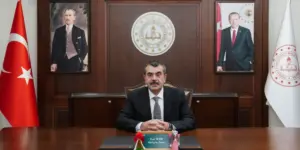
An extensive new report prepared through the collaboration of the Maarif Platform and the TOBB Turkey Education Council has closely examined the “Türkiye Century Maarif Model with Deepening in Language and Thought Congress,” which was jointly organized by the Ministry of National Education’s Directorate General of Secondary Education and the Union of Chambers and Commodity Exchanges of Turkey (TOBB) in Ankara on June 9–10, 2026.
The congress, centered around the core theme of “Language, Thought, and Value,” tackled a broad spectrum of educational topics, including socio-emotional learning, literacy skills, systems thinking, the Virtue-Value-Action Framework, interdisciplinary approaches, the Harezmi Education Model, art and thinking, Turkish as a science language, vocational and technical education, and skill-oriented measurement and evaluation. A total of 45 papers, selected through rigorous blind peer review among numerous submissions, were presented during the event. The report highlighted the high proportion of contributions authored by field teachers as one of the event’s primary strengths.
According to the report, the fundamental purpose of the evaluation is neither to unconditionally praise nor to harshly criticize the congress, but rather to document the studies conducted, identify strengths and weaknesses, and formulate practical recommendations to support the effective field implementation of the Türkiye Century Maarif Model (TYMM). Noting that the model has only been in practice for two years, the report cautions that current evaluations should not be viewed as absolute verdicts. Instead, it emphasizes that these findings must be tested through comprehensive field research encompassing diverse regions and school types.
"The Greatest Obstacle Facing the Model is Teacher Competency"
The core finding highlighted in the report is that the challenges encountered during the implementation of the model cannot be fully explained merely by examining the curriculum text itself. Both congress papers and field observations point to a common denominator: the competency of teachers tasked with interpreting and implementing the program within their classrooms.
The report notes that while some teachers find the new textbooks insufficient and continue to wait for direct directives, the curriculum and textbooks are designed to leave intentional gaps. Rather than being viewed as a deficiency, these gaps are meant to provide the flexibility needed to design activities tailored to the specific needs of schools and students.
However, utilizing this flexibility effectively requires a high level of professional readiness, which the report suggests is not sufficiently cultivated in undergraduate education faculties. The analysis warns that if a teacher is unable to develop tailored activities appropriate for their specific classroom and environment, what is initially intended as a strength of the program could easily transform into ambiguity.
Furthermore, the report highlights that teachers often avoid taking personal initiative due to factors extending beyond mere professional preparation. Administrative and inspection pressures, concerns regarding legal liability, and the fear that complaint mechanisms such as CİMER (the Presidential Communication Center) could occasionally be leveraged against educators tend to drive teachers toward more passive positions. Teachers who fill the program’s prescribed gaps with original activities are sometimes criticized not for their innovation, but for stepping outside the boundaries of the curriculum or disrupting standard practices. Consequently, the report emphasizes that a teacher’s ability to exercise professional initiative depends as much on supportive administrative approaches and school conditions as it does on individual competence.
Notable Criticisms Regarding Physical Education and Music Classes
The report also examines the broader issue of teacher initiative and curriculum execution through the lens of physical education and music classes. While these courses are intended to foster a consciousness of healthy living and aesthetic sensitivity, the report points out that in many schools, physical education is frequently reduced to standard soccer hours for male students and volleyball hours for female students, or the class periods are repurposed for exam preparation.

Drawing attention to the reality that movement, breathing, and nutritional habits acquired during childhood directly carry over into adulthood, the report underscores the vital role physical education plays in developing discipline, patience, and self-regulation, alongside the importance of music for rhythm, harmony, and emotional growth. The neglect of these subjects is described not merely as a scheduling issue, but as a significant gap in an educational philosophy that prioritizes the holistic integrity of the human mind and body.
Continuous Professional Development Over One-Off Seminars
Addressing the ongoing professional development of teachers, the report evaluates current in-service training programs as insufficient for closing existing gaps. It asserts that teacher development cannot be achieved through one-off seminars, but rather requires content-driven, engaging initiatives spread across time and conducted collaboratively among colleagues.
In this direction, the report proposes the establishment of continuous “experience-sharing workshops” at the school and district levels. To prevent these workshops from devolving into routine administrative meetings, it suggests that mentoring roles should be assigned based on merit rather than seniority. A proposed peer-mentoring model envisions utilizing teachers who are recognized for their exemplary practices and openness in sharing their classrooms. These mentors, the report suggests, should be selected by taking the recommendations of their peers into careful consideration. Meanwhile, the report notes that it remains premature to reach definitive conclusions regarding newer institutional structures such as Teacher Academies before their long-term impacts can be accurately measured.
The "Learning Guide" Approach Deemed Insufficient on Its Own
The evolving role of the teacher is another central theme examined in the report. While moving away from the traditional view of the teacher as merely an information transmitter toward the role of a learning facilitator is considered valuable, the report argues that the traditional educational concept of the "muallim" encompasses much more.
According to the analysis, a true muallim is not merely someone who simplifies learning or manages a classroom; rather, they combine knowledge with ethics, impart character and refined manners to their students, and serve as a behavioral role model. This perspective emphasizes that students learn not only academic facts from their teachers, but also acquire a specific stance and code of conduct.
The Pressure of Centralized Examinations on Learning
Among the primary challenges confronting the Türkiye Century Maarif Model, the report identifies the prevailing learning culture and the immense pressure exerted by the centralized examination system. The heavy shadow cast by high-stakes exams on school life emerged as one of the most frequent grievances voiced during the congress.
This pressure manifests in three primary consequences: the restriction of teaching strictly to topics measured in exams, the marginalization of non-tested areas such as ethics, art, and physical education, and the financial burden placed on families by the private tutoring and test-prep book markets. The report argues that viewing this problem solely through the lens of a commercialized "exam rent" industry obscures the root causes. Centralized examinations arise from the structural necessity to place a large student population into limited institutional capacities, as well as from the influence of international comparative assessments such as PISA and TIMSS.
Because high-stakes exams narrow the scope of classroom instruction, the report recommends a gradual transition toward a process-oriented, multi-dimensional assessment system that utilizes the formative power of evaluation to support genuine learning.

Support for Speaking and Listening Exams in Language Curriculums
One of the specific applications evaluated positively in the report is the incorporation of speaking and listening skill assessments into Turkish and foreign language courses. The Türkiye Century Maarif Model places reading, writing, speaking, and listening skills—along with the critical thinking capacities developed through them—at the center of the curriculum.
Traditionally, assessments relying exclusively on written and multiple-choice tests have sidelined speaking and listening abilities. The report notes that structuring language course grades to comprise 50 percent written exams, 25 percent listening exams, and 25 percent speaking exams represents a timely and appropriate implementation. Because skills emphasized in school evaluations naturally gain greater importance during instruction, these oral and auditory assessments are expected to help students who possess grammar knowledge but struggle with self-expression.
In the short term, this practice is projected to increase in-class discussion and communication; in the medium term, it is expected to help students articulate their thoughts with greater confidence and clarity; and in the long term, it aims to foster a society skilled in active listening, constructive debate, and persuasion. However, the report cautions that these assessments must be accompanied by shared evaluation criteria, practical training, and manageable workloads for teachers to prevent them from becoming mere bureaucratic formalities.
Comprehensive Analysis of Congress Papers
The report analyzes the 45 papers presented at the congress, noting that while they offer valuable insights into the implementation of the Maarif Model, their findings must be interpreted with caution. The majority of the studies utilized document analysis, action research, and mixed-methods approaches, with a prominent focus on the model’s Virtue-Value-Action Framework.
For instance, studies examining first-grade reading series highlighted the presence of values such as patriotism, cultural heritage, helpfulness, responsibility, and justice, alongside the introduction of abstract and philosophical concepts in early literacy materials. Another study analyzing fifth-grade English curricula through Schwartz’s Theory of Basic Human Values found that value emphases were particularly concentrated in productive skills such as speaking and writing, indicating that value-oriented approaches extend effectively into foreign language education.
Other papers covered topics ranging from artificial intelligence-aided language learning and philosophy for children to probability in high school math textbooks. Interdisciplinary studies explored themes such as "Religion, Environment, and Technology" in religious education, the teaching of justice and responsibility through force and motion units in science classes, the effectiveness of the Harezmi Education Model teacher training programs, and the impact of argumentation-based learning on cognitive development.
Despite these rich examples, the report reiterates that document analyses and single-classroom action researches demonstrate the intended goals of the materials but do not fully capture everyday classroom realities. Consequently, independent, multi-year research covering diverse regional contexts and school types is deemed essential to monitor the model’s true impact accurately.
Gaps Identified in Measurement, Evaluation, and Event Organization
Beyond evaluating the papers, the report outlines several structural and organizational deficiencies observed during the congress. A primary logistical critique was the insufficient time allocated for open discussions, with presentations consuming the majority of some sessions and leaving little room for critical feedback or debate. Furthermore, the absence of a concluding synthesis session was noted as a missed opportunity to tie the 45 distinct papers together into cohesive policy recommendations.

From a thematic standpoint, the most notable gap was the complete absence of papers dedicated directly to measurement and evaluation. Practical questions regarding how process-oriented assessment should be executed in the classroom and how it can be reconciled with centralized exams remained largely unanswered. The report also touched upon the recent decision to set a 70-passing score requirement for Turkish and Turkish Language and Literature courses, noting that while the emphasis on the mother tongue is valuable, the new threshold can only strengthen learning if it is backed by robust remediation programs and teacher support; otherwise, it risks generating superficial grade anxiety.
Additional critiques pointed to the unbalanced distribution of the congress’s nine sub-themes. Vocational and technical education was represented by only a single paper—a notable shortfall given that the event was hosted by TOBB. Similarly, the arts theme featured only three papers. While teachers’ experiences were thoroughly represented, the perspectives of students and parents were largely absent, indicating a need to incorporate learner-narratives into future evaluations.
Recommendations for the Ministry of National Education
To enhance the model’s field implementation, the report presents seven core recommendations directed to the Ministry of National Education:
- Broad public sharing of congress records, discussion transcripts, and a comprehensive final action plan, alongside expanded debate time and synthesis sessions in future events.
- Decentralization of the congress model, encouraging provincial directorates of national education to organize local workshops tailored to regional needs.
- Sustained support for listening and speaking exams, accompanied by shared assessment criteria, practical training tools, and manageable administrative workloads.
- Transitioning from one-time in-service seminars to continuous, school- and district-based experience-sharing workshops led by merit-selected peer mentors.
- Securing teacher initiative by explicitly safeguarding original, school-based activities from administrative over-regulation, ensuring that inspections remain guiding rather than punitive.
- Expanding teacher guidebooks and collaborative activity pools across all subject areas, matching the resources already available in fields like English, early childhood, and physical education.
- Commissioning independent, multi-year empirical research to monitor the rollout and long-term effects of the Maarif Model across varied educational settings, from village schools to vocational institutions.
Conclusion and Outlook for the Future
In its concluding assessment, the report emphasizes that while the "Language and Thought in Depth" congress successfully gathered initial field impressions and united public, business, and civil society stakeholders, the Türkiye Century Maarif Model is still in its developmental infancy. The foundational steps of prioritizing fundamental language and thinking skills, alongside oral and auditory evaluations, are recognized as positive indicators.
Ultimately, the report asserts that the ultimate success of the Maarif Model depends not merely on a well-designed curriculum text, but on the continuous professional empowerment of teachers, equitable school resources, a supportive examination framework, and a constructive societal approach toward learning as a lifelong journey.