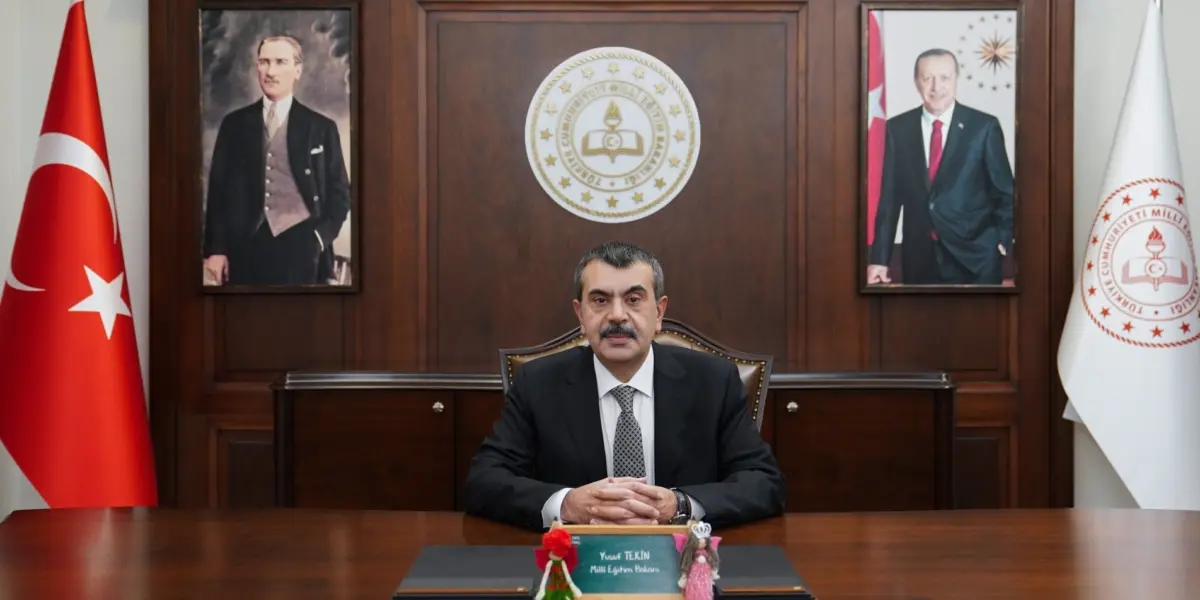
On the occasion of November 10 Atatürk Commemoration Day, Turkish Minister of National Education Yusuf Tekin issued a comprehensive official message honoring the founder of the Republic of Turkey, Gazi Mustafa Kemal Atatürk, on the 88th anniversary of his passing. Marking a solemn day of national remembrance, Minister Tekin highlighted Atatürk’s enduring legacy as an extraordinary military strategist, a visionary statesman, and the nation’s revered "Head Teacher" (Başöğretmen). In his statement, Tekin underscored that the founding principles of the Republic remain fundamentally intertwined with the nation’s educational mission and its strategic vision for future generations.
Minister Tekin emphasized that November 10 is not merely a date of mourning, but a pivotal annual moment for national reflection. He noted that the day serves as an opportunity for the Turkish nation to re-evaluate its historical journey, reaffirm the founding determination of the Republic, and recognize the profound responsibility carried by educators, public leaders, and society as a whole toward the youth who will shape Turkey’s future.
Remembering the Founding Will and National Struggle
In the opening of his message, Minister Tekin extended his solemn respect, mercy, and gratitude to Gazi Mustafa Kemal Atatürk, alongside his comrades-in-arms and all the martyrs and veterans who sacrificed their lives for the independence of the homeland. Tekin framed the historical narrative of Turkey’s liberation as a testament to collective sacrifice and unyielding national resolve, guided by Atatürk’s decisive leadership during one of the most critical junctures in modern history.
"We commemorate Gazi Mustafa Kemal Atatürk on the 88th anniversary of his passing into eternity, together with his comrades-in-arms and all our martyrs and veterans who showed great self-sacrifice for the independence of our homeland, with mercy, respect, and gratitude," Minister Tekin stated. He elaborated on the significance of the day within the national consciousness, observing that November 10 offers a structured occasion to honor the past while looking purposefully toward the future.
According to Minister Tekin, the remembrance of Atatürk is intrinsically tied to understanding the foundational struggle of the Turkish nation. He noted that November 10 provides a moment to re-evaluate the historical struggle of the people, the original founding will that established the Republic out of the ruins of war, and the ongoing obligation to pass these values intact to subsequent generations. By keeping this historical memory alive, Tekin affirmed, society ensures that the core tenets of national independence and sovereignty remain the guiding pillars of the modern state.
Tekin highlighted that Atatürk was a historic figure whose vision altered the entire trajectory of Turkish history. By leading the Turkish War of Independence and subsequently crowning that victory with the establishment of a modern republic, Atatürk transformed the nation’s governance structure and laid down a blueprint for comprehensive modernization, legal reform, and social progress.
The Interconnected Roles of Statesman and Head Teacher
A central theme in Minister Tekin’s commemorative message was the unique duality of Atatürk’s leadership, specifically how his military and political achievements were complemented by his role as the nation’s primary educator. Atatürk was officially bestowed the title of "Başöğretmen" (Head Teacher) by the Council of Ministers in 1928 following the introduction of the new Turkish alphabet, a title that reflected his belief that true independence could only be secured through widespread literacy, scientific inquiry, and public enlightenment.
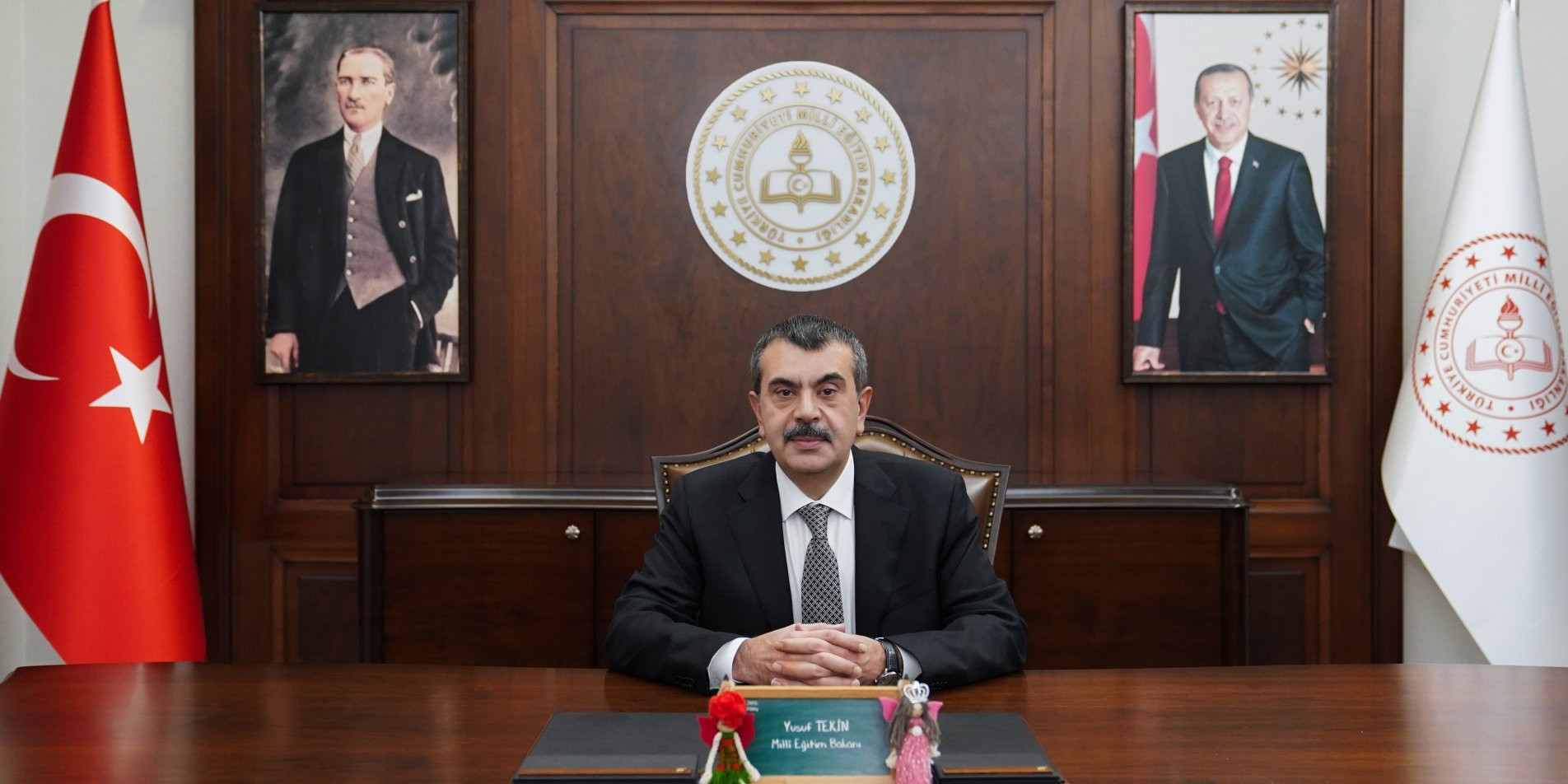
Tekin stressed that Atatürk’s military genius and statecraft cannot be separated from his educational vision, describing them as mutually reinforcing components of the Republic’s founding philosophy. "Gazi Mustafa Kemal Atatürk, the founder of our Republic, led our nation’s will for independence and altered the course of our history by crowning this will with the Republic," Tekin stated in his message. "His military and political leadership, together with his character as Head Teacher, are complementary aspects of the Republic’s will to establish and rise."
The Minister pointed out that Atatürk consistently linked the ultimate survival, stability, and growth of the Republic to the quality of education taking place inside school classrooms across the country. Rather than viewing education as a secondary policy area, the founder of the Republic treated schoolrooms as the primary battlegrounds where the nation’s long-term independence would be permanently defended. By entrusting the preservation of the Republic to teachers and students, Atatürk established a direct historic connection between educational success and national sovereignty.
Tekin observed that this historical perspective places an enduring responsibility on the shoulders of modern educators. The mandate handed down by Atatürk requires educational leaders not merely to impart academic knowledge, but to cultivate character, civic duty, and an unwavering commitment to the nation’s democratic and republican ideals.
Unpacking the Triad: Free Minds, Free Consciences, and Free Wisdom
To illustrate the foundational duties imposed on the education system, Minister Tekin cited one of Atatürk’s most famous addresses to Turkish teachers: "The Republic demands of you generations whose minds are free, whose consciences are free, whose wisdom is free." ("Cumhuriyet sizden fikri hür, vicdanı hür, irfanı hür nesiller ister.")
Tekin highlighted this historic statement as the definitive expression of the historical responsibility assigned to the teaching profession. He provided a detailed philosophical breakdown of what these three core attributes—a free mind (fikri hür), a free conscience (vicdanı hür), and free wisdom (irfanı hür)—mean within the context of contemporary pedagogy and societal development.
Analyzing the concept of a "free mind" (fikri hür), Minister Tekin explained that an intellectually free individual is defined by an active capacity for inquiry, research, and critical analysis. A free mind does not passively accept information; rather, it questions assumptions, seeks evidence, engages in rigorous reasoning, and evaluates claims through an analytical lens. In an educational context, fostering free minds requires creating learning environments that encourage curiosity, scientific inquiry, and independent problem-solving.
Turning to the concept of a "free conscience" (vicdanı hür), Tekin emphasized the indispensable role of ethics, moral accountability, and social justice in personal development. A person with a free conscience possesses a strong internal moral compass, acts with integrity, and demonstrates a deep commitment to fairness and equity. Tekin noted that intellectual capability without moral grounding is incomplete; therefore, the educational process must instill a profound sense of ethical responsibility, respect for human dignity, and a dedication to upholding justice within society.

Addressing the third pillar, "free wisdom" or "free insight" (irfanı hür), Minister Tekin described it as a harmonious synthesis of cultural grounding and universal open-mindedness. An individual endowed with free wisdom deeply understands, appreciates, and draws strength from their own national culture, history, and heritage. At the same time, such an individual remains intellectually receptive to the broader achievements of humanity, engaging constructively with global science, art, and philosophy. Tekin asserted that this balanced perspective allows young people to remain rooted in their identity while contributing meaningfully to modern global civilization.
Aligning Historic Principles with the ‘Century of Türkiye Education Model’
Connecting these foundational historical principles to contemporary educational policy, Minister Tekin introduced the strategic framework currently guiding the Ministry of National Education: the "Türkiye Yüzyılı Maarif Modeli" (Century of Türkiye Education Model). Tekin explained that this national curriculum model was crafted specifically to operationalize Atatürk’s vision within twenty-first-century learning environments.
"Today, with the Century of Türkiye Education Model, we aim to develop our students’ thinking and reasoning skills, while raising them as individuals who are integrated with their national and spiritual values, responsible, and open to knowledge and learning," Tekin stated in his message.
The Minister detailed how the new educational framework seeks to bridge traditional values with modern cognitive skills. By focusing on critical thinking, problem-solving, and analytical reasoning, the model aims to ensure that Turkish students can navigate an increasingly complex, technology-driven world. Simultaneously, by embedding national, moral, and human values into the educational experience, the Ministry seeks to foster civic responsibility and moral integrity among the youth.
Tekin emphasized that a nation’s collective memory is sustained by its ability to pass down its founding principles alongside the historical context that gave birth to those principles. "A nation’s memory carries both its founding will and the historical accumulated experience that prepared that will," he noted. "Generations raised with this consciousness build the future using the strength they draw from their past."
Through this approach, Tekin asserted, education serves as the vital bridge between history and the future, enabling young citizens to draw confidence from their historical roots while actively building the scientific, economic, and social infrastructure of Turkey’s second century.
Preserving the Republican Legacy in its Second Century
Looking toward the broader trajectory of the Turkish Republic as it navigates its second century, Minister Tekin declared that safeguarding the legacy entrusted by Atatürk is a continuous, dynamic responsibility shared by every generation. He noted that honoring Atatürk’s memory requires far more than symbolic commemorations; it demands a practical, daily dedication to the principles of national sovereignty, full independence, democratic governance, the rule of law, and scientific progress.

Tekin stressed that upholding this legacy relies on a collaborative ecosystem involving all segments of the educational community. The foundation of this effort rests upon the dedicated labor of teachers, the natural curiosity and ambition of students, and the supportive involvement of families. When these three elements align, Tekin observed, the educational system can successfully fulfill its mandate to elevate the nation.
"In the second century of our Republic, the legacy entrusted to us by Atatürk is a historical responsibility re-undertaken by every generation," Tekin declared. "Protecting national sovereignty, full independence, democracy, the republic, and science—and elevating the labor of the teacher, the curiosity of the student, and the contribution of the family—forms the very essence of this responsibility."
The Minister underlined that investing in education is the most effective method of safeguarding national sovereignty and fostering sustainable development. By prioritizing science, critical thought, and ethical grounding, the nation honors the vision of its founder by ensuring its resilience and independence in an ever-changing international landscape.
In the closing section of his message, Minister Yusuf Tekin reiterated his profound respect for the founder of the Republic and expressed deep appreciation for the millions of educators working across the nation.
"With these feelings and thoughts, I once again remember Gazi Mustafa Kemal Atatürk with mercy, respect, and gratitude; and I present my thanks to all our teachers and our educational community who labor in our classrooms for the future of our Republic," Tekin concluded.