

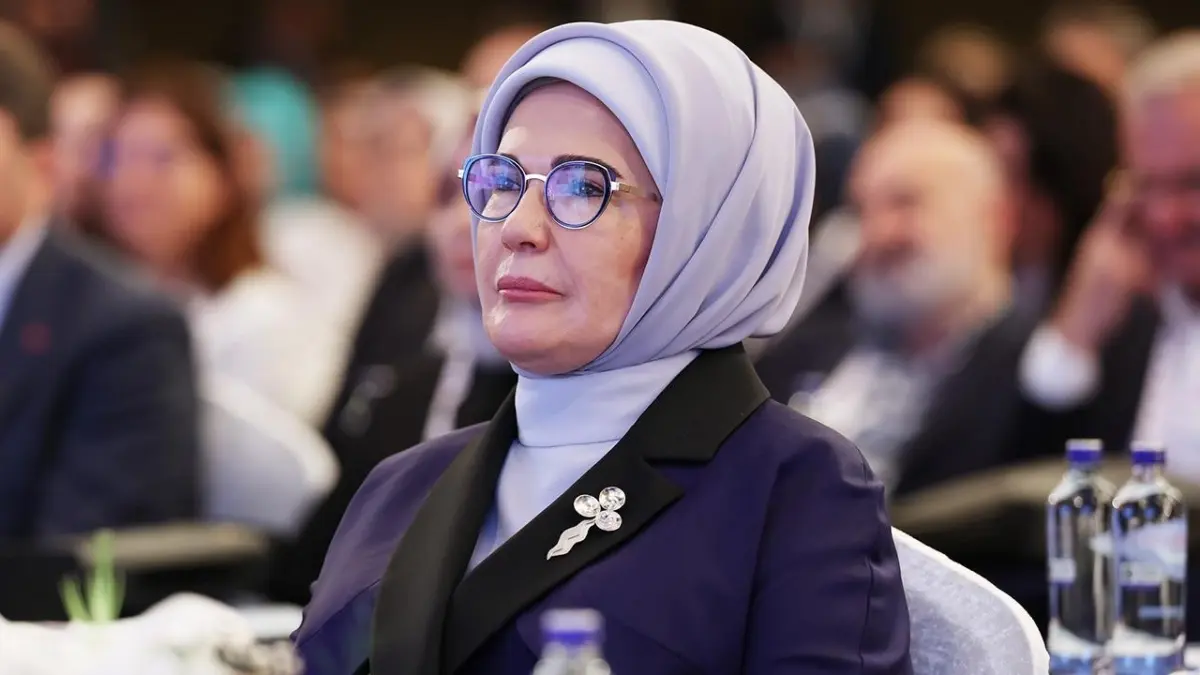
ANKARA — In a poignant message delivered on the occasion of November 24 Teachers’ Day, Turkish First Lady Emine Erdoğan paid tribute to educators across the nation, characterizing the teaching profession as a sacred calling that extends far beyond routine professional duties to shape the moral and intellectual framework of future generations.
Sharing her statement on her official social media account, the wife of President Recep Tayyip Erdoğan reflected on the profound societal impact of educators who dedicate their lives to guiding youth. She emphasized that true teaching lies at the intersection of knowledge, compassion, and perseverance, serving as an irreplaceable catalyst for personal growth and collective national progress.
"Teaching is more than a profession; it is the art of leaving a mark on hearts, being a light in the darkness, and carrying hope into the future," First Lady Emine Erdoğan stated in her message. "I congratulate all our teachers, who shape generations by blending knowledge with love, on Teachers’ Day. I remember with mercy and gratitude our heroic teachers who were martyred in the line of duty."
Her message resonates deeply across Turkey, where November 24 is commemorated annually as a dedicated national day honoring the teaching community, acknowledging both the everyday sacrifices of active educators and the solemn memory of those who lost their lives serving in remote or vulnerable corners of the country.
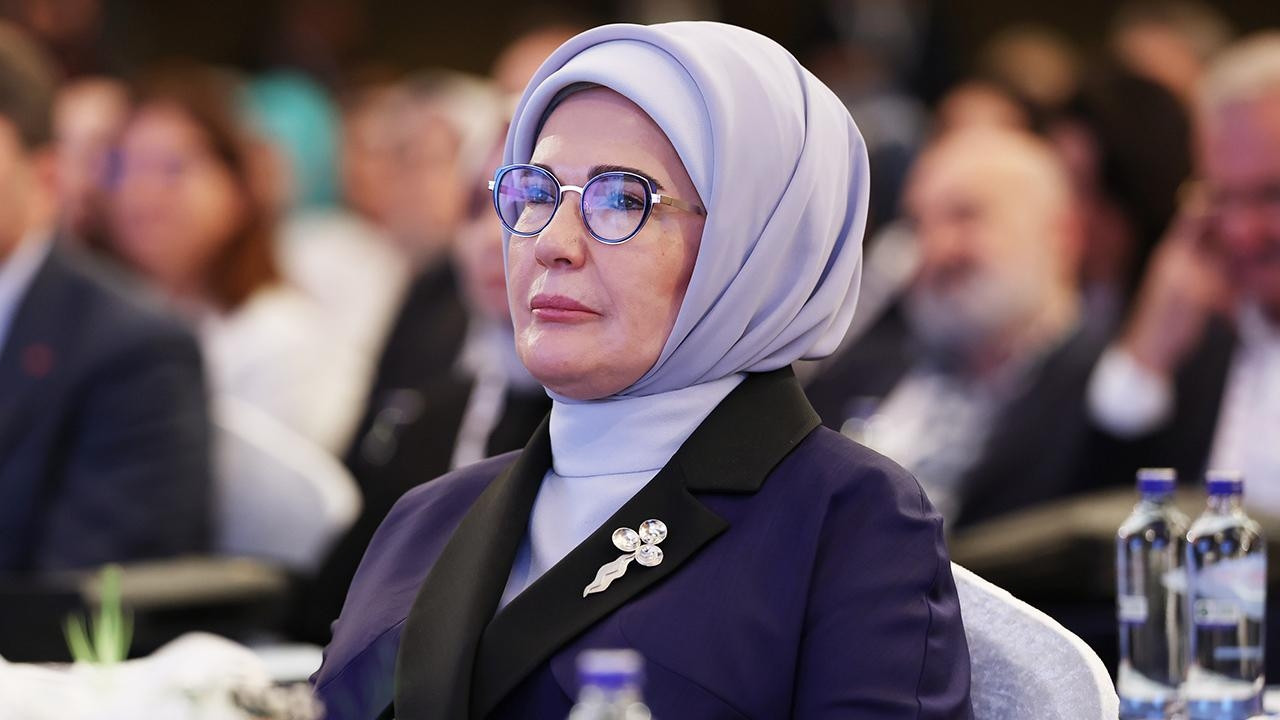
A Profession Defined by Heart, Wisdom, and Illumination
In her public address, First Lady Emine Erdoğan framed pedagogy not merely as an instructional process or an administrative career, but as an art form rooted in emotional connection and moral responsibility. By describing teaching as "the art of leaving a mark on hearts," her words touched upon a fundamental tenet of Turkish educational culture, which views the educator as a mentor, role model, and guardian of social values.
The assertion that educators act as "a light in the darkness" highlights the transformative role education plays in overcoming ignorance, poverty, and social inequality. Throughout history, access to quality instruction has served as the primary instrument for individual empowerment and social mobility. In the context of modern society, where young people face increasingly complex informational environments and fast-paced technological shifts, the guidance of a dedicated teacher remains an anchor of clarity and ethical orientation.
Furthermore, the First Lady’s emphasis on "blending knowledge with love" underscores a holistic vision of pedagogy. Modern educational philosophy increasingly recognizes that cognitive learning cannot be divorced from emotional and social development. When academic instruction is infused with genuine empathy and care, students develop not only intellectual competence but also emotional resilience, civic responsibility, and ethical integrity. Emine Erdoğan’s message serves as a reminder that information alone is insufficient to build a thriving society; it is the humane application of knowledge, nurtured by compassionate educators, that builds strong character and enduring social cohesion.
By defining educators as carriers of hope into the future, the First Lady linked the quiet daily work performed in classrooms across the country to the overarching destiny of the nation. Every lesson taught, every student encouraged, and every potential unlocked contributes directly to the long-term vitality, innovation, and stability of society.
Honoring the Memory of Martyred Educators
A central and deeply solemn component of Emine Erdoğan’s message was her commemoration of teachers who lost their lives while performing their duties. The phrase "heroic teachers who were martyred in the line of duty" invokes a poignant chapter of modern Turkish history, paying homage to educators who demonstrated ultimate selflessness in pursuit of their educational mission.
Over the decades, thousands of young teachers have been assigned to remote villages and rural districts across Turkey, often working under challenging conditions to ensure that children in every geographic region enjoy equal educational opportunities. Among them were educators who faced severe adversity and security risks, yet remained steadfast in their commitment to their students. The loss of these teachers while carrying out their duty has left an indelible mark on the national consciousness.
In Turkish public discourse, teachers who have fallen in the line of duty are held in the highest esteem, recognized not only as public servants but as heroes who made the ultimate sacrifice for the enlightenment of youth and the unity of the nation. By offering prayers of mercy and expressions of national gratitude, the First Lady reinforced a collective vow of remembrance, ensuring that the legacy of these fallen educators remains an enduring source of inspiration for present and future generations.
This tribute also highlights the inherent courage required of educators who step into unfamiliar environments, bridging cultural and geographic divides to foster unity and understanding through education. Their sacrifice stands as a testament to the belief that education is a national right that must be defended and delivered regardless of geography or hardship.
The Cultural and Historical Weight of Teachers’ Day in Turkey
The annual observance of Teachers’ Day on November 24 carries immense historical significance in Turkey, rooted in the foundational reforms of the modern Turkish Republic. The date marks the anniversary of November 24, 1928, when Mustafa Kemal Atatürk, the founder of the Republic of Turkey, officially accepted the title of "Başöğretmen" (Head Teacher) following the adoption of the new Turkish alphabet and the launch of a widespread national literacy campaign.
The historical decision in 1928 marked the beginning of an unprecedented educational mobilization. National schools (Millet Mektepleri) were established across the country to teach citizens of all ages the new alphabet, dramatically boosting literacy rates and laying the groundwork for a modern, knowledge-based society. Decades later, in 1981, November 24 was officially designated as Teachers’ Day to permanently honor Atatürk’s vision of education as the cornerstone of national independence and modernization.

Against this historical backdrop, annual messages from national figures like First Lady Emine Erdoğan carry forward a long-standing tradition of societal appreciation for the teaching profession. The national commemoration is marked by ceremonies in schools, cultural institutions, and civic centers across all 81 provinces of Turkey. Students express gratitude to their mentors, communities gather to recognize retired educators, and public institutions reaffirm their commitment to strengthening the country’s educational infrastructure.
The celebration of Teachers’ Day serves as a vital reminder that national development relies not merely on material infrastructure or economic metrics, but fundamentally on the quality of education provided to the rising generations. By keeping the historic spirit of November 24 alive, Turkey continuously reaffirms the central role of educators in realizing its national aspirations.
Educational Advocacy and Social Transformation
First Lady Emine Erdoğan’s tribute to educators aligns with her long-standing involvement in social development, literacy, and educational initiatives across Turkey. Over the years, she has consistently advocated for programs aimed at expanding access to education, particularly for girls, rural youth, and disadvantaged groups.
National campaigns focused on boosting female literacy and enrollment rates have long been a focal point of public advocacy in Turkey, seeking to ensure that every child, regardless of gender or socioeconomic background, has the opportunity to attend school. Furthermore, recent initiatives aimed at establishing modern school libraries, enriching cultural resources, and introducing environmental awareness programs—such as the globally recognized Zero Waste initiative—into school curricula reflect an ongoing effort to broaden the scope of basic education in the country.
In modern educational settings, environmental stewardship, digital literacy, and cultural preservation have emerged as crucial elements of comprehensive schooling. The First Lady’s active support for integrating environmental consciousness into primary and secondary education highlights the evolving demands placed on contemporary teachers, who are tasked not only with teaching core academic subjects but also with cultivating globally responsible citizens.

As educational requirements evolve in an increasingly complex world, the burden on teachers to continuously adapt their methodologies while maintaining traditional values becomes greater. Messages of support from high-level leadership serve to bolster public appreciation for the tireless work of teachers who navigate these changing landscapes daily.
The Enduring Impact of Teachers on Future Generations
The narrative articulated in Emine Erdoğan’s Teachers’ Day message speaks to the universal and timeless nature of the teaching profession. While educational tools, technologies, and curricula undergo continuous transformation, the foundational core of education remains an intrinsically human interaction—a dynamic built on trust, mentorship, and mutual respect between teacher and student.
In an era increasingly dominated by digital technologies, automated learning tools, and artificial intelligence, the essential human element highlighted in the First Lady’s message remains irreplaceable. Technology can deliver information and streamline administrative processes, but it cannot inspire hope, cultivate empathy, or leave a lasting impression on a young person’s heart. It is the personal dedication of the teacher that transforms raw information into wisdom and potential into achievement.
The First Lady’s words serve as a call to action for broader society to uphold the dignity of the teaching profession, recognize the emotional and social labor inherent in the field, and support educators in their vital mission. By celebrating teachers as custodians of hope and architects of the future, the message underscores that the investments made in educators today directly determine the character, resilience, and success of the nation tomorrow.
As Turkey reflects on the profound contributions of its educators on November 24, the shared national gratitude expressed by figures across the public spectrum reinforces a enduring truth: the strength of a society rests squarely on the wisdom, dedication, and heart of those who teach.