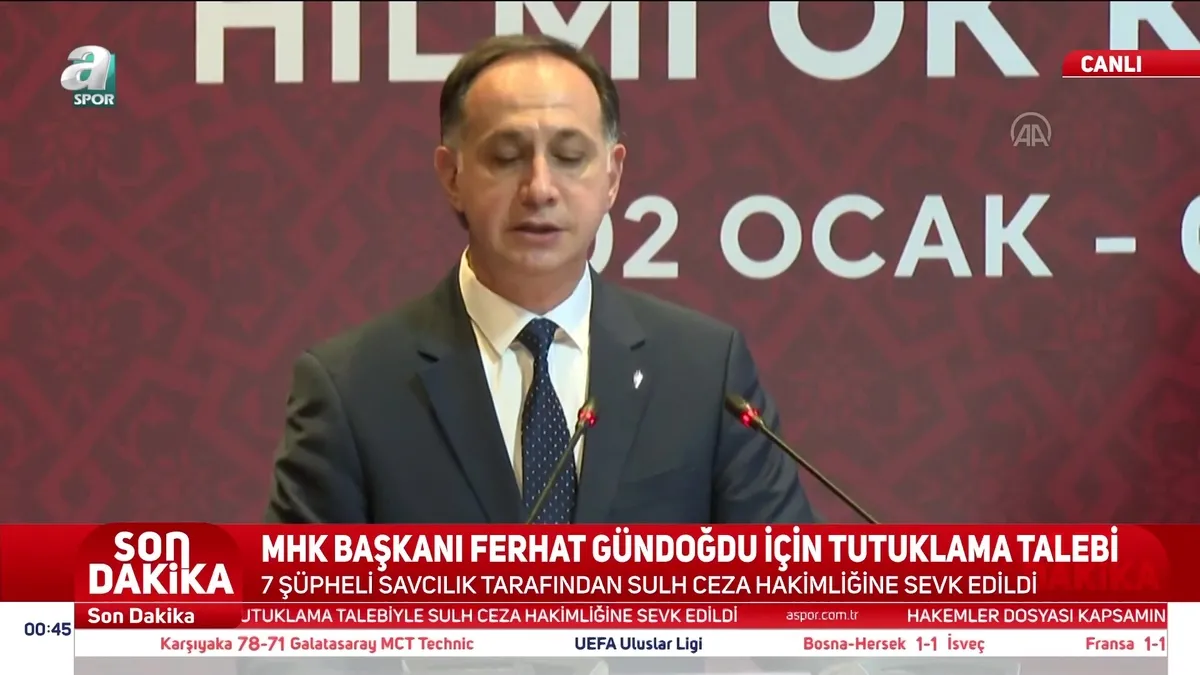
The proceedings, which reached a critical juncture at approximately 1:06 AM, are being conducted by the Istanbul Chief Public Prosecutor’s Illegal Betting and Sports Crimes Investigation Bureau. The investigation, officially logged under the case file number 2025/83127, has reportedly been active for a considerable period, suggesting a meticulous gathering of evidence by Turkish authorities. Gündoğdu is not the only individual facing these serious allegations; he is among seven suspects who were transferred to the courthouse following their statements at the prosecutor’s office. The decision to seek formal arrest—a measure typically reserved for cases where there is strong suspicion of a crime, a risk of tampering with evidence, or a potential for the suspects to flee—underscores the gravity with which the judiciary is treating the matter.
The details of the referral were brought to public attention by A Spor reporter Mustafa Kadir Mercan, who has been monitoring the developments at the Istanbul Courthouse. According to the reporting, the atmosphere surrounding the investigation is one of intense scrutiny, as the legal system grapples with allegations that strike at the very heart of the game’s fairness. The Central Referee Committee, or MHK, is the body responsible for the appointment, training, and evaluation of all professional referees in Turkey. As its chairman, Ferhat Gündoğdu holds a position of immense influence, overseeing the individuals who make the final calls on the pitch. When the head of such an organization is implicated in a probe concerning illegal betting, the implications extend far beyond a single individual, casting a shadow over the legitimacy of match results and the institutional integrity of the federation itself.
The investigation labeled 2025/83127 appears to be a comprehensive effort by the Illegal Betting and Sports Crimes Investigation Bureau to dismantle networks that may be influencing the outcome of sporting events for financial gain. While the specific evidence against Gündoğdu and the other six suspects has not been fully disclosed to the public due to the confidentiality of the ongoing judicial process, the prosecutor’s insistence on a request for arrest suggests that the findings thus far are substantial. In the Turkish legal framework, the referral to a Duty Criminal Court of Peace is the final step before a judge decides whether the suspects will be remanded in custody pending trial or released under judicial control measures.
The timing of this development is particularly sensitive for Turkish football. With the 2026 season in full swing, the sudden legal jeopardy of the MHK President creates an administrative vacuum and a crisis of confidence. The MHK is tasked with ensuring that referees remain impartial and insulated from outside pressures. The allegation that the leadership of this committee could be linked to illegal betting activities strikes a chord with a fanbase that has long demanded greater transparency and accountability in the sport. The Istanbul Chief Public Prosecutor’s Office has been increasingly active in monitoring the digital and financial footprints of betting syndicates, and this latest move suggests that their reach has extended into the highest echelons of sports management.
As the seven suspects, including Gündoğdu, awaited their appearance before the judge in the pre-dawn hours of October 3, the broader sports community began to digest the potential fallout. If the court grants the request for arrest, it would likely necessitate an immediate and total restructuring of the Central Referee Committee. The Turkish Football Federation (TFF) would be forced to appoint interim leadership to ensure that the weekly schedule of matches can proceed without the perception of bias or corruption. However, the psychological impact on the referees themselves cannot be understated. Officiating in the Turkish Super Lig is already a high-pressure job, frequently characterized by intense criticism from clubs and supporters. The news that their administrative head is being investigated for sports crimes adds an unprecedented layer of stress to their professional environment.
The role of the Illegal Betting and Sports Crimes Investigation Bureau is central to this narrative. Established to combat the rising tide of unauthorized gambling and its corrosive effects on athletic competition, the bureau utilizes specialized financial investigators and cybercrime experts. The fact that the investigation began in 2025 suggests that the authorities have been tracing a complex web of transactions or communications for over a year. By the time the file reached the stage of requesting arrests for seven individuals simultaneously, it is probable that the prosecution had identified a coordinated effort or a recurring pattern of illicit activity.
Public interest in the case is at an all-time high, with major news outlets and sports journalists converging on the courthouse to provide live updates. The reporting by Mustafa Kadir Mercan for A Spor emphasized the procedural importance of this moment. The transition from the prosecutor’s office to the Nöbetçi Sulh Ceza Hakimliği (Duty Criminal Court of Peace) represents the point where the executive branch’s investigative work meets the judiciary’s oversight. The judge’s role now is to evaluate the "reasonable suspicion" presented by the prosecutor and determine if the deprivation of liberty is a necessary and proportionate step at this stage of the inquiry.
The broader context of illegal betting in Turkey provides a backdrop for why this case is being pursued with such vigor. Law No. 7258, which governs betting and games of chance in the country, carries strict penalties for those who organize, facilitate, or profit from unauthorized gambling. When these activities intersect with the professional duties of sports officials, the legal consequences are even more severe, often involving charges related to "official misconduct" or "attempting to influence the outcome of a game." The investigation 2025/83127 is likely exploring these intersections, looking for links between the administrative decisions of the MHK and the movements in the illegal betting markets.
For Ferhat Gündoğdu, this moment represents a dramatic turn in a career that has been spent in the service of Turkish officiating. Having ascended to the presidency of the MHK, he was entrusted with the mission of modernizing the refereeing system and restoring faith in the VAR (Video Assistant Referee) protocols. Now, he must defend his actions and his reputation in a court of law. The other six suspects, whose identities and roles have not yet been fully detailed, are believed to include figures from various levels of the sports and betting ecosystem, potentially indicating a network that bridges the gap between the field of play and the shadowy world of illegal gambling.
As the sun rose over Istanbul on October 3, the legal process continued behind closed doors. The decision of the Duty Criminal Court of Peace is expected to be announced following the completion of the suspects’ statements and the review of the prosecutor’s evidence. Regardless of the immediate outcome—whether Gündoğdu and his associates are arrested or released pending trial—the damage to the image of the MHK is significant. The Turkish Football Federation is expected to release a formal statement once the court’s decision is finalized, but the pressure for a deep-cleaning of the organization’s structures is already mounting from fans, club presidents, and the media.
The investigation remains a developing story, with the Istanbul Chief Public Prosecutor’s Office indicating that the scope of the inquiry could expand as new evidence comes to light. For now, the focus remains on the seven individuals in the courthouse and the judge who holds their immediate future in balance. The integrity of the sport hangs in the balance, as the legal system seeks to determine whether the very people sworn to uphold the rules of the game were, in fact, involved in undermining them. The coming days will likely bring more clarity to the specific charges and the evidence that led to this midnight referral, but for the moment, Turkish football stands at a crossroads, waiting for justice to take its course.