In the contemporary financial environment, the diversity of banking needs is as vast as the consumer base itself. While one individual may be scouring the market for emergency cash to cover an unexpected expense, another might be seeking the most sustainable path to homeownership, looking for ways to spread the cost of a major purchase, or attempting to maximize the returns on their hard-earned savings. Managing these daily banking operations efficiently requires more than just a basic understanding of finance; it demands access to accurate, real-time information and the ability to compare complex institutional offerings.
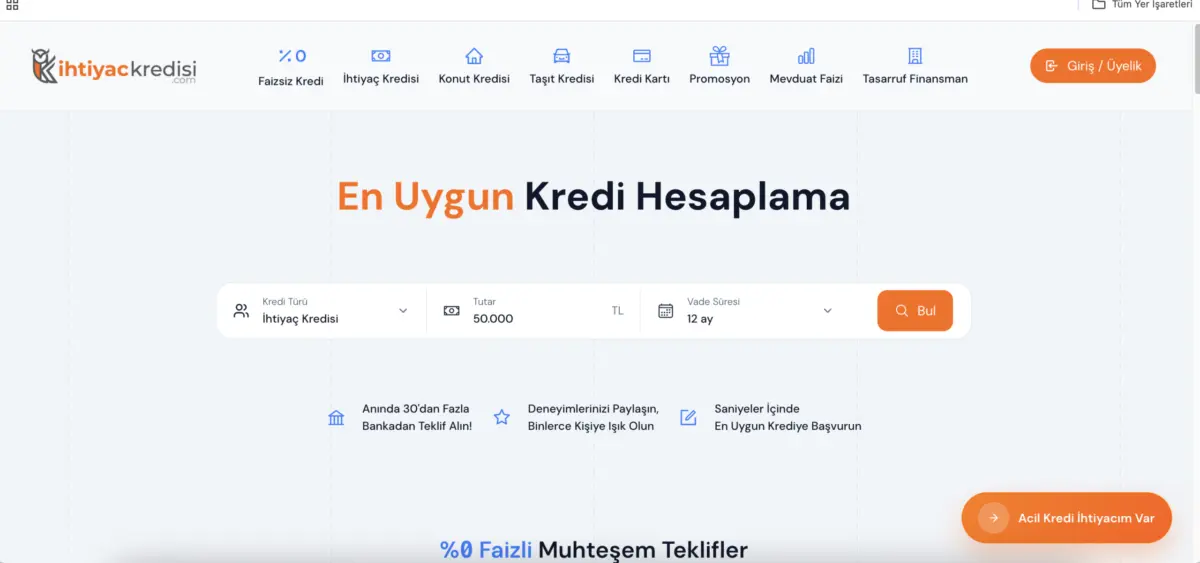
As the financial sector becomes increasingly digitized and competitive, platforms like ihtiyackredisi.com have emerged as essential resources. These guides serve to demystify the intricacies of loans, deposits, credit cards, and cash advances, presenting them in a format that is accessible to the average consumer. However, experts warn that when evaluating bank campaigns, consumers must look far beyond the initial interest rate. A truly informed decision requires a deep dive into the fine print, including loan terms, additional costs, insurance requirements, allocation fees, and specific repayment conditions that can significantly alter the total cost of credit.
The Strategy Behind Interest-Free Loan Campaigns
One of the most searched and discussed topics in the current financial market is the availability of interest-free loans. In an aggressive bid to expand their market share, many banking institutions have launched periodic campaigns offering zero-interest loans, interest-free cash advances, or "no-cost" credit products. These initiatives are primarily designed as "loss leaders"—tools used to attract new customers into the bank’s ecosystem with the hope of building a long-term relationship.
However, these attractive offers are rarely without strings attached. For a consumer to successfully navigate these campaigns, they must scrutinize several factors: the maximum loan amount (which is often limited), the maturity period (usually short-term), the required application channel (often restricted to mobile apps), and the strict requirement of being a "new customer." Furthermore, a loan that appears interest-free on the surface may still carry "file costs," mandatory insurance premiums, or other transaction fees. Therefore, the most accurate way to evaluate these offers is not by the interest rate alone, but by calculating the total repayment amount at the end of the term.
Zero-Interest and Promotional Credit Opportunities
The banking sector frequently updates its promotional portfolio, with "0% interest" loans being a staple of digital-first strategies. These campaigns are almost exclusively offered through mobile banking platforms to incentivize users to bypass traditional brick-and-mortar branches. By reducing overhead costs through digital onboarding, banks can afford to offer small-scale consumer loans or interest-free installments on cash advances to new users.
Prospective borrowers must remain vigilant regarding the duration of these offers. Interest-free campaigns are notoriously ephemeral; a deal available today may vanish tomorrow as banks hit their acquisition targets or adjust to new central bank policies. Because the terms and conditions vary wildly from one institution to another, a systematic comparison of the validity dates and application criteria is essential before committing to a specific bank.
The Mechanics of Interest-Free Cash Advances
For credit card holders, the "interest-free cash advance" represents a unique tool for managing short-term liquidity. This product allows a user to withdraw a portion of their credit limit or transfer it to their bank account, repaying it in installments without the standard high interest usually associated with cash withdrawals. For those facing a temporary cash flow gap, this can be a significantly more affordable alternative to a standard consumer loan.
Despite the "interest-free" label, the risks associated with cash advances remain. Users must be acutely aware of their payment deadlines, the number of allowed installments, and their remaining card limit. Most importantly, the "zero-interest" status is often contingent on perfect repayment behavior. If a payment is missed or delayed, banks typically revert to the maximum contractual interest rate, and additional late fees may be applied. Consequently, a product designed to save money can quickly become a financial burden if not managed with a strict repayment schedule.
Evaluating Interest-Free Consumer Loans for Emergency Needs
Interest-free consumer loans (İhtiyaç Kredisi) are generally tailored for individuals who require relatively small amounts of capital for a short duration. These are often used for medical bills, minor home repairs, or urgent travel. While the lack of interest makes them highly desirable, approval is not guaranteed.
Banks employ rigorous credit scoring models to evaluate the financial history and income stability of every applicant. Even if a bank advertises a zero-interest loan, they will only extend it to "prime" borrowers—those with a high credit score and a proven track record of timely payments. Therefore, before applying, consumers should ensure their financial profile is in good standing, as a rejected application can sometimes negatively impact one’s credit score.
Securing the Most Advantageous Mortgage Options
For many, the transition from tenant to homeowner is the most significant financial milestone of their lives. Finding the most suitable mortgage (Konut Kredisi) is a multi-dimensional challenge that extends well beyond the monthly installment figure. Because mortgages are long-term commitments—often spanning a decade or more—even a fractional difference in the interest rate or fees can result in a massive difference in the total amount paid over the life of the loan.
A comprehensive mortgage evaluation must include the appraisal fee (the cost of valuing the property), mandatory building and life insurance, file costs, and the "Annual Percentage Rate" (APR). Additionally, savvy borrowers look for flexibility in their contracts, such as the ability to make interim payments or the conditions for early closure of the debt. Making a well-researched choice in the mortgage market can lead to substantial long-term savings, potentially freeing up capital for other investments.
The Critical Importance of Loan Calculation
Before signing any credit agreement, performing a detailed loan interest calculation is an indispensable step. This process allows borrowers to visualize their monthly obligations and understand the full weight of the debt they are assuming. A clear calculation reveals the "true cost" of the loan, which includes the principal, the interest, and all associated taxes and fees.
It is common for some loans to advertise a lower monthly interest rate while hiding higher costs in the form of "allocation fees" or expensive insurance policies. By using comparison tools and calculators, consumers can focus on the "Total Repayment Amount" and the "Annual Effective Interest Rate." This level of transparency ensures that there are no surprises during the repayment period and allows for a fair comparison between different banks’ offerings.
Maximizing Returns with Time Deposit Accounts
While loans focus on the cost of borrowing, time deposits (Vadeli Mevduat) focus on the growth of capital. For those looking to preserve and grow their savings in a secure environment, deposit accounts offer a predictable return on investment. By locking a specific amount of money in the bank for a set period, the depositor earns interest, with the rate typically determined by the length of the "maturity" or "term."
When opening a time deposit account, the investor must consider the term length, the gross interest rate, and the "stopaj" (withholding tax) that will be deducted from the earnings. Whether a consumer chooses a 32-day "overnight" style account or a longer one-year term depends on their personal liquidity needs and their expectations of future interest rate movements. Understanding the net gain—what actually lands in the account after taxes—is the key to successful savings management.
The Role of Daily Interest and Flexible Liquidity
For individuals who want their money to work for them without losing immediate access to it, daily interest accounts and flexible deposit products have become increasingly popular. Daily interest calculation allows the bank to apply interest to the balance every night, meaning the user can withdraw their money at any time without losing all the accrued interest, unlike traditional fixed-term accounts.
These products are particularly useful for managing "floating" capital—money that might be needed for an upcoming payment but is currently idle. While the interest rates on daily accounts may be slightly lower than fixed-term deposits, the benefit of liquidity often outweighs the difference for many users. However, it remains vital to check for minimum balance requirements or specific conditions that must be met to earn the daily rate.
Foundations of Modern Banking: Account Management
At the heart of all financial activity is the humble bank account. From receiving salaries and making rent payments to executing wire transfers and paying utility bills, the bank account is the primary gateway to the modern economy. However, not all accounts are created equal.
When selecting a bank for a primary account, consumers should evaluate the fee structure for EFT (Electronic Funds Transfer) and FAST (Instant Transfer) transactions. In an era where mobile banking is the norm, the quality and security of a bank’s digital application are just as important as the physical proximity of its branches. Many digital-only banks now offer accounts with zero maintenance fees and free money transfers, forcing traditional banks to reconsider their fee models to remain competitive.
The Practical Advantages of Debit Cards
The debit card (Banka Kartı) remains one of the most practical payment tools in a consumer’s wallet. Unlike a credit card, which involves borrowing money from the bank, a debit card draws directly from the user’s current account. This provides a built-in mechanism for budget control, as one can only spend what they actually possess.
Beyond simple ATM withdrawals, modern debit cards are integrated into global payment networks, allowing for secure online shopping and international use. Many banks have also introduced "loyalty points" or cashback rewards for debit card transactions, similar to those found on credit cards. When opening a new account, it is worth investigating which bank offers the best "perks" for their debit card users, as these small rewards can add up over time.
Financing Consumer Goods: The Rise of Shopping Loans
In recent years, the "Shopping Loan" (Alışveriş Kredisi) has emerged as a specialized financial product, often integrated directly into the checkout process of major e-commerce platforms and electronics retailers. These loans are designed to finance specific purchases, such as smartphones, laptops, or furniture, providing an alternative to credit card installments.
The primary advantage of a shopping loan is that it often offers a longer repayment period than what is legally allowed for credit card installments on certain products. However, because these are essentially mini-consumer loans, they are subject to the same interest rate scrutiny and credit checks. Consumers should compare the total cost of the shopping loan against the option of saving up for the purchase or using existing credit card limits.
Conclusion: The Power of Informed Comparison
The modern banking landscape is characterized by its complexity and the speed at which it evolves. Whether a consumer is looking for the "cheapest" loan, the "highest" deposit return, or the "most flexible" bank account, the path to success is paved with diligent research and comparison. Relying solely on marketing slogans or headline interest rates is a strategy fraught with hidden costs.
Resources like ihtiyackredisi.com play a vital role in this ecosystem by providing the tools and information necessary for consumers to take control of their financial futures. By understanding the nuances of APR, the conditions of interest-free campaigns, and the long-term impact of mortgage fees, individuals can make decisions that align with their specific goals and financial health. In the world of finance, knowledge is not just power—it is the difference between a mounting debt and a growing fortune.
Note: This report is for informational purposes only. Before applying for any credit, deposit, or banking product, it is imperative to review the current campaign conditions, official interest rates, and legal disclosures provided by the respective financial institutions.