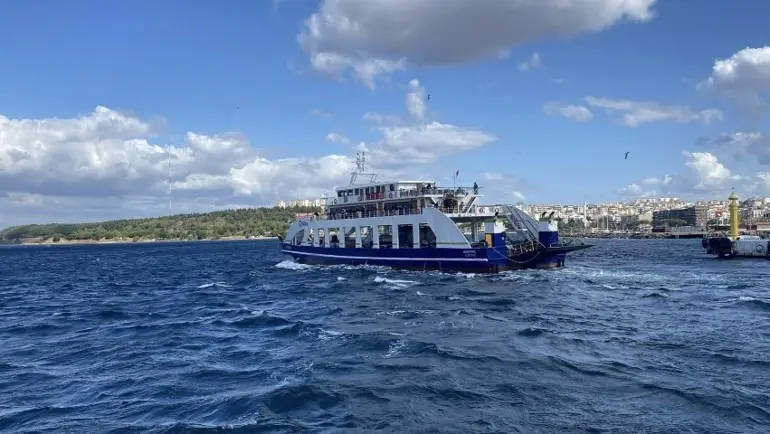
Severe weather conditions sweeping across the northern reaches of the Aegean Sea have brought maritime transportation along key island routes to a complete standstill. GESTAŞ, the primary maritime transport authority responsible for vehicle and passenger transit throughout the Çanakkale Strait and the neighboring island routes, officially announced that all scheduled ferry services connecting the Turkish mainland to the islands of Gökçeada and Bozcaada have been canceled for tomorrow due to violent storm conditions making sea navigation unsafe.
The suspension impacts both the Kabatepe-Gökçeada and Geyikli-Bozcaada ferry lines, cutting off the primary marine linkages that connect these islands to the mainland province of Çanakkale. Local port authorities and maritime officials reached the decision after meteorological forecasts indicated dangerously high wind velocities and adverse sea conditions throughout the northern Aegean basin, creating hazardous sailing environments for marine vessels.
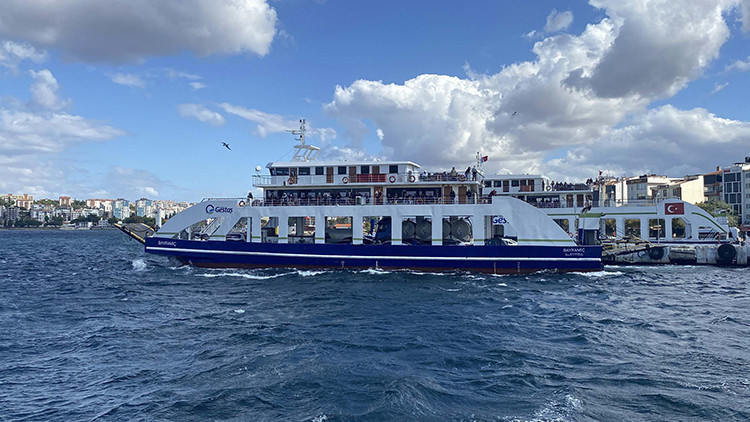
Severe Weather Conditions Trigger Full Maritime Shutdown Across Island Lines
The official announcement from GESTAŞ (GESTAŞ Deniz Ulaşım A.Ş.) confirmed that the anticipated deterioration in weather patterns across the Northern Aegean Sea necessitated an immediate and total suspension of ferry sailings scheduled for tomorrow on both critical island routes. According to statements released by the transport operator, all trips between the port of Kabatepe and Gökçeada, as well as those between the port of Geyikli and Bozcaada, have been removed from the operational schedule for the entire day.
Meteorological evaluations conducted for the region highlighted gale-force winds, elevated wave action, and unpredictable sea currents in the open waters separating the mainland coastal ports from the offshore islands. Under such adverse hydrometeorological circumstances, attempting scheduled marine crossings presents substantial risks to vessel stability, passenger safety, and harbor dockings. GESTAŞ emphasized that the decision to halt operations was taken as a proactive preventive measure prioritizing the safety of passengers, vehicle drivers, crew members, and maritime assets.
The regional transport authority indicated that operational teams are continuing to monitor real-time weather developments and oceanographic updates provided by meteorological services. Should sea conditions improve or stabilize earlier than projected, revised operational announcements will be shared promptly with the public. However, for the immediate duration of the forecasted storm event, all scheduled maritime transit along the two island corridors remains completely canceled.
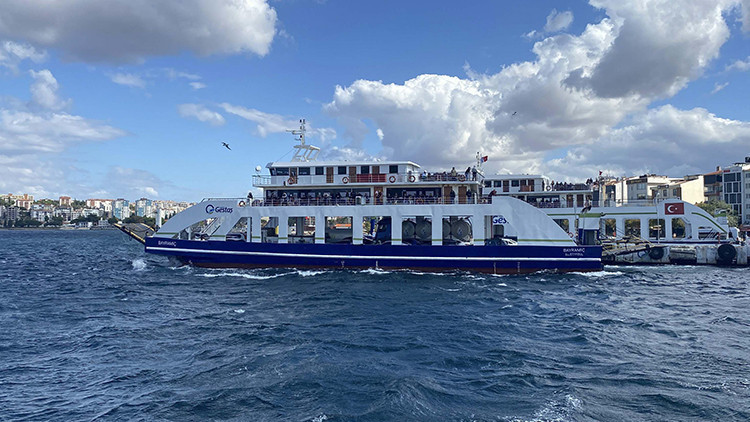
Essential Lifelines Connecting Mainland Çanakkale to the North Aegean Islands
The disruption highlights the vulnerable nature of island connectivity in the northern Aegean region, where local communities and commercial activities rely almost exclusively on maritime transport for daily movement. Gökçeada, recognized as Turkey’s largest island, relies on the port of Kabatepe, located on the southern stretches of the Gallipoli (Gelibolu) Peninsula, as its primary conduit for passenger travel, food supplies, medical transit, and cargo logistics. The distance between Kabatepe and Gökçeada requires vessels to navigate open sea waters that are frequently exposed to unshielded winds sweeping across the northern Aegean basin.
Similarly, Bozcaada—a historically and economically significant island renowned for its local agriculture, viticulture, and seasonal tourism—is linked to the mainland via the port of Geyikli, situated within the Ezine district of Çanakkale province. While the physical separation between Geyikli and Bozcaada is shorter than that of the Gökçeada crossing, the narrow channel between the island and the Anatolian coastline creates localized wind funnels and turbulent sea channels during severe weather events.
GESTAŞ operates a fleet of roll-on/roll-off (Ro-Ro) passenger and car ferries along these routes, providing continuous daily connectivity under standard weather conditions. These vessels serve as the vital economic and logistical backbone for both islands, transporting everything from private vehicles, emergency services, and municipal repair crews to daily consumer goods, agricultural products, and fuel tankers. When severe storms force a complete shutdown of these ferry routes, the physical isolation of the islands becomes immediate, underscoring the absolute dependency of island life on favorable marine weather.

Meteorological Dynamics and Maritime Safety in the Northern Aegean
The northern sector of the Aegean Sea is geographically recognized as one of the most dynamic and meteorologically sensitive marine corridors in the Mediterranean basin. The region is particularly susceptible to powerful northeasterly winds, locally referred to as Poyraz, which regularly intensify during seasonal weather transitions in autumn and winter. These atmospheric systems build substantial momentum as they push southward from the Black Sea, through the Çanakkale Strait (the Dardanelles), and into the broader Aegean waters.
When gale-force winds align with open-water fetch lengths in the Northern Aegean, wave heights can rise rapidly within a brief timeframe, creating steep, short-period swells. For regional passenger and car ferries, such wave profiles introduce severe vessel rolling and pitching, complicating open-sea navigation and making harbor berthing maneuvers at exposed piers—such as those at Kabatepe, Gökçeada, Geyikli, and Bozcaada—extremely dangerous.
Port captains and maritime safety managers operate under strict regulatory protocols that govern permissible wind speeds, wave height thresholds, and visibility parameters for commercial passenger vessels. When forecasted or measured wind speeds exceed safe operational limits, maritime law mandates the suspension of services to eliminate the risk of structural vessel damage, passenger injury, or maneuvering accidents while docking at exposed island breakwaters.

Socio-Economic Impact on Island Communities and Traveler Advisories
The unexpected shutdown of maritime routes creates widespread ripple effects across the daily lives of island residents, local business owners, commuters, and travelers. Complete ferry suspensions interrupt daily logistical supply chains, delaying the delivery of fresh goods, commercial freight, postal mail, and industrial materials. Regional logistics operators, distribution networks, and local merchants are forced to pause transport schedules until maritime corridors reopen.
For permanent island residents, weather-induced ferry cancellations require immediate adaptations to daily routines. Appointments on the mainland—including non-emergency medical consultations, administrative visits, and educational commitments—must be postponed. Local emergency services work in close coordination with provincial healthcare authorities and coastal safety teams to ensure that urgent medical evacuations can still be evaluated using specialized emergency craft or helicopter transport if sea conditions make standard ferry transit impossible.
GESTAŞ has advised all prospective travelers, freight haulers, and island residents to monitor official communication channels closely for updates regarding service restoration. The company regularly updates its online portal, automated telephone information systems, and official social media platforms to provide real-time notification regarding route statuses, rescheduled trips, and harbor conditions. Passengers holding advance travel reservations or planning travel along the Kabatepe-Gökçeada and Geyikli-Bozcaada lines are strongly urged to verify operational statuses before setting out toward mainland ports.

As the storm system continues its sweep across the northern Aegean, maritime officials, port crews, and local authorities in Çanakkale remain on standby. Ferry operations across the impacted routes will resume only when wind speeds diminish to safe levels and marine conditions permit the safe navigation and docking of passenger vessels across the islands.