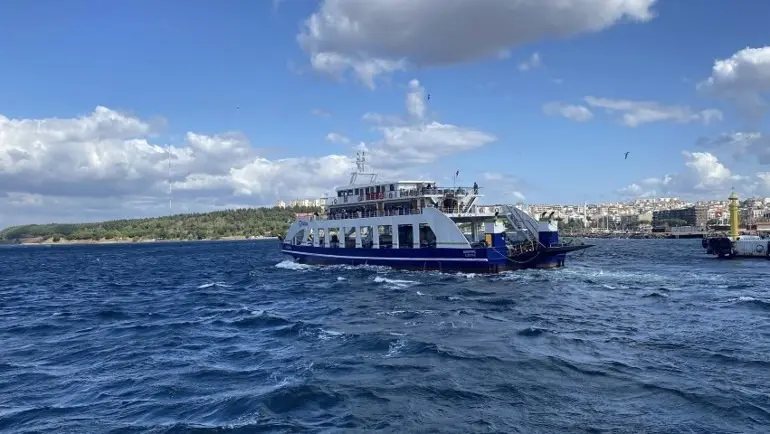
Adverse weather conditions and severe gales sweeping across the northern Aegean Sea have severely disrupted maritime transit, forcing regional authorities to order a complete temporary halt to essential ferry services connecting mainland Turkey to the islands of Gökçeada and Bozcaada.
According to official announcements and field reports from Demirören News Agency (DHA) correspondent Nazif Cemhan Şen in Çanakkale, regional maritime transport company GESTAŞ confirmed the cancellation of all scheduled ferry sailings on the affected island routes for the upcoming day due to safety hazards posed by the mounting storm.
The preventative cancellations affect two of the primary sea corridors in the province of Çanakkale: the Kabatepe–Gökçeada route and the Geyikli–Bozcaada route. Maritime officials indicated that deteriorating sea conditions, marked by powerful winds and heavy swell activity in the open waters of the northern Aegean basin, made safe docking, maneuvering, and passenger transport impossible along these routes.
Widespread Disruption to Island Maritime Connections
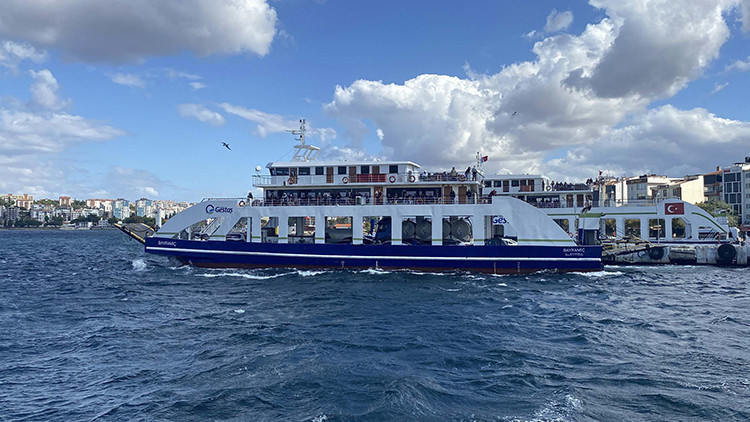
The decision to ground all vessel operations came after updated meteorological forecasts warned of high-velocity winds and unstable sea states across the northern Aegean region. GESTAŞ Deniz Ulaşım A.Ş., the primary maritime operator responsible for passenger and vehicle transport across the Çanakkale Strait and its neighboring island territories, formally issued a travel advisory notifying the public of the blanket cancellations across the two major island lines.
In its statement, the transport agency noted that all scheduled round-trip voyages between Kabatepe port on the Gallipoli Peninsula and the island of Gökçeada, as well as those between the coastal town of Geyikli in the Ezine district and the island of Bozcaada, were officially suspended.
The service disruptions come as a direct response to gale-force winds that have created rough conditions across the open waters of the Aegean. Harbor masters and maritime safety inspectors routinely monitor wind speeds, wave heights, and visibility parameters before granting clearance for commercial passenger and vehicle ferries. When sea conditions breach established safety thresholds, operators are legally mandated to hold vessels in port to protect passengers, crew members, and maritime assets.
The administrative center of Çanakkale, which oversees these territorial waters, experiences frequent seasonal atmospheric shifts during the autumn months. High-pressure and low-pressure systems moving across the Mediterranean and Black Sea basins often converge over the Aegean Sea and the Dardanelles, resulting in sudden, powerful wind events that directly impact regional ferry operations.
The Key Corridors: Kabatepe–Gökçeada and Geyikli–Bozcaada
The two ferry corridors affected by the storm play an indispensable role in maintaining continuous travel and commerce between mainland Turkey and its offshore Aegean islands. Each route presents unique operational considerations during periods of severe weather.
The Kabatepe–Gökçeada line operates from Kabatepe harbor, situated on the western coast of the historic Gallipoli Peninsula, and crosses open waters to reach Gökçeada, Turkey’s largest island. Because this sea route traverses unprotected stretches of the northern Aegean Sea, vessels navigating the channel are fully exposed to strong northerly and northwesterly winds. Heavy wave action in this open corridor creates significant navigation challenges, particularly when ferries attempt to dock at the island’s Kuzu Harbor. Under severe gale conditions, maintaining vessel stability during loading and unloading maneuvers becomes hazardous, prompting early precautionary closures by transport authorities.

Similarly, the Geyikli–Bozcaada line links the mainland port in the Geyikli neighborhood of Ezine to Bozcaada, a major island municipality known for its agricultural, historical, and tourism sectors. Although the physical distance between Geyikli and Bozcaada is shorter than the Gökçeada crossing, the narrow channel separating the island from the Anatolian mainland is prone to intense local currents and wind funnels. When strong gales hit the Bozcaada Channel, sea turbulence rises rapidly, making the approach to Bozcaada’s harbor perilous for passenger ferries and roll-on/roll-off (Ro-Ro) vehicle transports.
Because both island destinations rely exclusively on sea transport for vehicular and bulk cargo movements, any operational suspension instantly cuts off the primary physical connection between the mainland and these remote communities.
Regional Reliance and the Logistics of Island Transport
For the residents of Gökçeada and Bozcaada, ferry cancellations represent far more than a simple travel inconvenience. The sea routes managed by GESTAŞ serve as critical lifelines that sustain daily life, economic activity, and public services on both islands.

On a daily basis, these ferries carry essential supplies from mainland Çanakkale, including fresh produce, packaged foods, fuel, building materials, pharmaceutical goods, and general freight. Commercial haulers and logistics providers plan their delivery routes around fixed GESTAŞ ferry departure schedules. When a full-day cancellation is implemented, supply chains are immediately paused, requiring commercial vendors and island businesses to adjust their operational logistics until weather conditions clear and sailings resume.
In addition to freight movement, the ferry networks support local commuting. Island residents regularly travel to mainland Çanakkale for specialized medical appointments, legal proceedings, administrative business, and higher education. Likewise, civil servants, teachers, healthcare workers, and maintenance personnel stationed on the islands rely on regular morning and evening sailings to fulfill their duties.
Emergency medical transport is another critical operational area impacted by maritime conditions. While standard ferry services are halted during severe weather, regional authorities maintain emergency protocols—such as coordinating dedicated sea ambulances or military and coast guard helicopter evacuations—when urgent medical transfers to mainland hospitals become necessary during storm closures.

Tourism operators on Bozcaada and Gökçeada also closely monitor ferry operations. Both islands draw visitors seeking historical sites, natural landscapes, and coastal leisure. Storm-induced ferry cancellations require travel agencies, hoteliers, and visitors to rearrange itineraries, extend accommodation bookings, or delay planned trips until maritime transit reopens.
Maritime Safety Standards and Northern Aegean Weather Dynamics
The northern Aegean Sea is historically recognized by mariners for its challenging meteorological patterns, particularly during seasonal transitions in autumn and winter. The regional marine environment is frequently shaped by powerful northerly winds, known regionally as the Poyraz, as well as strong southerly storms, known as the Lodos.
These prevailing wind patterns can generate steep, close-interval waves that create severe dynamic stress on commercial vessels. In addition to high sea states, storm conditions in the northern Aegean often bring sudden gusts, heavy rain squalls, and reduced marine visibility, all of which compound navigational hazards in busy sea lanes near the mouth of the Dardanelles.
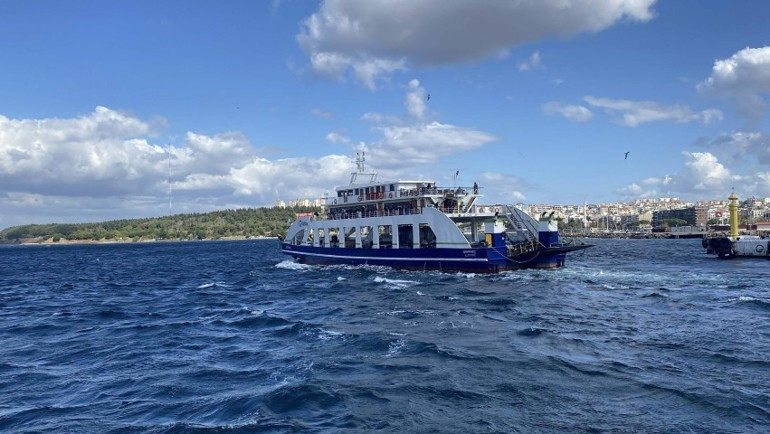
GESTAŞ operates under strict maritime safety regulations monitored by national harbor authorities and international maritime safety codes. Decisions to cancel scheduled sailings are informed by real-time data gathered from coastal weather stations, marine radar, offshore wave buoys, and official updates issued by the Turkish State Meteorological Service.
When wind speeds exceed operational limits or wave heights threaten ship stability and dock infrastructure, safety protocols mandate an immediate suspension of service. Transport officials emphasize that taking preventative action prior to the onset of peak storm conditions prevents vessels from becoming stranded at sea or experiencing emergencies in open water.
In the wake of the latest cancellations, GESTAŞ advised all travelers, freight operators, and island residents to monitor official company communication channels, website alerts, and mobile updates for real-time information regarding schedule adjustments. Company representatives indicated that normal sailing schedules on the Kabatepe–Gökçeada and Geyikli–Bozcaada lines would be restored as soon as weather conditions moderate and coastal harbor masters issue safe navigation clearances.