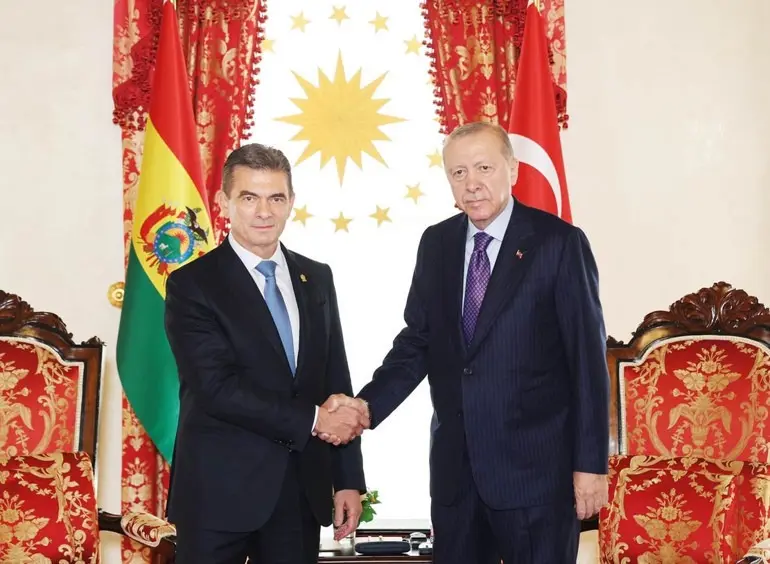
In a significant diplomatic move highlighting Turkey’s expanding influence in Latin America, President Recep Tayyip Erdoğan hosted Bolivian President Rodrigo Paz Pereira at the Presidential Dolmabahçe Working Office in Istanbul on November 15, 2026. The high-level meeting, characterized by a spirit of mutual cooperation and a shared vision for transcontinental partnership, focused on a wide range of bilateral issues, regional developments, and the potential for a robust strategic alliance between the two nations.
The arrival of President Paz Pereira in Istanbul marks a pivotal moment in the diplomatic history of Turkey and Bolivia, as both nations seek to diversify their international partnerships and explore new avenues for economic and technological exchange. The reception at Dolmabahçe, a venue often reserved for high-stakes international diplomacy due to its historical and symbolic importance, underscored the gravity with which the Turkish administration views its relations with Bolivia.
A Ceremonial Welcome and High-Level Deliberations
The official visit commenced with a formal welcoming ceremony at the Dolmabahçe Working Office, located on the scenic banks of the Bosphorus. President Erdoğan greeted the Bolivian leader with full military honors, reflecting the state-level importance of the visit. Following the national anthems of both countries, the two presidents introduced their respective delegations, which included key ministers and high-ranking officials from both the Turkish and Bolivian governments.
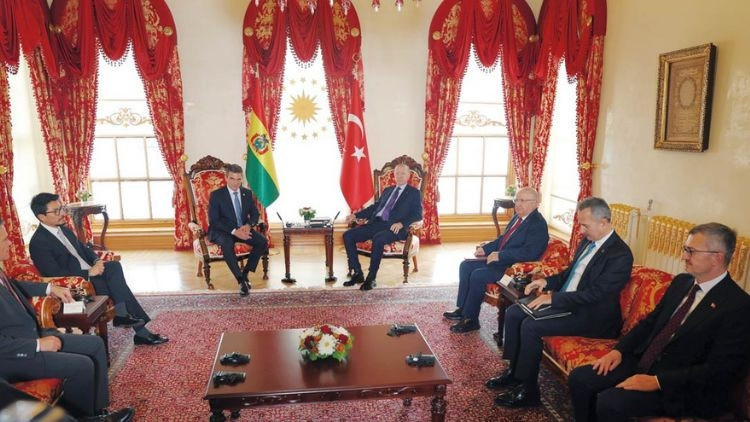
After the ceremonial proceedings, the leaders transitioned to a private, one-on-one meeting to discuss the nuances of the bilateral relationship. According to a statement released by the Turkish Presidency’s Directorate of Communications, the discussions were comprehensive, covering the current state of Turkey-Bolivia relations as well as broader regional issues affecting both the Middle East and South America. The meeting provided a platform for both leaders to align their perspectives on global challenges and to identify specific sectors where cooperation could be accelerated.
President Erdoğan emphasized that Turkey views Bolivia as a vital partner in Latin America. Over the past decade, Turkey has pursued a proactive "Opening to Latin America" policy, seeking to increase its diplomatic presence, trade volume, and cultural exchange with the continent. The visit of President Paz Pereira is seen as a continuation of this strategic trajectory, aimed at cementing Turkey’s role as a reliable partner for South American nations looking for alternative economic and defense collaborators.
Deepening Cooperation in the Defense Industry
A primary focus of the summit was the potential for deep-seated cooperation in the defense industry. The presence of high-ranking Turkish defense and security officials during the talks signaled the priority given to this sector. National Defense Minister Yaşar Güler and the President of the Defense Industry Agency (SSB), Haluk Görgün, were among the key participants in the expanded meetings.
President Erdoğan noted that the defense industry stands out as a particularly promising field for bilateral engagement. Turkey has emerged as a global leader in defense technology, particularly in the production of unmanned aerial vehicles (UAVs), armored vehicles, and naval platforms. During the discussions, the Turkish side expressed its readiness to share its technological expertise and manufacturing capabilities with Bolivia.

The deepening of defense ties is not merely seen as a commercial opportunity but as a means of enhancing Bolivia’s national security and self-sufficiency. By fostering a partnership in this area, both nations aim to create a framework for technology transfer and joint development projects that could serve as a model for Turkey’s defense relations with other Latin American countries. The involvement of Haluk Görgün, who oversees Turkey’s defense procurement and export strategies, suggests that the talks moved beyond generalities and into the realm of specific technical and industrial cooperation.
The "Win-Win" Philosophy and Economic Integration
Central to President Erdoğan’s diplomatic rhetoric was the concept of a "win-win" approach. He articulated that the agreements currently on the agenda would serve to strengthen the "legal and contractual basis" of the bilateral relationship, ensuring that economic growth and investment are mutually beneficial. This philosophy is intended to move away from traditional donor-recipient dynamics, instead fostering a partnership based on equality and shared prosperity.
One of the most prominent economic sectors discussed was mining. Bolivia, known for its vast mineral wealth, including significant deposits of lithium, silver, and tin, presents a natural point of synergy for Turkish industry. Turkey, which has been seeking to diversify its resource supply chains to support its growing industrial and energy needs, views the Bolivian mining sector as a strategic area for investment.
President Erdoğan indicated that the two countries would continue to take concrete steps in the mining sector and other potential areas of growth. This includes not only the extraction of raw materials but also the potential for joint ventures in processing and manufacturing. By combining Bolivia’s natural resources with Turkey’s industrial capacity and logistical advantages, the two leaders hope to create a value chain that benefits both economies.

Furthermore, the discussions touched upon the necessity of finalizing several pending agreements that would provide the necessary legal protections for investors. These include treaties on the prevention of double taxation and the reciprocal promotion and protection of investments. Establishing such a framework is considered essential for encouraging the Turkish private sector to engage more deeply with the Bolivian market.
Regional Stability and Diplomatic Coordination
Beyond economic and defense matters, the two presidents exchanged views on regional and international issues. As Turkey navigates complex geopolitical dynamics in its own neighborhood, and as Bolivia plays an active role in South American regional organizations, the leaders found common ground on the importance of national sovereignty and multilateral diplomacy.
The presence of Burhanettin Duran, the President of Communications (and a noted academic in international relations), highlighted the importance Turkey places on the strategic communication of its foreign policy goals. The meeting served to synchronize the diplomatic narratives of both nations, particularly regarding their shared commitment to a more equitable global order.
President Erdoğan expressed his belief that a stronger relationship between Turkey and Bolivia would contribute to regional stability and provide a counterbalance to traditional power structures. By building bridges across the Atlantic, both nations are seeking to enhance their strategic autonomy and ensure that their voices are heard on the global stage.

A Multi-Faceted Delegation and Future Outlook
The high-level nature of the Turkish delegation—including the Minister of National Defense, the Communications Director, and the head of the Defense Industry Agency—demonstrates the multi-dimensional approach Turkey is taking toward its relations with Bolivia. This was not merely a diplomatic courtesy visit but a working summit aimed at producing tangible results across various sectors of governance.
The Dolmabahçe meeting is expected to be followed by a series of technical-level visits and joint committee meetings to implement the decisions reached by the two presidents. As both countries look toward the future, the emphasis remains on building a sustainable and resilient partnership that can withstand global economic fluctuations and geopolitical shifts.
The summit concluded with a sense of optimism regarding the future of Turkey-Bolivia relations. President Erdoğan’s remarks reflected a long-term commitment to the partnership, positioning Bolivia as a cornerstone of Turkey’s broader strategy in the Western Hemisphere. For President Paz Pereira, the visit represented an opportunity to tap into Turkey’s technological and industrial prowess, providing Bolivia with a modern partner for its national development goals.
As the two leaders emerged from their deliberations, the message was clear: Turkey and Bolivia are committed to a path of increased cooperation, driven by mutual respect, a "win-win" economic strategy, and a shared interest in fostering a more interconnected and multipolar world. The discussions in Istanbul have laid the groundwork for a new chapter in trans-Atlantic diplomacy, one that promises to bring the people and economies of Turkey and Bolivia closer than ever before.