A fierce wave of street unrest and civil turmoil that erupted in France has rapidly cascaded across international borders into multiple European nations, prompting emergency government meetings, extensive security deployments, and stern condemnations from continent leaders. In Italy, the northern economic hub of Milan endured a second consecutive night of widespread disorder and property destruction, pushing Italian Prime Minister Giorgia Meloni to convene an urgent security gathering. At the same time, French President Emmanuel Macron issued a forceful reprimand against agitators within his own country, warning that those actively seeking to tear down the French Republic would face decisive legal reckoning.
What began as massive domestic demonstrations has increasingly taken on a transnational dimension. European governing officials have voiced mounting apprehension that extremist networks, particularly radical far-left formations, are exploiting socioeconomic grievances to wage organized disruption across urban centers. With hundreds of thousands taking part in marches, clashes have left public spaces charred, commercial avenues looted, and law enforcement agencies under severe operational strain from Paris to Rome, Lisbon, and Tirana.
Macron Calls for National Unity Amid Escalating Clashes
Addressing the nation in the wake of catastrophic weekend disturbances, French President Emmanuel Macron launched an urgent appeal for civic cohesion, emphasizing that lawlessness and street warfare will not go unpunished. Macron firmly blamed the descent into unbridled violence on marginal far-left agitators, instigators, and opportunistic criminals who, he stated, have systematically hijacked public protests to destabilize civil institutions.
The French head of state’s interventions came after a staggering weekend that saw an estimated half a million demonstrators mobilize nationwide. The scale of the turmoil quickly overwhelmed conventional crowd-control measures in multiple municipalities, resulting in approximately 2,400 arrests across France. The human toll among emergency responders was equally pronounced, with around 1,000 police officers and gendarmes sustaining injuries while trying to contain the unrest and disperse aggressive crowds.

"Looking at these images, all of us asked how French citizens could do this to France," President Macron stated during his remarks. He stressed that societal frustrations could not serve as an apology for acts of destruction, adding, "Nothing justifies it, nothing explains it, nothing excuses it. Those who loot will pay for the damages, and those who try to destroy the Republic will be held to account."
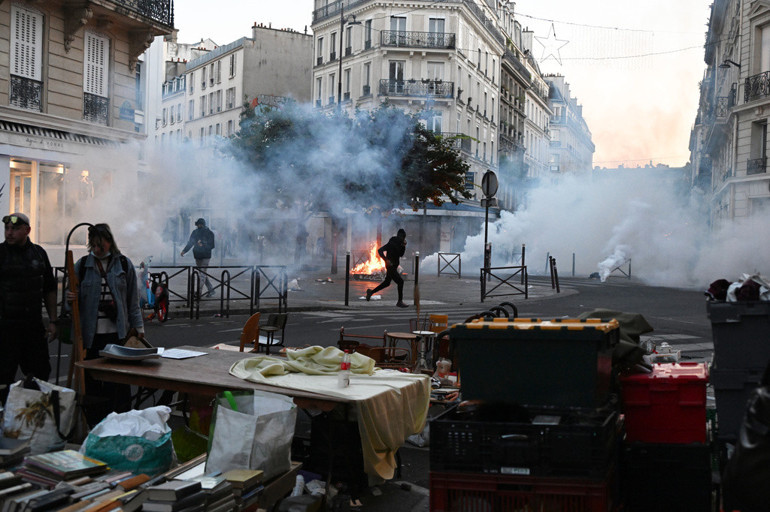
Macron’s public position reflects growing anxiety within French political circles over the sheer ferocity of recent gatherings. In urban districts throughout France, peaceful assemblies addressing systemic concerns have repeatedly devolved into intense confrontations with police, featuring the destruction of commercial property, setting fires, and targeted strikes against civic buildings.

A Second Night of Chaos Grips Milan
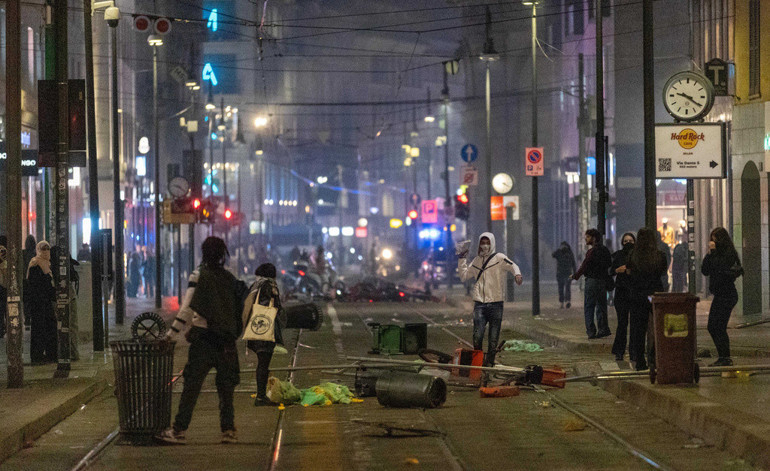
The turbulence quickly spilled over the Alps into northern Italy, where Milan experienced its second night of severe clashes and property destruction over the weekend. What had initially begun on Saturday as an authorized civic demonstration addressing the escalating cost of living quickly splintered as radical elements began clashing with law enforcement on the periphery of the main rally.
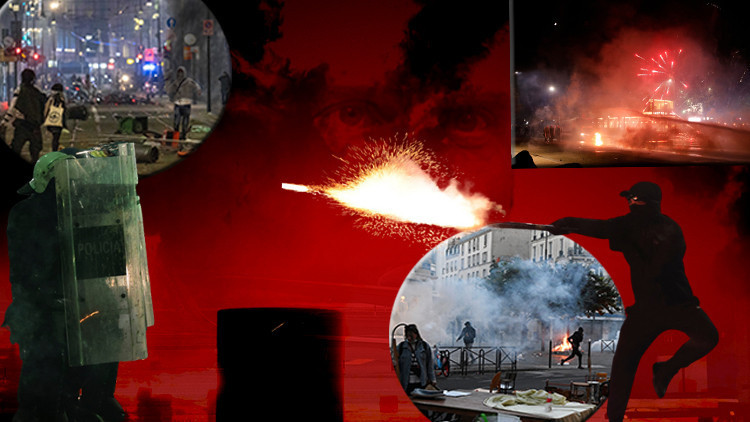
The unrest was not confined strictly to Milan; neighboring northern hubs such as Bologna and Turin also witnessed parallel disruptions, underscoring the regional contagion of civil dissent. By Sunday evening, central Milan returned to a state of outright friction. Italian police, seeking to break up combative factions congregating in public squares, deployed sustained barrages of tear gas and high-powered water cannons to disperse the gatherings.

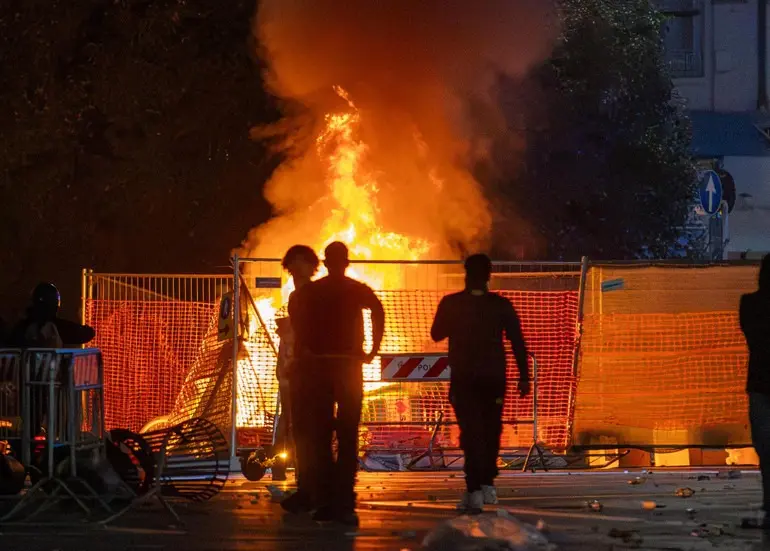
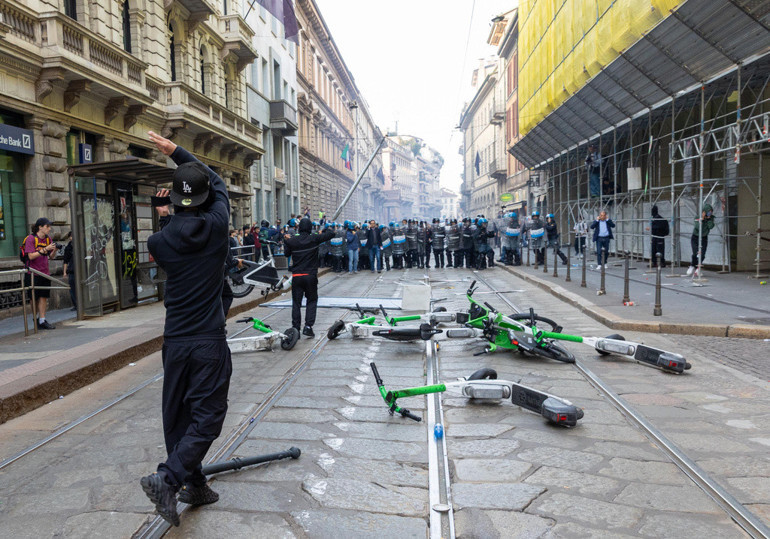
Images and footage gathered from the scene depicted crowds of predominantly masked youths engaging in direct clashes, hurling bottles, debris, and solid projectiles directly at tactical police vehicles. The unrest caused visible destruction through several premier commercial areas branching outward from Milan’s historic Duomo square. A prominent supermarket was overrun and thoroughly ransacked, while surrounding sidewalks were left strewn with overturned waste containers, scorched barricades, and wrecked electric scooters and bicycles.
Milan Mayor Giuseppe Sala expressed acute alarm over the scenes unfolding in the city’s heart, identifying the unrest as part of an unsettling international trend rather than an isolated municipal dispute.
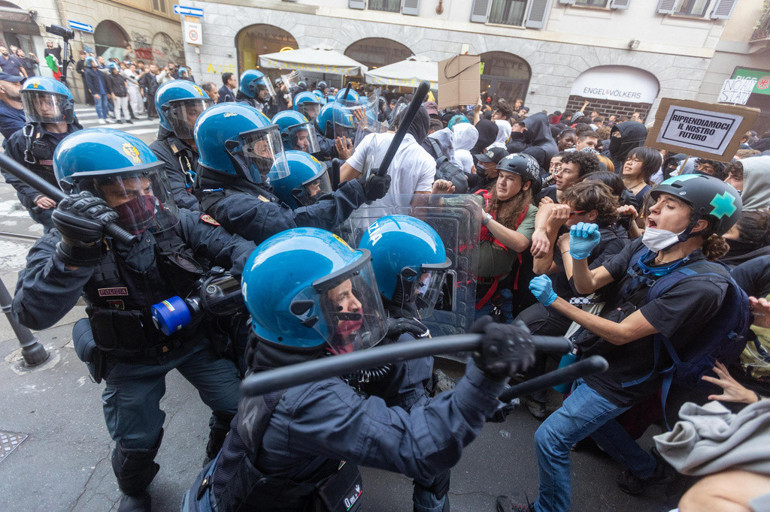
"I saw broken shop windows, ransacked stores, and terrified citizens," Mayor Sala observed after assessing the physical aftermath. "What is happening here is what we are seeing across many cities of the world. I am deeply concerned because this is a new phenomenon that stems from an international situation and feeds off of itself."
Italian Leadership Condemns Urban Warfare and Cities Held Hostage
The violent disturbances in Milan prompted a direct and uncompromising response from Rome. According to reports, Italian Prime Minister Giorgia Meloni sharply criticized the perpetrators, characterizing the violent factions as rogue elements intent on exploiting legitimate freedoms for criminal disruption.
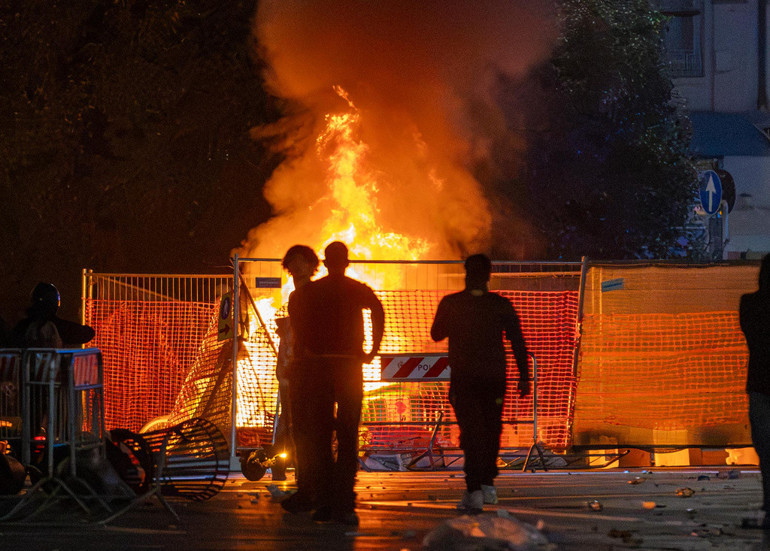
Prime Minister Meloni convened an emergency security meeting to address the deteriorating public order, drawing parallels between the scenes in Milan and the widespread looting and lawlessness witnessed across Paris. In a statement published on the social media platform X, the Italian leader drew a firm line between democratic expression and criminal chaos.
"To demonstrate is a right," Meloni wrote. "Burning and destroying our cities is not."
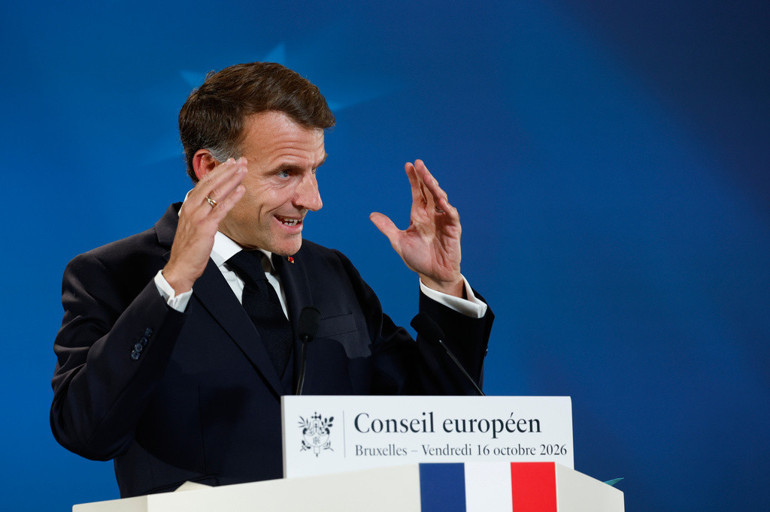
The Prime Minister explicitly described the perpetrators as bandits using legitimate assemblies merely as cover to sow chaos, launch targeted assaults on law enforcement officers charged with maintaining public safety, and hold entire cities hostage.
Meloni’s sentiments were echoed by high-ranking members of her cabinet, who presented a unified front against the rioting. Deputy Prime Minister Matteo Salvini, who heads the right-wing League party, offered an equally stark assessment of the unrest, publicly describing the recurring clashes, property destruction, and direct assaults against police as scenes resembling full-blown urban warfare.
Demonstrations Shake Lisbon and Tirana
Beyond France and Italy, the broader European continent has seen simultaneous outbreaks of civil discontent, with substantial public demonstrations taking place in Portugal and Albania, each fueled by local socioeconomic strains.
In the Portuguese capital of Lisbon, thousands converged on the landmark Rossio Square in the city’s historic center. The demonstrators gathered to voice mounting frustration over the country’s severe housing shortage, steep rent increases, and persistently low wage levels. Banners carried by participants demanded substantial hikes in statutory wages and state retirement pensions, while drawing urgent attention to the steep rise in general housing expenses and fuel costs that continue to squeeze household budgets across the country.
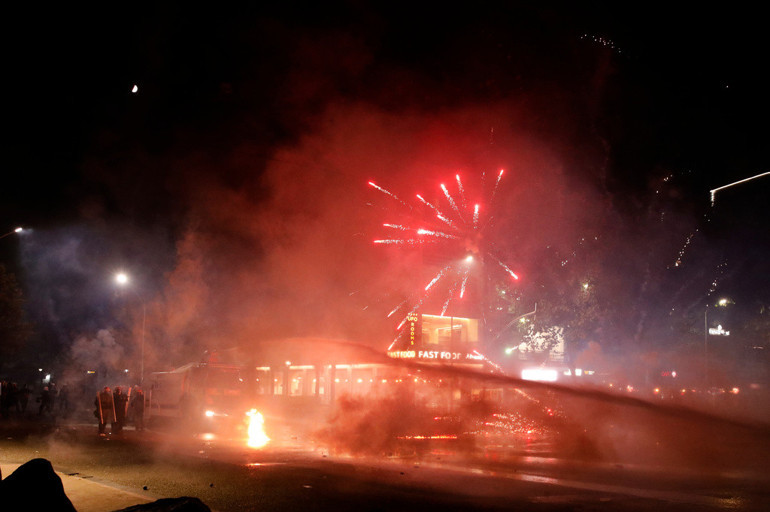
Meanwhile, in Tirana, the capital of Albania, tensions reached a critical boiling point over the weekend. According to reports, Saturday marked the fifth consecutive day of sustained clashes between demonstrators and police forces. The demonstrations in Tirana were heavily populated by masked youths, including large contingents of high school and university students, who clashed fiercely with state authorities outside the Ministry of Education.
Protesters hurled stones and petrol bombs at lines of security personnel guarding the government complex, prompting police units to retaliate with tear gas and water cannon trucks to force the crowds backward. The unrest in Albania represents the culmination of political volatility that took root during the summer months, when initial public rallies against alleged state corruption steadily evolved into an expansive anti-government protest movement demanding the formal resignation of Prime Minister Edi Rama.
Premeditated Tactics and Organized Warfare
Across the affected European cities, authorities and civic leaders have expressed particular shock at the degree of preparation, tactical sophistication, and logistical coordination exhibited by the most militant demonstrators. In France, one of the most visible and symbolic casualties of the unrest was the historic city hall in Limoges. The 143-year-old landmark saw its iconic clock tower collapse into flames following a calculated, aggressive assault.
Limoges Mayor Guillaume Guerin dismissed notions that the destructive acts were spontaneous outbursts committed by disaffected local youths. Instead, Guerin directly accused extremist factions of manipulating young people while deploying organized tactical methods against civic infrastructure.
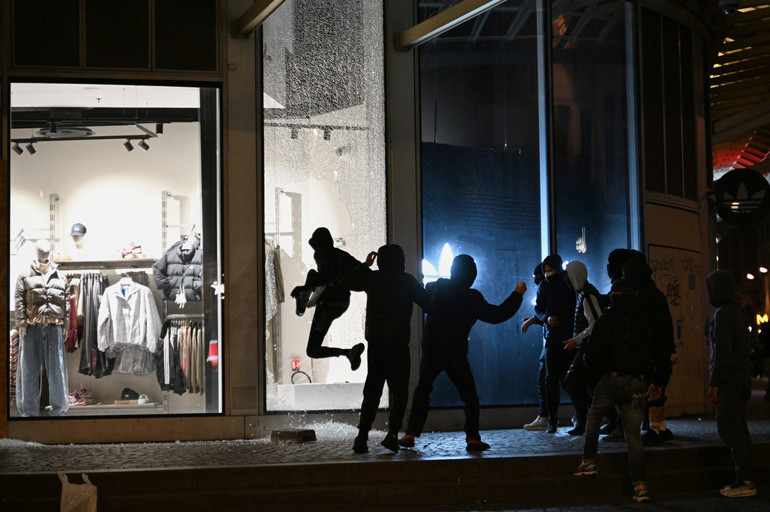
"The people who organized everything, who brought battering rams, who broke the glass, and who scouted out the basement entry points to infiltrate this city hall are not children," Guerin stated. "They are individuals organized to wage war. The logistics, the coordination, and the premeditated planning behind yesterday’s assault on our city hall are, for me, simply unbearable."
Amid the escalating confrontation in French urban centers, moments of citizen resistance against the wave of destruction also emerged. In the streets of Paris, eyewitness accounts and video recordings captured a lone female demonstrator attempting to stand directly in the path of looters targeting commercial storefronts. Positioning herself before a shattered entrance to block intruders, the woman pleaded with the crowd, asking why they were committing such acts, shouting that demonstrations were not meant for looting, and urging them to halt. Despite her intervention, masked individuals pushed past her to ransack the premises.
The compounding events across France, Italy, Portugal, and Albania underline an increasingly volatile environment throughout Europe. With governments struggling to reconcile cost-of-living hardships and political discontent against the imperative to preserve public order, European capitals remain on high alert as leaders seek coordinated solutions to curb cross-border unrest.