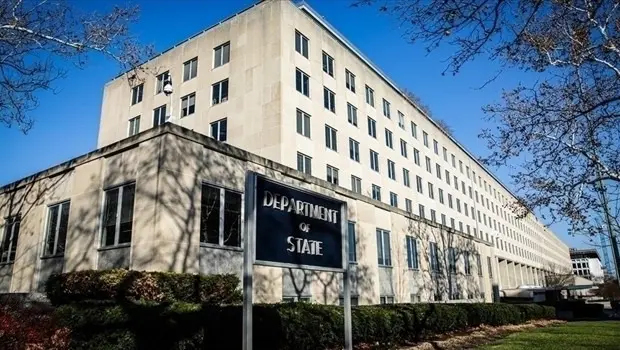
WASHINGTON — The United States Department of State has issued a comprehensive security alert and updated travel advisories for nations across the Middle East, citing an increasingly complex and rapidly shifting security environment driven by heightened regional tensions. Official statements specifically highlighted escalating friction between the United States and Iran as a primary catalyst for elevated security risks throughout the area, prompting American officials to urge citizens currently residing in or planning travel to the region to exercise extreme caution and maintain heightened situational awareness.
According to the official announcement released by the State Department, the security landscape in the Middle East remains exceptionally fluid, with conditions capable of deteriorating on short notice. The department reiterated its standing call for American nationals to remain vigilant, monitor local media, stay abreast of real-time security updates, and review personal emergency action plans. Officials emphasized that regional travel advisories remain actively enforced under high-level threat designations, covering a broad swath of countries across the Persian Gulf, the Levant, and neighboring areas.
Under the updated guidance, the State Department confirmed that travel warnings for a wide list of regional partners remain maintained at "Level 3: Reconsider Travel" or "Level 4: Do Not Travel." The classification scheme reflects a comprehensive assessment of ongoing security threats, potential military escalation, civil unrest, and the operational capacity of diplomatic missions to assist American citizens during an emergency.
Categorization of Threat Levels Across Middle Eastern Destinations
The State Department’s advisory categorizes destinations into distinct risk tiers based on localized security factors, political stability, and potential exposure to military action or regional fallout. A significant portion of the Middle East remains under the most severe advisory tier, "Level 4: Do Not Travel," which represents the highest risk level issued by the U.S. government.
Countries and territories currently designated under "Level 4: Do Not Travel" include Iran, Iraq, Lebanon, Syria, Gaza, and Yemen. For these destinations, the State Department warns that security conditions are extremely hazardous due to active conflict, terrorism, political instability, or severe hostility toward foreign nationals. The government explicitly warns American citizens that traveling to or remaining in Level 4 zones carries an extraordinarily high danger of injury, detention, or death, while U.S. diplomatic posts in several of these areas may have limited or suspended operations, severely constraining the government’s ability to provide emergency consular assistance.
Concurrently, a broad range of key regional partners has been designated under "Level 3: Reconsider Travel." Destinations remaining at Level 3 include Bahrain, Israel, the West Bank, Jordan, Kuwait, Oman, Qatar, Suudi Arabia, and the United Arab Emirates. While these nations maintain varying degrees of domestic stability and advanced security infrastructure, the overall regional atmosphere and potential for cross-border escalation have prompted U.S. authorities to advise citizens to carefully weigh the necessity of their travel plans.
The inclusion of major Gulf states and long-standing regional partners under Level 3 highlights the expansive reach of current security concerns. Officials note that even in nations with robust internal security mechanisms, the broader geopolitical climate creates potential vulnerabilities related to airspace closures, missile or drone activity, civil disturbances, and sudden disruptions to international transit corridors.
"Learn the Location of the Nearest Shelter": Direct Emergency Guidance for Citizens
In light of potential conflict scenarios and unpredictable security developments, the U.S. State Department incorporated explicit emergency preparedness instructions within its advisory, urging citizens to take proactive measures to ensure their personal safety. Central to these recommendations is an explicit directive advising American citizens in the region to identify and learn the location of the nearest emergency shelter or hardened facility in advance.
The alert stresses that during sudden security crises or aerial threats, rapid access to safe shelter is critical. Citizens are instructed to familiarize themselves with the emergency procedures of their residences, hotels, places of employment, and local municipal infrastructure. Officials noted that understanding where to seek refuge before an incident occurs significantly reduces response time during active emergencies.

In addition to shelter awareness, the official notification outlines several specific behavioral recommendations aimed at mitigating personal risk while in public spaces:
- Maintain a Low Profile: American nationals are advised to avoid drawing undue attention to themselves in public areas, refrain from discussing sensitive topics publicly, and remain mindful of local customs and political sensitivities.
- Avoid Large Gatherings: Citizens are strongly encouraged to stay away from large crowds, demonstrations, political rallies, and public protests, which have the potential to turn volatile or become targets of civil unrest.
- Steer Clear of High-Risk Zones: The advisory warns against visiting areas known for elevated crime, ongoing military activity, border friction, or potential infrastructure targets.
- Monitor Local and Diplomatic Alerts: Travelers and residents are urged to regularly check local news broadcasts, follow updates from local authorities, and subscribe to official security alerts from the nearest U.S. embassy or consulate through government notification networks.
Diplomatic representatives emphasized that these recommendations are designed to help individuals navigate an increasingly unpredictable security landscape while minimizing exposure to potential danger.
Broader Security Context and Geopolitical Implications
The updated travel warnings come against the backdrop of persistent strategic friction and regional uncertainty, particularly regarding diplomatic and military posture between the United States and Iran. Tensions between the two nations have repeatedly spilled over into broader regional dynamics, impacting maritime navigation in crucial trade lanes, aerial security, and political stability across neighboring territories.
State Department travel advisories serve as a primary mechanism through which the U.S. government communicates threat assessments to its citizens abroad, commercial airlines, international businesses, and non-governmental organizations. When regional tensions elevate, these advisories are frequently updated to reflect real-time intelligence, military postures, and potential threats to civil aviation and infrastructure.
The advisory system relies on a four-level scale to convey safety conditions:

- Level 1 — Exercise Normal Precautions: The lowest advisory level, indicating standard safety precautions are sufficient.
- Level 2 — Exercise Increased Caution: Highlights heightened risks to safety and security due to specific factors such as elevated crime or localized instability.
- Level 3 — Reconsider Travel: Advises citizens to avoid travel due to serious risks to safety and security, recommending that plans be postponed or canceled unless essential.
- Level 4 — Do Not Travel: The highest threat level, indicating an immediate and severe danger to life, where the U.S. government may have extremely limited capability to intervene or assist.
By maintaining Level 3 and Level 4 designations across virtually the entirety of the Middle East, U.S. authorities are signaling that regional security risks remain elevated across multiple geographic sectors simultaneously. The wide geographic footprint of these warnings reflects how regional conflicts in the Middle East can rapidly transcend national borders, affecting civil transportation, commercial shipping lanes, and international travel routes.
Diplomatic missions across the region remain on heightened alert, with emergency response teams continually assessing local conditions. U.S. embassies and consulates in the affected nations continue to monitor developments closely, reminding citizens that official travel guidance may undergo further adjustments as security conditions evolve throughout the region.