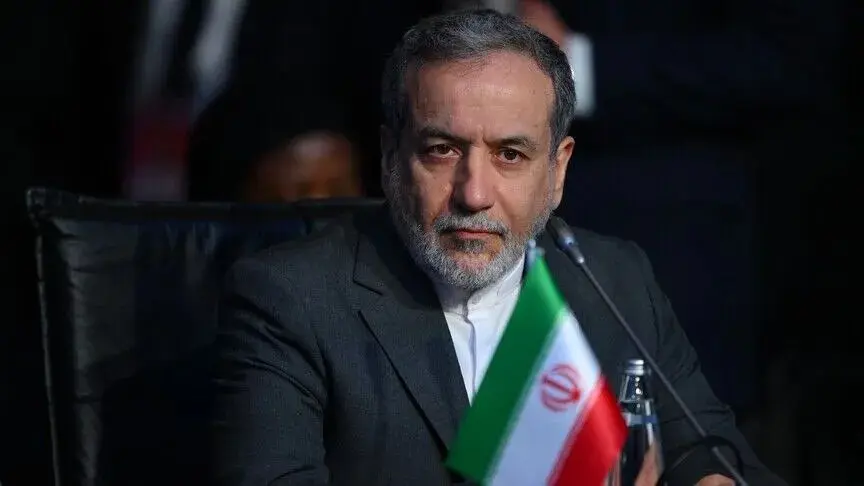
Iranian Foreign Minister Abbas Araghchi has launched a scathing verbal offensive against Israeli Prime Minister Benjamin Netanyahu, accusing the Israeli leader of deliberately attempting to drag the United States into a direct military confrontation with Iran as a calculated maneuver to escape criminal prosecution and avoid prison time at home.
The public exchange marks a sharp intensification of rhetoric between the two adversaries. Araghchi’s remarks, issued via his official account on the social media platform X, were delivered in direct response to recent pronouncements by Netanyahu regarding a comprehensive Israeli security doctrine aimed at toppling the leadership in Tehran.
According to Araghchi, Netanyahu’s regional posture is driven not by genuine security necessities, but by narrow personal interests and political survival. The Iranian foreign minister asserted that the Israeli prime minister is actively nudging Washington toward catastrophic hostilities while remaining entirely indifferent to the disastrous repercussions such an escalation would inflict on both Israel and the American presidency.
"Netanyahu is dragging the U.S. into another war, ignoring the consequences for Israel and the U.S. President, just to save himself from going to prison," Araghchi stated.
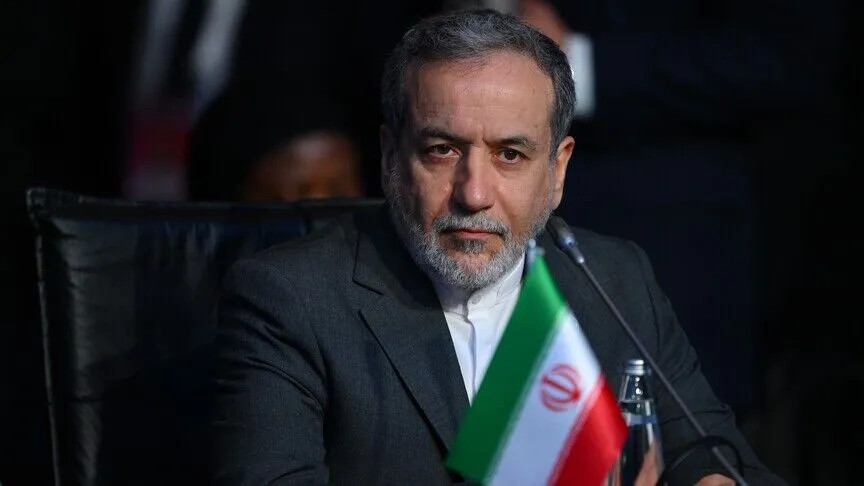
The Iranian top diplomat also dismissed suggestions that previous military strikes directed at the Islamic Republic had weakened its strategic standing or curtailed its regional influence. Addressing threats of renewed military action, Araghchi maintained that Iran had emerged from past attacks in a significantly stronger posture, directly countering the narrative that external strikes could successfully dismantle Tehran’s sovereign capabilities or destabilize its internal governance.
Responding to what he characterized as foreign attempts to "finish off" Iran, Araghchi delivered a direct and defiant challenge to the Israeli leadership, cautioning that Tehran possesses both the will and the capability to respond in kind if provoked further.
"Do you want to try your luck once more? Go ahead, try it," Araghchi declared. "But be careful; we also have unfinished business."
The exchange follows reports detailing the Israeli prime minister’s strategic plans and internal political maneuvers. According to a report by The Times of Israel, Netanyahu recently addressed his broader geopolitical and security doctrine, framing the upcoming Israeli elections scheduled for October 27 as an event of "existential importance" for the nation’s future.
In laying out his strategic framework, Netanyahu explicitly highlighted the goal of overthrowing the Iranian government, linking Israel’s long-term survival and regional stability directly to the demise of the clerical establishment in Tehran. Netanyahu pointed toward Iran’s mounting internal difficulties, arguing that a continuously deteriorating domestic economy has generated severe public frustration, heightened socio-economic grievances, and laid the groundwork for potential new waves of nationwide civil protests.

Netanyahu asserted that these internal economic and social fractures create a decisive window of opportunity for coordinated external and covert pressure. He stated that Israel has formulated a comprehensive, multi-faceted strategy intended to actively accelerate the breakdown of the Iranian state apparatus.
"Our plan is a very comprehensive and resolute plan to bring about the collapse of the regime," Netanyahu was quoted as saying. "This is the instruction I have given to all security agencies."
Netanyahu’s directive commands every branch of Israel’s defense and intelligence apparatus to coordinate operations with the overarching objective of bringing down the Iranian leadership. By presenting the upcoming October 27 vote as an existential watershed, the Israeli prime minister sought to tie his political platform directly to the national defense agenda, framing his continued tenure as vital to prosecuting this sweeping campaign against Tehran.
The sharp counterattack by Araghchi seeks to flip the narrative, directly targeting Netanyahu’s personal vulnerabilities and his ongoing domestic legal challenges. By explicitly raising the prospect of Netanyahu facing imprisonment, the Iranian foreign minister sought to frame Israel’s aggressive strategic doctrine as the desperate gambit of an embattled politician facing criminal indictments. In Araghchi’s framing, the Israeli leader is willing to gamble with regional stability and sacrifice the strategic interests of his closest international ally—the United States—to maintain power and shield himself from judicial accountability.
The diplomatic spat also highlights Tehran’s deliberate efforts to drive a conceptual wedge between the leadership in Washington and the political calculations of the Israeli government. By warning that Netanyahu is operating without regard for the political and military consequences facing the U.S. president, Araghchi sought to caution Washington against allowing itself to be drawn into an expanded Middle Eastern theater of war dictated by Israeli domestic political calculations.

Araghchi’s insistence that previous military operations against Iran had ultimately failed to achieve their desired outcomes reflects Tehran’s consistent defense posture. Iranian officials have persistently maintained that external strikes aimed at crippling their defense infrastructure, technological developments, or state institutions only serve to galvanize domestic resilience and fortify the nation’s deterrence posture. Araghchi’s assertion that Iran has "unfinished business" serves as an explicit warning that Tehran has not exhausted its strategic options and maintains ready retaliatory plans should Israel follow through on its threats of direct intervention or regime change.
At the same time, Netanyahu’s focus on the Iranian economy touches upon a known vulnerability for Tehran. Sustained international sanctions, inflation, and structural fiscal challenges have strained the daily livelihoods of Iranian citizens, a reality that Israeli leadership believes could translate into broad popular dissent. In his security doctrine, Netanyahu outlined a dynamic wherein external pressure and internal economic dissatisfaction converge, weakening state authority and ultimately precipitating the collapse of the ruling establishment from within.
Netanyahu’s assertion that all Israeli security agencies have been issued formal, resolute instructions to work toward the collapse of the Iranian regime represents an unusually direct public acknowledgment of a state policy aimed at sovereign overthrow. Historically, such strategic aims have often been pursued through ambiguous language, deterrence doctrines, or covert channels. The public codification of regime collapse as an official governmental objective, tied directly to the timeline of an election framed as existentially critical, significantly raises the stakes of the ongoing standoff.
The rhetorical confrontation between Araghchi and Netanyahu reflects a volatile geopolitical landscape where international security agendas and domestic political imperatives have become deeply intertwined. With Netanyahu asserting that his security forces are actively working under instructions to bring down Tehran’s leadership, and Araghchi cautioning that Iran is prepared to settle "unfinished business" while warning Washington against being dragged into an avoidable war, the rhetoric between Tehran and West Jerusalem continues to signal a perilous trajectory for regional stability.