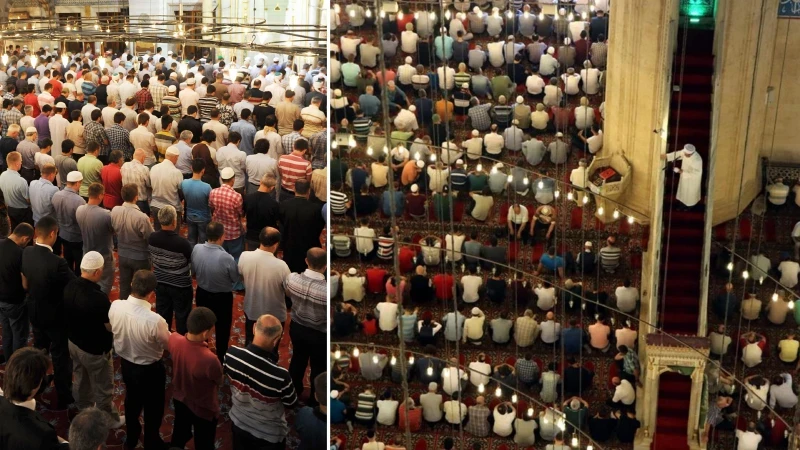
ANKARA — The Presidency of Religious Affairs (Diyanet) has released its weekly Friday sermon, focusing heavily on the Islamic duty of conveying the message of faith, known as "tebliğ" (preaching). Titled "Our Responsibility of Preaching," the sermon was distributed nationwide to be read across mosques during Friday prayers, drawing the participation of millions of Muslim citizens.
The latest guidance issued by the General Directorate of Religious Services emphasizes that every Muslim carries an individual responsibility, according to their capacity and means, to represent Islamic values through their speech, actions, and overall character, serving as a positive example to society.
The Historical Example of Mus’ab ibn Umayr
To contextualize the historical roots and methodology of conveying the Islamic faith, the sermon recalled the profound mission undertaken by Mus’ab ibn Umayr during the early period of Islam. According to historical accounts referenced in the text, the people of Medina had requested the Prophet Muhammad to send someone who could instruct them in the teachings of Islam.
The Prophet selected the young companion Mus’ab ibn Umayr for this crucial assignment. Approaching people of all ages without distinction, Mus’ab communicated the message of Islam with profound dedication, ultimately becoming the means for numerous hearts to embrace the faith. The sermon highlighted that within a single year, his efforts bore such remarkable fruit that there was hardly a household left in Medina where the Prophet Muhammad was not mentioned.
The text pointed out that the extraordinary success achieved by the young Mus’ab in such a short span stemmed from his emulation of the sublime character of the Prophet. The Messenger of Islam was characterized as gentle in speech and welcoming in demeanor—a merciful messenger who facilitated rather than complicated matters, and who brought glad tidings rather than driving people away through harshness.
Fulfilling the Duty of Preaching Through Daily Life
Addressing the congregation of worshippers, the sermon underscored that inviting others to the path of Islam is not a duty restricted to a specific segment of society. Citing the Quranic verse, "Invite to the way of your Lord with wisdom and good instruction," the text stressed that making the beauties of Islam visible and prominent in daily life is a fundamental obligation of worship for every believer.
Every Muslim, the sermon noted, is expected to strive to be an exemplary model for their family, environment, and all of humanity through their conduct, aiming to convey truth and goodness. This responsibility manifests in everyday roles: a parent striving for the spiritual and worldly well-being of their children, a teacher working to leave positive marks on the lives of students, a merchant who inspires trust in customers, and a neighbor who maintains kinship ties and lives harmoniously in the community are all described as embodying the prophetic invitation.
The core of preaching, the text elaborated, lies in winning hearts, which can often be achieved simply through a smile or a greeting. Highlighting the spiritual value of guiding another person toward righteousness, the sermon reminded believers of the statement made by the Prophet Muhammad to Ali ibn Abi Talib: "By Allah, for Allah to guide a single man through you is better for you than possessing red camels," equating it to something far more valuable than the world and everything it contains.
Navigating the Responsibilities of the Digital Age
A significant portion of the Friday sermon was dedicated to the modern challenges and opportunities presented by technological advancements and social media. While acknowledging that modern communication tools open new avenues for reaching individuals in distant geographies who might otherwise never be contacted, the Diyanet cautioned that these platforms also increase the ethical and moral responsibilities of believers.
Every individual who shares content on digital platforms must remain mindful of divine supervision, the sermon warned, referencing the Quranic reminder that a person utters no word except that a vigilant observer is present beside them. Believers are urged to verify the accuracy of statements before sharing them and to respect personal privacy before commenting on the lives of others.
The text specifically cautioned against the casual and unmeasured discussion of topics that rightfully belong in scholarly assemblies on social media platforms. It reminded the public that a careless word or an unconsidered digital post can easily transform into a lasting wound carried in human hearts for years.
The sermon concluded with an encouragement for Muslims to conduct themselves in a manner that inspires trust and draws others naturally to the ethical values of Islam. It ended with a traditional prayer and the well-known tradition of the Prophet: "May Allah brighten the face of a person who hears a statement from us and conveys it to others just as they heard it."