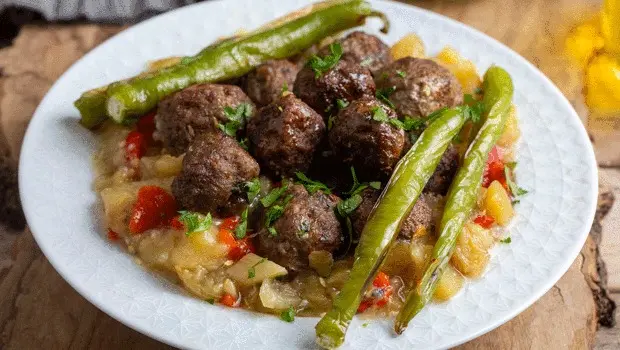
The perennial domestic dilemma of what to prepare for the evening meal often challenges home cooks seeking balance, seasonal comfort, and authentic flavor. In response to this daily question, culinary experts have curated an evening menu designed to bring the depth of traditional regional cooking into the home kitchen. Spanning centuries-old Anatolian culinary traditions, the suggested dinner progression opens with a classic red lentil soup, centers on a tender söğürme kebab resting over charred vegetables, and accompanies the main dish with ancient siyez bulgur pilaf. To round out the table, a crisp arugula and tomato salad dressed with pomegranate molasses provides acidity, a distinctive regional Van-style cucumber-yogurt mezze enriched with butter adds cool creaminess, and a quintessential butter-toasted semolina halva with pine nuts delivers a comforting finish.
Home dining menus structured around seasonal transitions serve more than just nutritional needs; they reflect a deliberate harmony of temperatures, textures, and flavor profiles. By blending accessible pantry staples with time-honored cooking techniques, this compilation demonstrates how traditional restaurant-caliber dishes can be successfully adapted for everyday domestic dining as well as hosting guests.
Lentil Soup: A Timeless Opening for the Evening Table
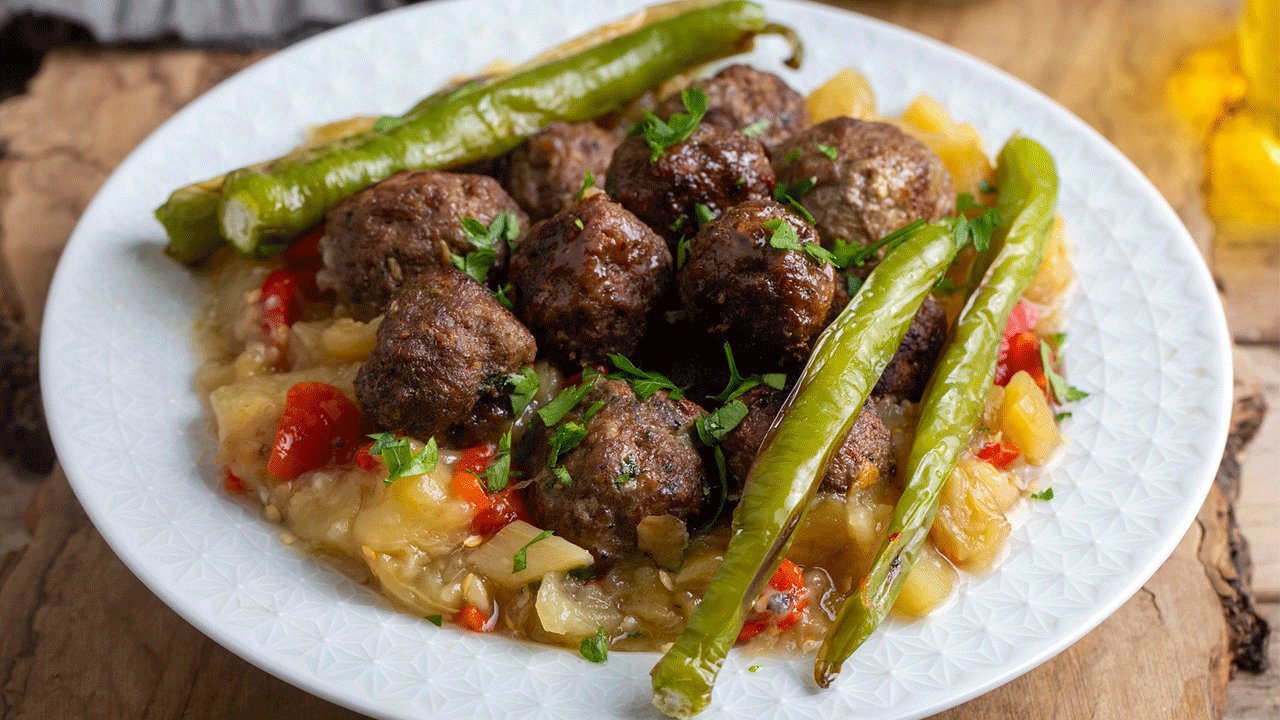
The proposed dinner begins with red lentil soup (mercimek çorbası), universally acknowledged as one of the most enduring cornerstones of Turkish culinary heritage. Across households, neighborhood eateries, and formal dining establishments, lentil soup functions as the quintessential appetite-opening starter. Its primary appeal lies in its smooth, velvety consistency and comforting warmth, which prepares the palate for the richer courses that follow.
In domestic culinary practice, red lentils are simmered until tender alongside aromatic vegetables such as onions and carrots, often cooked with a light broth or water before being blended into a uniform, silky purée. The simplicity of the soup allows the natural earthiness of the pulse to take center stage, while a touch of dried mint, warming pepper flakes, or a squeeze of fresh lemon juice frequently serves to heighten its clean, soothing profile. Beyond its nutritional merits—supplying plant-based protein and fiber—the dish holds a revered cultural status as an equalizer on the dinner table, offering immediate hospitality and comfort as the first spoonful is served.

Söğürme Kebab: Bringing Hearthside Kebabs to the Home Kitchen
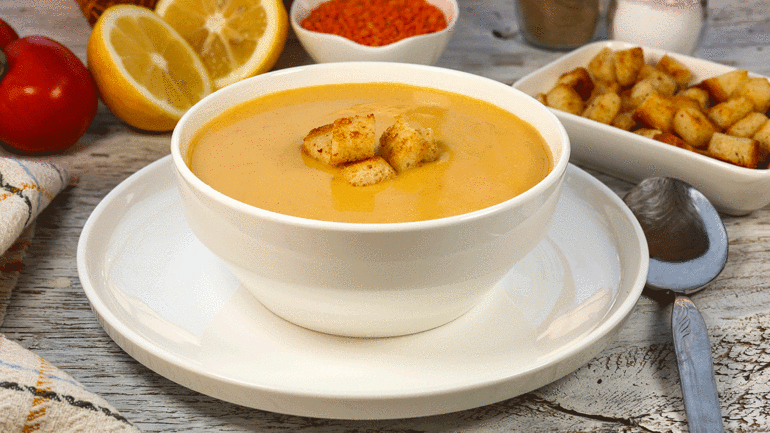
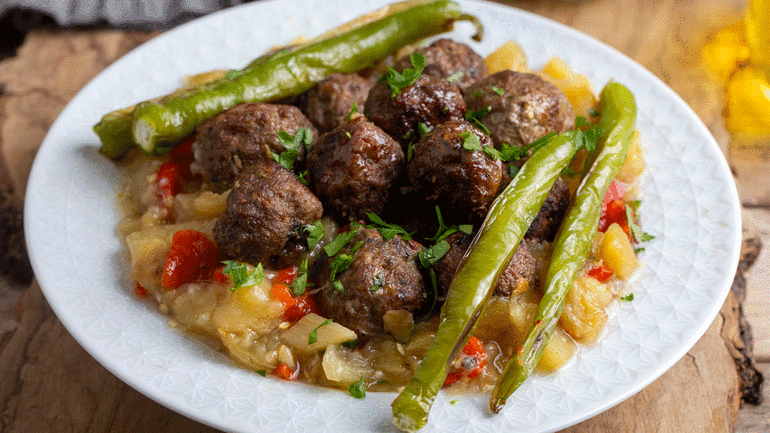
For the centerpiece of the meal, the menu features söğürme kebab (söğürme kebabı), an Anatolian regional specialty that combines the smokiness of fire-roasted produce with delicately seasoned ground meat. Traditionally associated with the culinary capitals of southeastern Turkey, the term söğürme refers to vegetables—most notably eggplants and peppers—that are roasted over open embers until their skins blister and blacken, yielding a soft, intensely fragrant pulp inside.
In this home-adapted rendition, the charred vegetable base is peeled, chopped, and lightly seasoned, forming a rich, smoky bed on the serving platter. Rested atop this base are tender, freshly cooked meatballs (köfte), prepared with balanced seasonings so as not to overwhelm the natural savory depth of the meat. The defining flourish of the dish occurs just prior to presentation, when sizzling melted butter is poured directly over the meatballs and roasted vegetables.

The heat of the clarified fat releases an immediate wave of aromatics, melding the smokiness of the roasted vegetables with the rich juices of the meatballs. This interaction creates an appetizing table presence that rivals dishes prepared in commercial kebab parlors. While söğürme kebab offers the visual drama and decadent flavor typically reserved for celebratory feasts or guests, its components are straightforward enough to execute in an ordinary domestic setting without specialized hearth equipment.
Siyez Bulgur Pilaf: Ancient Grains Meet Everyday Comfort
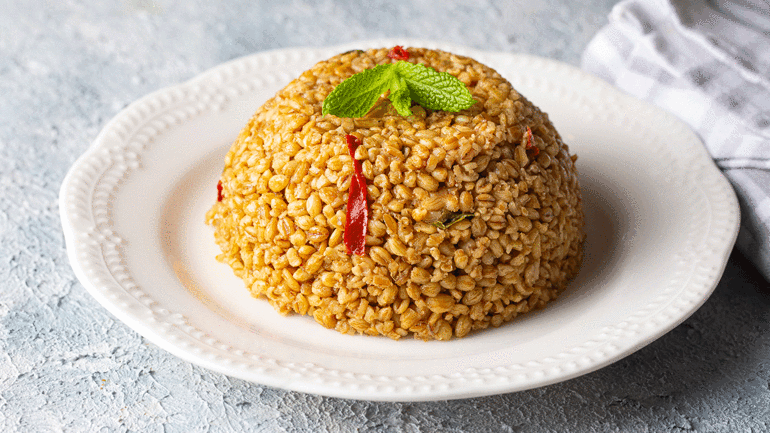
To complement the rich, smoky profile of the kebab, the menu pairs the main course with a hearty pilaf made from siyez bulgur. Siyez, recognized as einkorn wheat, is one of the earliest cultivated grain varieties in agricultural history, cultivated in Anatolia for millennia. Prized for its rustic flavor, firm bite, and resilience during cooking, siyez introduces both textural interest and historical depth to an otherwise everyday side dish.

Unlike standard cracked wheat or polished white rice, siyez grains retain their structural integrity throughout the cooking process, resulting in a pilaf where each grain remains distinct and separate—a texture celebrated in Turkish culinary terminology as tane tane. In this preparation, the ancient grain is enriched by a savory flavor base composed of finely diced onions and fresh peppers gently sautéed in fat. The addition of concentrated tomato and pepper pastes (salça) imparts a deep mahogany hue and a concentrated savory richness that penetrates deep into the grain during simmering. The natural nuttiness of the siyez bulgur harmonizes with the sweet caramelization of the sautéed peppers and onions, producing a side dish that is substantial, nutritionally robust, and deeply satisfying.
Tomato and Arugula Salad: A Crisp, Tart Counterpoint
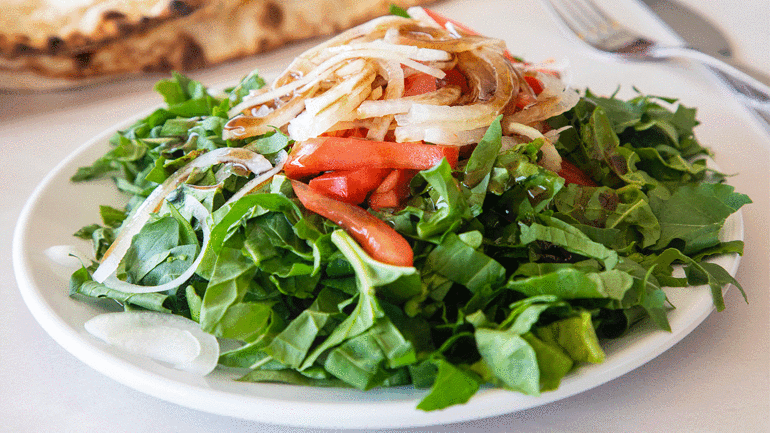
To balance the richness of sizzling butter, roasted meats, and seasoned grains, the menu incorporates a fresh tomato and arugula salad (domatesli roka salatası). Peppery, crisp arugula leaves form the foundation of the salad, offering a pleasant bitterness that instantly cuts through the heavier elements of the meal.
Tossed with ripe, juicy tomatoes and thinly sliced onions, the salad provides textural variety through the contrast between crisp greens and succulent vegetables. The dressing serves as the vital unifying element: a tangy emulsion of extra-virgin olive oil, freshly squeezed lemon juice, and tart-sweet pomegranate molasses (nar ekşisi). The pronounced acidity and fruity astringency of the pomegranate reduction brighten the entire table, stimulating the palate between bites of the savory kebab and warm bulgur pilaf. Salads of this nature reflect the broader Mediterranean and Aegean principles embedded within Turkish regional dining, where raw, seasonal produce is treated as an indispensable balancing agent rather than an afterthought.
Van Cacığı: A Distinctive Regional Dairy Side
Providing further freshness and cooling relief, the menu turns to eastern Anatolia with Van cacığı, a unique regional interpretation of the classic cucumber-and-yogurt accompaniment. While standard variations of cacık lean toward a lighter, soup-like consistency thinned with cold water and ice, the version originating from the province of Van emphasizes substance, thickness, and complex herbal aromatics.
The dish is built upon a foundation of strained yogurt (süzme yoğurt), which lends a dense, velvety consistency capable of holding its shape alongside hot entrees. Fresh cucumbers are finely prepared and incorporated into the dairy base, accompanied by a generous mixture of finely chopped green herbs, including aromatic dill, flat-leaf parsley, and fresh green scallions.
What sets this eastern regional specialty distinctly apart from conventional yogurt preparations is the inclusion of butter. When blended or drizzled into the strained yogurt alongside the crisp greens and cucumbers, the butter enriches the dairy fat profile, transforming a simple refreshing side into an opulent, spreadable accompaniment. Its cooling properties offer a soothing contrast to the warm spices and hot savory components of the söğürme kebab and seasoned pilaf.
Semolina Halva: The Quintessential Sweet Finale
No traditional multi-course Turkish evening meal is complete without an understated, comforting dessert, and the menu concludes with classic semolina halva (irmik helvası). Held in high regard across generations, semolina halva holds deep cultural importance, often served during significant life milestones, gatherings, and quiet family evenings alongside freshly brewed Turkish tea.
The hallmark of a well-executed semolina halva lies in the careful, gradual toasting of the semolina grains in melted butter. As the semolina cooks slowly over moderate heat, it undergoes a transformation, shifting from pale yellow to an amber-gold tone while releasing an unmistakably warm, toasted aroma. Pine nuts (çam fıstığı) are stirred into the mixture, toasting in the butter alongside the grain to impart an appealing nutty crunch.
Once the semolina has attained its target color and aroma, a warm liquid mixture—typically water, milk, or a blend of both infused with sugar—is introduced. The grains quickly absorb the liquid, swelling into a tender, moist, and fluffy structure that is neither dry nor overly dense. Served warm or at room temperature, the halva delivers a balanced sweetness that rounds out the evening meal without overwhelming the palate.
By coordinating each course around complementary elements—the restorative warmth of lentils, the smoky richness of charred vegetables and meat, the wholesome texture of ancient grains, the refreshing acidity of dressed greens, the cooling richness of strained yogurt, and the sweet toasted notes of semolina—the menu provides a comprehensive roadmap for an authentic, restaurant-quality dinner prepared entirely within the comforts of the home kitchen.