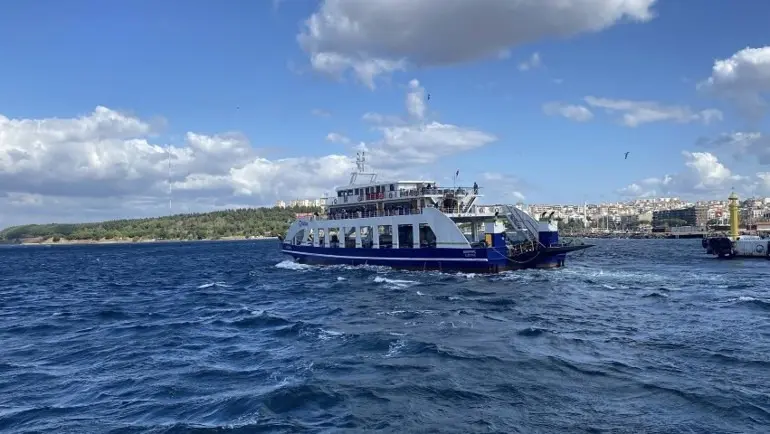
ÇANAKKALE — Adverse weather conditions escalating across the northern Aegean Sea have disrupted maritime transportation off the northwestern coast of Turkey, forcing maritime transport authorities to take precautionary measures. GESTAŞ Sea Transportation, the primary operator responsible for passenger and vehicle transport along the Çanakkale Strait and regional island routes, announced the complete suspension of all scheduled ferry trips to Gökçeada and Bozcaada scheduled for tomorrow due to severe storm warnings.
According to official statements released by GESTAŞ and reported by local correspondents in Çanakkale, the decision was taken following updated marine weather evaluations indicating dangerous sea conditions across the open waters of the northern Aegean. The temporary shutdown affects both major island lines operating from the Anatolian and Gallipoli mainland shores, severing the primary physical connections between the mainland and the two inhabited Turkish islands in the region.
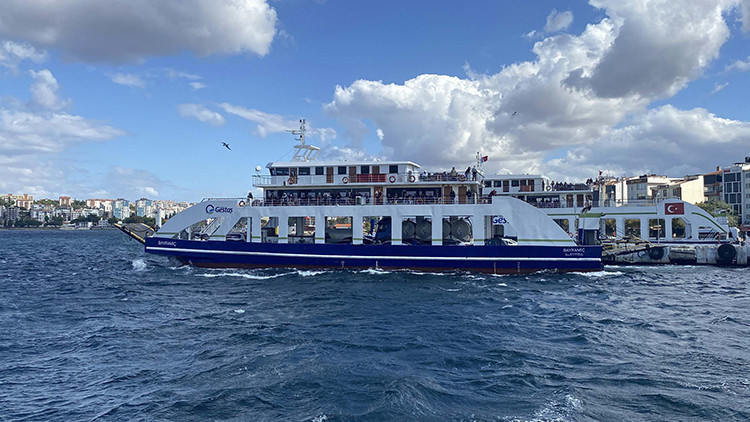
Specifically, all scheduled sailings on the Kabatepe–Gökçeada route and the Geyikli–Bozcaada route have been called off for the entire day. Maritime officials emphasized that the preventive suspension is necessary to guarantee the safety of passengers, crew members, and vessels, as gale-force winds and severe wave swells present significant navigational hazards during open-water crossings.
Severe Weather Conditions Impact Transportation Across Northern Aegean Lines
The suspension of service highlights the operational vulnerabilities of maritime transit in the northern Aegean, where seasonal weather shifts frequently bring intense storms. The Kabatepe–Gökçeada route connects the Gallipoli Peninsula with Turkey’s largest island, Gökçeada. Spanning a broad passage across open marine waters, the route is notoriously exposed to powerful northerly winds that sweep through the upper Aegean basin. Similarly, the Geyikli–Bozcaada line, which links the coastal pier in the Ezine district of Çanakkale to the island of Bozcaada, faces severe oceanographic challenges when regional weather systems intensify.
GESTAŞ Sea Transportation (GESTAŞ Deniz Ulaşım A.Ş.), operated under the auspices of the Çanakkale Provincial Special Administration, serves as the central transit authority for the maritime corridors of the region. While the company manages multiple high-frequency ferry crossings within the relatively sheltered waters of the Çanakkale Strait—such as the Çanakkale–Eceabat, Çanakkale–Kilitbahir, and Lapseki–Gelibolu routes—the island routes extend beyond the protection of the Dardanelles into open sea environments where atmospheric and wave impacts are felt much more severely.
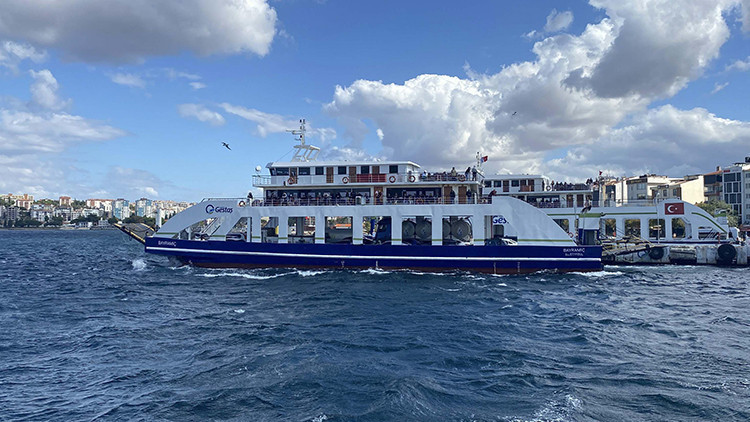
The northern Aegean Sea is recognized by mariners for its complex weather patterns, particularly during the autumn and winter months. During autumn transitions, cold atmospheric fronts moving south from the Balkans regularly interact with warmer maritime air masses over the Aegean, generating powerful northerly winds, locally referred to as Poyraz (northeasterly) or Karayel (northwesterly). Alternatively, strong southerly gales (Lodos) can push heavy sea swells directly into the coastal gulfs and channels surrounding Çanakkale.
When wind speeds rise to gale force, sea conditions in the open passages outside the Çanakkale Strait deteriorate rapidly. Deep-water swells, combined with strong surface currents exiting the Dardanelles into the Aegean Sea, produce erratic wave fields that make docking at island piers hazardous. Commercial ferry vessels, particularly roll-on/roll-off (Ro-Ro) passenger ferries optimized for island transport, require stable conditions to safely clear harbor entrances and maneuver during vehicle loading and unloading operations.
For the resident populations of Gökçeada and Bozcaada, ferry connections represent more than a convenient travel option; they are vital infrastructure supporting everyday life. Unlike mainland coastal settlements connected by extensive highway networks, these islands depend entirely on GESTAŞ ferry operations for daily commerce, municipal services, agricultural exports, medical access, and basic supply chains.

Gökçeada, situated near the mouth of the Saros Gulf, maintains a permanent population alongside agricultural, military, and public sector operations. Heavy commercial vehicles carrying food supplies, fuel, construction materials, and essential consumer goods rely on the daily Kabatepe ferry service. When severe autumn or winter storms prompt multi-day service suspensions, local authorities and businesses must carefully manage existing island inventories until maritime corridors reopen.
Bozcaada, famous for its viticulture, historic heritage, and local tourism industry, maintains a close economic connection with the mainland via the Geyikli terminal. Although the geographical distance between Geyikli and Bozcaada is shorter than the Kabatepe–Gökçeada passage, the narrow channel between the island and the Anatolian mainland creates strong wind-funneling effects. These localized wind dynamics produce short, steep wave patterns that make ferry maneuvers near Bozcaada’s historic harbor particularly difficult during high-wind events.
Essential Updates for Travelers and Local Logistics
Maritime safety regulations enforced by Turkish port authorities and the Ministry of Transport and Infrastructure set strict operational parameters for commercial passenger ferry services. Captains and operations managers continuously evaluate marine weather bulletins issued by the Turkish State Meteorological Service (MGM) alongside real-time oceanic buoy data.

When forecasted wind speeds exceed established safety thresholds—typically when Beaufort scale wind forces reach gale-force levels—operators are legally and operationally required to halt services. Proceeding under such conditions creates severe risks, including structural strain on vessels, vehicle shifting on car decks, and potential injury to passengers due to violent ship motion.
GESTAŞ has advised all commuters, commercial transport drivers, and island residents to track official communication channels for real-time updates regarding operational changes and potential service reinstatements. The company maintains an online portal, automated text messaging systems, and customer service call lines to keep the traveling public informed of schedule alterations brought on by adverse weather. Travelers holding advance reservations on the affected lines are routinely advised to adjust their schedules or request updates through GESTAŞ service desks once conditions normalize.
Storm-related disruptions in the northern Aegean are a recurring feature of maritime life in northwestern Turkey during the late months of the year. While ferry crossings within the narrow confines of the Çanakkale Strait are often able to continue operating during moderate storms due to the windbreak provided by surrounding hills, open-water routes to Gökçeada and Bozcaada are typically the first to be suspended when severe atmospheric fronts arrive.

During extended ferry suspensions, emergency response agencies, including regional health directorates and the Turkish Coast Guard, maintain specialized contingency protocols. In circumstances involving urgent medical evacuations when ferry transit is impossible, air ambulance helicopters or heavy-weather Coast Guard vessels are mobilized to transport patients to mainland hospitals in Çanakkale.
GESTAŞ officials noted that continuous marine evaluations will be conducted throughout the duration of the storm system. Scheduled ferry sailings along the Kabatepe–Gökçeada and Geyikli–Bozcaada routes are expected to resume as soon as the gale subsides and sea conditions return to safe operational limits.