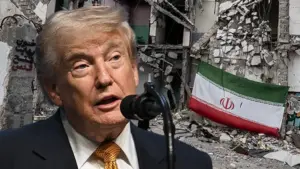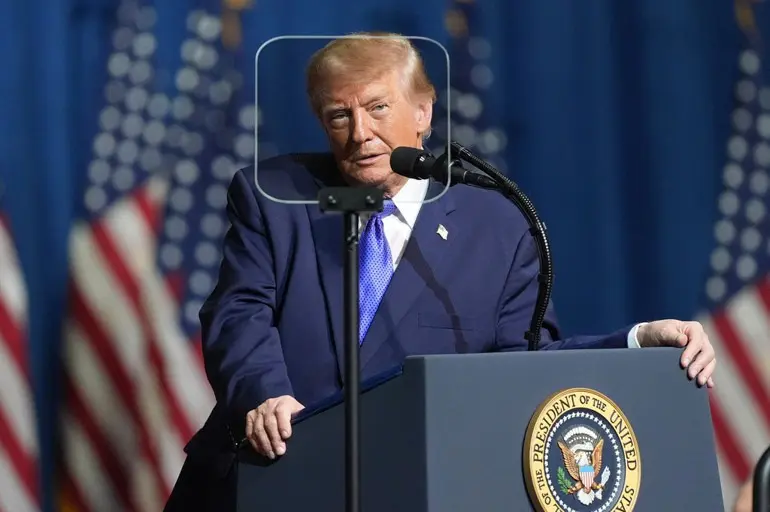
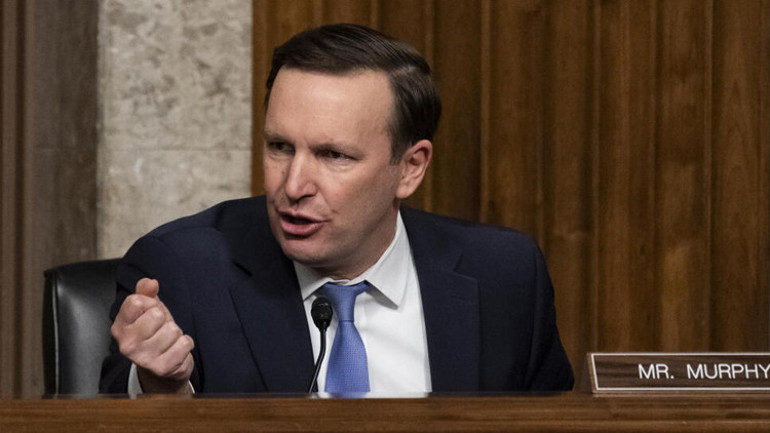
WASHINGTON — Members of the United States Senate have received classified briefings outlining the Trump administration’s prospective strategy for the next phase of military operations against Iran, sparking sharp condemnation from prominent lawmakers on Capitol Hill. Senator Chris Murphy, a senior Democrat on the Senate Foreign Relations Committee, delivered a blistering assessment of the proposed campaign, describing the administration’s blueprint as sheer "madness" that risks dragging the United States into an uncontrollable, ruinous regional war while eroding foundational commitments to international law.
The high-level briefings come as Washington signals to regional allies that President Donald Trump is weighing an expansion of military strikes and enforcement actions immediately following the upcoming November 3 midterm elections. While officials maintain that a final decision has not yet been authorized by the Oval Office, diplomatic and defense channels indicate that preparations are advancing rapidly across multiple operational theaters, pairing intensified naval blockades with the prospect of direct kinetic strikes on critical infrastructure.
Murphy’s Warning: Plan Labeled ‘Madness’ and Threat to Rule of Law
Speaking in the wake of the congressional consultations, Senator Murphy offered an unvarnished critique of the administration’s strategic posture, warning that the trajectory being pursued by the White House threatens both regional stability and American strategic interests. Murphy expressed grave alarm over the scope and targets under review, emphasizing that expanding the conflict would produce severe and long-lasting blowback.
"I will say this: Their plan is madness," Murphy stated, characterizing the administration’s intended direction as reckless. "This will lead to a devastating escalation and the probable destruction of our adherence to the rule of law."
The Connecticut senator drew attention to publicly circulating reports regarding the potential targeting parameters under discussion within the Pentagon, including options that could impact civilian and dual-use industrial infrastructure. According to Murphy, the plans currently on the table reflect executive directives rather than a coherent strategic consensus among military planners.
"The President asked [the Pentagon] to develop a plan," Murphy explained. "I don’t know whether they believe it will work. But the plan they developed will, in my view, be devastating for our security interests. [The plan] will prolong and escalate this war."

Murphy’s remarks underscore widening apprehension in Congress over executive war-making authorities and the potential human and geopolitical costs of an expanded confrontation. Lawmakers across committee rooms have questioned whether the proposed operational expansion adheres to established international norms, particularly amid indications that energy generation networks, petrochemical processing facilities, and maritime transit corridors could become focal points of military action.
Allies on Alert for Multi-Day Bombing Campaign and Iranian Retaliation
Beyond Washington, regional capitals are actively bracing for the possibility of renewed hostilities. According to diplomatic reporting by Axios, the United States has formally warned Middle Eastern allies to prepare for a prospective new military campaign against Iran in the days following the midterm elections. U.S. officials have cautioned partners in the region that the projected offensive would not be confined to a single symbolic raid, but could unfold as an air and naval campaign spanning multiple consecutive days.
The warnings also stressed the heightened probability of significant Iranian counterstrikes. Regional partners were advised to reinforce defensive measures around their own critical infrastructure, with particular attention given to power grids, energy processing complexes, and desalination plants that could be singled out by Tehran or its affiliated regional networks in response to American action.

The strategic coordination extends closely to Israel. Israeli security sources previously confirmed to ABC News that bilateral discussions had taken place regarding a tightening maritime blockade on Iranian crude oil exports, alongside contingencies for direct strikes against Iranian petrochemical installations. Such measures would aim to cripple Tehran’s remaining economic lifelines and severely constrain its state revenues.
Reporting from the Associated Press affirms that while President Trump has not issued an irrevocable green light for renewed bombardment, his public and private rhetoric has repeatedly pointed toward decisive military intervention once the election window concludes. Two regional diplomats confirmed that governments across the Middle East are treating the warnings with the utmost urgency, preparing defenses against potential retaliatory salvos from both the Iranian military and non-state aligned groups operating across regional proxy corridors.
Pentagon Reinforcements and Naval Buildup in the Persian Gulf
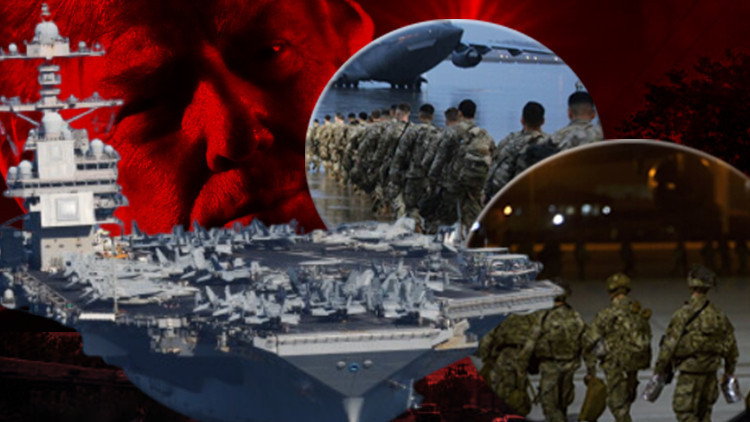
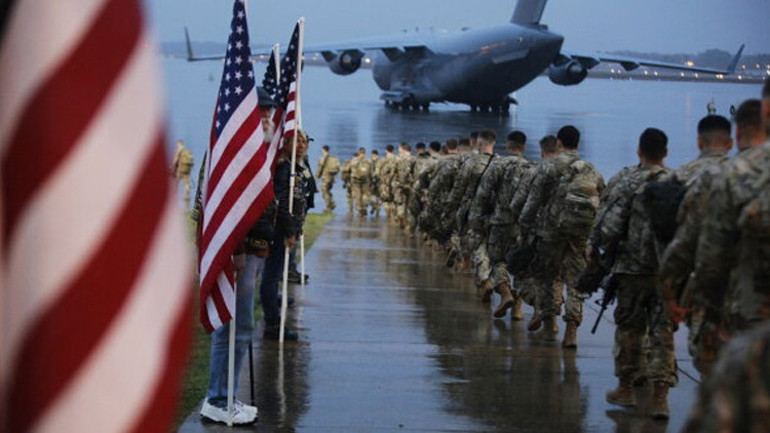
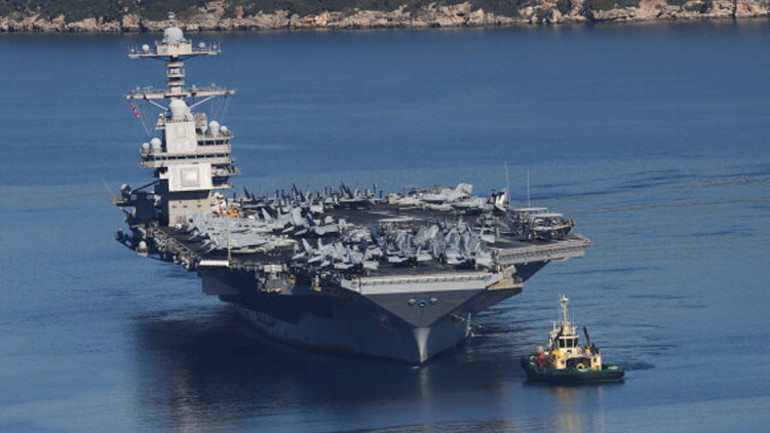
Backing the administration’s warnings is a substantial repositioning of American military power in and around the Middle East. At the end of last month, the Pentagon dispatched a major naval contingent to the Persian Gulf, spearheaded by the aircraft carrier USS Theodore Roosevelt alongside amphibious assault ships carrying an expeditionary force of U.S. Marines deployed from San Diego. In total, the deployment has funneled approximately 9,000 military personnel into the Central Command area of responsibility.

Despite the formidable force posture, defense analysts cited by the Associated Press observe that questions remain regarding the precise operational timeline required for U.S. forces to commence sustained combat sorties following election day. The logistics of coordinating carrier-based aviation, surface combatants, and land-based strike assets require tight synchronization, particularly if joint operations are launched in tandem with regional partners.
International partners are also calibrating their presence in the vital waterway. South Korea announced on Thursday that it is reviewing several operational options for a potential deployment to the Strait of Hormuz, including the dispatch of maritime patrol aircraft to monitor sea lanes and protect commercial shipping. However, officials in Seoul explicitly ruled out participating in offensive or combat missions, seeking to navigate the delicate balance between safeguarding commercial shipping and avoiding direct entanglement in an armed clash.
The current posture mirrors an established operational rhythm for the Trump presidency. Throughout his tenure, Trump has frequently maintained a dual-track strategy combining aggressive coercive leverage with transactional diplomacy. Observers point to previous military escalations—notably Operation "Midnight Hammer" in June 2025 and Operation "Epic Fury" in February—where sweeping military maneuvers were paired with eleventh-hour efforts to extract diplomatic concessions. The administration appears once again to be operating along this parallel path, holding open the prospect of a negotiated framework while assembling the assets necessary to execute comprehensive combat operations.
High-Stakes CENTCOM Briefing Inside the White House
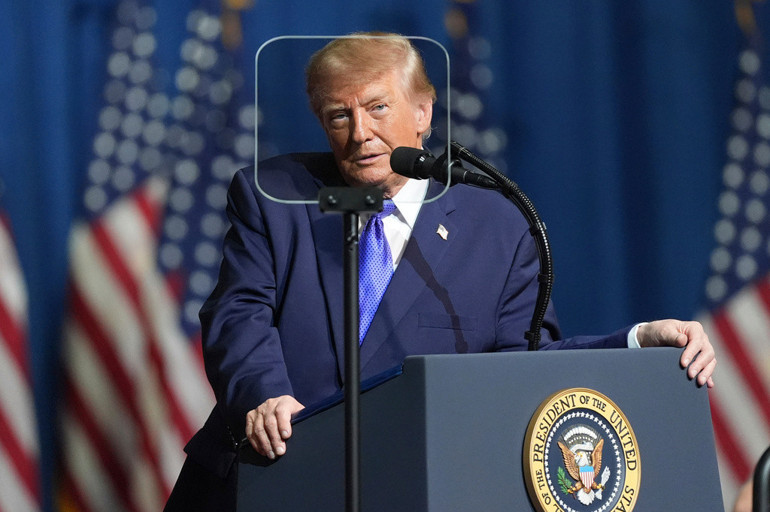
The operational details of the administration’s approach were recently reviewed at the highest levels of the national security apparatus. As reported by The Wall Street Journal, President Trump convened a comprehensive strategy session to assess the efficacy of the ongoing maritime interdiction campaign, seeking direct evaluations from the leadership of U.S. Central Command.
During the session, CENTCOM Commander Admiral Brad Cooper briefed the President on the progress of maritime interdiction operations in the Strait of Hormuz. Cooper provided detailed reporting on the military’s ongoing mission to redirect oil tankers carrying illicit crude through the chokepoint and steer energy supplies into stabilized global markets. The briefing highlighted the close operational synergy between the Department of Defense and the Department of the Treasury, illustrating how naval interdiction is serving as the direct enforcement arm of a coordinated economic pressure campaign.
The meeting gathered the administration’s most influential cabinet officials and national security advisers. In attendance were Defense Secretary Pete Hegseth, Treasury Secretary Scott Bessent, Chairman of the Joint Chiefs of Staff General Dan Caine, and White House Special Envoy Steve Witkoff. They were joined by Vice President JD Vance, Energy Secretary Chris Wright, and White House Chief of Staff Susie Wiles, reflecting a unified interagency push to align military preparedness, global energy market security, and fiscal enforcement.
The deliberations focused heavily on the economic fallout of prolonged naval disruption, examining whether tightening the cordon around Iranian ports can force political concessions from Tehran without triggering an uncontrollable spike in global oil prices.
Backchannel Diplomacy, Regional Mediation, and Preconditions
Even as military strike plans are finalized, an active diplomatic track continues behind closed doors. A coalition of regional mediators led by Qatar is engaged in intensive efforts to avert a full-scale resumption of war post-elections, working to steer both Washington and Tehran back toward formal negotiations. Regional sources close to the talks describe the mediation initiative as having reached an extraordinarily delicate stage.
As part of this backchannel engagement, Qatari envoys recently delivered a formal letter from Vice President JD Vance addressed to General Mohsen Rezaee, Secretary of Iran’s Supreme National Security Council. In the communication, Vance proposed re-establishing a diplomatic framework, but made clear that any productive dialogue must directly confront and constrain Iran’s nuclear program—a consistent redline for the White House.
Simultaneously, the administration has explored limited humanitarian overtures to lower tensions. According to individuals familiar with the matter, Trump and Vance met to evaluate potential goodwill gestures toward Tehran, including the targeted provision of humanitarian relief such as food and critical medical supplies. President Trump subsequently expressed public support for the humanitarian initiative, signaling a desire to maintain diplomatic leverage alongside military pressure.
Diplomatic figures have offered cautious optimism that an off-ramp remains achievable. Speaking to CNN International, the United States Ambassador to Turkey, Tom Barrack, stated that Washington and Tehran are remarkably close to reaching an interim formula to defuse the standoff.
"I think we’re very close to a point where we can say, ‘Let’s take a pause for a while,’" Barrack said. "We’re not going to find a comprehensive solution immediately, but we can let the region find its own pace."
However, major obstacles remain entrenched on the Iranian side. Tehran’s leadership reiterated firm conditions for re-entering structured talks, stating that it will not return to the negotiating table on its nuclear program until Washington takes tangible steps to ease economic strangulation. Iranian officials demanded that the United States formally terminate the maritime blockade, unfreeze billions of dollars in sovereign assets held abroad, and allow unimpeded Iranian crude oil exports on international markets before any comprehensive diplomatic dialogue can officially resume.