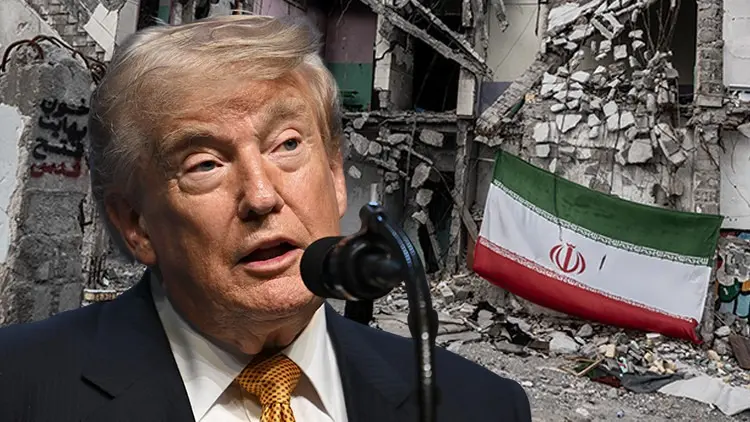
WASHINGTON — U.S. President Donald Trump has announced that the United States will not launch any military strike against Iran prior to the upcoming congressional midterm elections scheduled for November 3. The declaration, delivered through a post on his social media account, offers a defined timeline regarding American military posture in the Middle East while addressing the broader trajectory of ongoing tensions and potential armed conflict between Washington and Tehran.
In his public statement, the American president outlined key assessments regarding the current state of bilateral communications, the domestic vulnerabilities facing the Iranian leadership, and the critical importance of international maritime energy transit routes. By pairing an explicit commitment against imminent military action with sharp evaluations of Iran’s internal stability and economic standing, the remarks have immediately reshaped discussions surrounding U.S. foreign policy priorities and regional security ahead of a pivotal domestic electoral milestone.
Productive Talks and Assessment of Tehran’s Standing
Addressing the diplomatic framework currently in play, President Trump noted that discussions with Tehran have been advancing constructively, describing the exchanges as productive. While tensions across the region have remained elevated, the president’s remarks pointed to ongoing communication channels that are actively functioning between the two adversaries, signaling that diplomatic avenues remain open despite persistent frictions.
In evaluating the conditions under which these negotiations are taking place, the president offered a candid assessment of the Islamic Republic’s current internal capacity. Trump stated that Iran is presently in a "very bad state" when viewed through both economic and military lenses. According to the president’s characterization, prolonged domestic strains, structural economic pressures, and diminished defense capacities have significantly weakened Tehran’s strategic standing, creating an asymmetrical dynamic as dialogue continues.
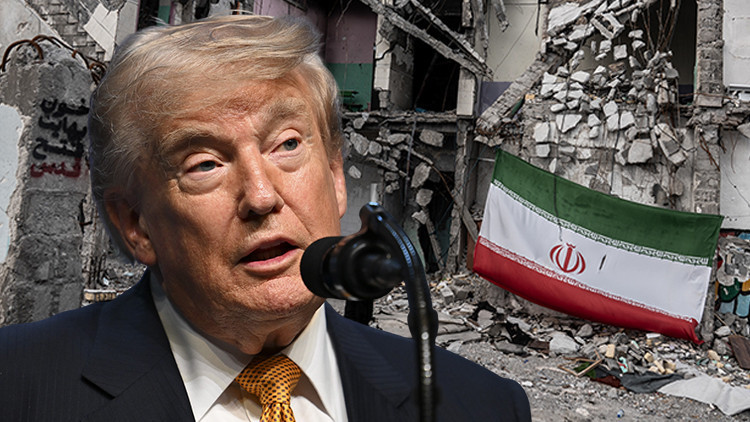
Central to this geopolitical and economic calculus is the vital significance of regional energy corridors, particularly the Strait of Hormuz. In his statement, Trump underscored the strategic prominence of the narrow waterway, noting that millions of barrels of crude oil transit through the choke point on a daily basis. The reference highlights the heightened sensitivity of international oil markets to any potential confrontation in the Persian Gulf.
The passage of substantial commercial volumes through the Strait of Hormuz has long made the corridor a central focus of global commerce and maritime stability. By explicitly mentioning the millions of barrels passing through the waterway daily, the president placed the ongoing dialogue within the context of global energy logistics, where any disruption could carry far-reaching consequences for international markets, global trade flows, and the broader world economy.
The depiction of Iran as an adversary facing profound domestic hardship, coupled with the assertion of fruitful talks, suggests an approach that leverages Tehran’s perceived vulnerabilities while maintaining an open channel for negotiation. In framing the talks as effective precisely while Iran faces intense economic and military headwinds, the administration’s public posture emphasizes that pressure and diplomatic dialogue can operate concurrently without immediately boiling over into direct kinetic confrontation.
Commitment Against Military Action Ahead of the Midterms
Setting a firm temporal boundary on direct military operations, President Trump directly ruled out any armed offensive against the country during the immediate weeks leading up to the domestic vote. Addressing the prospects of escalation, Trump stated: "We will never attack Iran before the midterm elections to be held in the U.S. on November 3."

The statement provides a clear and unambiguous assurance that, at least until the American electorate casts its ballots in the congressional races, the United States will refrain from initiating strikes against Iranian targets. Tying a military non-belligerence pledge directly to a domestic political calendar is a distinct rhetorical and strategic maneuver, establishing a temporary pause in direct confrontation that aligns with the electoral cycle at home.
The decision to establish November 3 as a clear marker draws direct attention to the interplay between high-stakes national security decisions and domestic governance. Midterm elections traditionally serve as a critical referendum on an administration’s policy agenda, determining the balance of legislative power in the U.S. Congress. Major foreign policy disruptions, particularly the outbreak of armed conflict in the Middle East, carry the potential to introduce profound unpredictability into the political environment, ranging from sudden spikes in domestic fuel prices to heightened public anxiety regarding prolonged overseas engagements.
By explicitly taking military strikes off the table through the date of the vote, the administration effectively mitigates immediate concerns regarding an unanticipated military crisis in the final stretch of campaigning. The guarantee offers predictability to domestic observers and international allies who have closely monitored escalating friction between the two nations, providing temporary clarity on Washington’s operational intentions.
At the same time, the specificity of the timeline leaves open questions regarding the posture of the administration once the midterm elections conclude. While the pledge definitively rules out military action in the period preceding November 3, it establishes a distinct horizon that naturally focuses attention on what might follow should the productive talks cited by the president fail to yield lasting agreements. The temporary nature of the commitment highlights that the avoidance of conflict is currently tied to a specific window of opportunity, during which Tehran’s economic and military difficulties are expected to weigh heavily on its strategic calculus.

The president’s direct framing links the trajectory of potential armed conflict with the current pace of dialogue. By asserting both that talks are moving constructively and that Iran is operating from a position of pronounced weakness, the message conveys that Washington sees no immediate necessity for military strikes while negotiations continue to function. The emphasis on the safe transit of oil through the Strait of Hormuz further reinforces the administration’s recognition that maintaining stability in critical shipping lanes serves both domestic and global interests during a delicate political season.
As the November 3 deadline approaches, the dynamics outlined in the president’s announcement place renewed scrutiny on the pace and outcome of bilateral communications. With millions of barrels of oil continuing to move through regional waterways and both nations acknowledging active channels of discussion, the commitment to withhold military strikes creates a defined window in which diplomatic interactions will be tested against the backdrop of sustained economic strain and strategic pressure.