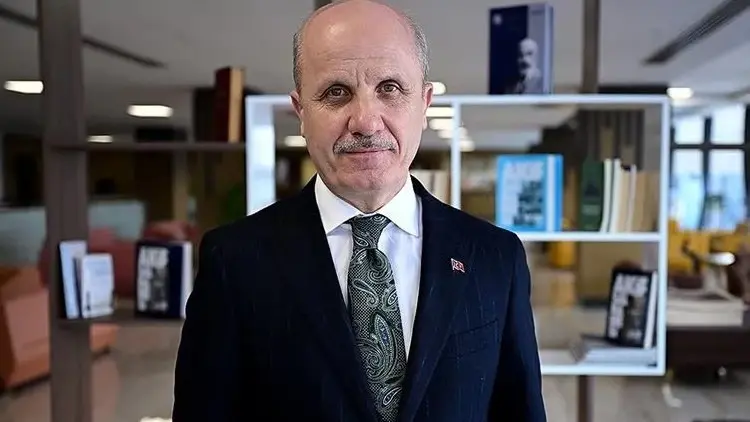
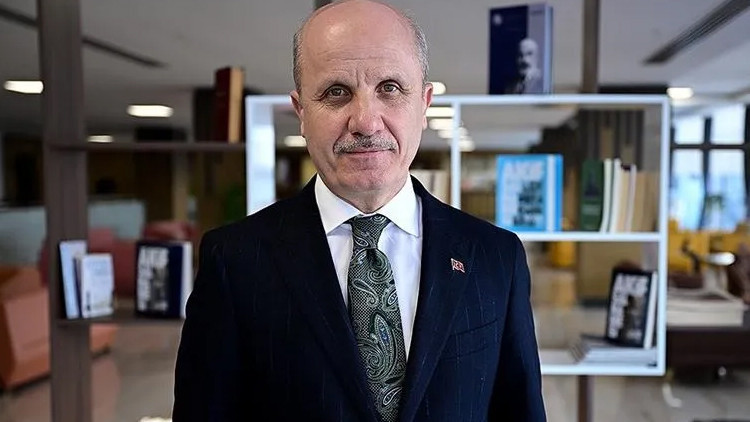
In a broad-ranging discussion on the future of higher education in Turkey, the President of the Council of Higher Education (YÖK), Prof. Dr. Erol Özvar, revealed that significant reforms are being considered across the country’s university system. Speaking during a live broadcast on CNN TÜRK with host Hakan Çelik, Özvar outlined a comprehensive agenda focused on modernizing academic curricula, aligning university programs with job market demands, integrating artificial intelligence into degree plans, and potentially shortening standard undergraduate education from four years to three.
The potential transition toward a three-year bachelor’s degree model represents one of the most substantial structural shifts proposed for Turkish higher education in recent decades. According to Özvar, YÖK has spent the past year preparing universities for this potential shift, which aims to align Turkish academic frameworks more closely with European standards while addressing domestic economic and demographic trends. Alongside degree length considerations, Özvar emphasized an urgent need for university administrations to streamline course loads, modernize outdated academic content, and phase out academic programs that fail to yield tangible employment outcomes for graduates.
Call for Curriculum Simplification and Course Load Reduction
A central pillar of the proposed higher education reforms is a comprehensive overhaul of undergraduate curricula across Turkish universities. Özvar pointed to a stark disparity between the structural demands placed on university students in Turkey compared to their peers in European institutions, calling on university administrations to take decisive steps toward reducing academic bloat and updating classroom content.
In Turkey, undergraduate students typically take up to 60 individual courses over the duration of a standard four-year program. In contrast, higher education systems across Europe generally require students to complete between 20 and 25 courses to earn a comparable bachelor’s degree. Özvar stressed that this high volume of individual courses in Turkish universities often leads to redundant theoretical content, overburdening students without necessarily delivering deeper professional or analytical competencies.
"Curricula in educational programs must be simplified," Özvar stated during the interview. "The number of courses must be reduced. While around 20 to 25 courses are taught at the undergraduate level in Europe, this figure reaches 60 in Turkey. Course content needs to be updated. University administrations must take active steps in this regard."
Part of this content modernization involves embedding digital capabilities directly into general degree coursework. Özvar highlighted that fundamental technology skills, digital literacy, and artificial intelligence must cease to be treated as isolated electives and instead become integrated components of broader university education. As industries globally undergo rapid digital transformations, YÖK’s vision requires higher education institutions to ensure that every graduate possesses foundational AI literacy and practical digital problem-solving skills regardless of their primary field of study.
To achieve this, university executives and academic boards are being urged to audit their existing course offerings, consolidate overlapping subjects, eliminate obsolete material, and create leaner, highly focused academic tracks that prioritize core subject mastery and modern technical competencies over sheer course quantity.
Transitioning Toward a Three-Year Undergraduate Structure
Beyond curriculum reduction, YÖK is actively evaluating a strategic model that would allow undergraduate degrees in Turkey to be completed within three years rather than the traditional four-year timeframe. Özvar explained that the groundwork for this initiative has been quietly taking shape within the council and university leadership over the past year.
The proposed system rests on restructuring standard undergraduate qualifications into a 180 ECTS (European Credit Transfer and Accumulation System) credit framework. Under this model, students would be able to satisfy all necessary degree requirements within three academic years, bringing Turkey into closer alignment with European higher education structures that utilize three-year bachelor’s degrees as a standard baseline.
Özvar noted that across European universities, undergraduate education frequently follows a three-year structure, often paired with specialized master’s programs in a "3+2" format for fields that require advanced technical expertise or professional certification, such as engineering and architecture.
"Degree programs in Europe are, on average, three years at the undergraduate level," Özvar explained. "In certain fields where specialized competencies are required, such as architecture and engineering, a 3+2 structure is implemented. What we are saying is that we can formulate our undergraduate credit requirements within a 180-credit framework, and this can be completed within three years. We have been preparing our universities for this topic for a year."
By shifting toward a 180-credit structure over three years, YÖK aims to streamline the academic pipeline, allowing students to acquire core theoretical knowledge more efficiently while spending less time in formal classroom settings and transitioning earlier into practical application.
Demographic Pressures and Early Workforce Entry
The rationale behind shortening the undergraduate timeline is deeply tied to Turkey’s broader demographic dynamics, national educational structure, and the timeline required for young adults to enter the economic workforce.
Under Turkey’s current educational framework, compulsory primary and secondary education follows a "4+4+4" structure, requiring 12 full years of schooling prior to university enrollment. When combined with a standard four-year undergraduate program, a student spends a minimum of 16 years continuously enrolled in formal educational institutions. For male students, subsequent obligations—such as mandatory military service, mandatory post-graduate internships, and the typical duration of post-graduation job searches—frequently delay full entry into settled economic and adult life until the ages of 26 or 27.

Özvar underscored that this prolonged timeline poses significant challenges when viewed alongside Turkey’s shifting demographic landscape. The national population is experiencing a noticeable trend toward declining birth rates and lower fertility levels, while the average age of marriage continues to rise. In light of these critical demographic shifts, delaying young adults’ entry into active economic productivity and independent life is increasingly seen as unsustainable.
"For a young person in secondary education, we have 12 years of compulsory education under the 4+4+4 system," Özvar observed. "With four years of undergraduate education, the period spent inside formal educational institutions reaches 16 years. For male students, when military service, internships, and job hunting are factored in, the age of stepping into life reaches 26 or 27."
Özvar emphasized that Turkey’s demographic realities require a policy pivot that helps young people transition out of full-time academic lecture halls and into the active workforce sooner. By compressing academic degree requirements into three years and emphasizing practical, application-oriented learning, the proposed reforms aim to enable students to establish their careers, gain professional independence, and contribute directly to the economy at an earlier stage in life.
"Our population is in a declining trend," Özvar added. "Fertility rates have dropped, and the age of marriage has been delayed. Turkey’s demographic structure is exceptionally critical. Course instruction should continue, but our students must be integrated into real life with an emphasis on practical application."
Aligning University Degrees with Employment and Research Excellence
The drive to restructure undergraduate timelines coincides with a broader institutional push by YÖK to hold higher education institutions accountable for graduate employment outcomes. Historically, university education and labor market demand were often treated as distinct domains in academic policy. However, Özvar stated clearly that contemporary higher education policy can no longer isolate academic offerings from economic realities.
Under YÖK’s current policy framework, academic departments and programs that consistently report low graduate employment rates are being systematically evaluated and closed. Conversely, the council is actively encouraging and approving new degree programs tailored specifically to modern market needs and emerging industries.
Özvar revealed that nearly 80 new, modern academic programs have been introduced across Turkish higher education institutions recently to replace obsolete disciplines that no longer serve the labor market or provide clear career pathways for students.

"In the past, the topics of universities and employment were rarely brought together," Özvar said. "Now, universities must address this issue. There are programs where employment is straightforward. Departments whose graduates cannot find employment are being closed. The number of newly opened programs has approached 80, while aging programs are being phased out of the system."
While pushing for structural efficiency and labor market alignment, Özvar also highlighted Turkey’s substantial progress in global scientific research and academic publishing over the past two decades. He pointed out that increased public funding, expanded university infrastructure, and sustained research investments have yielded measurable international academic performance gains.
According to global academic indexing data cited by Özvar, Turkey ranked 35th in the world in scientific publications during the early 2000s. Through targeted resource allocation and institutional development over the intervening years, the country has climbed to 13th place globally in total scientific publication output.
"When the budget increases, development follows," Özvar concluded. "Turkey has advanced from 35th place to 13th in the world in scientific publications. We have elevated our standing to 13th in scientific output, whereas in the 2000s, Turkey was ranked 35th."
As YÖK continues its consultations with university leadership across the country, the combined initiatives—ranging from curriculum simplification and mandatory AI integration to the potential realization of 180-credit, three-year undergraduate degrees—mark a fundamental realignment of Turkish higher education toward global competitiveness, workforce readiness, and demographic sustainability.