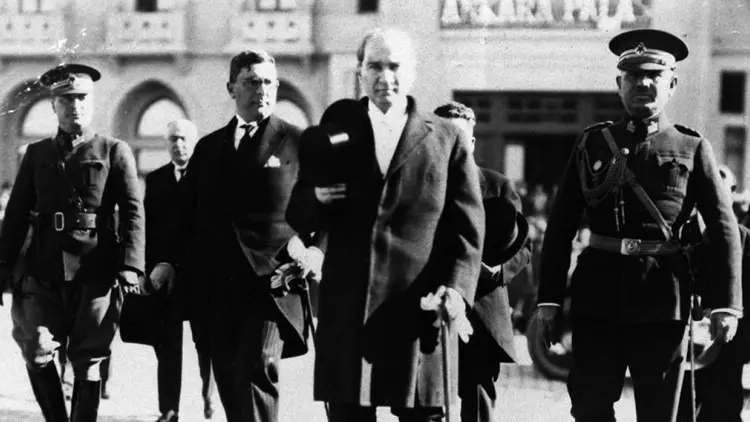
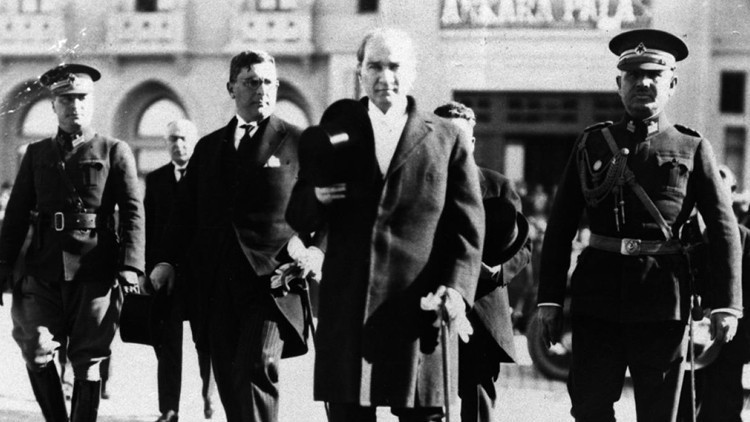
Eighty-eight years have passed since the departure of Gazi Mustafa Kemal Atatürk, the visionary founder of the Republic of Turkey and the Commander-in-Chief of the Turkish War of Independence. On November 10, 2026, the Turkish nation once again came together in a profound display of unity, respect, and remembrance to honor the life and legacy of a leader whose influence continues to shape the country’s trajectory into its second century. As has become a sacred tradition across the Anatolian peninsula and beyond its borders, the anniversary of Atatürk’s passing was marked by official ceremonies, moments of silence, and a series of commemorative messages from the highest levels of the Turkish state.
The commemoration serves not only as a day of mourning but as a moment of national reflection on the principles of sovereignty, independence, and modernization that Atatürk championed. From the capital of Ankara to the smallest villages, the legacy of the "Great Leader" remains a cornerstone of the national identity, bridging the history of the struggle for liberation with the aspirations of a modern, sovereign power.
State Leaders and Ministers Issue Commemorative Messages for November 10 Atatürk Remembrance Day
As the nation paused at 09:05 AM—the exact moment of Atatürk’s passing in 1938—the political leadership of the Republic of Turkey issued a series of statements emphasizing the enduring relevance of his reforms and the commitment to the survival and prosperity of the Republic.
Vice President Cevdet Yılmaz released a poignant message reflecting the deep sense of gratitude felt by the nation. In his statement, Yılmaz highlighted Atatürk’s dual role as both a revolutionary statesman and a military genius. "I commemorate Gazi Mustafa Kemal Atatürk, the founder of our Republic and the Commander-in-Chief of our Struggle for Independence, with mercy, gratitude, and respect on the 88th anniversary of his transition to eternity," Yılmaz stated. He further extended his tributes to the broader collective of the independence movement, adding, "On this occasion, I remember with mercy and gratitude all the heroes of our National Struggle, our beloved martyrs, and our veterans who have passed away."
The Vice President’s words underscored a central theme of this year’s commemorations: the idea that the Republic was not the work of one man alone, but the result of a collective national will that Atatürk catalyzed and led. This sentiment was echoed by Numan Kurtulmuş, the Speaker of the Turkish Grand National Assembly (TBMM). Kurtulmuş’s message carried significant weight, given the TBMM’s status as the institution where the national will is manifested—a body first presided over by Atatürk himself.
"We commemorate Gazi Mustafa Kemal Atatürk, the first Speaker of our Turkish Grand National Assembly—the headquarters of the national will—and the founder of our Republic, on the anniversary of his passing," Kurtulmuş said. He emphasized that the path toward an "independent and strong Republic of Turkey" was paved by the extraordinary leadership shown during the National Struggle. Kurtulmuş reminded the public that the memory of Atatürk is inseparable from the sacrifices made for the homeland, offering prayers for the fallen soldiers and veterans who secured the nation’s freedom.
The judicial and executive branches also contributed to the chorus of remembrance. Justice Minister Akın Gürlek issued a statement mirroring the sentiments of mercy and respect, emphasizing the foundational role Atatürk played as the "Commander-in-Chief of the National Struggle." Gürlek’s message focused on the historical continuity of the state, noting that the values of the Republic remain the guiding light for the nation’s legal and social frameworks.

In a similar vein, Murat Kurum, the Minister of Environment, Urbanization, and Climate Change, spoke of the responsibility to preserve Atatürk’s heritage for future generations. "We will always keep his cherished memory and his ideas alive, and we will carry the legacy he left behind to the future with the same faith and determination," Kurum remarked. His statement highlighted the government’s commitment to not only remembering the past but actively building a future that aligns with the "Great Leader’s" vision of a developed and resilient Turkey.
Foreign Minister Hakan Fidan provided a perspective that linked Atatürk’s legacy to Turkey’s contemporary role on the global stage. Fidan noted that the strength Turkey currently wields in its foreign policy is derived directly from the will for independence that Atatürk instilled in the nation. "With the strength we derive from our nation’s will for independence, we are determinedly implementing our foreign policy, which is based on Turkey’s sovereignty and national interests," Fidan stated. His remarks suggested that the "Atatürkist" principle of complete independence remains the North Star for Turkish diplomacy in an increasingly complex international environment.
One of the most comprehensive and detailed tributes came from National Education Minister Yusuf Tekin, who contextualized Atatürk’s legacy within the framework of the "Century of Turkey." Tekin emphasized that the responsibilities handed down by the founder of the Republic are renewed with every generation. He described November 10 as a day for the nation to re-apprehend its historical struggle and its duties toward the future.
Minister Tekin highlighted that Atatürk was not only a military and political giant but also the "Head Teacher" (Başöğretmen) of the nation. He argued that Atatürk’s military leadership and his educational vision were two sides of the same coin, both aimed at the elevation of the Turkish people. Tekin quoted one of Atatürk’s most famous directives to educators: "Republic wants from you generations whose ideas are free, whose conscience is free, whose wisdom is free."

Explaining the depth of this quote, Tekin noted, "A mind that is free in thought asks questions, researches, and reasons. A person with a free conscience carries moral responsibility and observes right and justice. A generation with free wisdom grasps the depth of its own culture and remains open to the common heritage of humanity."
Tekin used the occasion to link these foundational principles to the "Century of Turkey Education Model," a contemporary initiative aimed at developing students’ reasoning skills while integrating them with national and moral values. He asserted that a nation’s memory is built on its founding will and the historical accumulation that prepared that will. "Protecting national sovereignty, full independence, democracy, the Republic, and science—and exalting the labor of the teacher, the curiosity of the student, and the contribution of the family—constitutes the essence of this responsibility," Tekin concluded.
The emphasis on national unity and the communicative power of the Republic was further addressed by Burhanettin Duran, the Presidency’s Director of Communications. Duran remarked that the National Struggle, where the determination to protect independence shaped history, remains one of the strongest examples of the Turkish people’s common will and spirit of unity. He described the Republic as the most significant achievement of the nation’s self-determination.
"I remember Gazi Mustafa Kemal Atatürk, his brothers-in-arms, and all our heroes who struggled for the independence of our homeland with mercy," Duran stated, reinforcing the narrative that the modern state is a monument to the collective bravery of the Turkish people.

Finally, AK Party Deputy Chairman and Party Spokesperson Ömer Çelik shared a message that echoed Atatürk’s own famous declaration: "The Republic of Turkey will stand forever." Çelik paid tribute to the "builder of the Republic" and expressed a commitment to the enduring nature of the state. "We commemorate the founder of our Republic, Gazi Mustafa Kemal Atatürk, with mercy and respect on the 88th anniversary of his passing. We remember all the heroes of our National Struggle and our beloved martyrs with mercy and gratitude," he said.
Across the country, these messages were mirrored by local ceremonies at Atatürk monuments. In schools, students recited poems and performed plays detailing the life of the boy from Thessaloniki who grew up to dismantle an empire and forge a modern nation-state. The 88th anniversary serves as a reminder that while the man who founded the Republic has been gone for nearly nine decades, the "intellectual heritage" he left behind—rooted in science, rationality, and national sovereignty—remains the primary catalyst for Turkey’s ongoing journey.
The widespread participation in these commemorations, spanning various political and social segments of society, demonstrates that the figure of Mustafa Kemal Atatürk remains a unifying force. As Turkey navigates the challenges of the 21st century, the annual remembrance on November 10 continues to function as a renewal of the national vow: to protect the Republic and to strive toward the "level of contemporary civilizations" that Atatürk set as the ultimate goal for his people. Through the words of its leaders and the silence of its citizens, Turkey once again proved that the legacy of its founder is not merely a matter of history, but a living, breathing guide for the future.