As travel preferences shift and navigating Western European visa processes becomes increasingly complex, Turkish travelers are turning their attention toward alternative cultural hubs. At the forefront of this shift is St. Petersburg, Russia’s imperial capital, which has rapidly transformed into one of the most sought-after destinations for tourists from Turkey.
Combining rich literary heritage, striking architectural splendor, and straightforward entry requirements, the city offers a compelling option for those seeking a European urban experience without the stress of traditional visa applications.

The growing popularity of St. Petersburg is clearly reflected in recent tourism data. Last year, a total of 69,000 Turkish tourists visited the city. Remarkably, that same benchmark was matched in just the first six months of this year, pointing to a dramatic surge in demand.
To accommodate this growing interest, aviation links between Turkey and St. Petersburg have expanded significantly. Airlines now operate up to 10 daily flights from Istanbul alone, taking roughly four hours. In response to mounting passenger demand, carriers such as AJet have introduced direct routes from Ankara, while regular charter flights operate out of Antalya. Altogether, approximately 300 flights per week currently connect various Turkish cities to St. Petersburg.
For many visitors, St. Petersburg represents far more than a routine city break. From the moment one arrives, the urban landscape conveys the distinct sensation of stepping back into another era. Broad boulevards, pastel-hued palaces, interconnected canals, historical bridges, and grand museums together create an environment reminiscent of a vast, open-air theater. Were one to remove modern motor vehicles from its streets, the city’s historical core would easily pass for the 19th century.

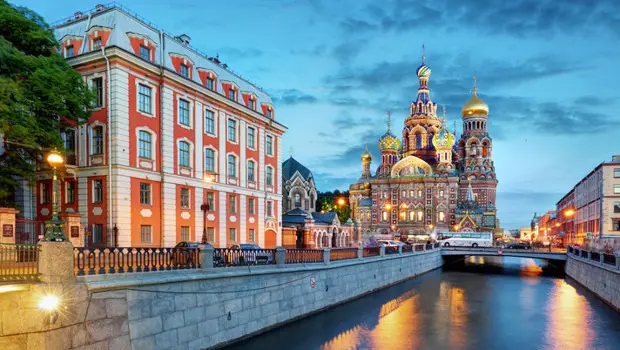
Often referred to as the "Venice of the North," St. Petersburg is defined by its relationship with water. Encompassing more than 90 rivers and canals spanned by hundreds of bridges, the city offers constant reflections and picturesque vistas around every corner. Excursions along the Neva River provide a unique perspective on the city’s scale, offering grand views during the day and an illuminated panorama after sunset.
‘Ah, If You Only Knew How Many Times I Have Fallen in Love Like This!’
The romantic and dramatic character of St. Petersburg has long served as a muse for world literature, famously inspiring Fyodor Dostoyevsky to write: "Ah, if you only knew how many times I have fallen in love like this!"
The city’s captivating atmosphere is most pronounced during the famous "White Nights" (Beyaz Geceler), a phenomenon that inspired Dostoyevsky’s celebrated novella of the same name. Experiencing the city during this period often proves even more evocative than the literature it inspired, as continuous twilight bridges the gap between dusk and dawn.

A Walk Through History: Every Step a New Surprise on Nevsky Prospect
To truly understand the rhythm of St. Petersburg, a walk along Nevsky Prospect (Nevsky Bulvarı) is essential. Serving as the city’s most dynamic, iconic, and bustling thoroughfare, the avenue is alive at all hours with historic buildings, vibrant cafés, bookstores, boutiques, bridge crossings, and street performers.
Laid out in the early 18th century under the reign of Peter the Great, Nevsky Prospect was planned as the central axis of the new imperial capital. Extending approximately 4.5 kilometers from the Admiralty complex to the Alexander Nevsky Monastery, the avenue functions as a living timeline where urban history, classical architecture, and modern daily life intersect.
Walking down Nevsky Prospect offers a continuous sequence of architectural monuments. On one side, the sweeping, majestic colonnades of Kazan Cathedral command attention; on the other, the refined Art Nouveau facade of the Singer Building (Singer Binası) stands over the Griboyedov Canal. Further along, historic shopping arcades and canal crossings open up into sweeping views of the city.

The avenue also holds a prominent place in Russian literary history. It provided the title and setting for Nikolai Gogol’s famous short story "Nevsky Prospect" and remains a key location for anyone wishing to trace the urban atmosphere depicted in Dostoyevsky’s works. Walking among the crowds, visitors experience a environment where the past and the present seamlessly coexist.
Nevsky Prospect remains the ideal starting point for first-time visitors. Observing its architectural details by day, walking under its streetlights at night, or simply pausing at a street-side café to watch the city move by offers an authentic taste of St. Petersburg’s unique character.
Escaping Schengen Stress: A Hassle-Free, Budget-Friendly Alternative
A key driver behind the rising number of Turkish tourists choosing St. Petersburg is the straightforward entry process. Special "Green Passport" holders from Turkey can enter Russia without a visa. Meanwhile, standard burgundy passport holders can bypass lengthy document collection and application queues by obtaining an electronic visa (e-visa) online.

Requiring only a valid passport and a digital photograph, the e-visa is typically issued within a few business days. This efficient process makes St. Petersburg an attractive alternative to Western European destinations, where obtaining a Schengen visa has become increasingly difficult and stressful.
Financial considerations also play a significant role. Compared to many popular Western European capitals, St. Petersburg offers considerably more affordable rates for accommodation, dining, local transport, and cultural excursions. This cost advantage allows travelers to enjoy a rich cultural itinerary while keeping their travel budgets manageable.
Architectural Jewels: The Hermitage, Church of the Savior on Spilled Blood, and Peterhof
Among the city’s wealth of historical attractions, the State Hermitage Museum stands out as a world-class cultural institution. More than a standard museum, the Hermitage is a vast repository of global art and history. Its foundations were laid in 1764 when Empress Catherine the Great acquired a major collection of European paintings.

Today, it ranks among the largest and most prestigious museums in the world. The Winter Palace, which houses the core of the museum, serves as a grand architectural testament to the power and extravagance of Tsarist Russia. Walking through its gilded halls, visitors are immersed in the grandeur of imperial history.
Another defining landmark of St. Petersburg is the Church of the Savior on Spilled Blood (Kanlı Kilise). With its colorful onion domes and decorative facade, the structure resembles something from a classic fairy tale, yet its origin is rooted in a somber historical event. The church was commissioned on the exact site where Tsar Alexander II was mortally wounded in an assassination attempt in 1881.
Construction began in 1883 and extended over two decades, concluding in 1907. While the exterior displays traditional Russian revival architecture, the interior is adorned with thousands of square meters of intricate mosaic artwork, creating a visually stunning experience for visitors.

Located just outside the city center along the Gulf of Finland lies Peterhof, the celebrated summer residence often referred to as "Russia’s Versailles." Designed during the early 18th century under Peter the Great, the estate was conceived as a grand seaside imperial retreat.
The highlight of Peterhof is its extensive park system and famous Grand Cascade fountains, featuring gilded statues, elaborate water features, and formal gardens that slope gently toward the Baltic shore. For nearly two centuries, Peterhof served as the primary summer retreat for Russian emperors, and it remains one of the most remarkable palace ensembles in Europe.
History, Art, and Culture Around Every Corner
The true charm of St. Petersburg lies in its versatility. Visitors can spend one morning exploring imperial state rooms and the afternoon walking through the neighborhood streets that inspired classic 19th-century novels. Evenings can be spent attending world-class opera or ballet performances, or simply relaxing at a waterfront café along the city’s extensive canal network.

The city’s culinary scene offers a similar balance of tradition and modern style. Travelers can sample classic Russian staples such as blini, borscht, and beef stroganoff at historic dining rooms, or explore modern establishments serving contemporary international cuisine. With prices remaining accessible compared to Western Europe, long stays and detailed culinary exploration are well within reach for most visitors.
A Destination to Remember
Convenient flight options make St. Petersburg an accessible destination for Turkish travelers. The peak travel season occurs during June and July, when the White Nights bring near-constant daylight to the city. During these midsummer weeks, streets remain active long past midnight, as locals and tourists alike take advantage of the extended daylight to explore the city’s parks, embankments, and open-air venues.
For Turkish travelers looking to enjoy a classic European atmosphere without navigating complex visa applications, St. Petersburg stands out as an increasingly ideal choice. With its rich history, celebrated museums, grand architecture, and picturesque waterways, the city offers a memorable travel experience that leaves a lasting impression long after the journey ends.