

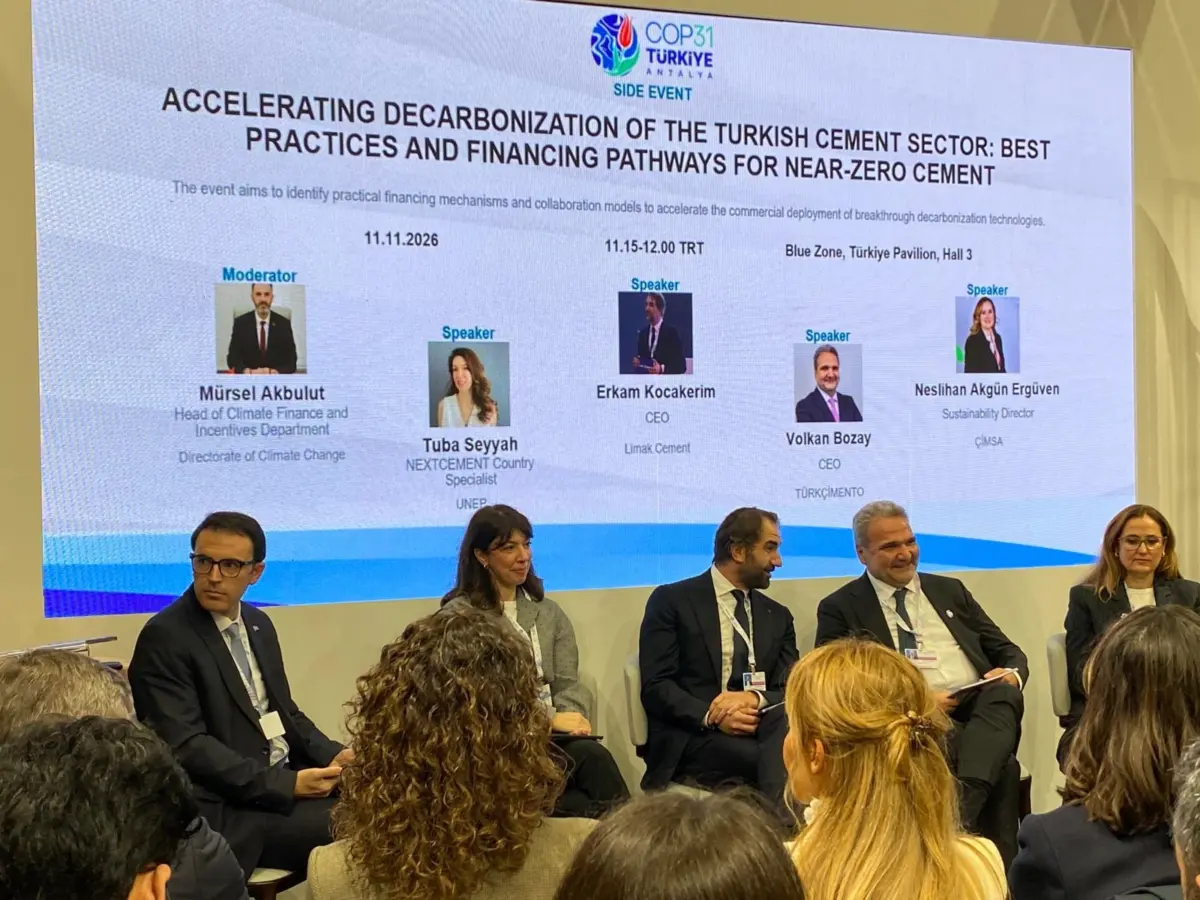
The first week of discussions has concluded at the summit in Antalya, where corridor debates among delegates, financiers, and policymakers were dominated by a single recurring descriptor: "green." From green investments and green credit facilities to green bond issuances, sustainable finance has taken center stage. Yet as capital markets increasingly pivot toward sustainability pledges, market participants are confronting an essential prerequisite: before an economic activity can be branded as green, there must be a universally understood and verifiable definition of what "green" actually means.
Turkey sought to codify this definition through its Green Taxonomy Regulation, which entered into force on September 24, 2026. Designed to establish an official classification system for sustainable economic operations, the regulatory framework represents a milestone in the country’s climate policy architecture. However, its implementation has brought two critical policy questions to the forefront of financial discussions. First, could the regulatory flexibilities extended to natural gas and intermediate transition processes—particularly when compared against the stricter benchmarks enforced by the European Union—be perceived across international capital markets as greenwashing, effectively serving as an unjustified green label? Second, if a noticeable gap opens between Turkey’s national criteria and the investment standards maintained by multilateral development banks, do investments financed under the green banner today risk turning into economically impaired, stranded assets tomorrow?
What Does a Taxonomy Actually Do?
In practical terms, a green taxonomy operates as an official, standardized dictionary for sustainable investments. When a corporation or project developer asserts that a specific enterprise or capital expenditure is environmentally friendly, the taxonomy establishes the technical, scientifically grounded threshold required to validate or refute that claim.
The objective of such a framework is fundamentally twofold. On one side, it aims to clarify market signals so that domestic and foreign capital can flow smoothly toward genuinely sustainable projects without friction. On the other side, it functions as a regulatory barrier against greenwashing—the practice of misrepresenting carbon-intensive or ecologically damaging activities as environmentally benign.
Turkey’s taxonomy framework draws heavily upon the architecture developed by the European Union. It incorporates the same six overarching environmental objectives: climate change mitigation, climate change adaptation, the sustainable use and protection of water and marine resources, the transition to a circular economy, pollution prevention and control, and the protection and restoration of biodiversity and ecosystems.
Under the regulation, an economic activity must fulfill three core criteria to earn a green classification: it must make a substantial contribution to at least one of these six environmental objectives; it must adhere to the "Do No Significant Harm" principle by ensuring it does not damage any of the remaining five objectives; and it must comply with minimum social safeguards, protecting basic labor and human rights. In its initial scope, the Turkish regulation defines 137 economic activities across 16 sectors, while explicitly excluding solid fossil fuels such as coal from receiving green classification under any circumstances.
While the structural architecture aligns with international norms on paper, market observers and financial analysts emphasize that the credibility of the entire mechanism hinges upon technical details, specific operational metrics, and sector-by-sector implementation rules.
Natural Gas, Transition Activities, and the Risk of Greenwashing
The debate over regulatory integrity sharpens considerably regarding what the regulation designates as "transitional activities." In sustainable finance, a transitional activity refers to an economic process in a sector where technologically and economically viable low-carbon alternatives are not yet readily available. To qualify, such an activity must operate at best-in-class performance levels with the lowest feasible emissions profile, avoid creating carbon lock-in effects during its operating lifecycle, and avoid hindering the deployment of cleaner, zero-carbon substitutes.
Under Turkey’s regulation, the transitional classification encompasses several heavy and carbon-intensive industries, including electricity and heat generation from natural gas, new nuclear power installations, cement production, iron and steel manufacturing, aluminum smelting, and specific chemical production processes.
The inclusion of natural gas and nuclear power mirrors the contentious path taken by the European Union, which added both sources to its taxonomy only after prolonged political negotiations and subject to stringent conditions. Under EU standards, a newly built natural gas-fired power plant must either maintain direct lifecycle emissions below 100 grams of carbon dioxide equivalent per kilowatt-hour, or meet an exacting secondary set of criteria: obtaining construction permits before 2030, directly replacing an existing coal-fired facility, and committing to a full switch to low-carbon or renewable gases by 2035.
In Turkey, the most critical question involves how and where these numerical emission thresholds are established. In the European Union, quantitative criteria are embedded directly within detailed delegated acts passed through formal legislative processes. In Turkey, by contrast, specific quantitative thresholds are not enshrined within the primary regulation itself. Instead, they are determined and updated by the Climate Change Directorate (İklim Değişikliği Başkanlığı), published on its official website, and subject to annual revisions.
This administrative model provides distinct domestic advantages, primarily regulatory agility: as low-carbon technologies evolve and scientific data progresses, technical benchmarks can be updated rapidly without requiring lengthy legislative procedures. Yet from the perspective of an international institutional investor or foreign asset manager, this flexibility introduces structural uncertainty. Assessing whether a capital-intensive gas facility deemed green today will maintain that certification across a multi-decade operating lifecycle becomes exceptionally difficult.
This ambiguity is precisely where the risk of greenwashing emerges. If an asset in Turkey is awarded a green label under domestic criteria that diverge significantly from EU or global benchmarks, foreign investors are unlikely to recognize the designation. In a worst-case scenario, skepticism surrounding specific transition activities could undermine investor confidence across the entire Turkish sustainable finance ecosystem, leading international markets to discount green claims made by Turkish companies across the board. This vulnerability is exacerbated by the fact that corporate taxonomy disclosures remain largely voluntary, and formal administrative procedures for independent third-party verification have yet to be fully established.
Concurrently, a complementary imbalance persists on the adaptation front. Crucial climate adaptation measures that are vital for Turkey’s geographic and economic vulnerabilities—such as the widespread transition to agricultural drip irrigation systems or the deployment of drought-resistant seeds—receive disproportionately limited coverage within the current taxonomy framework. Consequently, the national taxonomy risks displaying excessive generosity toward fossil-based transition fuels while maintaining an overly restrictive posture toward basic, defensive capital investments required to safeguard the country against accelerating droughts and severe flooding.
Divergence with Multilateral Banks and the Threat of Stranded Assets
The practical stakes of taxonomy alignment are underscored by Turkey’s reliance on external financing for its energy and industrial transition. A substantial portion of green and sustainability-linked capital entering the country originates from multilateral institutions, most notably the European Bank for Reconstruction and Development (EBRD) and the World Bank Group. These entities operate under their own distinct, evolving sustainability mandates.
The EBRD, for example, adopted an exclusion policy in 2023 that completely bars direct financing for upstream oil and gas exploration and extraction projects. For midstream pipelines and downstream gas-fired generation, the bank requires rigorous operational assessments to prove that any proposed facility aligns directly with the long-term decarbonization trajectories established under the Paris Agreement. In contrast, the World Bank Group continues to recognize natural gas as a necessary transition fuel in developing economies facing acute, immediate supply constraints, selectively financing gas infrastructure under specific economic criteria.
These varying institutional policies illustrate that "international standards" do not represent a single, static threshold, but rather a dynamic continuum of requirements. The operational risk for Turkey materializes if its domestic taxonomy rules fall outside this international regulatory corridor altogether.
Conventional gas-fired power generation assets are engineered to operate continuously over lifespans spanning 30 to 40 years. If an industrial facility or power utility constructs a natural gas installation financed through favorable green credit lines today, but domestic or international carbon prices rise under emissions trading systems over the next decade, or if international asset managers systematically purge such hybrid assets from their ESG-screened portfolios, the asset may struggle to generate its anticipated financial returns. In economic and financial literature, this phenomenon is defined as a stranded asset—an investment that suffers premature write-downs, devaluations, or full economic obsolescence before the end of its anticipated operational lifespan.
It is critical to note that taxonomy frameworks do not generate stranded asset risks on their own; fundamental market trends, climate impacts, and decarbonization mandates create those risks independently. The core objective of a taxonomy is to make those financial and operational risks visible and measurable to the market. When a green label masks economic transition risks instead of exposing them, the ultimate financial damage falls upon the institutional lenders, commercial banks, and insurance corporations that extended capital based on that label—and ultimately upon the individual depositors, investors, and policyholders backing those institutions.
The Compounded Risks in the Insurance and Tourism Sectors
The operational consequences of taxonomy misalignment are nowhere more immediate than in the insurance and reinsurance sector. Insurance companies occupy a dual role within the modern financial system: they operate simultaneously as large-scale institutional asset managers deploying substantial premium reserves into capital markets, and as risk underwriters directly absorbing the physical and liability damages caused by systemic climate events. Under the Turkish regulatory roadmap, insurance corporations will be required to comply with mandatory taxonomy reporting standards starting in 2029, alongside commercial banks.
Consider a practical financial dilemma: a domestic insurance company invests a portion of its technical reserves into local corporate bonds issued to finance a natural gas power plant that qualifies as green under Turkey’s national taxonomy. Within Turkey, the insurer reports this asset under the green column of its balance sheet. However, the insurer’s European joint-venture partner or the international reinsurer with whom it shares systemic liabilities evaluates the identical asset against European standards, determining that it fails to meet international green thresholds. The same balance-sheet asset is consequently saddled with conflicting financial evaluations, placing the burden on the domestic insurer to justify its sustainability metrics to global credit-rating agencies and international investors.
A second, equally illustrative vulnerability appears in the tourism and hospitality industry. In recognition of the sector’s vital role in the national economy, Turkey’s taxonomy explicitly incorporates tourism and commercial accommodation operations into its classification scope. Under these provisions, a modern coastal resort equipped with rooftop solar installations, high-efficiency building insulation, and certified environmental management systems could successfully qualify for a green taxonomy classification.
However, if that same certified facility is constructed within a flood-prone river basin or situated along an exposed shoreline vulnerable to accelerating coastal erosion and sea-level rise, the physical realities of climate change alter its financial standing. Within a matter of years, the escalating frequency of extreme weather events could make underwriting the property prohibitively expensive or entirely impossible for commercial insurers. Without active property and casualty insurance coverage, commercial lenders cannot extend mortgage or corporate loans against the facility, and prospective buyers disappear. Under this scenario, an asset carrying a verified green label becomes financially stranded—not due to its direct carbon emissions, but because of its acute vulnerability to physical climate impacts.
This dynamic exposes a blind spot within contemporary sustainable finance debates. While conventional discussions around stranded assets focus almost entirely on fossil fuel infrastructure such as coal mines and older thermal power stations, the total monetary value of commercial, agricultural, and tourism assets in Turkey vulnerable to devaluation from flash flooding, prolonged heatwaves, and water stress is considerably larger. If taxonomy rules prioritize direct emissions abatement while treating climate resilience as an incidental consideration, they fail to insulate the financial sector from physical climate disruptions.
Strategic Pathways Ahead: Four Essential Reforms
While the Green Taxonomy Regulation marks a critical step forward for Turkey’s sustainable finance infrastructure, its long-term success depends on addressing technical implementation gaps. Because mandatory reporting for financial institutions does not take effect until 2029, policymakers, regulators, and industry leaders have a multi-year window to refine the framework. To ensure the taxonomy protects financial stability and commands international credibility, four policy measures are essential:
- Establish Definitive Sunset Clauses for All Transition Activities: The regulatory framework should clearly define expiration dates and steadily decreasing emissions caps for transitional sectors, particularly natural gas-fired energy generation. Clear phase-out trajectories must detail the exact timeline and operational parameters under which gas facilities will cease to qualify for green designations. Without hard statutory deadlines, transition classifications risk turning into permanent exemptions that lock in fossil-dependent capital.
- Institute Structured Public Consultations and Justifications for Technical Revisions: Whenever the Climate Change Directorate updates technical screening criteria or quantitative thresholds, the proposed adjustments should undergo transparent public consultations involving industry experts, environmental scientists, and financial institutions. Every technical revision should be accompanied by published scientific and economic justifications. While administrative adaptability is a valuable tool, regulatory unpredictability deters long-term domestic and foreign capital.
- Publish an Official Concordance and Equivalence Mapping Framework: Regulatory authorities should release a comprehensive comparative matrix detailing exactly where Turkey’s national taxonomy aligns with, diverges from, or exceeds the benchmarks set by the EU Taxonomy and major multilateral development lenders like the EBRD and World Bank. Explicitly outlining these differences alongside the economic rationale for domestic variations will give financial institutions clear operational guidance, removing ambiguity from cross-border capital transactions.
- Elevate Physical Climate Adaptation and Resilience Across Project Reviews: Adaptation-focused investments—including modern drip irrigation networks, drought-resilient agricultural methods, municipal flood diversion infrastructure, and heat-resilient urban architecture—must receive equal prominence within the taxonomy’s operational catalog. In parallel, any large-scale infrastructure or industrial project seeking a green taxonomy label must undergo a standardized, mandatory physical climate risk and resilience assessment. While international frameworks often focus heavily on mitigation, Turkey’s high exposure to climate volatility makes physical resilience an indispensable economic safeguard.
The ultimate value of a green taxonomy does not rest upon the authority that issues the label, but upon the enduring trust of the domestic and global financial markets that rely upon it.