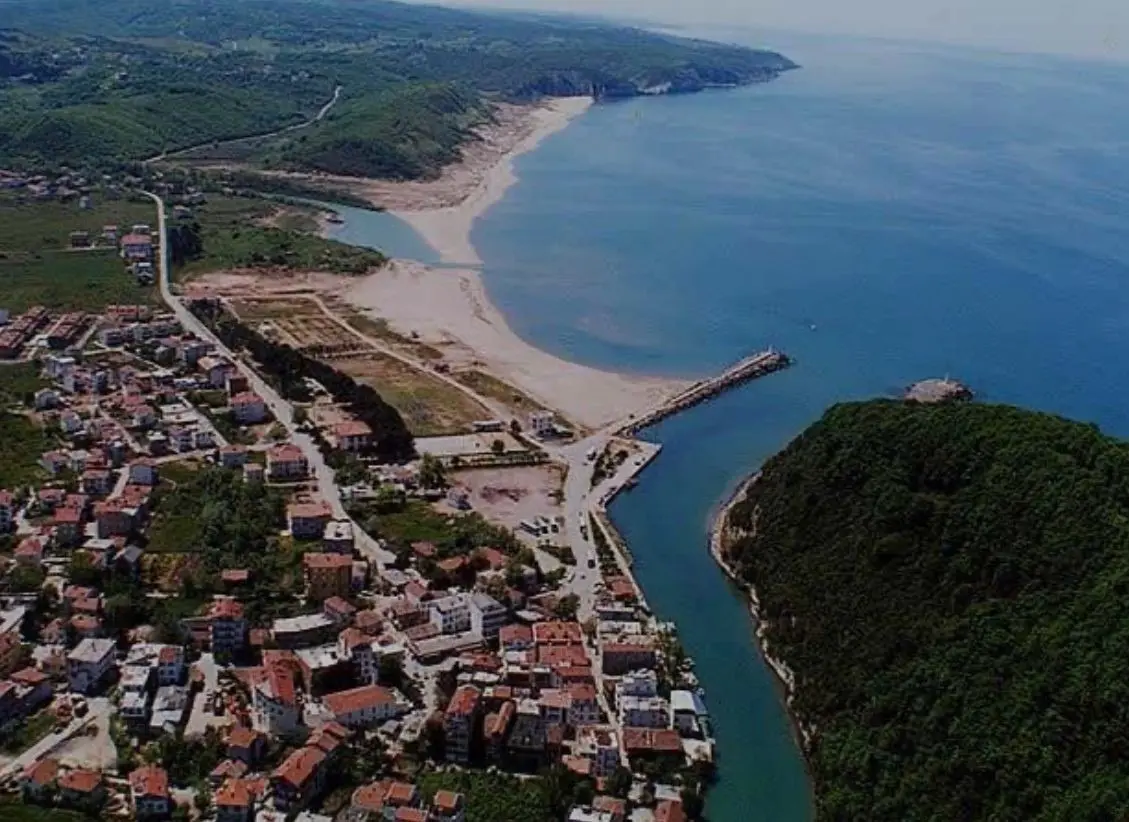
A coastal protection initiative designed by the State Hydraulic Works (DSİ) for the renowned Ağva Beach along Istanbul’s Black Sea coastline has been officially opened for public review, triggering immediate pushback from residents, local businesses, and environmental advocates. The proposed project involves the installation of massive boulder groynes at the mouths of two major streams flanking the popular resort strip, a move critics warn could permanently alter marine circulation, destroy natural beach dynamics, and compromise one of the region’s premier natural coastlines.
The zoning and implementation plans for the "Ağva Fishermen’s Shelter Groyne/Coastal Protection Structure" and the "Ağva Göksu Stream Groyne/Coastal Protection Structure" have been formally approved and placed on public display by the Istanbul Provincial Directorate of Environment, Urbanisation and Climate Change. Under Turkey’s Zoning Law, members of the public, civil society organizations, and local stakeholders are granted a strict statutory window to examine the documentation and file official objections. With the suspension period drawing to a close, local campaigners from the Ağva Life Solidarity Association (Ağva Yaşam Dayanışma Derneği) are mounting an urgent legal and public appeal, warning that only four days remain to challenge the administrative decision before the plans become finalized.
According to the official project dossier, the primary engineering rationale behind the initiative centers on flood mitigation and coastal defense. The plan envisions the construction of extensive groyne barriers made of giant boulders extending directly from the shoreline into the Black Sea. These hard barriers are to be situated where the Sungurlu (Ağva) and Göksu streams empty into the sea, flanking either side of the sandy beach corridor. Official documentation asserts that the rock structures will regulate sediment transport and solid particle accumulation at the mouth of the Sungurlu Stream, thereby preventing riverbed blockages, mitigating flash flood hazards, and limiting coastal erosion.
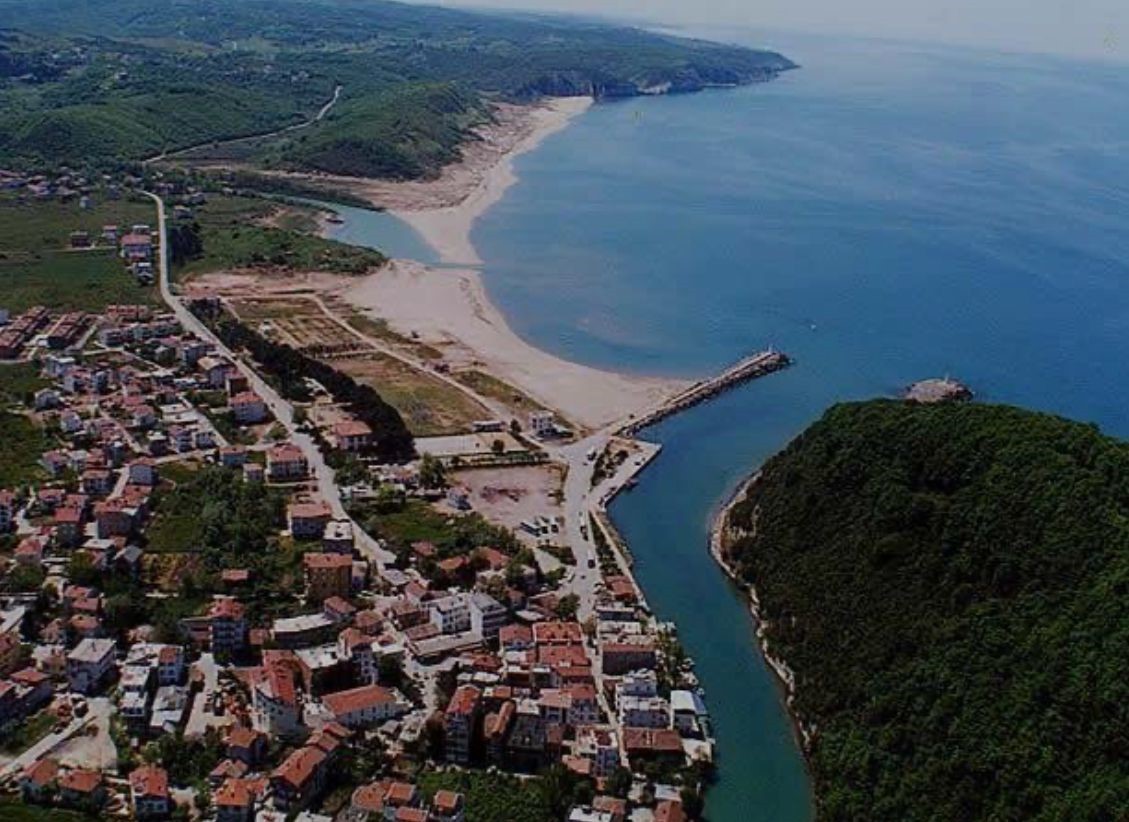
However, the local community and environmental organizations view the initiative with profound concern. Opponents argue that placing rigid, artificial rock barriers into the delicate littoral zone between the two river mouths will disrupt the natural hydrodynamic balance of the Black Sea coast. Activists caution that rather than solving environmental problems, the engineering intervention risks degrading marine ecosystems, degrading water quality along the central public beach, and undermining the local eco-tourism economy that depends entirely on Ağva’s pristine natural landscape.
Sea Filling and Heavy Construction on the Public Beach
The project layout calls for substantial coastal reclamation and marine engineering that will dramatically reshape the shoreline profile. Detailed project reports indicate that the construction of the groynes and accompanying coastal protection works will require filling parts of the sea to establish permanent infrastructure, including operational wharves, quays, and specialized boat slipways (haul-out areas).
The anticipated construction timeline spans approximately three years. During this multi-year implementation phase, the project will require an intense logistical operation involving thousands of heavy haulage trucks, excavators, and heavy machinery operating directly across the beach environment. Under the current design, the public shoreline will effectively be hemmed in on both sides by rigid groyne installations, transforming a pristine natural coastal landscape into an active industrial worksite.
Residents, local business operators, and tourism professionals in Ağva have expressed grave reservations regarding the acute disruptions of the building phase as well as the lasting ecological footprint. They emphasize that subjecting a delicate coastal ecosystem to years of intensive sea filling and earthmoving will inevitably damage the shoreline’s physical integrity, with strong possibilities that the public beach will suffer long-term degradation and eventual loss of public utility.

Severe Threat to Local Tourism and Ecological Equilibrium
Representatives of local civil society stress that the introduction of heavy concrete and rock barriers fundamentally clashes with the character of a destination whose primary appeal lies in unspoiled natural beauty. Meral Kantarcıoğlu, a representative of the Ağva Life Solidarity Association, underscored the ecological risks inherent in artificially manipulating sediment flows along dynamic shorelines.
"Groynes interrupt the natural sand transport cycle, which can trigger severe imbalances across the coastal strip," Kantarcıoğlu stated. "While such structures might reduce shoreline erosion in one specific localized area, they frequently accelerate erosion further along the coast and destroy native shoreline habitats in the process. Ağva is a prominent tourism hub whose reputation is built entirely on its distinctive natural assets. The installation of massive rock and concrete structures will shatter this natural aesthetic. Furthermore, alterations to the shoreline will restrict public access and usability of our coastal spaces, delivering a direct blow to the local tourism sector."
Kantarcıoğlu further noted that the Black Sea’s characteristic wave regimes, seasonal currents, and natural energy patterns have historically shaped and maintained the Ağva coast in a self-regulating equilibrium.
"The construction of groynes interrupts these organic processes and carries the potential to generate much larger, far more intractable environmental crises over the long term," Kantarcıoğlu explained. "Even if groyne projects are presented as short-term remedies for localized coastal protection challenges, in the broader picture they carry an undeniable risk of inflicting irreparable damage upon Ağva’s natural coastal architecture and wider marine ecosystem."
Water Stagnation, Pollution, and Habitat Alteration
Beyond physical beach erosion, critics have raised detailed hydrotechnical concerns regarding how the hard barriers will interact with prevailing winds and localized water circulation. Muhterem Yaman, also representing the Ağva Life Solidarity Association, pointed out that the geographic orientation of the planned groynes leaves them vulnerable to extreme meteorological conditions, specifically the powerful northwesterly Karayel winds that dominate Black Sea storms.
"Because the orientation of these groynes lies open to the northwest Karayel direction, severe storm events exceeding 24 hours will cause elevated sea levels to surge directly toward the river mouths, creating destructive backwater effects upstream," Yaman warned.
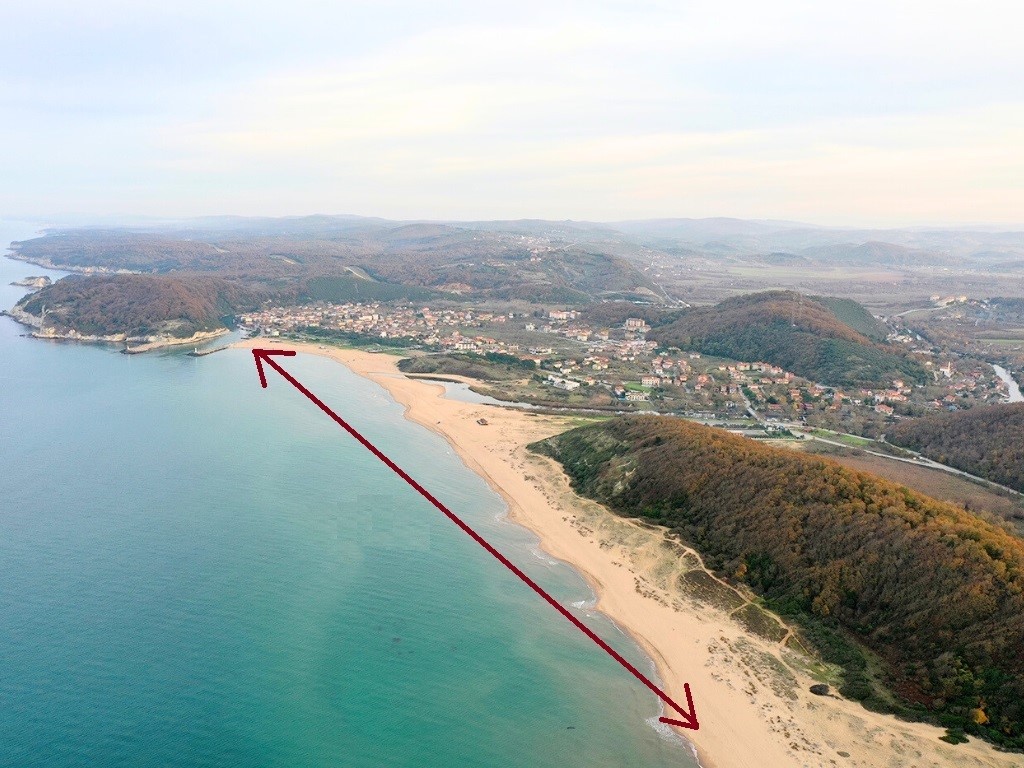
Yaman emphasized the critical social and ecological value of the immediate shoreline: "The stretch of approximately 300 meters lying between the Ağva (Sungurlu) Stream and the Göksu Stream forms the core of Ağva Beach, an area extensively utilized by the public. The coastal protection groyne planned for the Göksu outlet will severely impede natural seawater exchange and circulation. This lack of dynamic flow will foster stagnant water conditions, invite severe pollution accumulation, and cause excessive sea meadowing and weed proliferation (‘çayırlaşma’), ultimately rendering the public beach unusable for swimming and recreation."
In light of these projected outcomes, community organizers are urging both local inhabitants and the broader Istanbul public to take swift civic action before administrative appeal mechanisms expire. "We call upon all residents of Istanbul and all citizens living in Ağva to stand in solidarity with us and defend our shared public commons," Yaman added, urging stakeholders to submit formal objection petitions to the Istanbul Provincial Directorate of Environment, Urbanisation and Climate Change.

The complete planning files, implementation amendments, and environmental assessment dossiers for the Ağva Fishermen’s Shelter and Göksu Stream coastal protection structures remain available for public inspection through the official portal of the Istanbul Provincial Directorate of Environment, Urbanisation and Climate Change as the final days of the statutory objection window elapse.