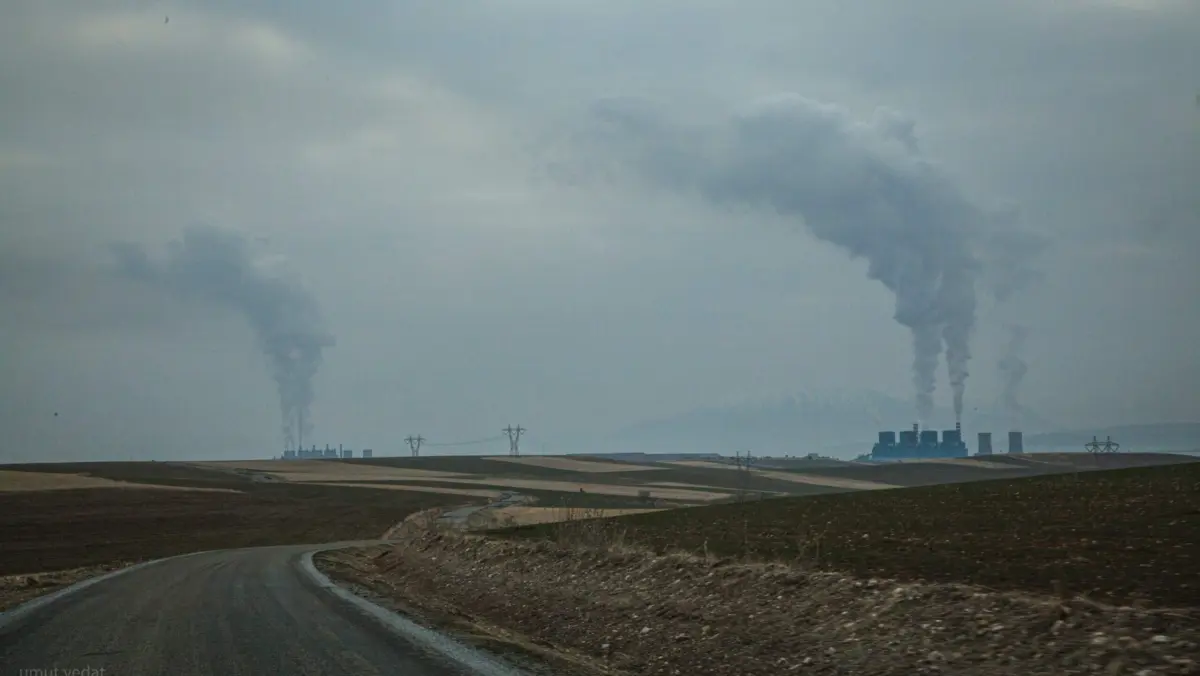
A coalition of non-governmental organizations working in the field of climate and environmental policy has published Turkey’s "2024 Climate Report Card," offering a comprehensive assessment of the nation’s climate actions over the past year. The evaluation presents a mixed picture: while the government has put forward ambitious roadmaps to expand domestic solar and wind power generation, these positive signals are heavily undercut by persistent investments in fossil fuels, the absence of a coal phase-out timetable, controversial nuclear energy commitments, and continued delays in passing a binding national climate law.
According to the civil society scorecard, Turkey’s stated ambition to quadruple its wind and solar generation capacity represents a noteworthy step toward modernizing its energy landscape. However, the report cautions that without formal integration into binding national energy plans, transparent regulatory oversight, and genuine public consultation, high-level targets risk remaining unfulfilled while high-emission practices continue unchecked across the economy.
Afşin-Elbistan and the Burden of Coal Expansion
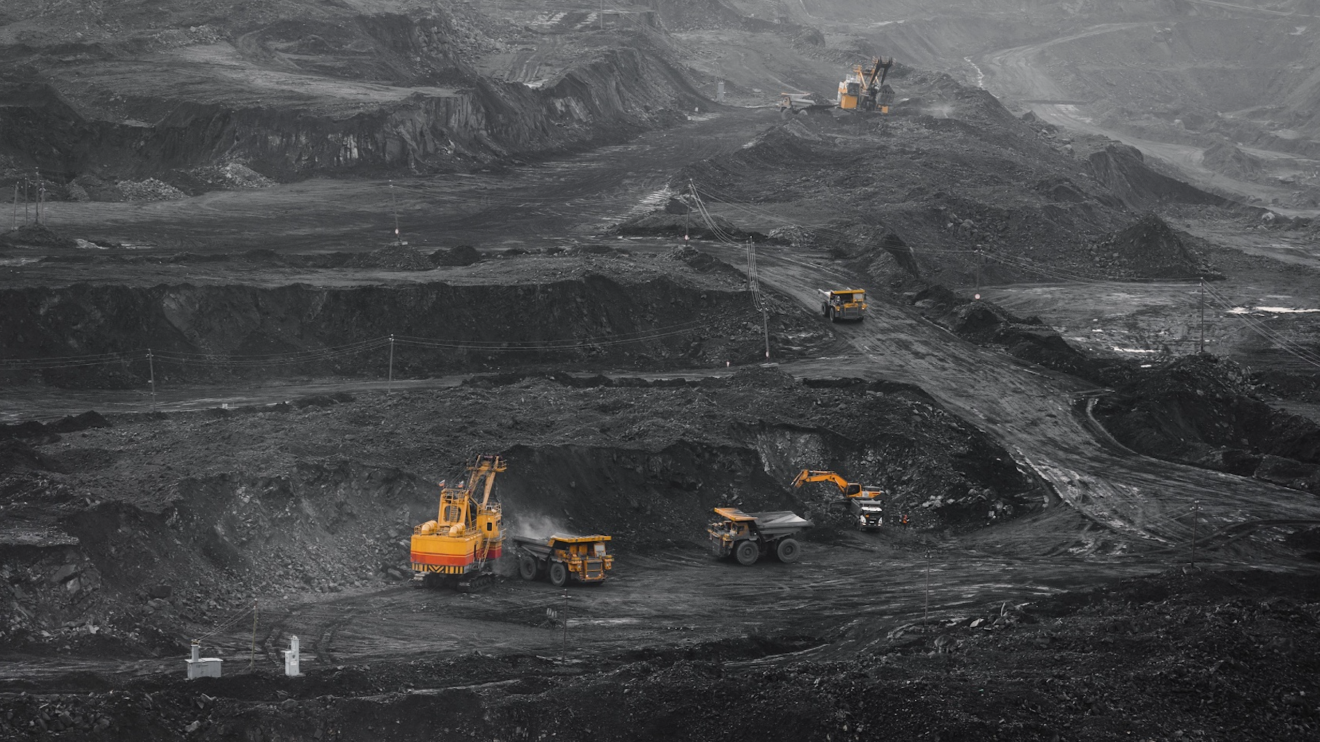
A major area of criticism in the 2024 assessment is the government’s continued commitment to expanding coal infrastructure, most visibly in the Afşin-Elbistan basin located in the province of Kahramanmaraş. State planning includes adding two new generation units to the aging Afşin-Elbistan A Coal-Fired Thermal Power Plant—an expansion equivalent in scale to constructing an entirely new power facility.
Environmental organizations emphasize that this planned expansion comes despite clear evidence of severe existing pollution. Air quality and emissions monitoring data from the Ministry of Environment, Urbanisation and Climate Change—obtained and analyzed by environmental groups—demonstrates that pollutant concentrations from the existing units have exceeded statutory limits by up to eight times. For four decades, local communities in Afşin and Elbistan have lived under the environmental and public health burdens of intensive lignite combustion. The coalition asserts that any plans to expand generation capacity in the region must be permanently abandoned in favor of immediate remediation and phase-out strategies.
Civil society groups argue that the government must cancel all proposed expansions, set a binding and definitive timeline to exit coal, and design just transition programs for affected communities. The groups also urge authorities to redirect capital away from capital-intensive, high-risk thermal and nuclear facilities toward sustainable, nature-compatible renewable power development carried out with local democratic participation.
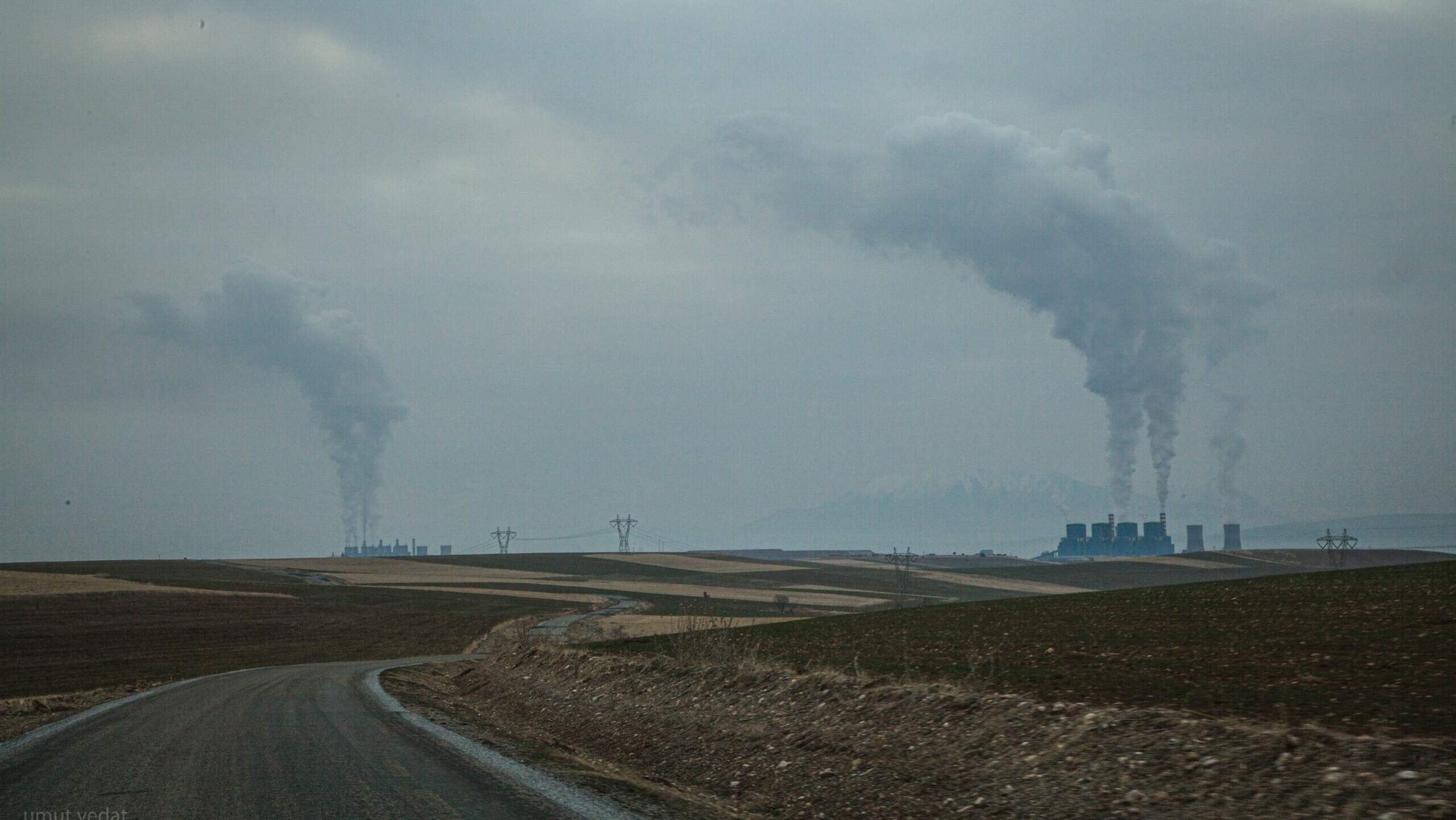
On the broader continental stage, Turkey’s coal policies increasingly diverge from prevailing international trends. Across Europe, 23 nations have formally committed to phasing out coal-fired power generation. Turkey remains one of only five European countries—alongside Poland, Serbia, Kosovo, and Bosnia and Herzegovina—that have failed to adopt a national coal phase-out date. Furthermore, Turkey is among only five member countries within the Organisation for Economic Co-operation and Development (OECD) that continue to entertain the construction of new coal-fired power plants.
Absence of Coal Phase-Out in the 2053 Net-Zero Vision
Turkey served as the third-largest national delegation in attendance at the 29th United Nations Climate Change Conference (COP29). Despite this high-profile participation, the "2053 Long-Term Climate Strategy" presented by Turkish officials during the summit was received with widespread disappointment by climate policy experts and civil society observers.
The principal shortcoming identified in the strategic document is the complete absence of a concrete end date for the extraction and combustion of coal and other fossil fuels. Climate policy analysts maintain that the nation’s legally declared target of achieving net-zero greenhouse gas emissions by 2053 cannot be realistically attained if fossil fuels remain central to the domestic energy mix.
This policy disconnect is further reflected in the Ministry of Energy and Natural Resources’ 2024–2028 Strategic Plan. Rather than charting a managed decline of domestic fossil fuel utilization, the ministry’s official roadmap outlines an intensification of exploration and extraction activities for domestic coal and other hydrocarbon reserves over the medium term. Environmental advocates argue that this trajectory creates deep structural contradictions between short-term sectoral planning and long-term decarbonization pledges.
Escalating Nuclear Commitments and Fiscal Concerns
The report card also raises serious concerns regarding Turkey’s expanding commitments to nuclear energy. During COP29, the Ministry of Energy and Natural Resources announced an international pledge to triple national nuclear power capacity by the year 2050.
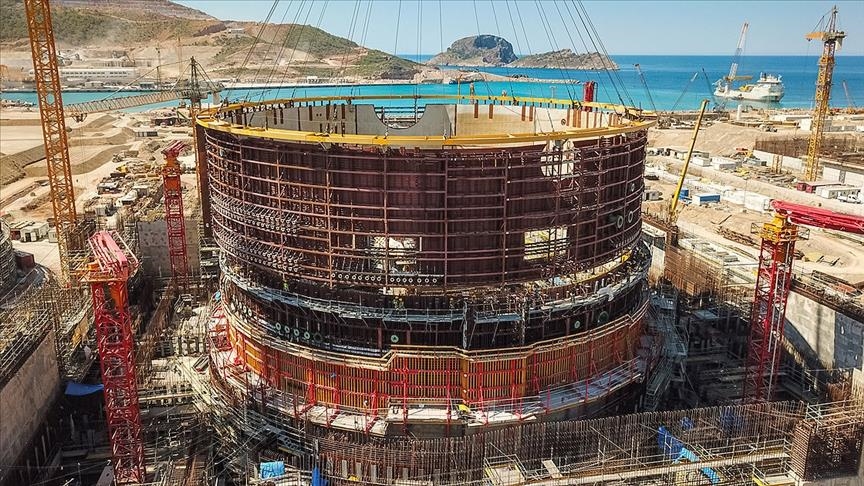
Much of this strategy centers on the ongoing construction of the Akkuyu Nuclear Power Plant in the Mediterranean province of Mersin, developed and owned by Russia’s state atomic energy corporation. The report card highlights the unfavorable fiscal terms governing the project’s long-term power purchase agreements: the Turkish state has guaranteed electricity purchases at a rate of 12.35 US cents per kilowatt-hour, compared to prevailing wholesale electricity market prices averaging around 7 US cents per kilowatt-hour.
Civil society groups contend that these guaranteed above-market tariffs represent an inefficient allocation of public resources. In addition to long-standing concerns regarding radioactive waste disposal, operational safety, and heightened geopolitical energy dependence, the report urges policymakers to divert public investments away from nuclear ventures and channel them directly into modernizing the power grid, expanding grid-scale storage, advancing energy efficiency measures, and supporting community-led renewable energy installations.
Aligning Renewable Targets with Nature Conservation
On the renewable energy front, the report card acknowledges positive steps, specifically highlighting the "Renewable Energy 2035" roadmap unveiled by the Ministry of Energy and Natural Resources. Under this initiative, Turkey aims to increase its combined solar and wind installed capacity fourfold, scaling from current levels to a target of 120 gigawatts (GW) by 2035.
If successfully realized, this capacity expansion could represent a pivotal turning point in aligning the national grid with long-term climate stability. Nonetheless, civil society organizations warn that the strategic implementation of these projects requires rigorous environmental safeguards.
A key concern raised in the report involves administrative proposals to compress and expedite environmental licensing and permitting processes for clean energy developments. The coalition warns that weakening regulatory scrutiny could accelerate the degradation of fragile ecosystems, natural habitats, and officially protected conservation areas. To prevent ecological harm and social friction, the groups recommend that renewable projects be strictly excluded from protected zones, undergo independent environmental impact assessments, and incorporate local benefit-sharing mechanisms. Furthermore, the 120 GW renewable target must be formally integrated into the statutory National Energy Plan to establish legal predictability.
The Stalled National Climate Law
A central structural failure identified in the 2024 review is the continued legislative stagnation surrounding Turkey’s draft Climate Law. Anticipated to enter into force within 2024 to establish the overarching legal framework for national climate policy, the draft bill has still not been introduced to the Grand National Assembly of Turkey (TBMM), despite remaining on the official legislative agenda since 2021.
Beyond procedural delays, non-governmental organizations criticize the lack of transparency and public participation during the drafting process, noting that specialized climate, labor, and environmental groups were largely sidelined.
The coalition stresses that an effective and credible Climate Law must incorporate specific, enforceable commitments. These include setting a legally binding target of at least a 35 percent absolute reduction in national greenhouse gas emissions by 2030, formalizing an equitable coal phase-out roadmap, codifying statutory protections for biodiversity, creating institutional mechanisms for climate adaptation, and establishing an independent scientific advisory council to monitor policy implementation and verify national emissions data.
The Urgency of Just Transition Frameworks
The report card emphasizes the urgent need for comprehensive just transition planning to protect workers and local economies dependent on carbon-intensive industries. While the Ministry of Labour and Social Security’s announcement regarding the formulation of a national Just Transition Strategy was welcomed as an encouraging step, environmental and labor advocates point out that the Ministry of Energy’s unyielding commitment to coal creates severe operational and socioeconomic friction.
Recent labor disruptions illustrate the cost of policy uncertainty. Over the course of 2024, workforce reductions at the Yatağan Thermal Power Plant and its associated lignite mines in Muğla left dozens of energy workers without employment. Simultaneously, privatization plans for the Çayırhan power and mining assets in Ankara have triggered widespread labor unrest over job security and future working conditions.
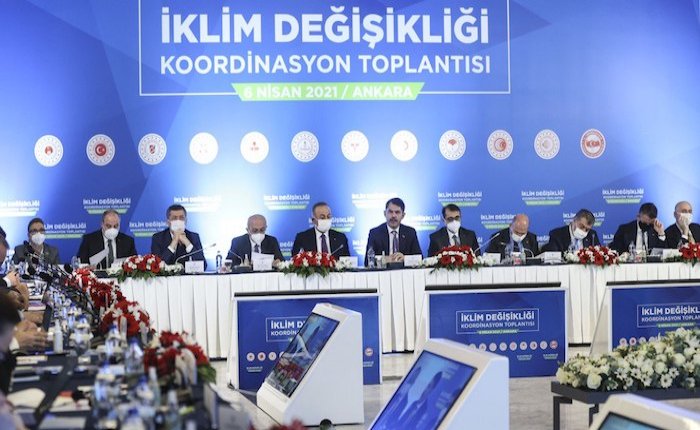
The report card underscores that without structured, well-funded just transition frameworks that guarantee labor protections, retraining initiatives, and regional economic diversification, workers in the fossil fuel sector will bear the brunt of an unmanaged energy transition. Civil society groups insist that future transition plans must be developed collaboratively with trade unions, local governments, and frontline communities.
Industrial Decarbonization Targets Require Strengthening
Finally, the report card examines efforts to mitigate emissions from Turkey’s industrial base. In 2024, the Ministry of Industry and Technology introduced low-carbon sectoral roadmaps focusing on key export-oriented, emissions-intensive industries: steel, aluminum, cement, and synthetic fertilizers.
To support these roadmaps, the ministry established the "Turkey Industrial Decarbonization Investment Platform," designed to mobilize green financing and concessionary loans from international development finance institutions.
However, civil society analysts point out that these sectoral blueprints currently lack robust, mandatory mid-term emissions reduction targets. Without binding benchmarks and interim compliance standards aligned with the 2053 net-zero horizon, the allocation of international transition finance risks being diluted across incremental efficiency improvements rather than driving the structural, deep decarbonization required to safeguard both climate stability and the future competitiveness of domestic industries.