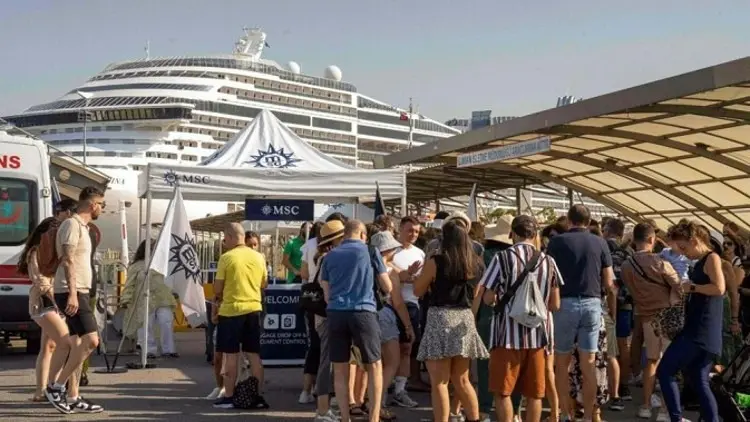
Maritime tourism across Izmir province recorded a substantial surge in activity during the first seven months of the year, driven by a rising number of international cruise ship arrivals and disembarking visitors across its main coastal gateways. Data covering the seven-month period indicates that the combined passenger traffic across the ports of Alsancak, Çeşme, and Dikili reached 90,907 cruise tourists, reflecting a clear upward trajectory for the region’s cruise sector.
This total represents a notable gain when measured against performance from the corresponding period of the previous year, during which the three regional ports welcomed 77,133 cruise passengers. The growth highlights expanding international interest in Western Anatolia’s Aegean shoreline, which serves as a major hub for Eastern Mediterranean itineraries, maritime excursions, and cultural heritage voyages.
The overall expansion in passenger volumes underscores the growing capacity and appeal of Western Turkey’s port infrastructure. Over the course of the seven-month window spanning from January through July, cruise operations picked up momentum, carrying tens of thousands of holidaymakers through the region’s principal urban center as well as its popular resort towns and historic coastal districts.
Cruise tourism plays a pivotal role in the broader travel and hospitality ecosystem of the Izmir metropolitan region and its surrounding maritime corridors. As one of the most prominent maritime provinces along the Aegean Sea, Izmir offers cruise lines a strategic combination of deep-water port access, modern passenger facilities, and immediate proximity to globally recognized historical, cultural, and natural landmarks. The influx of nearly 91,000 visitors within seven months reflects both the seasonal rebound of Mediterranean maritime travel and the continued integration of Turkish ports into multi-country cruise itineraries.
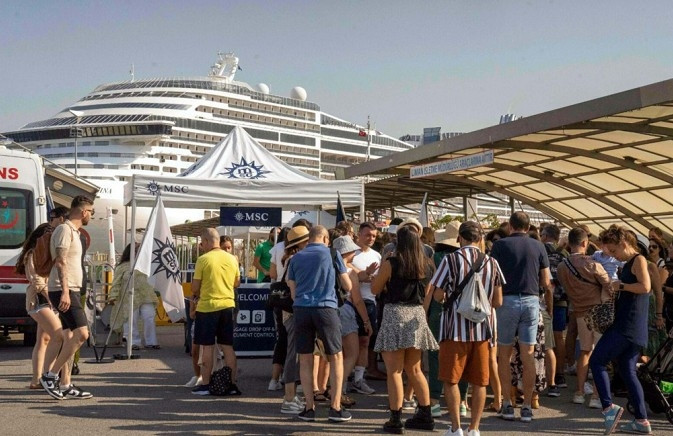
The seven-month window captures both the shoulder season of early spring and the height of the summer holiday surge, a period when cruise liners frequently navigate routes connecting mainland Greece, the Aegean islands, and the Turkish coast. Ports in the Izmir region benefit directly from this geographic proximity, offering cruise operators flexible options ranging from major city stops to specialized boutique harbour calls.
The increase of more than 13,000 passengers year-over-year highlights the operational resilience of local port facilities and their ability to handle varying vessel sizes. From high-capacity ocean liners docking in the heart of Izmir city to mid-sized and boutique cruise ships calling at coastal towns, the diversified port network has allowed the region to capture a broad spectrum of maritime tourists.
Beyond the sheer volume of arrivals, cruise traffic provides an essential economic boost to coastal communities. Cruise passengers disembarking at Aegean ports routinely participate in organized shore excursions, patronize local transport providers, visit historical sites, and explore traditional markets, dining establishments, and retail districts, generating broad-based commercial benefits across multiple sectors of the regional economy.
Highest Increase Recorded at Alsancak Port
Among the three main maritime gateways evaluated in the report, Alsancak Port in central Izmir registered the most significant year-over-year increase in cruise ship calls. During the first seven months of the year, Alsancak Port welcomed a total of 35 cruise ships, marking a clear expansion in traffic compared to the same period in the previous year, when 28 cruise vessels docked at the facility.
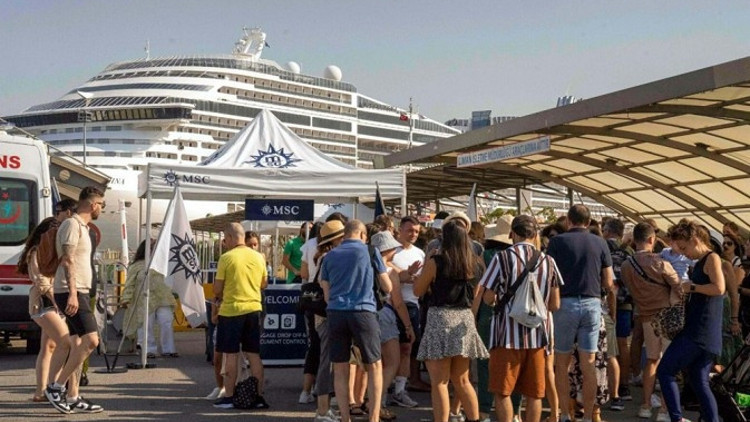
The rise in vessel calls at Alsancak Port emphasizes the growing demand for urban cruise experiences in Izmir, Turkey’s third-largest city. Located centrally within the Gulf of Izmir, the port provides cruise passengers with immediate disembarkation into the heart of the metropolis. This direct urban connectivity allows visitors easy access to iconic landmarks, including the historic Kemeraltı Bazaar, the waterfront Kordon promenade, the Konak Clock Tower, and nearby archaeological locations such as the Smyrna Agora.
The increase from 28 to 35 ship calls at Alsancak highlights the port’s strategic efforts and operational readiness to accommodate larger cruise vessels and elevated passenger volumes. As a commercial and passenger port hub, Alsancak possesses deep-water capabilities and infrastructure designed to process high-capacity ships, making it the primary stop for major international cruise operators seeking an urban anchor point in Western Turkey.
The resurgence of passenger traffic at Alsancak is particularly meaningful for central Izmir’s local commercial ecosystem. Unlike destination ports focused purely on beach or resort leisure, urban ports like Alsancak feed thousands of day-trippers directly into the city center’s retail, cultural, and food services markets, supporting local shopkeepers, artisans, museum operations, and municipal transport systems during every port call.
While Alsancak led the region in terms of vessel growth, Çeşme Port recorded the highest overall number of cruise ship arrivals during the seven-month period. Located on the westernmost tip of the Izmir peninsula, Çeşme welcomed 39 cruise ships, solidifying its position as a highly favored stopover for Aegean maritime itineraries.

Çeşme’s strong showing reflects its established status as an internationally renowned coastal destination known for its clear waters, luxury marina facilities, thermal springs, and historical fortress. The port’s geographic position directly opposite the Greek island of Chios makes it an ideal stop for island-hopping cruise itineraries and smaller to mid-sized cruise vessels. Passengers arriving in Çeşme are treated to a blend of high-end resort amenities, windsurfing venues, and coastal heritage, offering a distinct alternative to large urban port stops.
The high volume of 39 ship calls at Çeşme Port underscores the demand for boutique and specialized cruise experiences. Many smaller cruise lines prefer docking at Çeşme due to its charming waterfront promenade, walkable town center, and direct maritime links across the Aegean Sea, contributing significantly to the peninsula’s summer holiday economy.
Further north along the Izmir coastline, Dikili Port also played a key role in the region’s maritime passenger network, accommodating 10 cruise ships in the first seven months of the year. Although smaller in scale compared to Alsancak and Çeşme, Dikili serves as an indispensable entry point for cultural and historical tourism in the northern part of the province.
Dikili Port acts as the primary maritime gateway for travelers visiting the ancient city of Pergamon (Bergama), a UNESCO World Heritage site located just inland from the coast. Cruise lines specializing in archaeological, educational, and heritage-focused itineraries frequently include Dikili on their routes, allowing disembarking passengers to visit ancient acropolises, sanctuaries, and historic monuments. Hosting 10 ships within the seven-month timeframe confirms Dikili’s sustained function as a specialized cruise stop tailored for cultural exploration.

The combined performance of Alsancak, Çeşme, and Dikili illustrates the multi-faceted nature of cruise tourism in the Izmir region. By offering three distinct port choices—an urban metropolis hub at Alsancak, a premium resort destination at Çeşme, and a historical access gateway at Dikili—the region effectively caters to diverse cruise operator profiles and passenger preferences.
This strategic distribution of port infrastructure helps balance tourist density across the province, avoiding over-concentration in a single location while spreading economic benefits across central, western, and northern coastal districts. It also enables port authorities and local tourism boards to offer flexible, complementary itineraries that showcase the full spectrum of Izmir’s geographic, cultural, and recreational assets.
The increase to 90,907 cruise tourists over seven months reflects a broader momentum within Turkey’s maritime travel sector, which has seen renewed investment in port services, passenger terminal handling, and regional promotion. As international cruise lines finalize their seasonal routes across the Mediterranean, the consistent growth recorded across Izmir’s ports positions the province as a stable and increasingly vital destination on Aegean cruise maps.
As the year progresses beyond the initial seven-month period, local stakeholders in the shipping, hospitality, and retail sectors remain focused on maintaining smooth port operations, improving shore excursion logistics, and enhancing visitor experiences. The growth recorded from January through July provides a solid foundation for the remainder of the cruising season, highlighting the enduring destination appeal of Izmir and its surrounding coastal districts.