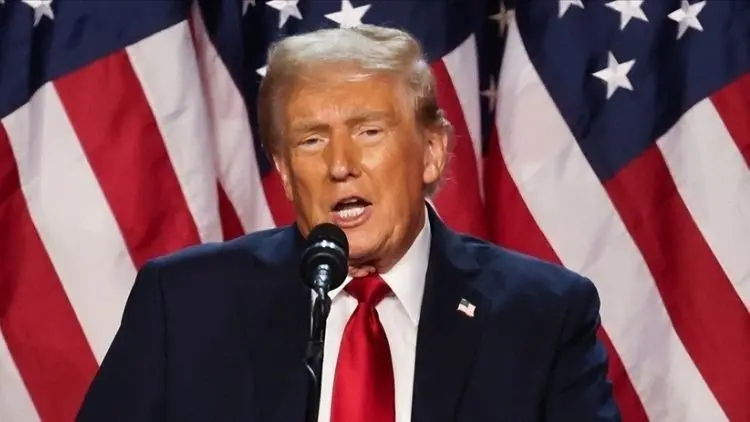
WASHINGTON — In a significant Veterans Day address delivered at the hallowed grounds of Arlington National Cemetery, President Donald Trump declared that the United States is nearing the end of its military operations against Iran. Speaking to a crowd of veterans, military families, and government officials on November 11, 2026, the President asserted that his administration has successfully neutralized Tehran’s path to nuclear weaponry and is now focused on securing what he described as a "total victory."
The President’s remarks, delivered against the backdrop of the rows of white headstones that mark the final resting place of America’s fallen heroes, framed the current tensions not as a recent development, but as the final chapter in a struggle that has spanned nearly half a century. Trump argued that the United States did not initiate the hostilities, but rather responded to a long-standing pattern of aggression that has defined the relationship between the two nations since the late 1970s.
President Trump Asserts Iran Conflict Nears End, Claims US Has Prevented Nuclear Armament and Seeks "Total Victory"
During his keynote speech, President Trump provided a rare glimpse into the administration’s assessment of the military campaign against the Iranian government. He maintained that the primary objective of the mission—preventing Iran from acquiring a nuclear arsenal—has been achieved through decisive action. According to the President, the threat of a nuclear-armed Tehran, which has loomed over global security for decades, has been effectively dismantled under his watch.
"America did not start a war with Iran," Trump told the gathered audience, his voice echoing through the silent cemetery. "Iran has been waging war against America since 1979. This is a situation that should have been handled a long time ago. For decades, the United States practiced restraint or sought diplomatic solutions that failed to curb the aggression. We chose a different path."
The President’s reference to 1979 points back to the Iranian Revolution and the subsequent hostage crisis, an event that fundamentally altered the geopolitical landscape of the Middle East and set Washington and Tehran on a collision course. By framing the current conflict within this historical arc, Trump suggested that his administration is finally resolving a "legacy issue" that previous leaders had left unaddressed.
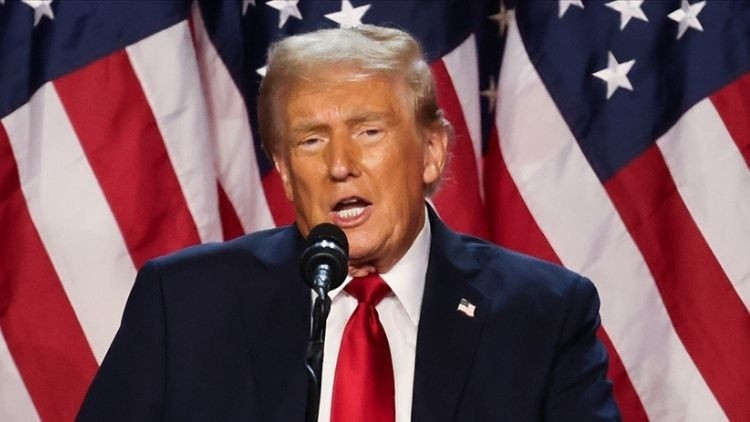
Reflecting on the progress of recent military engagements, Trump claimed that the United States has successfully repelled Iranian provocations and emerged in a dominant position. "We responded seriously, and we won," he stated. "The only question remaining is exactly when we want to bring this situation to a formal close."
Despite the optimistic tone regarding the conflict’s end, the President was clear that he would not settle for a partial resolution. In a characteristically firm stance, he emphasized that the United States is holding out for an absolute conclusion to the hostilities. "We want to make sure we achieve a total victory—not a 93 percent victory," Trump said. "This will be a complete and total victory, ensuring that the threat is permanently neutralized."
While the President did not offer specific details regarding the diplomatic or military roadmap for the coming weeks, his rhetoric suggested that the United States is in the final stages of a strategic campaign. He indicated that the goal is not merely a ceasefire, but a fundamental shift in the regional balance of power that ensures American interests and the safety of its allies.
The President also took a moment to quantify the impact of the military operations conducted over the past several months. He claimed that U.S. strikes have dealt a devastating blow to Iran’s military infrastructure and strategic capabilities. The damage, he asserted, is so extensive that it would take the Iranian government decades to recover their previous standing.
"We have caused immense damage to Iran’s military capacity," Trump claimed. "By our estimates, it would take them at least 25 years to even begin to rebuild what has been destroyed." He added a cautionary note, expressing a hope that further escalation would be unnecessary. "I hope we do not have to destroy more parts of that country. We have shown our strength, and now it is time for a new reality to take hold."
Providing a timeline for the most recent phase of the conflict, the President noted that the focused military campaign began approximately seven months ago. However, he clarified that the period of "intense" or "heavy" combat was relatively brief, lasting only a few weeks. This distinction suggested a campaign characterized by high-intensity, precision strikes designed to achieve maximum strategic impact in a short window of time.

The human cost of the conflict was also acknowledged during the Veterans Day ceremony. President Trump confirmed that 18 American service members lost their lives during this recent period of operations. He paused to honor their sacrifice, linking their service directly to the broader mission of global non-proliferation and national security.
"These brave men and women were there for a reason," Trump said, addressing the families of the fallen. "They were serving to ensure that Iran never acquires a nuclear weapon. Their sacrifice has made the world a safer place, and we owe them a debt of gratitude that can never be fully repaid."
The President’s speech also delved into historical grievances, specifically citing the 1983 bombing of the U.S. Marine barracks in Beirut, Lebanon. That attack, which resulted in the deaths of 241 American service members, remains one of the deadliest days in the history of the U.S. Marine Corps. Trump explicitly linked the attack to Hezbollah, the Lebanese militant group, and its primary benefactor, Iran.
By invoking the memory of the Beirut bombing, the President sought to justify the current administration’s hardline stance as a necessary response to decades of state-sponsored terrorism. He suggested that the current operations are, in part, a long-delayed accounting for past tragedies and a firm message that the United States will no longer tolerate the actions of proxies acting on behalf of Tehran.
The broader implications of the conflict’s end were a central theme of the President’s closing remarks. He argued that the conclusion of the war with Iran would usher in a new era of international stability. "With the end of this conflict, the world will become a safer and more peaceful place," Trump contended. "We have made great strides toward that goal, and the progress we have seen is undeniable."
The President’s assertions at Arlington reflect an administration confident in its military achievements and ready to pivot toward a post-conflict strategy. However, the mention of "total victory" suggests that the terms of any peace or cessation of hostilities will be dictated largely by Washington’s requirements.

As the ceremony concluded, the atmosphere at Arlington remained one of somber reflection mixed with the weight of the President’s declarations. For the veterans in attendance, the speech served as both a tribute to their past service and a report on the current state of American military engagement abroad.
The White House has not yet released a formal document outlining the specific terms of the "total victory" the President described, nor has there been an immediate official response from Tehran regarding the claim that their military capacity has been set back by 25 years. However, the President’s speech stands as a definitive statement of intent, signaling that the United States views the long-standing shadow war with Iran as reaching its definitive conclusion.
As the sun set over the Potomac, the President’s words left the nation and the international community to contemplate the future of the Middle East and the potential for a new geopolitical order following what the administration characterizes as a decisive American triumph. The focus now shifts to the coming weeks and months to see how this "total victory" manifests on the ground and whether the "safer and more peaceful world" promised by the President begins to take shape.