

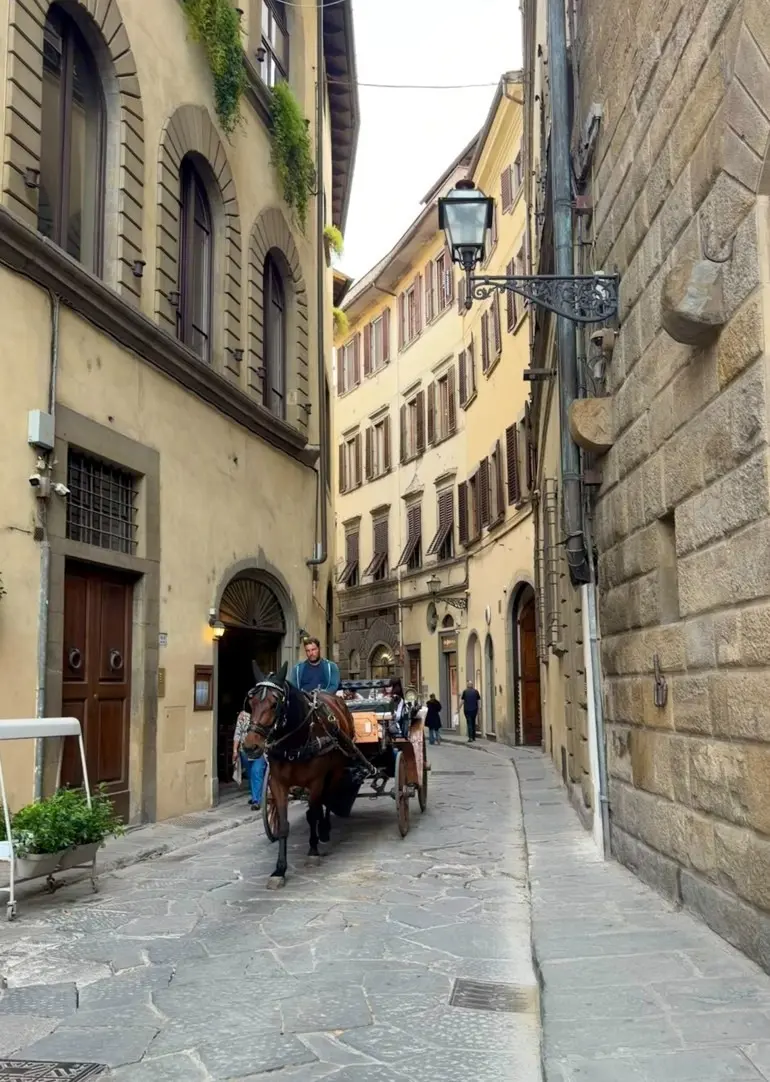
Florence remains one of the world’s most captivating urban destinations, universally recognized as the cradle of the Renaissance. Stepping into the Tuscan capital often feels less like entering a modern city and more like walking through an expansive open-air museum. Everywhere you turn, magnificent historic architecture commands attention, anchored by the monumental presence of the Florence Cathedral. To truly understand why Florence is repeatedly ranked among the most beautiful cities on Earth, one only needs to immerse oneself in its unique, historic atmosphere.
Yet, visiting Florence today presents a strikingly different experience than it did a quarter-century ago. Over the past twenty-five years, the city’s meteoric rise in global popularity has transformed it into an exceptionally crowded tourist hub. Visitors who arrive during peak seasons face massive queues that stretch for hours at major cultural institutions—most notably the Uffizi Gallery—alongside packed thoroughfares and steep prices at city-center cafes.
To experience the city’s authentic charm without the stress of overwhelming crowds, careful planning is essential. Traveling during the shoulder seasons of spring and autumn offers far better weather and manageable crowds. Booking museum and monument tickets online well in advance is crucial, as is rising early to explore iconic spots such as the Ponte Vecchio or the cathedral piazza before daytime tour groups arrive.
Florence Cathedral (Duomo)
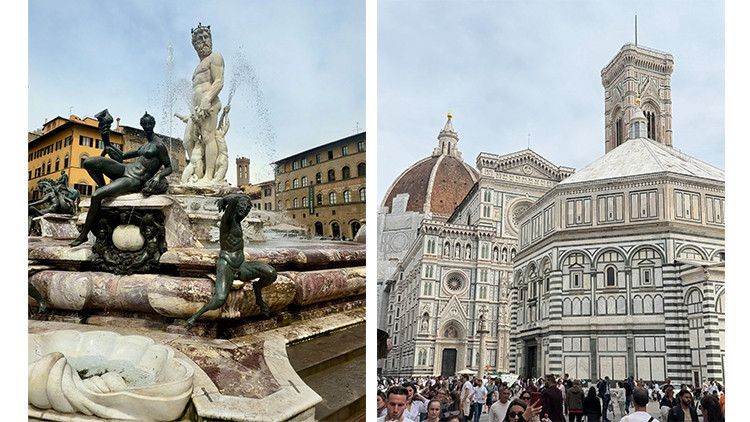
The quintessential starting point for any Florence itinerary is the Cathedral of Santa Maria del Fiore, universally referred to as the Duomo. Standing as the undisputed centerpiece of the city, this architectural masterpiece dominates the skyline with its massive Renaissance dome and intricate exterior cladding of green, pink, and white marble.
The cathedral complex consists of several distinct sections: the main church interior, the grand dome, Giotto’s Bell Tower, the Baptistery, the Cathedral Museum (Museo dell’Opera del Duomo), the underground crypt, and the upper terraces. While deciding how much of the complex to explore depends on individual schedules, stepping inside the cathedral interior is an essential experience for any traveler.
Entry to the main cathedral floor is free of charge; however, long lines form rapidly throughout the day. To avoid spending hours waiting outside, arriving early in the morning is highly recommended. For visitors wishing to explore the additional historical components, such as climbing the bell tower or examining the crypt, purchasing tickets online beforehand is mandatory. Securing the "Brunelleschi Pass" is often the most practical option, as it grants access to all major parts of the cathedral complex, with the exception of the cathedral terraces.
Ponte Vecchio
Crossing the Arno River, the Ponte Vecchio—or "Old Bridge"—stands as Florence’s second most famous landmark. As the oldest bridge in the city, this medieval structure holds a unique position in Tuscan history. Walking across the Ponte Vecchio is a quintessential Florentine tradition, though first-time visitors may be surprised by its unusual appearance.
Unlike conventional bridges, the Ponte Vecchio is lined on both sides by continuous rows of small, historic shops, historically occupied by butchers but today housing traditional jewelers and goldsmiths. The dense arrangement of storefronts creates the sensation of strolling down a narrow shopping street rather than crossing a river.
While walking across the bridge is an essential item on any itinerary, some of the most striking views of the Ponte Vecchio are enjoyed from a distance. Excellent viewing points include the upper-floor windows of the neighboring Uffizi Gallery, the elevated vantage point of Piazzale Michelangelo, and the adjacent Ponte alle Grazie bridge.
The Uffizi Gallery
For art enthusiasts and casual visitors alike, the Uffizi Gallery is an unmissable destination. Holding a cultural status in Florence equivalent to that of the Louvre in Paris, the Uffizi is widely regarded as one of the premier art museums in the world.
The museum’s vast collection spans from classical antiquity to the late Baroque period, featuring celebrated masterpieces by titans of the Renaissance including Leonardo da Vinci, Michelangelo, and Sandro Botticelli. Because the gallery encompasses dozens of halls across multiple floors, thoroughly exploring its treasures requires significant time. Visitors should allocate at least two to three hours to appreciate the collection properly.
Given that millions of art lovers visit the Uffizi each year, long queues are constant regardless of the season. Reserving timed-entry tickets online prior to arrival is virtually mandatory to guarantee access. For a memorable moment inside the museum, head to the window located at the far back corner of the top floor, which offers a breathtaking, framed perspective of the Ponte Vecchio below.

Palazzo Vecchio and Piazza della Signoria
Located just around the corner from the Uffizi Gallery is the Palazzo Vecchio, Florence’s historic fortress-like city hall. Built in the late 13th century, this imposing, sand-colored structure features a soaring tower and heavy crenellations, serving as one of the city’s most recognizable symbols of civic power. Today, it continues to function as the seat of local government while hosting an extensive public museum.
Visitors can walk into the main ground-floor courtyard of the Palazzo Vecchio free of charge to admire its intricate Renaissance frescoes and ornate fountain. For those seeking deeper historical context, the interior museum (entry fee €12.50) grants access to grand historical chambers, most notably the monumental Hall of the Five Hundred (Salone dei Cinquecento). Attached to the palace is the Torre di Arnolfo (entry fee €12.50), which provides sweeping panoramic views over the surrounding historic district.
The Palazzo Vecchio anchors the Piazza della Signoria, one of Florence’s main public squares. Beyond the palace itself, the square functions as an open-air sculpture gallery, housing the famous Loggia dei Lanzi—an open arched hall filled with classical and Renaissance statues—as well as a full-scale marble replica of Michelangelo’s David standing at the original entrance location of the palace.
Piazza della Repubblica
Located a short walk from both the Duomo and Piazza della Signoria is the Piazza della Repubblica, a grand, open square marking the geographical heart of the historic center. Built during the 19th-century urban renewal of Florence, the square is characterized by its grand archways, historic cafes, and vibrant street life.
A prominent feature of the square is its antique, illuminated carousel, which serves as a favorite attraction for families traveling with children. The square becomes particularly atmospheric in the evening hours when street performers gather under the warm glow of the surrounding lights.
Pitti Palace and the Boboli Gardens
Crossing the Ponte Vecchio leads into Oltrarno, a vibrant neighborhood located on the southern bank of the Arno River. Though slightly less congested than the northern district, Oltrarno contains several of Florence’s most significant cultural landmarks, headlined by the massive Pitti Palace (Palazzo Pitti).

As the largest palace in Florence, this vast Renaissance residence boasts a heavy, rusticated stone facade that served as the architectural inspiration for Munich’s famous Residenz. Originally constructed for the Pitti family and later acquired by the ruling Medici dynasty, the palace now houses multiple public collections, including the renowned Palatine Gallery—which displays the private art collection of the Medicis—and the opulent Royal Apartments.
Extending directly behind the palace are the famous Boboli Gardens (Giardino di Boboli). Designed as an expansive Italian landscape park, the gardens feature terraced lawns, formal pathways, ornamental fountains, shaded grottoes, and classical sculptures, offering a peaceful retreat from the paved streets of the city center.
Santa Croce Basilica
Following the Duomo, the Basilica of Santa Croce is widely considered the second most important religious site in Florence. Located in the spacious Piazza di Santa Croce, this striking Franciscan church features an ornate, white-and-colored marble façade that stands out vividly against the surrounding square.
Santa Croce is internationally famous as the final resting place of some of Italy’s most illustrious historic figures. Inside, visitors can pay homage at the elaborate tombs of polymath Galileo Galilei, artist and sculptor Michelangelo, and political philosopher Niccolò Machiavelli.
The adjacent monastic cloister courtyard offers a serene setting for photography. Admission to the church complex costs €8, though the building’s exterior presence makes it worth visiting even for those who choose not to purchase an interior ticket. A pleasant ten-minute walk connects Santa Croce back to the Duomo, making it an easy addition to a central walking tour.
Extended Itinerary Highlights
For travelers spending multiple days in Florence, several secondary locations provide deeper insight into the city’s cultural and daily life:

- Mercato Centrale: A bustling historic food hall housed in a grand 19th-century cast-iron building. The ground floor functions as a traditional market selling fresh Tuscan produce, meats, cheeses, and seafood, while the upper floor features a lively food hall filled with artisanal food stalls.
- Galleria dell’Accademia: Florence’s second most famous art institution after the Uffizi. The primary draw of the Accademia is Michelangelo’s original masterpiece, the marble statue of David, housed alongside an important collection of Renaissance paintings and unfinished sculptures.
- Fiesole: A historic hilltop town situated just outside Florence’s administrative limits. Accessible by local public bus, Fiesole offers elevated, sweeping views across the entire Florentine basin, making it an ideal half-day excursion on clear days.
- Giardino Bardini: Situated near the Boboli Gardens, this historic villa garden offers a quieter, less-crowded alternative for outdoor leisure, featuring terraced gardens, a famous wisteria tunnel, and panoramic viewpoints overlooking the river.
Unforgettable Viewpoints Across the City
Piazzale Michelangelo
To capture the classic skyline of Florence, most visitors make the journey to Piazzale Michelangelo, a grand, elevated square situated on a hill south of the Arno River. Once a lesser-known vantage point, the square has become one of the city’s most popular gathering spots. Every evening, thousands of tourists assemble along the stone steps to watch the sunset over the red-tiled roofs, the Ponte Vecchio, the Arnolfo Tower, and the massive dome of the Duomo.
Small souvenir and refreshment kiosks operate around the perimeter of the plaza, though prices tend to be high. Many experienced travelers choose to bring their own refreshments up from the neighborhood below. Reaching the plaza on foot from the Ponte Vecchio takes roughly 20 minutes along a steady uphill walk, though public buses are also available for those who prefer not to walk.
San Miniato al Monte
For a significantly quieter and higher perspective, visitors can walk five minutes further uphill from Piazzale Michelangelo to reach the Basilica of San Miniato al Monte. Positioned atop one of the highest points in the city, this site remains largely free of the tourist buses and crowded selfie sticks found at the lower plaza.
San Miniato al Monte is widely regarded as one of the finest Romanesque structures in Tuscany. Its geometric facade of green and white marble leads into an interior containing a Renaissance chapel, intricate Byzantine-style floor mosaics, and an ornate painted wooden ceiling.
Adjacent to the basilica lies the historic Cimitero delle Porte Sante (Cemetery of the Holy Gates). This monumental graveyard features elaborate Neoclassical and Art Deco tombs belonging to prominent Italian figures. Notably, it contains the family plot of Carlo Lorenzini—better known by his pen name, Carlo Collodi—the 19th-century author who created the world-famous story of Pinocchio.
Comparing Florence’s Architectural Towers
Visitors seeking bird’s-eye views directly over the historical center have three primary architectural towers to consider:
Giotto’s Bell Tower (Campanile)
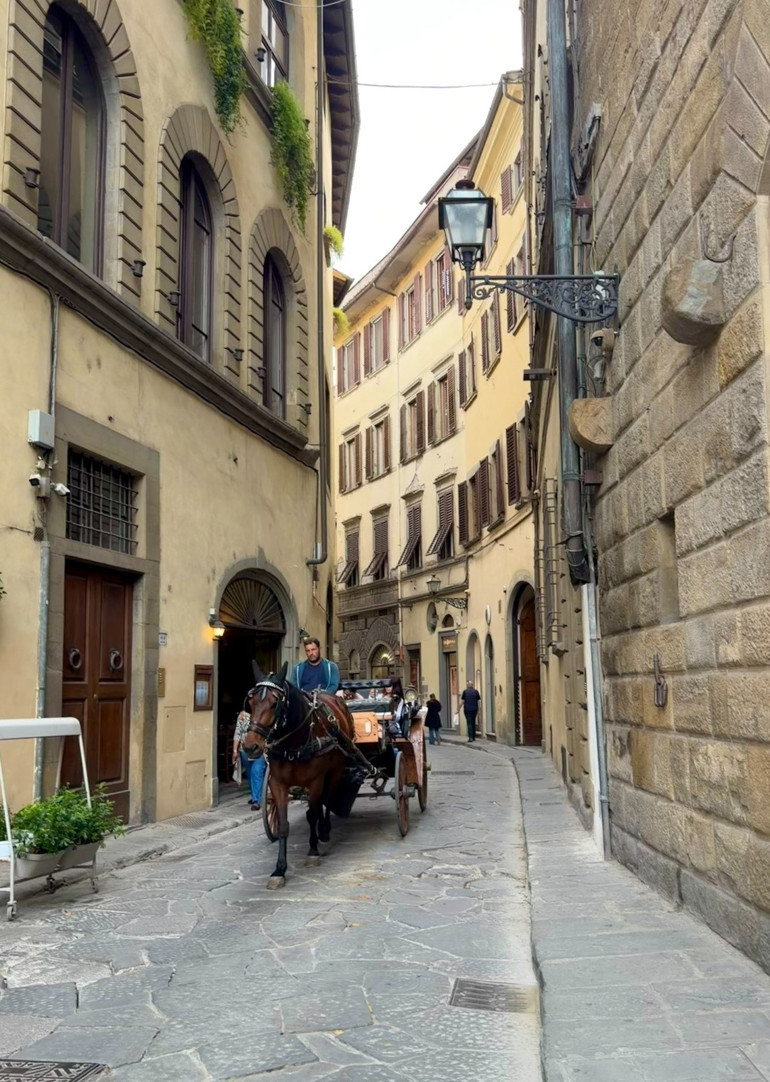
Standing independently alongside the cathedral, Giotto’s Bell Tower rises roughly 85 meters high. Climbing to the top requires scaling 414 steps with no elevator access. The platform at the top offers a direct, close-up perspective of Brunelleschi’s Dome. However, visitors should note that the viewing area is fully enclosed by heavy protective wire netting, which can hinder unobstructed photography.
Brunelleschi’s Dome (Cupola)
The highest vantage point in the historic center is located atop the cathedral dome itself. Ascending the dome involves climbing 463 steps, guiding visitors through the narrow spaces between the inner and outer masonry shells designed by Filippo Brunelleschi. The primary advantage of the dome’s viewing gallery is its completely open, 365-degree panoramic view of Florence, free from wire screens. Access to both the Dome and the Bell Tower is included in the comprehensive €30 Brunelleschi Pass.
Arnolfo Tower
Rising 95 meters above the Piazza della Signoria from the Palazzo Vecchio, the Arnolfo Tower provides a commanding perspective over the city center. Entry (costing €12.50) is managed through guided access, allowing visitors dedicated time on the upper platform. The tower offers an iconic, direct angle facing the Duomo and the surrounding rooftops.
Rooftop Bars and Dining Recommendations
Florence features an array of rooftop venues and distinct dining spots that combine culinary experiences with memorable urban views:
- Tosca & Nino: Situated on the upper terrace of the upscale Rinascente department store in Piazza della Repubblica, this venue provides close-up views of the Duomo while serving traditional Tuscan specialties.
- View on Art: A popular rooftop lounge specifically known for its direct, elevated line of sight toward the cathedral dome.
- SE·STO on Arno: Located atop the Westin Excelsior hotel, this high-end rooftop bar features floor-to-ceiling glass walls overlooking the Arno River. While prices reflect its luxury status, it is an exceptional spot for an evening drink.
- Floret: Tucked away on the top floor of the Luisaviaroma concept store, Floret offers a green, plant-filled terrace designed like an urban sanctuary. The kitchen serves a fusion menu alongside a variety of vegetarian and vegan dishes.
- Neromo: A traditional restaurant located in the Oltrarno district, highly regarded by travelers seeking authentic Tuscan wood-fired pizza away from the primary tourist thoroughfares.
- Ditta Artigianale: A pioneer in Italy’s specialty coffee movement, operating several cafes across the city that roast their own beans and serve high-quality espresso drinks.
Logistics, Transit, and Hidden Passageways
Navigating Florence is straightforward due to the compact nature of its historic core. Florence Amerigo Vespucci Airport (FLR) is located on the outer edge of the city, connected directly to the central Santa Maria Novella train station via the T2 tram line or by local taxis.
Because the entire historic center is designated as a Restricted Traffic Zone (ZTL) closed to non-resident motor vehicles, Florence is best explored on foot. Nearly all major sights can be reached within a 15- to 20-minute walk from the central plaza.
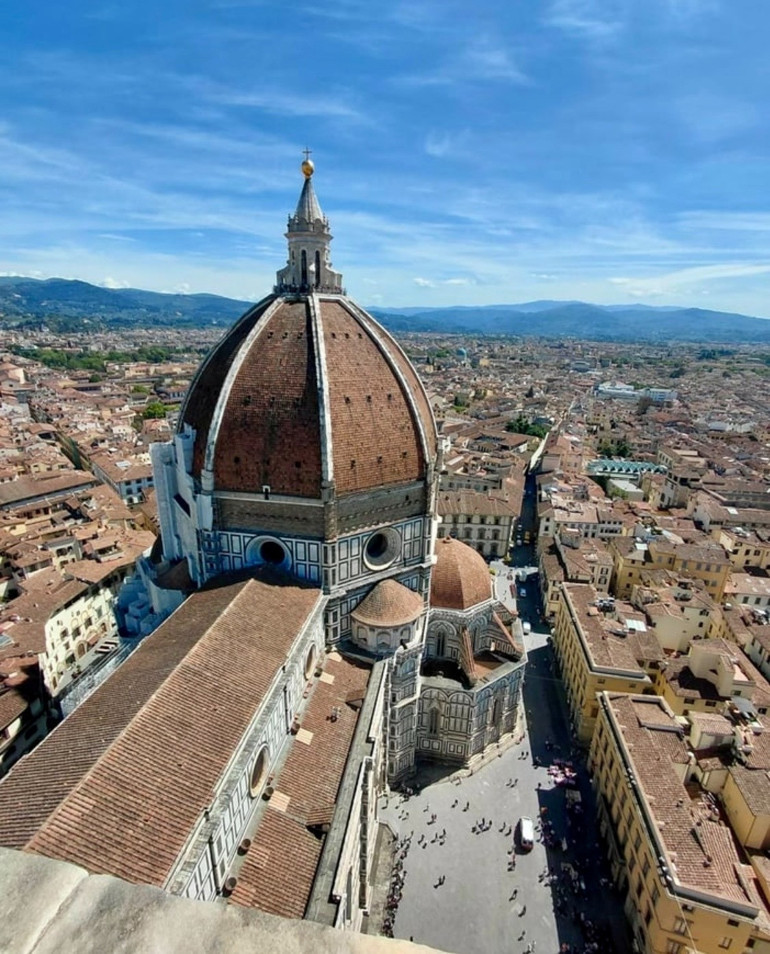
To escape the heavy pedestrian traffic that clogs the main corridor between the Duomo and Piazza della Signoria, visitors are encouraged to venture into the narrow side streets known historically as chiassi (singular: chiasso). Dating back to the Middle Ages, these extremely narrow passageways—sometimes no wider than a doorway—cut between tall stone buildings, leading to quiet hidden squares, local artisan workshops, and subtle works of contemporary street art that most tourists overlook.