

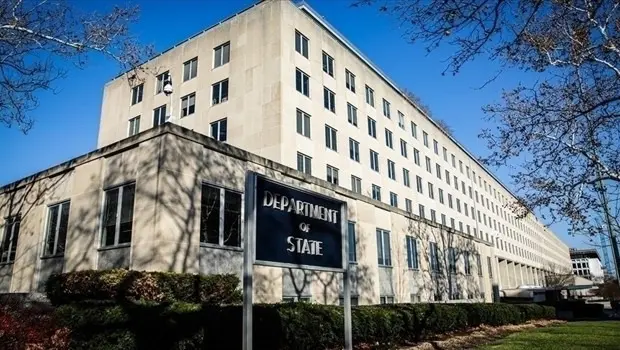
WASHINGTON — The United States Department of State has issued a comprehensive security alert and travel advisory for countries across the Middle East, citing a complex, rapidly evolving security environment fueled by heightened regional tensions and ongoing friction between the United States and Iran. Federal officials are urging all American citizens currently residing in or planning to travel to the region to maintain an elevated state of vigilance, monitor local media, and prepare for sudden changes in safety conditions.
The formal warning highlights growing concerns over regional stability, pointing to the unpredictable nature of the current security landscape. According to official statements from the U.S. State Department, the situation across the Middle East remains fluid and highly sensitive, creating unpredictable challenges for travelers, foreign workers, and diplomatic personnel alike.
In its official guidance, the State Department underscored that safety conditions across the Middle East can deteriorate with little to no notice. The official announcement emphasized the necessity for heightened caution, noting that due to high tension in the Middle East, the security environment is complex and can change quickly. As a result, federal authorities reiterated their advisory for U.S. citizens throughout the region to remain exceptionally alert, closely monitor real-time security updates, and make informed decisions regarding their personal safety and travel plans.
Tiered Travel Warnings for Middle Eastern Destinations
The State Department’s updated notice reclassifies and reinforces existing travel advisories across two major threat tiers: "Level 3: Reconsider Travel" and "Level 4: Do Not Travel." These advisories reflect varying degrees of risk depending on regional proximity to potential flashpoints, historical security concerns, and active political or military friction.
Under the "Level 3: Reconsider Travel" advisory, U.S. authorities are advising citizens to carefully evaluate their plans before traveling to several key nations across the Gulf and the Levant. The countries currently designated under Level 3 include Bahrain, Israel, the West Bank, Jordan, Kuwait, Oman, Qatar, Saudi Arabia, and the United Arab Emirates.
For destinations under Level 3, the State Department cautions that while commercial infrastructure and daily life may appear operational, underlying regional tensions present sudden security risks. Travelers to these locations are advised to consider the potential for rapid escalation, transport disruptions, or localized security incidents. The inclusion of major commercial and diplomatic hubs in the Arabian Peninsula—such as the United Arab Emirates, Qatar, Saudi Arabia, Kuwait, Bahrain, and Oman—alongside Jordan, Israel, and the West Bank, reflects the broad scope of Washington’s security assessment across the entire Middle Eastern theater.
Conversely, the U.S. State Department maintains its most severe warning level—"Level 4: Do Not Travel"—for destinations deemed to present severe, life-threatening risks to American nationals. The regions and countries remaining under Level 4 advisories include Iran, Iraq, Lebanon, Syria, Gaza, and Yemen.

A Level 4 advisory represents the highest level of warning issued by the U.S. government. For these destinations, official policy strongly advises Americans against any travel due to extreme danger arising from active conflict, terrorism, civil unrest, or severe hostility toward foreign nationals. The State Department warns that in Level 4 zones, the U.S. government may have extremely limited operational capability to assist American citizens in emergency situations or facilitate evacuation should hostilities escalate. The retention of Iran, Iraq, Lebanon, Syria, Gaza, and Yemen under Level 4 underscores the severe structural instability and high risk of military conflict characterizing these specific areas.
The overarching tension between the United States and Iran continues to serve as a primary catalyst for these precautionary measures. As geopolitical friction persists, U.S. officials remain focused on mitigating potential risks to non-combatants, diplomatic installations, and private citizens located throughout neighboring countries. The State Department emphasized that these advisory levels are under continuous review and may be adjusted as real-time intelligence and ground conditions dictate.
"Learn the Location of the Nearest Shelter"
In light of the potential for sudden military escalation or armed conflict in the region, the U.S. State Department included explicit, practical instructions aimed at maximizing personal safety for Americans currently situated in the Middle East. A central directive issued by federal authorities explicitly urges U.S. citizens to identify and familiarize themselves with local emergency infrastructure, particularly shelter facilities.
State Department officials advised that individuals living in or visiting the region should proactively locate the nearest safe shelters relative to their residence, workplace, or hotel accommodations before an emergency occurs. Knowing the precise location of designated shelters, reinforced rooms, or secure underground facilities is highlighted as a critical precautionary measure in the event of sudden aerial attacks, missile activity, or localized violence.

Beyond identifying shelter locations, the official advisory outlines a series of behavioral guidelines aimed at reducing personal vulnerability in high-risk environments. Americans in the region are strongly encouraged to maintain a low profile and avoid drawing undue attention to themselves. This includes exercising caution when frequenting places popular with foreign nationals, avoiding public demonstrations, and refraining from traveling in large, conspicuous groups.
Furthermore, U.S. citizens are urged to stay completely clear of areas known to possess elevated security risks, including border regions, military installations, political rallies, and unmonitored public gatherings. The State Department noted that civilian crowds can quickly become targets or focal points for instability during periods of heightened international tension.
To ensure citizens remain informed of rapidly shifting conditions, federal authorities strongly advise Americans in the Middle East to actively monitor official security alerts, local news broadcasts, and consular updates. Citizens are encouraged to enroll in diplomatic notification systems to receive real-time security messages and emergency updates directly from the nearest U.S. embassy or consulate.
The State Department’s comprehensive guidance reflects a proactive posture designed to ensure that U.S. nationals possess the necessary awareness and preparation to respond swiftly should regional security conditions deteriorate further. As diplomatic efforts and security assessments continue, officials emphasize that individual preparedness and adherence to safety recommendations remain essential for all Americans present in the Middle East.