

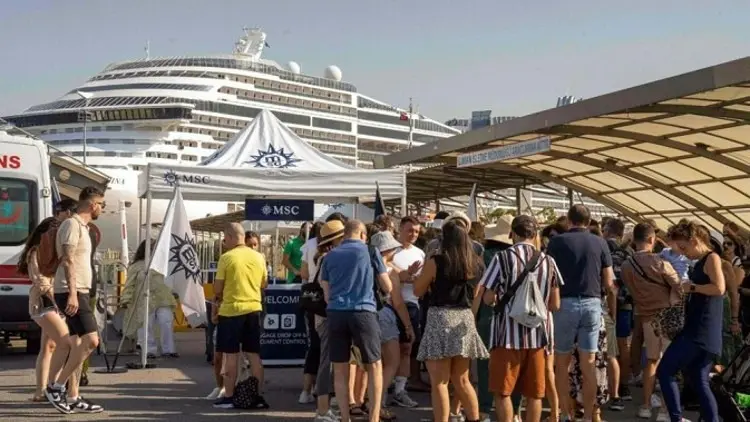
Maritime tourism across the Aegean coast of Turkey recorded a significant surge during the first seven months of the year, driven by a notable rise in international cruise ship arrivals and passenger volumes across key port facilities in İzmir province. Official maritime industry data covering the seven-month period from January through July shows that the region’s primary passenger terminals—Alsancak, Çeşme, and Dikili—collectively welcomed 90,907 cruise passengers. This represents a substantial increase compared to the corresponding period of the previous year, when the three ports registered a total of 77,133 cruise visitors.
The steady year-over-year growth highlights a sustained momentum in Eastern Mediterranean cruise itineraries. Turkey’s western sea routes, long celebrated for their blend of classical Greco-Roman heritage, coastal landscapes, and vibrant regional culture, continue to solidify their position on the schedules of major international cruise lines. The latest figures demonstrate how coordinated port operations, regional destination marketing, and rich cultural excursion offerings are yielding positive results for maritime traffic and the broader local economy across İzmir.
Over the course of the seven-month monitoring period, a combined total of 84 cruise ships docked across the three terminals, bringing tens of thousands of international holidaymakers to western Turkey. The continuous influx of ocean-going visitors has provided a direct boost to local service sectors, benefiting tour operators, transport providers, heritage sites, hospitality venues, and traditional marketplaces throughout the province.
Strongest Growth Recorded at Alsancak Port
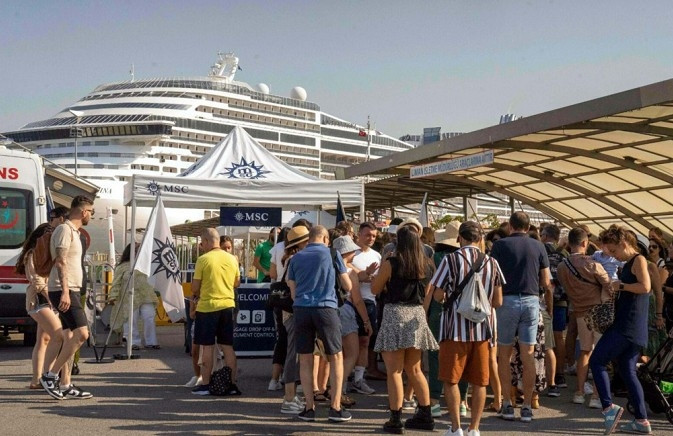
Among the three maritime gateways, Alsancak Port—located directly within the urban heart of İzmir—emerged as the key driver of regional growth in cruise ship calls. During the first seven months of the year, Alsancak served as the port of call for 35 cruise ships. This marks a clear expansion compared to the same seven-month period of the prior year, when the terminal recorded 28 cruise vessel arrivals.
This upward trajectory underscores Alsancak’s revitalized standing within the urban cruise sector. Situated in close proximity to İzmir’s central commercial and cultural districts, the port provides distinct operational advantages for vessel operators and unique convenience for passengers. Disembarking cruise travelers at Alsancak enter directly into the metropolitan atmosphere of Turkey’s third-largest city, with rapid access to landmark attractions such as the historic Kemeraltı Bazaar, Konak Square, the historic Clock Tower, and the picturesque seaside promenade of Kordon.
The increase from 28 to 35 ship calls at Alsancak reflects a broader trend among cruise lines seeking to offer passengers immersive urban and cultural experiences. For local vendors, craftspeople, shopkeepers, and restaurateurs in central İzmir, the regular arrival of large cruise vessels provides consistent foot traffic and economic activity during the peak spring and summer travel months.
While Alsancak registered the sharpest relative increase in vessel arrivals, Çeşme Port secured the highest total volume of cruise ship dockings among the three regional terminals during the seven-month period. Positioned at the western tip of the İzmir peninsula, Çeşme hosted 39 cruise ships between January and July.
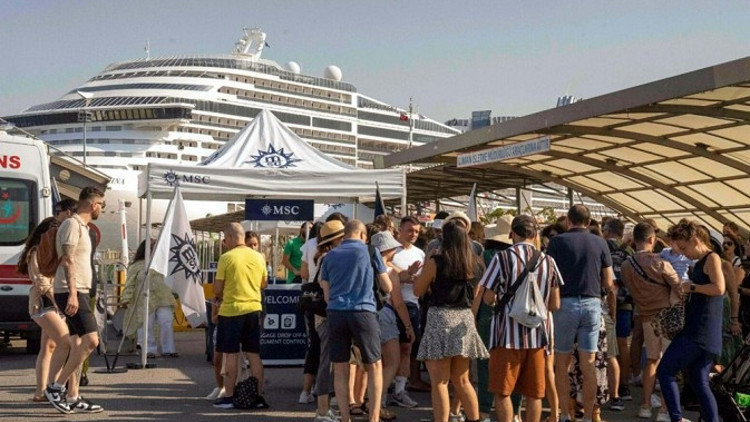
Çeşme has carved out a distinct position within the Aegean cruise landscape, attracting a high concentration of mid-sized and boutique cruise vessels. Famous for its Aegean architecture, crystal-clear coastal waters, historic fortress, and active marina culture, the district is a key draw for travelers interested in boutique shopping, high-end maritime leisure, and coastal exploration.
The arrival of 39 cruise ships at Çeşme Port highlights the town’s dual role as both a domestic holiday retreat and an international maritime gateway. Ships docking at Çeşme berth within short walking distance of the historic town center and waterfront promenades. Disembarking passengers frequently explore local historic sites, sample regional Aegean gastronomy, or take short excursions to neighboring coastal villages like Alaçatı, known for its preserved stone houses and windsurfing culture. Additionally, Çeşme’s close geographic proximity to nearby Greek islands in the North Aegean creates practical operational synergies for cruise operators designing multi-destination Mediterranean itineraries.
Further north along the Aegean coast, Dikili Port hosted 10 cruise ships during the seven-month period, maintaining its niche role within the regional port matrix.
Although smaller in scale compared to Alsancak and Çeşme in terms of absolute passenger and ship numbers, Dikili plays a specialized role in catering to cultural and heritage-focused cruise travel. The port serves as the main maritime disembarkation point for passengers traveling to Bergama, home to the ancient city of Pergamon—a UNESCO World Heritage site located a short distance inland.

The 10 cruise ships calling at Dikili brought thousands of excursionists seeking to visit Pergamon’s famous Acropolis, the ancient sanctuary of Asclepieion, and well-preserved Hellenistic architectural ruins. By serving as the entry point for these world-renowned archaeological sites, Dikili Port ensures that the economic benefits of cruise tourism are distributed beyond the metropolitan center to the northern coastal districts of İzmir province.
The collective performance of Alsancak, Çeşme, and Dikili during the first seven months of the year reflects a broader structural recovery and growth pattern in Aegean maritime tourism. The rise from 77,133 to 90,907 passengers highlights the capacity of İzmir’s port infrastructure to accommodate growing traveler demand and larger ship capacities.
Cruise passengers contribute to local economies through structured shore excursions, independent sightseeing, dining, and retail purchases. In port cities like İzmir, cruise visits generate economic activity across multiple sectors, supporting bus and taxi operators, licensed tour guides, museum staff, and independent small businesses. The distribution of ship calls across three distinct ports—an urban center at Alsancak, a coastal resort hub at Çeşme, and a heritage gateway at Dikili—allows İzmir province to cater to diverse traveler demographics while spreading economic impact across different municipal areas.
The technical capabilities of the ports also play a vital role in sustaining this growth. Port operators and maritime logistics managers in İzmir have worked to streamline customs procedures, enhance security protocols, and improve terminal facilities to handle simultaneous ship arrivals efficiently. These operational standards are essential for maintaining the confidence of major international cruise lines that operate strict timetables across Eastern Mediterranean routes.

Furthermore, the geographical position of İzmir’s ports makes them strategic components of broader Eastern Mediterranean cruise tracks. Cruise liners operating between Greek ports, Italian hubs, and the Turkish coast rely on İzmir’s ports to offer passengers a balanced mix of urban culture, seaside resort leisure, and ancient history within a compact geographic area.
The positive passenger metrics recorded in the first seven months lay a strong foundation for the remainder of the cruising season. Autumn traditionally represents another active period for Mediterranean cruise traffic, as milder temperatures attract travelers interested in historical excursions and cultural sightseeing across the Aegean.
As maritime traffic continues to perform strongly across Alsancak, Çeşme, and Dikili, local tourism authorities and port administrators remain focused on maintaining high service standards, expanding regional tour offerings, and further enhancing port infrastructure. With 90,907 passengers already hosted in the first seven months, İzmir’s port network continues to demonstrate its vital importance to Turkey’s maritime tourism industry.