The landscape of modern warfare and national defense continues to evolve at a rapid pace, with asymmetric threats such as unmanned aerial vehicles presenting new challenges for military forces worldwide. In response to these shifting operational dynamics, domestic defense engineering has achieved a significant milestone. The TOLGA Laser Weapon System, meticulously developed by the skilled engineers of Makine ve Kimya Endüstrisi (MKE), has undergone rigorous live-fire testing under the auspices of the Ministry of National Defense. The system demonstrated its operational readiness and pinpoint precision during the comprehensive Ateş Serbest-2026 exercise, marking a crucial step forward in the country’s indigenous air defense capabilities.
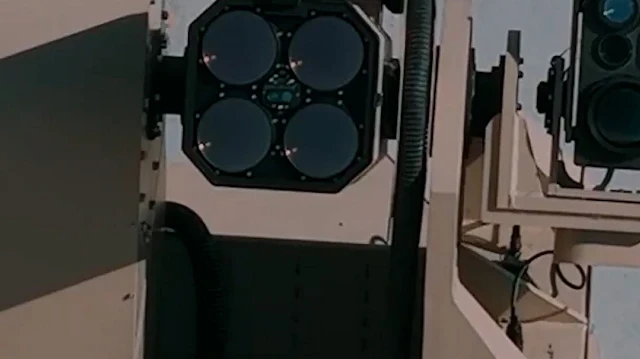
During the high-profile military activity, the advanced directed-energy weapon system proved its mettle in a realistic operational scenario. Configured with a robust total output of 20 kilowatts, the system is engineered from four distinct 5-kilowatt fiber lasers that combine their beams to deliver concentrated energy onto designated targets. In the demonstration monitored during the Ateş Serbest-2026 exercise, this concentrated thermal and optical power was brought to bear against a dynamic aerial target. Operating at a distance of 760 meters, the system successfully acquired, tracked, and neutralized the incoming drone target with absolute precision, validating years of research, development, and engineering efforts by MKE experts.
The TOLGA Laser Weapon System has been intentionally designed to serve as a versatile defensive asset capable of countering a wide spectrum of emerging threats spanning air, land, and maritime domains. Modern battlefields are increasingly crowded with low-cost, highly maneuverable aerial platforms that can compromise critical infrastructure or frontline units. To counter this, directed-energy solutions offer a high-magazine-depth capability, where engagements are limited primarily by power availability rather than physical ammunition constraints. Furthermore, the system does not operate in isolation. It has been architected to achieve seamless integration with the broader operational ecosystem of the TOLGA Close Air Defense System, leveraging its established detection, tracking, and command-and-control infrastructure to coordinate responses swiftly and efficiently.
Advanced Threat Mitigation Through Multi-Tiered Engagement Options
One of the most notable engineering achievements embedded within the TOLGA Laser Weapon System is its capacity to deliver tiered, progressive engagement options tailored to the specific nature and distance of an approaching threat. Rather than relying on a single binary mode of operation, the system provides three distinct methods of intervention against hostile air assets. This graduated response matrix allows operators to manage the escalation of force dynamically, optimizing the defensive posture according to tactical requirements and operational urgency.
At longer engagement ranges, spanning from 4,500 meters down to 2,500 meters, the system is designed to execute non-lethal optical disruption techniques. Specifically, it employs dazzling and blinding methodologies aimed directly at the optical sensors and cameras mounted on incoming reconnaissance or attack drones. Within this outer band of the engagement zone, the laser energy induces temporary blindness in the target’s guidance and surveillance optics, effectively neutralizing its operational vision without necessarily destroying the airframe. As the threat closes the distance and enters the 2,500 to 1,500-meter window, the intensity of the intervention scales up, transitioning from temporary disruption to permanent blinding of the target’s optical and electro-optical sensing suites. This ensures that even if the drone continues its trajectory, its ability to gather intelligence, target friendly positions, or guide munitions is completely compromised.
When an asymmetric aerial threat breaches the inner defensive perimeter and reaches ranges between 1,500 and 100 meters, the system shifts from optical countermeasures to hard-kill kinetic-equivalent effects. In this critical zone, the 20-kilowatt fiber laser focuses its energy onto the physical body of the target. By delivering concentrated thermal energy directly onto the structural framework or critical components of the drone, the system creates structural destruction and structural failure, successfully neutralizing the threat before it can reach its intended destination or inflict damage on protected assets.
Precision Tracking and 360-Degree Operational Mobility
The operational effectiveness of a directed-energy weapon depends not only on the raw power of its laser source but equally on its ability to maintain stable, uninterrupted contact with fast-moving, highly agile targets. To achieve this, the TOLGA platform incorporates advanced mechanical and electrical design principles, featuring a turret engineered for complete 360-degree freedom of movement. This omnidirectional capability ensures that there are no blind spots, allowing the defense system to respond instantly to threats approaching from any azimuth.
At the core of this mobility is the implementation of cutting-edge lineer motor technology within the system’s turret architecture. Unlike traditional mechanical gearing systems that rely on rotary motors and complex linkages, linear motor technology converts electrical energy directly into linear motion. This modern technological approach eliminates mechanical backlash and reduces latency, providing several distinct performance advantages on the modern battlefield. Most notably, it enables the turret to track detected threats with exceptional precision, rapid acceleration, and high angular velocity.
The successful engagement and destruction of the drone target at a distance of 760 meters during the Ateş Serbest-2026 exercise served as a practical validation of these advanced mobility and tracking features. By seamlessly combining high-power fiber laser technology, graduated intervention capabilities, and rapid-response linear motor turret actuation, the TOLGA system has substantiated its tactical value. The field demonstration underscored the maturity of indigenous defense technologies in meeting the rigorous demands of contemporary close air defense, providing military forces with a reliable, adaptable, and technologically sophisticated shield against modern aerial hazards.