

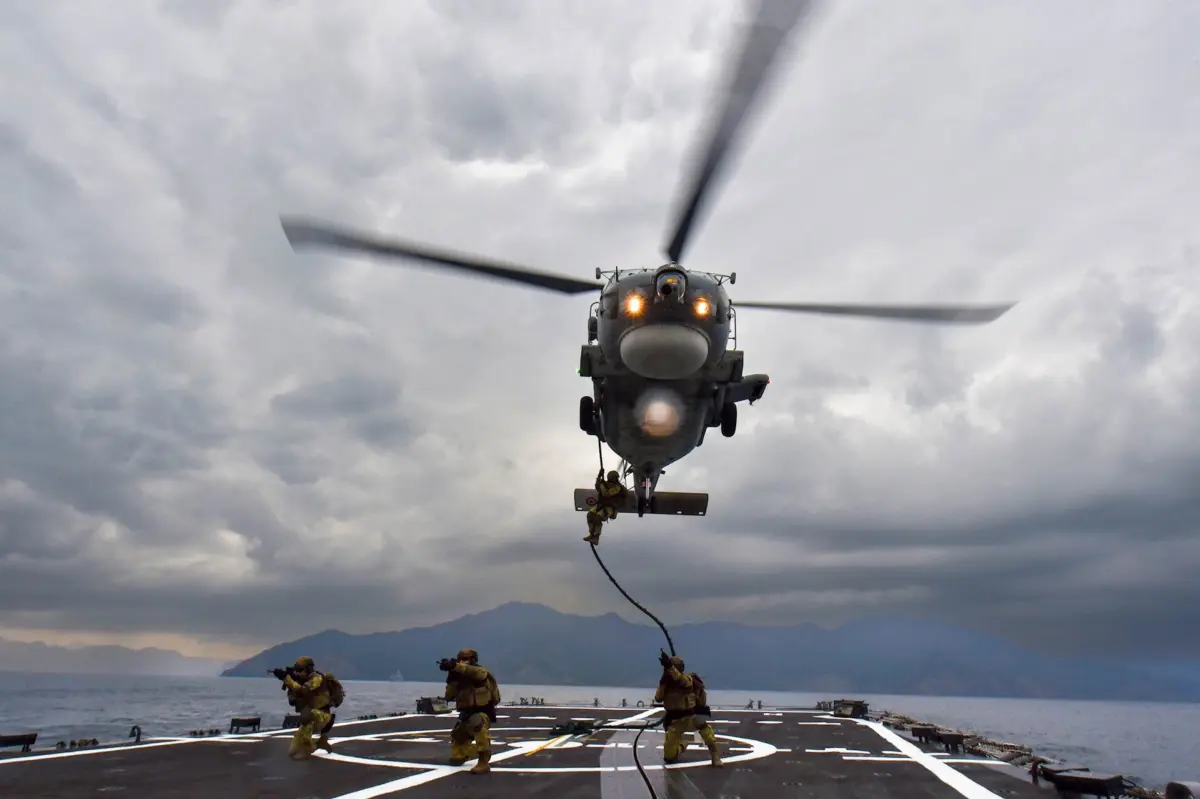
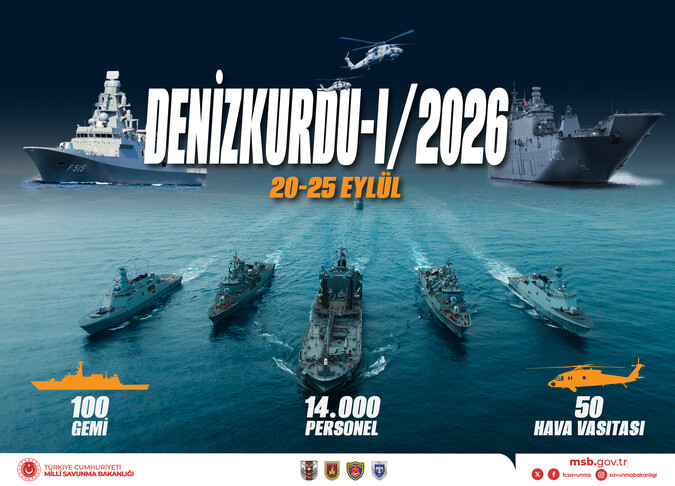
The Turkish Naval Forces are embarking on one of their most comprehensive and strategically significant military exercises of the year. The Ministry of National Defense (MSB) has officially announced that all preparations are complete for the start of the Denizkurdu-I/2026 Tatbikatı (Seawolf-I/2026 Exercise). Designed to test the operational readiness of the naval fleet and to foster high-level coordination among different military branches, the massive drills will bring together a formidable fleet of approximately 100 warships, 50 air assets, and 14,000 military personnel.
The scheduled maneuvers represent a major demonstration of the Turkish Armed Forces’ (TSK) ability to project power, secure maritime boundaries, and conduct complex joint-force operations in multiple theaters simultaneously. As geopolitical dynamics in the surrounding seas continue to require high states of readiness, this exercise serves as a vital platform for testing modern naval doctrines, newly integrated defense systems, and joint combat capabilities under realistic operational scenarios.
A Fleet of 100 Ships and 50 Air Vehicles to Deploy
According to the official statement released by the Ministry of National Defense, the Denizkurdu-I/2026 exercise is scheduled to take place between September 20 and September 25, 2026. During this intensive five-day period, the Turkish Navy will deploy a massive contingent comprising around 100 surface vessels and submarines, 50 manned and unmanned aerial vehicles, and approximately 14,000 personnel.
Crucially, Denizkurdu-I/2026 is not an isolated naval event. In line with modern military doctrines that emphasize the necessity of multi-domain warfare, the exercise will feature extensive joint-force integration. Alongside the Turkish Naval Forces Command (Deniz Kuvvetleri Komutanlığı), key assets and personnel from the Land Forces Command (Kara Kuvvetleri Komutanlığı), the Air Forces Command (Hava Kuvvetleri Komutanlığı), and the Coast Guard Command (Sahil Güvenlik Komutanlığı) will actively participate.
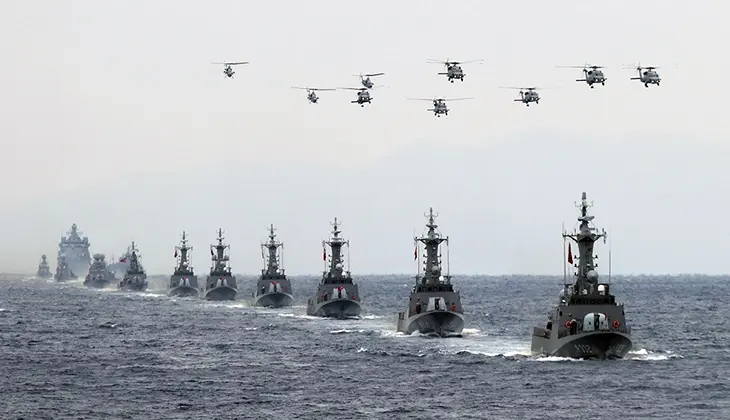
This inter-service participation turns the exercise into a critical testing ground for joint operations. By placing different branches of the Turkish military under a unified operational scenario, Denizkurdu-I/2026 aims to refine communication protocols, synchronize joint strike capabilities, and improve overall tactical coordination. In modern conflict zones, the ability of naval assets to work seamlessly with land-based artillery, air force fighter jets, and coast guard patrol units is paramount. This exercise is specifically structured to address and improve these joint-service synergies in highly demanding environments.
Simultaneous Operations Across Four Seas
One of the most challenging aspects of Denizkurdu-I/2026 is its vast geographical scope. The Ministry of National Defense has designated four distinct maritime regions as active training zones: the Black Sea (Karadeniz), the Sea of Marmara (Marmara Denizi), the Aegean Sea (Ege Denizi), and the Eastern Mediterranean (Doğu Akdeniz).
While initial reports by the state-run Anadolu Agency (AA) indicated that the exercise would take place across the Black Sea, Aegean Sea, and Eastern Mediterranean, the official press release issued by the Ministry of National Defense on September 18 clarified that the Sea of Marmara is also included in the operational zone. Consequently, the official scope of the exercise covers four seas, requiring the Turkish Navy to manage complex logistical and command-and-control operations across multiple distinct geographical theaters at the same time.
Executing synchronized naval maneuvers across four seas presents a unique set of challenges. Each of these maritime zones has different environmental conditions, shipping densities, and strategic characteristics. For instance, the Black Sea requires specific focus on surface monitoring and mine countermeasures, while the Aegean and Eastern Mediterranean demand complex air-defense maneuvers, anti-submarine warfare, and sea-lane protection strategies. By conducting simultaneous operations in all four regions, the Turkish Navy will demonstrate its capacity to maintain situational awareness and operational control over all surrounding waters, validating its multi-theater defense readiness.
Operational Readiness and Live-Fire Drills
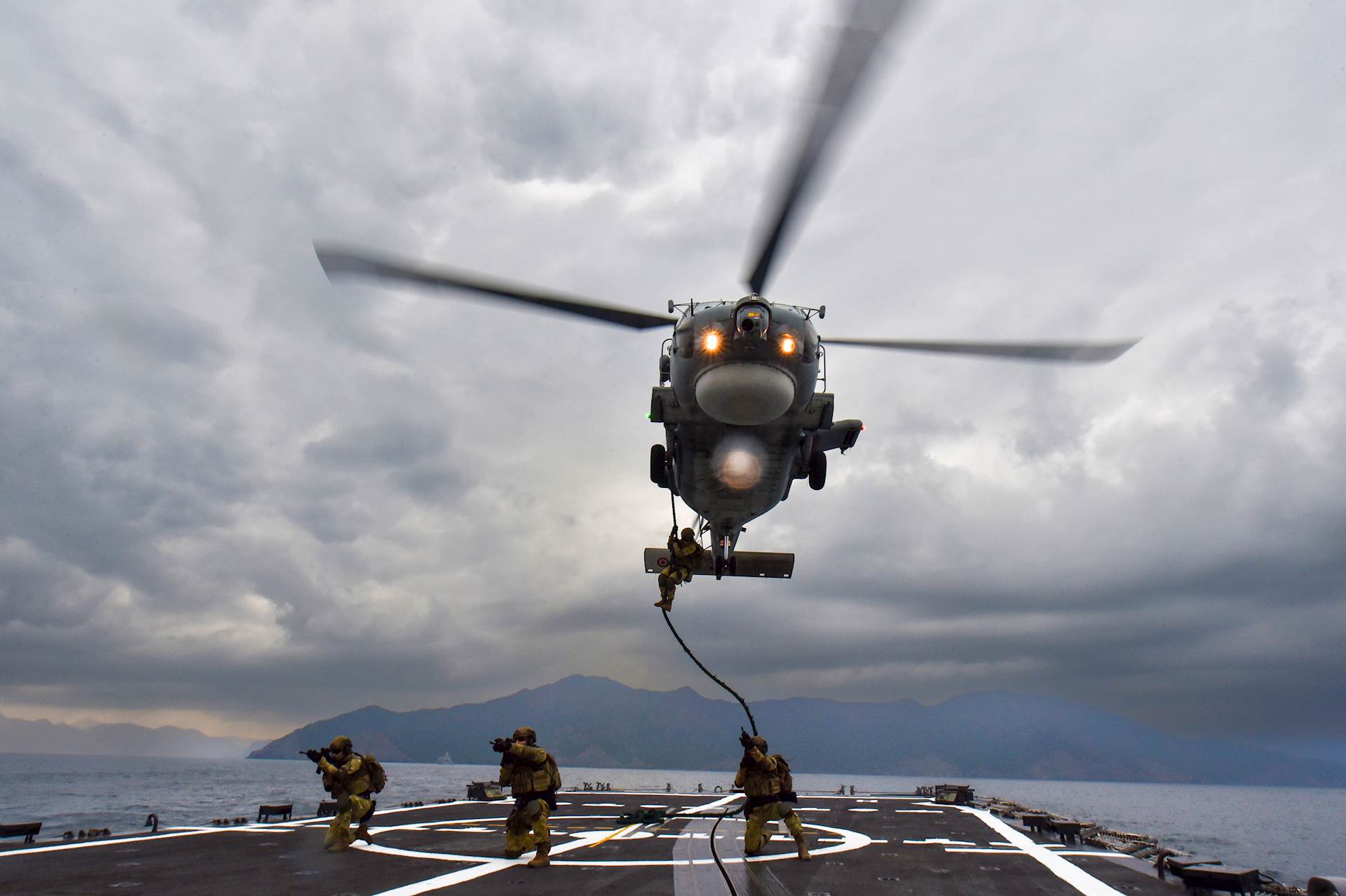
At the core of the Denizkurdu-I/2026 exercise are the Operational Readiness Training (Harekâta Hazırlık Eğitimleri) and Live-Fire Weapon Training (Fiilî Silah Eğitimleri). These activities are designed to push both personnel and hardware to their limits, ensuring that the fleet remains prepared for real-world combat scenarios.
During the operational readiness phase, participating crews will be subjected to simulated emergencies, including asymmetric threats, electronic warfare jamming, submarine attacks, and sudden aerial incursions. These drills are designed to evaluate the rapid decision-making capabilities of commanding officers and the efficiency of the crews in high-stress environments. Furthermore, damage control, search and rescue (SAR), and casualty evacuation procedures will be practiced to ensure maximum survivability of assets during active conflicts.
The live-fire portion of the exercise will see the actual deployment of various onboard weapon systems. Ships, submarines, and aircraft will engage designated surface, underwater, and aerial targets using live ammunition. This includes the test-firing of advanced guided missiles, torpedoes, naval artillery, and close-in weapon systems (CIWS). Engaging real targets with live ordnance is essential for verifying the accuracy and reliability of Turkey’s naval weaponry, much of which has been developed or modernized by the domestic defense industry in recent years. These live-fire drills serve as the ultimate test of the fleet’s offensive and defensive capabilities.
Distinguished Observer Day Hosted on TCG Anadolu
A major highlight of the Denizkurdu-I/2026 exercise will be the Distinguished Observer Day (Seçkin Gözlemci Günü), scheduled to take place on September 24, 2026, in the Eastern Mediterranean. This high-profile event will be hosted aboard the TCG Anadolu, the flagship of the Turkish Navy and the nation’s first multipurpose amphibious assault ship.
The TCG Anadolu, which serves as a floating command-and-control center, is uniquely suited to host such an event. From its flight deck and command bridges, high-ranking military officials, defense attaches, and government dignitaries will observe the live execution of highly coordinated joint-force maneuvers. The Distinguished Observer Day will showcase the pinnacle of the exercise’s joint-operability goals, demonstrating how naval, air, and ground forces can be brought together to execute complex tactical missions under a single operational command.
The activities on September 24 are expected to include coordinated air-to-sea strikes, amphibious landing simulations, and advanced fleet formations. By demonstrating these capabilities in the strategically vital waters of the Eastern Mediterranean, the Turkish Armed Forces aim to highlight their readiness to protect national interests and contribute to regional stability. Following the conclusion of the Distinguished Observer Day, the remaining phases of the exercise will be completed, with all activities wrapping up on September 25, 2026.
A Comprehensive Readiness Initiative for the Turkish Navy
Denizkurdu-I/2026 stands as a testament to the scale, capability, and ambition of the modern Turkish Navy. Organizing an exercise of this magnitude—involving 100 ships, 50 aircraft, and 14,000 personnel—requires meticulous planning, robust logistics, and advanced command infrastructure.
By conducting simultaneous operations across four seas from September 20 to September 25, the Turkish Armed Forces are reinforcing their role as a major maritime power in the region. The exercise not only sharpens the combat edge of individual sailors and pilots but also validates the collective readiness of the entire military apparatus to operate as a cohesive, multi-domain force. As the naval units return to their bases after September 25, the extensive data gathered during these five days of intensive drills will be analyzed to further refine training doctrines, tactical procedures, and future defense acquisition strategies.