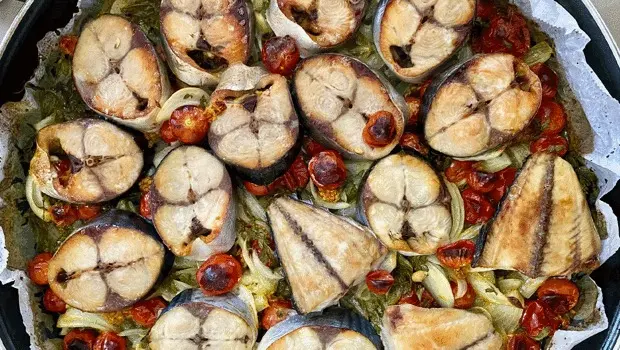
As the coastal fishing season reaches its peak, seafood lovers and home cooks across Turkey are turning their focus to bonito, known locally as palamut. Celebrated for its firm flesh and rich, robust flavor, the prized seasonal catch has re-established itself as a centerpiece of domestic dining. While frying remains a long-standing custom in bustling harbor kitchens, roasting bonito slices in the oven alongside garden-fresh vegetables has gained widespread popularity among culinary enthusiasts seeking a satisfying, wholesome, and effortless main course.
Paired with a light infusion of olive oil and freshly squeezed lemon juice, oven baking transforms the naturally lean fish into tender slices with a delicate, melt-in-the-mouth texture. To complement the depth of the fish, culinary experts have assembled a curated menu of traditional accompaniments. Ranging from silky zucchini soup and piquant Cretan cheese paste to crisp arugula salad, classic broad bean fava, and slow-simmered quince dessert, these five classic dishes provide a well-rounded dining experience that balances warmth, acidity, and gentle sweetness.
Preparing Oven-Baked Bonito to Perfection
The arrival of autumn signals the prime window for bonito, when the fish migrate southward through the Bosphorus and the Sea of Marmara, developing the ideal fat content that makes their meat succulent and flavorful. When brought into home kitchens, the preparation focuses on accentuating freshness while keeping culinary effort straightforward.
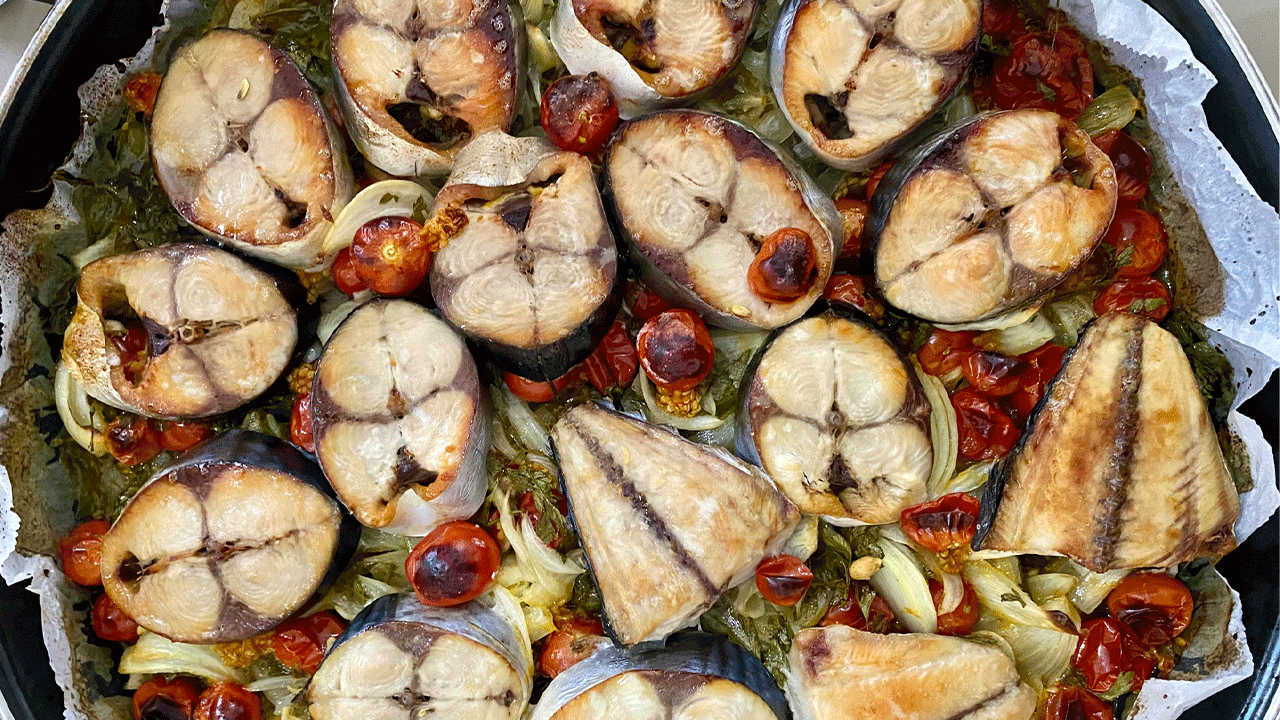
Cleaned and sliced bonito steaks or fillets are arranged in a baking dish over a foundational bed of aromatics. Onions cut into rings and ripe, juicy tomatoes form a natural trivet beneath the fish, releasing moisture during the baking process and ensuring the fish does not dry out under direct heat. The seasoned marinade—consisting of premium extra virgin olive oil, freshly squeezed lemon juice, and a balanced selection of herbs and spices—is massaged evenly over the fish slices.
As the tray roasts in the oven, the vegetable juices meld with the seasoned olive oil and the natural oils of the bonito. The heat softens the tomatoes and caramelizes the edges of the onions, imparting a subtle savory sweetness throughout the dish. The result is a vibrant, aromatic platter where the fish achieves a soft consistency while retaining its structural integrity, offering an inviting main course that easily serves family gatherings and seasonal dinner guests.
Five Distinct Recipes to Complement Oven-Baked Bonito
A well-composed fish dinner relies on contrasting textures and temperatures to balance the natural richness of the main seafood course. By thoughtfully selecting a light starter, vibrant cold appetizers, a refreshing salad, and an autumnal dessert, home cooks can elevate oven-baked bonito into a comprehensive feast.

Zucchini Soup
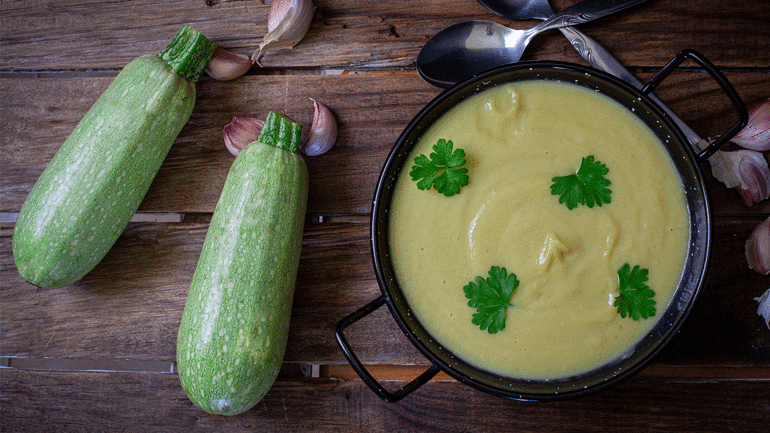
A refined meal begins with a calming, delicate first course, and a tempered zucchini soup (terbiyeli kabak çorbası) serves as an appetizing prelude. Prepared with fresh zucchini simmered alongside complementary vegetables until thoroughly tender, the soup is blended into a silky, smooth consistency that immediately engages the palate.
What distinguishes this preparation is its traditional tempering process, which incorporates strained yogurt (süzme yoğurt). Introduced gradually into the warm vegetable broth, the thick yogurt imparts a velvety body and a mild, pleasant tanginess without the heaviness associated with dairy cream. The light green soup balances warmth and restraint, priming the appetite for the heartier roasted fish without overwhelming the senses. It remains a dependable, consistently pleasing starter that sets an elegant tone for the courses that follow.
Cretan Cheese Spread (Girit Ezmesi)
Cold meze selections are an integral component of any traditional fish gathering, providing vibrant flavor contrasts between bites of warm seafood. Among the most beloved accompaniments is Cretan cheese spread (Girit ezmesi), a staple shared across Aegean coastal traditions that brings together dairy richness and aromatic freshness.

The foundation of the spread relies on a balanced blend of white cheese and mild curd cheese (lor peyniri), which are mashed together until they achieve a pliable, spreadable consistency. Finely chopped raw walnuts are folded into the cheeses, introducing a pleasant earthiness and a subtle crunch. The mixture is then thoroughly scented with finely minced fresh dill, crushed garlic, and a generous pour of extra virgin olive oil.
Quick to assemble, this savory spread delivers a creamy richness sharpened by the bite of raw garlic and the herbal vibrancy of dill. When served alongside oven-baked bonito, it offers a cool, savory counterpoint that complements the baked onions and seasoned fish.
Arugula and Tomato Salad
No seafood table is considered complete without a generous salad of bitter greens, and a classic arugula and tomato salad (domatesli roka salatası) remains the quintessential pairing for dark-fleshed fish such as bonito. The inherent pepperiness of fresh arugula leaves cuts cleanly through the richness of the oily fish, refreshing the palate with every forkful.

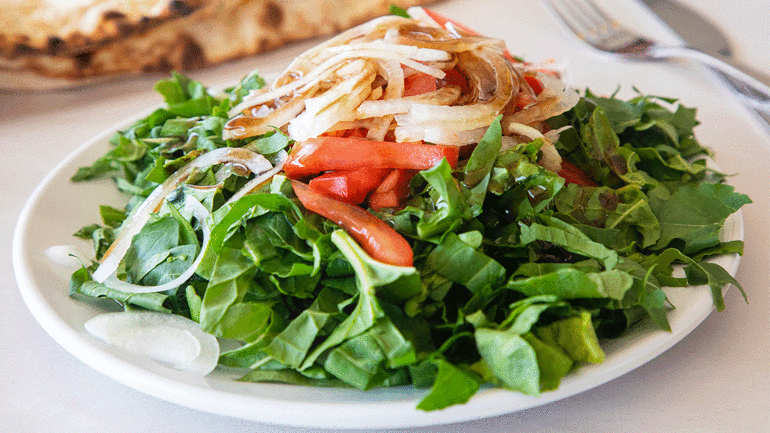
Freshly washed and torn arugula leaves are tossed with ripe, sweet tomatoes and thinly sliced onions. The salad is dressed with a lively vinaigrette crafted from fruity olive oil, freshly squeezed lemon juice, and a drizzle of tart pomegranate molasses (nar ekşisi). The sweet-and-sour profile of the pomegranate reduction, combined with the sharp acidity of the lemon, elevates the crisp vegetables and provides a zesty, palate-cleansing contrast that enhances the savory nuances of the roasted fish.
Fava (Broad Bean Purée)
Holding a revered place in coastal culinary history, fava—the traditional Aegean purée made from dried split broad beans—stands as an essential companion to seasonal seafood. The preparation transforms simple, humble legumes into an extraordinarily luxurious cold appetizer through patient cooking and generous seasoning.
Dried broad beans are gently simmered with onions, water, and olive oil until the beans soften completely and absorb the aromatic flavors. Once cooked through, the legumes are whipped or puréed into an impeccably smooth paste and allowed to cool, firming up into a tender consistency that can be neatly sliced or spooned.
The dish owes its velvety character and distinctive flavor to the liberal inclusion of high-quality olive oil, which bridges the earthy depth of the legumes with the sweet undertone of cooked onions. Often garnished with a final swirl of olive oil, fresh dill, and red onion slivers, fava adds substantive body and historical depth to the dining spread, reinforcing the timeless culinary connection between pulses and the bounty of the sea.
Quince Dessert (Ayva Tatlısı)
To conclude an extensive autumn seafood dinner, a traditional seasonal sweet brings the dining experience to a satisfying and colorful finish. Quince dessert (ayva tatlısı) captures the very essence of late-season orchards, transforming the hard, astringent fruit into a meltingly tender, glistening delicacy.
Halved and cored quinces are simmered slowly in a shallow pan with sugar, water, and their own seeds. It is the natural presence of pectin within the seeds that works culinary magic during the gentle poaching process, imparting a radiant, deep-ruby hue to the syrup and fruit without requiring artificial coloring.
As the simmering liquid reduces into a light, fragrant jelly, the fruit becomes thoroughly infused with sweetness while preserving a whisper of its native tartness. Served cool or at room temperature, often crowned with traditional clotted cream (kaymak) or a sprinkle of crushed nuts, this vibrant dessert captivates visually and provides a harmonious, sweet conclusion to a robust fish dinner.