By Gülay Yılmaz
SCOTLAND — When autumn arrives across northern Great Britain, the Scottish Highlands undergo a dramatic transformation. Rolling moors turn rich shades of amber and gold, dense mountain mists roll through steep glens, and unpredictable weather creates rapid shifts between rainstorms and vibrant rainbows. Starting from the historic capital city of Edinburgh, a comprehensive 2,000-kilometer clockwise journey through the rugged wilderness reveals a country shaped as much by its sheer physical grandeur as by centuries of turbulent history, clan traditions, world-renowned whisky, and iconic cultural heritage.
Covering vast stretches of untamed terrain, solitary coastlines, serene lochs, and soaring mountain ridges, the route offers a deep encounter with Scotland’s landscape. The experience is continuously defined by the elements—sudden downpours, strong Atlantic winds, and brilliant beams of sunlight piercing through heavy cloud cover. Yet beyond the geography lies a rich cultural fabric forged by centuries of conflict with England, deeply rooted clan rivalries, traditional bagpipes, kilts, and historic distilleries. Traversing this terrain from end to end remains the ultimate way to absorb the region’s enduring character.

Loch Lomond and the Contrasting Charm of Luss
Following two days spent exploring the architectural and historic depths of Edinburgh, the journey turned northward toward the expansive boundaries of Loch Lomond and The Trossachs National Park. Spanning nearly 2,000 square kilometers, this national park is widely regarded as one of Scotland’s most cherished natural assets. The loch itself, famous among fishing enthusiasts for its abundance of brown trout and salmon, serves as a primary hub for hikers, outdoor adventurers, and nature lovers seeking refuge in the countryside.
Navigating the Highlands requires a flexible itinerary and a constant "Plan B," as the weather in this part of the world can alter within minutes. Upon reaching the southern shore of Loch Lomond, dark clouds swiftly accumulated, bringing heavy rain that enveloped the 40-kilometer-long sheet of water in thick gray fog. Despite the sudden loss of visibility across the open water, the nearby village of Luss, situated on the loch’s western shore, delivered an unforgettable visual contrast.

The small settlement of Luss is defined by its historic cottages constructed from muted brown and gray sandstone. In the autumn rain, the bright, meticulously tended flower gardens standing in front of these stone homes created a striking juxtaposition against the dark sky and shrouded hillsides. Viewed from the village pier, the scene embodied the tranquil resilience typical of Scottish coastal settlements.
Oban: The Vibrant Gateway to the Hebrides
Continuing along the route, the journey leads west to the coastal town of Oban. Home to a resident population of approximately 8,500 people, this energetic port serves as a vital transportation hub and the main gateway to the Hebrides archipelago. Ferries depart regularly from Oban’s harbor to islands such as Mull, Barra, and Colonsay, carrying locals, supplies, and travelers deeper into the island chain.

Oban is compact and easily navigated on foot. The heart of the town revolves around its busy waterfront district, accessible through narrow streets lined with local art galleries, artisan shops, and seafood markets. The ambient aroma of fresh catches fills the air along the quayside, where visitors can gaze across the harbor to take in the town’s most prominent architectural markers.
Dominating the skyline from high above the harbor is McCaig’s Tower, a sweeping circular structure modeled after the Colosseum in Rome. Featuring 94 distinct arches, this 19th-century granite monument stands like a crown over the town. Situated closer to the waterfront below is the famous Oban Distillery, one of the oldest and smallest single malt distilleries in Scotland, which has been producing whisky at the core of the town since 1794.
Glencoe: Natural Splendor and the Historical Echoes of the "Valley of Tears"
Driving northeast from Oban brings travelers into Glencoe Valley, undeniably one of the most magnificent and emotionally charged natural landscapes in the British Isles. Characterized by towering mountain walls, narrow mountain passes, tumbling waterfalls, and the winding currents of the River Coe, the valley possesses a cinematic quality that has drawn major film productions over the years, including Braveheart, Highlander, and the Harry Potter series.
Yet Glencoe’s awe-inspiring beauty is inextricably linked to a dark and somber past. Historically referred to as the "Valley of Tears," Glencoe was the site of the infamous 1632 Glencoe Massacre, in which members of the Campbell clan turned against their hosts, the MacDonalds of Glencoe, resulting in a tragic loss of life that remains etched in Scottish collective memory.
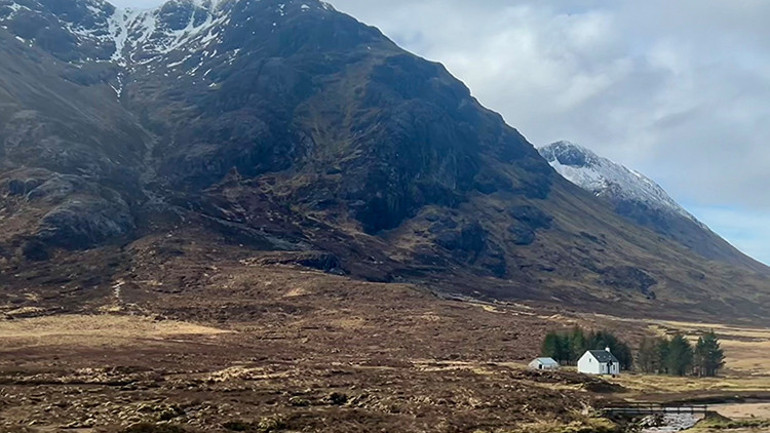
Standing in stark contrast to the imposing wilderness is a world-famous landmark known locally and globally as the "Wee White House." Located at the foot of Buachaille Etive Mòr—a massive, pyramid-shaped mountain that dominates the entrance to the glen—this lone structure’s official name is Lagangarbh Hut. Positioned near the banks of the River Coupall alongside the A82 road, the solitary white building against the massive backdrop of dark rock serves as one of the most photographed points in the entire Highland region.
Fort William and the Relics of Inverlochy Castle
Further along the northern path sits Fort William, a bustling tourist center located at the base of Ben Nevis, the highest peak in the British Isles. Fort William also marks the northern terminus of the West Highland Way, Scotland’s renowned 165-kilometer long-distance walking trail.
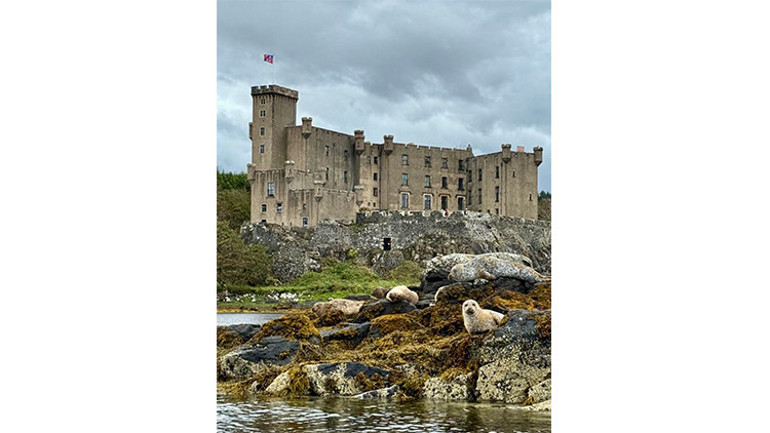
When heavy downpours render mountain ascents impractical, alternative cultural sites in the immediate area offer compelling historic detours. A short distance from the town center lie the ruins of Old Inverlochy Castle. Dating back to the 13th century, this ancient fortress played a critical role in Scottish military history, enduring multiple major battles during periods of civil conflict. Although much of the original structure now stands in ruins, its surviving stone curtain walls and corner towers provide visitors with a tangible connection to the feudal conflicts that once swept through the Highlands.
In the Footsteps of the Hogwarts Express: Glenfinnan Viaduct
A 30-minute drive west from Fort William leads to Glenfinnan, a site that attracts film enthusiasts and literary fans from around the globe. Spanning 380 meters across a lush green valley, the Glenfinnan Viaduct features 21 towering concrete arches rising dramatically above the terrain. The viaduct remains an operational railway bridge, crossed regularly by the Jacobite steam train—a locomotive world-famous for its appearance as the Hogwarts Express in the film adaptations of J.K. Rowling’s books.
Reaching the primary viewing points requires a brief five-minute walk from the local visitor center. Travelers sheltering beneath the massive arches during frequent rain showers should come prepared for Highland midges—tiny biting insects that are notorious throughout the region in damp, still weather. Continuing past the viaduct along elevated hiking trails rewards visitors with a sweeping vista that captures three iconic elements in a single frame: the Glenfinnan Viaduct, the tranquil waters of Loch Shiel, and the lone Glenfinnan Monument erected in memory of the Jacobite risings.
Eilean Donan: Scotland’s Most Photogenic Fortress
Before crossing over to the Isle of Skye, the route passes Eilean Donan Castle, arguably the most recognizable and photographed castle in Scotland. Situated on a small tidal island where three sea lochs—Loch Duich, Loch Long, and Loch Alsh—converge, the fortress is linked to the mainland by an elongated stone arch bridge. During high tide, water completely surrounds the stronghold, enhancing its fairytale appearance.
Originally constructed in the early 13th century as a defense against Norse raids, the castle was destroyed during political conflicts in the 18th century before undergoing a comprehensive restoration in the early 20th century. Today, visitors can explore the fully restored interior spaces, including grand banquet halls, period bedrooms, and timber-roofed kitchen quarters, providing a detailed glimpse into medieval clan life.
Isle of Skye: Microclimates, Dramatic Landscapes, and Ancient Geology
Departing Eilean Donan and crossing the Skye Bridge brings travelers onto the Isle of Skye, the largest and most famous island of the Inner Hebrides. Renowned for its folklore, single malt whisky, and sheer geological diversity, Skye is equally infamous for its localized microclimates. Weather on the island changes with extreme speed; bright sunshine can bathe one corner of the island while heavy rain and fog blanket another area just a few miles away. While the sharp peaks of the Cuillin range in the south may be completely engulfed in mist, the northern peninsulas often enjoy clear skies.
At the heart of the island sits Portree, a vibrant harbor town characterized by its brightly painted waterfront buildings, seafood restaurants, and lively local docks. Serving as a central base for exploration, Portree provides easy access to several of Skye’s most renowned geological features:
- Old Man of Storr: Located on the Trotternish Peninsula, this towering basalt pinnacle is one of the island’s most iconic landmarks. Reaching the base of the rock formation involves a popular four-kilometer round-trip hike from the parking area, rewarding hikers with panoramic vistas of the surrounding coastline.
- Lealt Falls: A dramatic waterfall set within a deep coastal gorge, easily accessible via short walking paths from the main road, making it a highly accessible stop for travelers.
- Kilt Rock and Mealt Falls: Formed approximately 60 million years ago through intense volcanic activity, the vertical basalt cliffs of Kilt Rock resemble the pleated folds of a Scottish kilt. Dinosaur footprints have been discovered in the surrounding rocks, and the sheer cliff face provides the drop over which Mealt Falls plunges directly into the sea below.
Following Legends to the Final Destination: Loch Ness
Leaving Skye and returning to the mainland leads to the final major stretch of the journey: the shores of Loch Ness. World-famous for the enduring legend of "Nessie," the mythical sea monster said to inhabit its depths, Loch Ness is one of the largest and deepest bodies of fresh water in the United Kingdom.
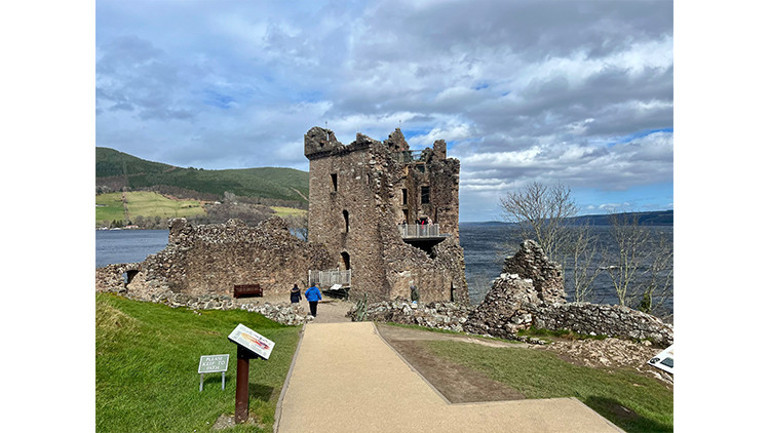
Taking a boat tour across the dark, peat-stained waters highlights the eerie, quiet grandeur of the loch. While scientific research has never produced concrete evidence of a prehistoric creature, the local town of Drumnadrochit on the northern shore has fully embraced the lore. Lined with exhibition centers, gift shops, and themed attractions, the town brings a lighthearted, intriguing end to a journey filled with history, mystery, and raw landscape.
Essential Practical Insights for Highland Travelers
Navigating the Scottish Highlands—the sparsely populated, mountainous expanse that covers northern and western Scotland—requires careful preparation to fully appreciate its wilderness character.
- Transportation and Timing: To truly experience the region, renting a car or booking a specialized guided tour is strongly recommended. Plan to allocate a minimum of five days for the circuit. Distances on a map can be deceiving; driving 100 kilometers in the Highlands often takes significantly longer than expected due to narrow, winding single-track roads and variable weather conditions.
- Packing and Equipment: Regardless of the season, travelers should pack heavy layering clothes, high-quality waterproof jackets, and sturdy waterproof footwear. Bring effective midge repellent during warmer or damp days. Travelers from outside the region must also bring a Type G electrical adapter (the standard British three-pin plug).
- Whisky and Accommodation: Setting aside a day for a guided single malt whisky tasting tour offers a memorable cultural experience. When booking lodging in the Highlands, travelers should note that many rural accommodations operate as traditional lodges or guest houses featuring shared bathroom facilities. While these locations offer immense charm and warm hospitality, those expecting modern luxury amenities should research options well in advance.