The global box office success of Odyssey, written and directed by filmmaker Christopher Nolan, has triggered an unprecedented wave of public fascination with Homer’s 3,000-year-old classical epic, ancient mythology, and the Mediterranean geography that serves as its backdrop. The cinematic release has created a noticeable surge in cultural activity across multiple sectors, driving up museum attendance, boosting sales of ancient literature, and spurring growing interest in heritage travel along the legendary routes of the Odyssey.
Archaeologists and cultural historians report that the film has successfully translated an ancient literary monument into a contemporary cultural phenomenon. The production is anticipated to deliver a substantial economic boost to tourism across the Mediterranean basin, encouraging travelers to retrace the steps of Odysseus from the ruins of ancient Anatolia to the volcanic landscapes of Sicily, the sheer cliffs of the Amalfi Coast, and the tranquil shores of the Ionian Islands.
According to Prof. Dr. Rüstem Aslan, Head of the Troy Excavations and author of the recently published book Homer for Beginners, the profound resonance of the story lies in its universal themes and emotional complexity. Aslan notes that Homer’s Odyssey stands as one of the most compelling maritime voyage narratives in human history, offering a deep meditation on human resilience.

"Following the Trojan War, Odysseus, King of Ithaca, embarks on a return journey home that lasts ten full years," Aslan explains. "However, this return is far more than a lengthy maritime voyage; it is a symbolic journey that rigorously tests human intellect, courage, patience, and willpower. Every island and every port that Odysseus encounters represents a distinct dimension and chapter of human life. The epic of Odysseus powerfully articulates how a person becomes fully human. Greed, forgetfulness, hubris, temptation, the relentless search for knowledge, and an abiding longing for home form the core thematic pillars of this voyage."
Travel writer Serda Büyükkoyuncu, author of Ancient Greek Mythology: Love Lives of the Gods, observes that the film has ignited an immediate desire among audiences to experience these mythical settings firsthand. "From the formidable walls of Troy to the active volcanoes of Sicily, from the Amalfi shores where the Sirens were believed to sing to Ithaca, where Odysseus was finally reunited with his home, this itinerary represents perhaps the oldest cultural and travel route in human history," Büyükkoyuncu says.

A Victory Born of Wood and Fire: Troy, Bozcaada, and the Troad Coast
The epic journey begins on the wind-swept plains of northwestern Anatolia, in the modern-day province of Çanakkale, Turkey. This region contains the ancient city of Troy, where the decade-long conflict between the Greeks and Trojans culminated in one of mythology’s most famous stratagems.
Prof. Dr. Rüstem Aslan emphasizes the historical and archaeological gravity of the site. "The Ancient City of Troy in Çanakkale remains one of the world’s most critical archaeological locations," Aslan states. "Visitors to the site can explore successive archaeological layers representing different eras of Troy’s history, alongside its ancient fortifications and monumental city gates. Immediately adjacent to the ruins, the Troy Museum displays a vast collection of artifacts unearthed during decades of excavation. Just off the entrance to the Dardanelles lies the island of Bozcaada, known in antiquity as Tenedos, which plays a pivotal role in Trojan mythology. According to Homer, the concept of the wooden horse—conceived by the cunning Odysseus—was executed on this island before being left outside the gates of Troy. In a very real sense, this island marks the starting point of Odysseus’s ten-year Odyssey."

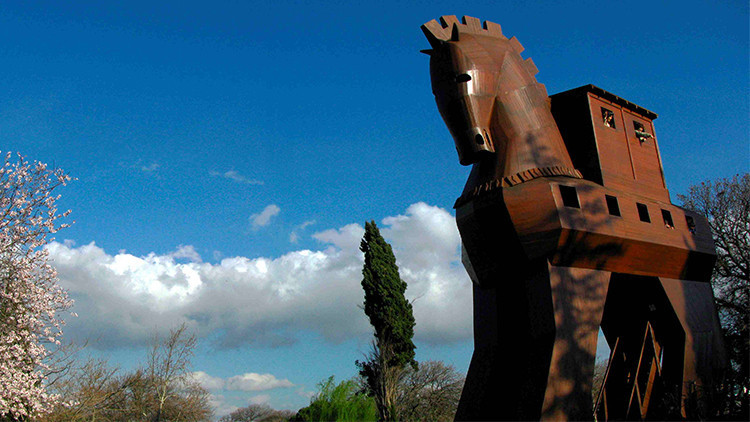
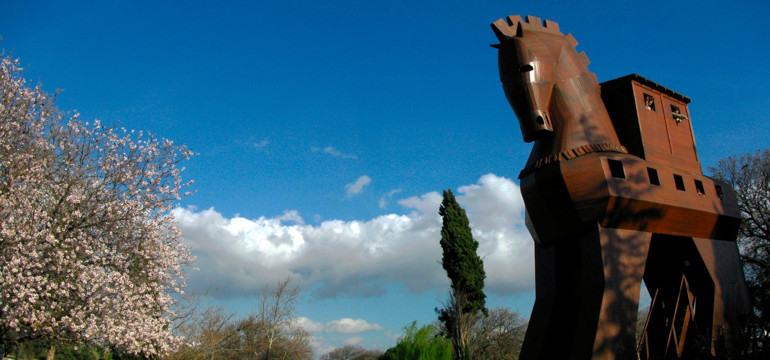
Serda Büyükkoyuncu highlights the experiential aspect of visiting the region today, recommending that travelers spend time reflecting on the landscape itself. "After exploring the archaeological site and the museum, stand at Hisarlık Hill at sunset and gaze out across the Troas Plain," Büyükkoyuncu suggests. "Looking over the plain allows you to truly feel why this epic war unfolded in this exact landscape. In Çanakkale city center, visitors can also take a photo stop at the large wooden horse prop originally constructed for the Hollywood film Troy."
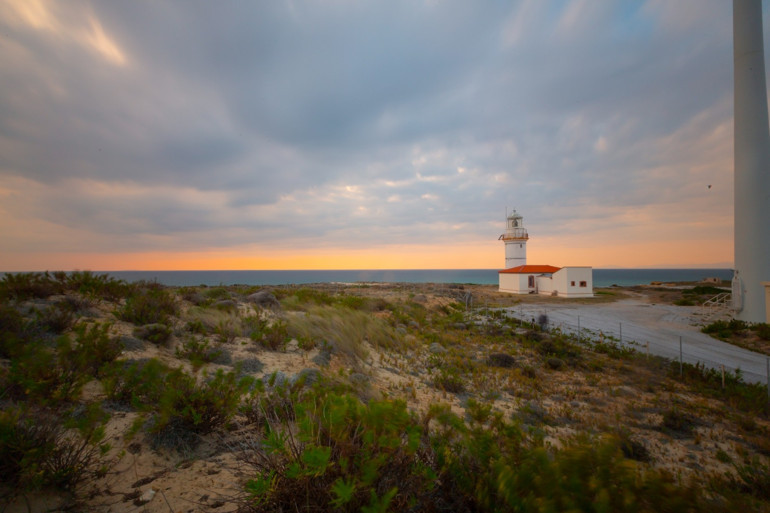
Büyükkoyuncu notes that Bozcaada remains one of the Aegean Sea’s most romantic destinations. "Your first stop on the island should be Bozcaada Castle, followed by a stroll through the narrow streets of the Greek Quarter, adorned with vibrant bougainvillea," she says. "At the far tip of the island stands Polente Lighthouse, one of the finest spots to watch the sunset. It is here that you can best experience the powerful Aegean winds described so vividly by Homer."
- Associated Mythological Figure: Poseidon — The ruler of the seas and creator of tempestuous waves, Poseidon commands the storms and determines the fate of mariners who dare to cross his domain.
The Clash of Hubris and Intellect: Sicily and Mount Etna
Leaving the ruined city of Troy behind, Odysseus and his surviving fleet faced a series of disastrous maritime misadventures before arriving at the land of the Cyclopes—a race of hostile, one-eyed giants.
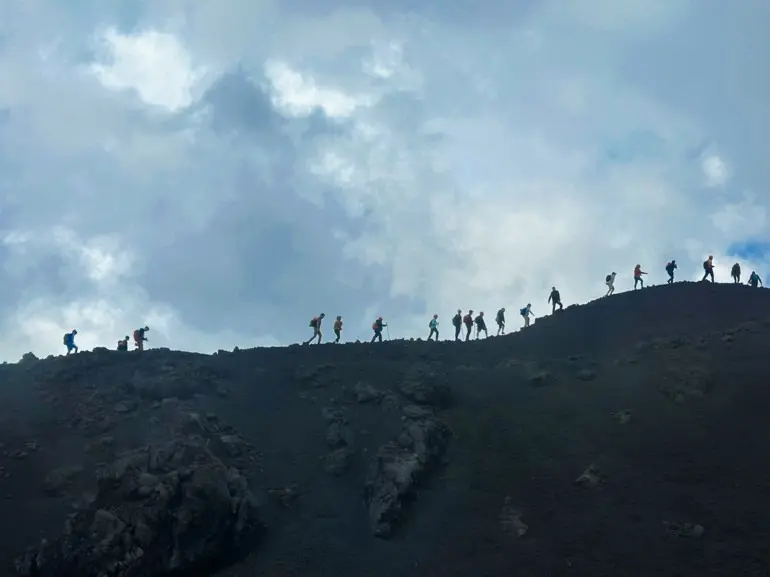
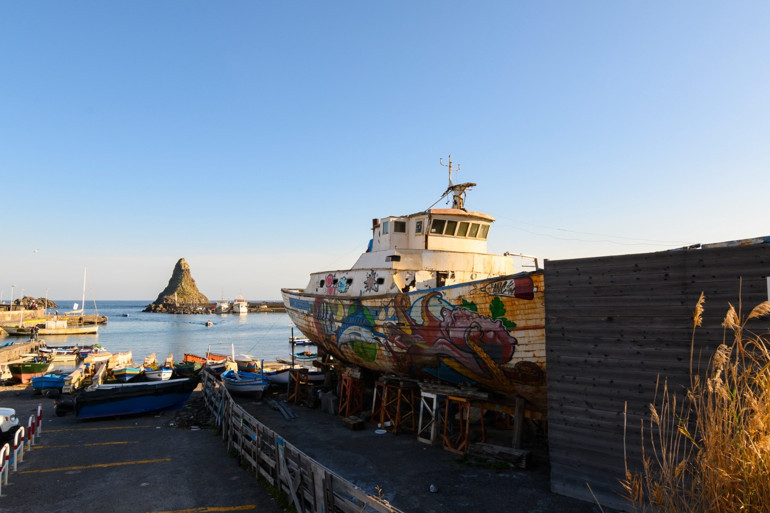
"Upon arriving at the island, Odysseus and his crew enter the cave of Polyphemus and consume his provisions," Aslan explains. "Polyphemus seals the cave entrance with a colossal boulder and begins systematically devouring several sailors each day. Realizing that brute force cannot overcome the giant, Odysseus relies on his intellect, devising a plan that allows his remaining men to blind the giant and escape. Researchers frequently link this episode to the region surrounding Mount Etna in eastern Sicily. The black basalt rock formations off the coast of Aci Trezza are locally known as the ‘Cyclops Rocks.’ The continuous plume of smoke rising from Etna likely inspired ancient mariners to create tales of giant beings inhabiting the mountains."
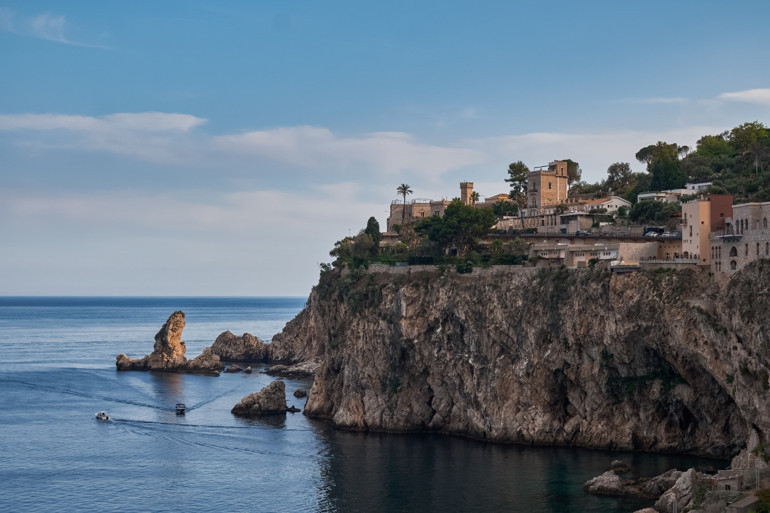
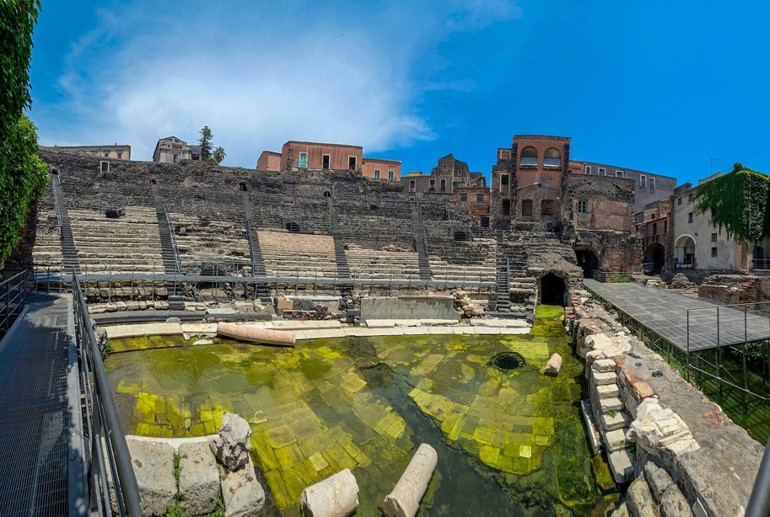
Büyükkoyuncu identifies Taormina, Catania, and Mount Etna National Park as the central travel destinations along this segment of the route. "Taormina is one of the places where you can most vividly feel the spirit of the epic," she remarks. "Its ancient Greco-Roman theater is not only a highlight of Sicily, but one of the most breathtaking ancient venues in the world. The city’s main thoroughfare, Corso Umberto, offers a delightful walk through historic palaces, small piazzas, boutiques, and cafes, while Isola Bella, located just below Taormina, is among Sicily’s most enchanting coves."
Further south sits Catania, a city built directly at the base of Mount Etna. "Catania sits dramatically positioned between the azure Mediterranean waters and Europe’s most active volcano," Büyükkoyuncu notes. "A UNESCO World Heritage site, Catania suffered catastrophic destruction during an earthquake in 1693. When the city was rebuilt, architects utilized black volcanic lava stone, creating a distinct black-and-white Baroque architectural style. Visitors can see this firsthand in the Piazza del Duomo, near the iconic Elephant Fountain, and at the adjacent fish market, which is among the most colorful in Sicily."
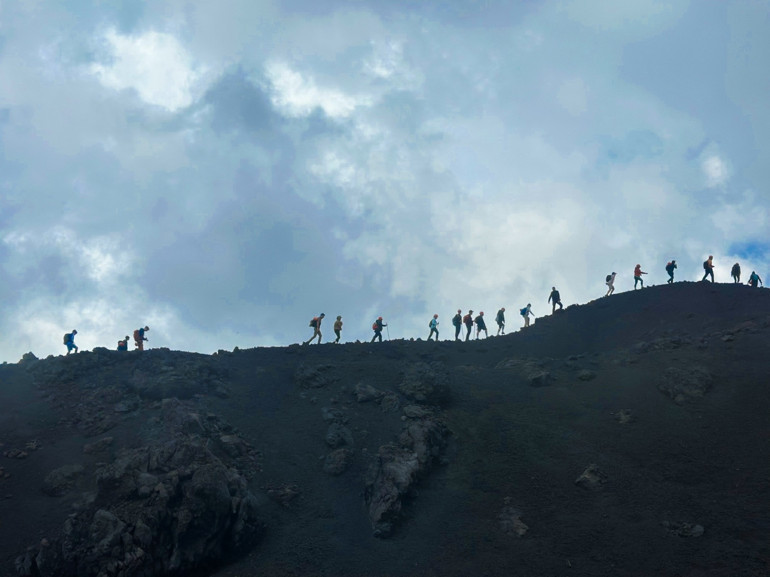
Büyükkoyuncu adds that the nearby coastal village of Aci Trezza should be included on any itinerary. "Rising just offshore are the jagged basalt formations known as the Cyclops Rocks," she explains. "Local tradition has maintained for centuries that these massive stones are the very boulders Polyphemus hurled at Odysseus’s retreating ship. If Mount Etna is calm during your visit, a guided excursion into Mount Etna National Park is an essential experience."
- Associated Mythological Figures:
- Hephaestus: The god of fire, metallurgy, and craftsmanship, whose divine forge was believed to operate beneath Mount Etna, with volcanic eruptions representing the strikes of his hammer on the anvil.
- The Cyclopes: One-eyed giants who served as assistants to Hephaestus.
- Polyphemus: A giant Cyclops and son of Poseidon, who lived as a solitary shepherd with an intense hostility toward mortals.
- Enceladus: A defeated giant buried beneath Mount Etna; ancient myth attributed volcanic tremors and earthquakes to his restless movements beneath the earth.
Wisdom, Temptation, and Transformation: Cape Circeo, Messina, Amalfi, and Corfu
As Odysseus navigated the central Mediterranean, his journey shifted from physical survival to profound psychological and spiritual trials.
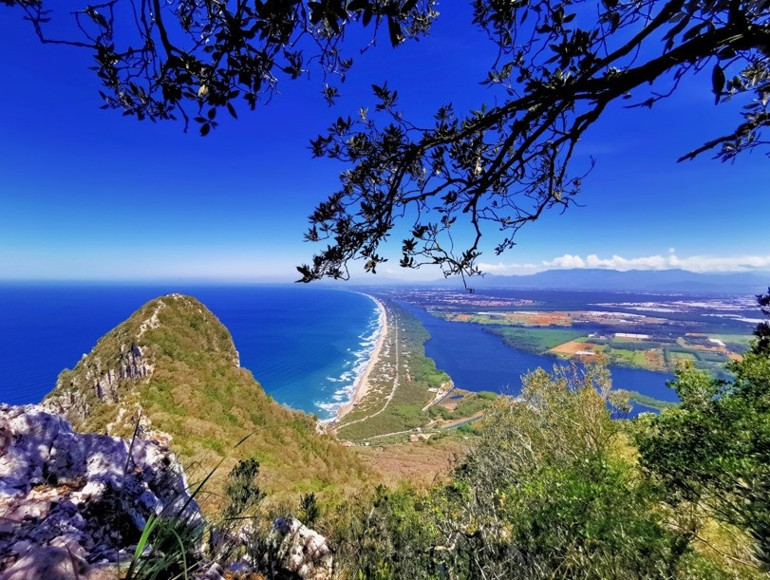
"When Odysseus’s fleet reaches the island of Aeaea, the sorceress Circe invites the crew into her palace and feeds them a enchanted potion that transforms them into swine," Aslan relates. "Only Eurylochus escapes the trap to warn Odysseus. Equipping himself with a magical herb, Odysseus confronts Circe, forcing her to lift the spell and restore his men to human form. At this juncture, the narrative transitions from a survival story into a spiritual quest. Since antiquity, Cape Circeo, situated on the western coast of mainland Italy, has been identified as Circe’s realm."
Following their stay with Circe, Odysseus faced the perilous temptation of the Sirens, whose irresistible songs lured mariners to their doom. Following Circe’s counsel, Odysseus had his crew plug their ears with beeswax while tying himself securely to the ship’s mast, allowing him to hear the forbidden knowledge of their song without succumbing to destruction.
"Directly after the Sirens, the fleet had to navigate a far more lethal passage," Aslan continues. "On one side stood Scylla, a six-headed sea monster, and on the other, Charybdis, a terrible whirlpool that swallowed ships whole. This ordeal illustrates that leadership sometimes requires making painful, heartbreaking compromises. Modern scholars associate the Sirens with the Li Galli Islands off the Amalfi Coast, while Scylla and Charybdis correspond to the treacherous currents of the Strait of Messina. Today, these locations—Amalfi, Positano, Capri, the Li Galli archipelago, Messina, and Reggio Calabria—rank among the most celebrated coastal destinations in the Mediterranean."
Büyükkoyuncu provides practical context for travelers exploring these Italian regions. "The Strait of Messina, which separates Sicily from mainland Italy, narrows to just three kilometers," she says. "While modern ferries cross this channel in a matter of minutes, it was considered one of the most perilous passages in antiquity. You can observe the strait from panoramic viewpoints along the Messina shoreline before crossing over to Reggio Calabria."
Regarding the Siren islands, Büyükkoyuncu recommends coastal excursions. "Boat tours departing from Positano or Amalfi pass close to the Li Galli Islands," she notes. "Early in the morning, the water around these rocky islets is extraordinarily clear. On the nearby island of Capri, highlights such as the Blue Grotto, Mount Solaro, the Gardens of Augustus, and Marina Grande remain absolute must-see destinations."
As a bonus stop on this leg of the journey, scholars often identify Homer’s hospitable land of Scheria as the modern Greek island of Corfu. "Your first stop should be the Old Town of Corfu, a UNESCO World Heritage site featuring Venetian alleyways, French arcades, and British colonial architecture," Büyükkoyuncu advises. "Afterward, travel to the coves of Paleokastritsa. With its crystal-clear waters and dramatic rock formations, many historians believe this is the exact shore where a washed-up, exhausted Odysseus was rescued."
- Associated Mythological Figures:
- Circe: A powerful goddess of magic, herbalism, and transformation, regarded as one of the earliest sorceresses in classical literature.
- The Sirens: Dangerous, mysterious creatures who used captivating, divine music to lure sailors onto rocky shores to their deaths.
The Ultimate Destination: The Homecoming to Ithaca
After two decades away from home—spent fighting a ten-year war in Troy and spending another ten years wandering treacherous seas—Odysseus finally reached his home kingdom of Ithaca.
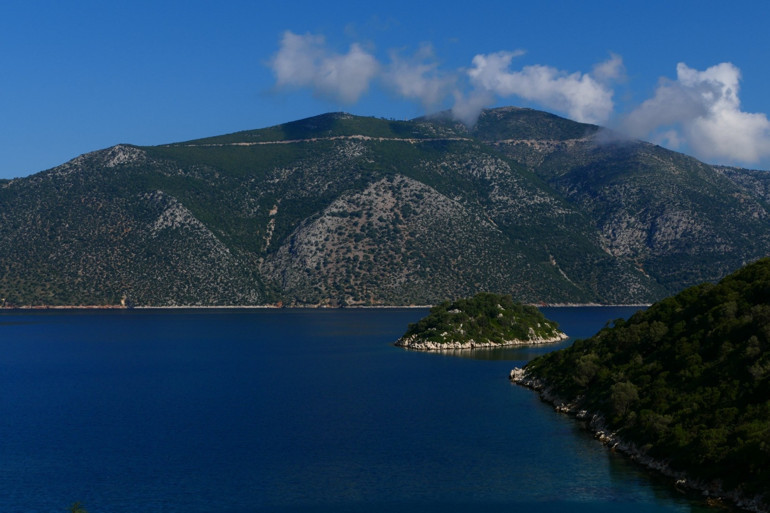
"Upon reaching the shores of Ithaca, Odysseus unites with his son Telemachus to reclaim his throne from the suitors who had consumed his estate," Aslan states. "Through strategic planning, he restores order and brings peace back to his island kingdom. Situated in the Ionian Sea, the small island of Ithaca remains one of Greece’s most serene destinations today. Its rugged topography, ancient olive groves, and quiet coves closely mirror the modest yet peaceful homeland described by Homer."
Büyükkoyuncu underscores the emotional climax of the epic upon Odysseus’s arrival. "When Odysseus finally steps onto Ithaca, no one recognizes him because the goddess Athena has disguised him as an elderly beggar—no one, that is, except his loyal old dog, Argos, who recognizes his master before passing away," Büyükkoyuncu notes.
"Ithaca today remains one of the most tranquil islands in the Ionian Sea," she adds. "The capital town of Vathy, with its traditional architecture and sheltered harbor, offers an authentic Greek island atmosphere. In the north, Polis Bay is strongly tied to the Odysseus narrative, and the nearby Loizos Cave was historically used as a place of worship. Furthermore, ongoing excavations in the Aetos region at a site believed to be ‘Odysseus’s Palace’ represent some of the most exciting recent archaeological developments in the region."
- Associated Mythological Figure: Athena — The goddess of wisdom, strategic warfare, and intellect, who acts as Odysseus’s primary divine guardian throughout his ten-year voyage, repeatedly intervening to ensure his safe return home.