Global data center provider Digital Realty and Rönesans Altyapı have established a joint venture to develop and operate next-generation data center facilities across Turkey, targeting up to 200 MW in capacity and $3 billion in total investment potential.
Digital Realty, a leading global provider of cloud- and carrier-neutral data center, colocation, and interconnection solutions, has entered into a strategic joint venture with Rönesans Altyapı, the infrastructure division of Rönesans Holding. The partnership has been established to develop, construct, and operate state-of-the-art data center campuses across Turkey, aiming to establish foundational digital infrastructure capable of supporting the rapid expansion of cloud computing, artificial intelligence, and enterprise connectivity.
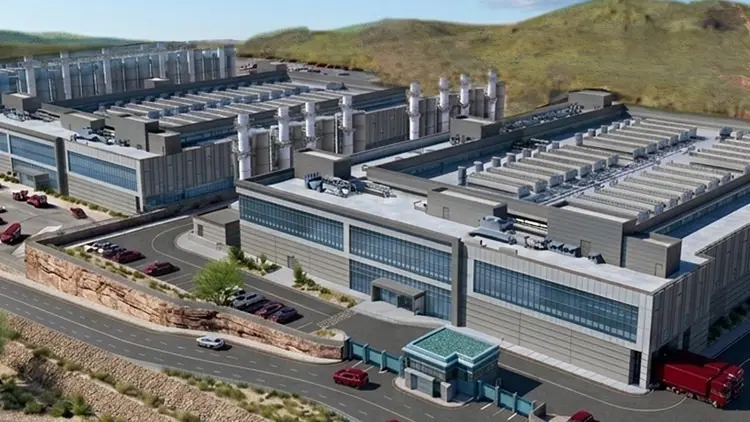
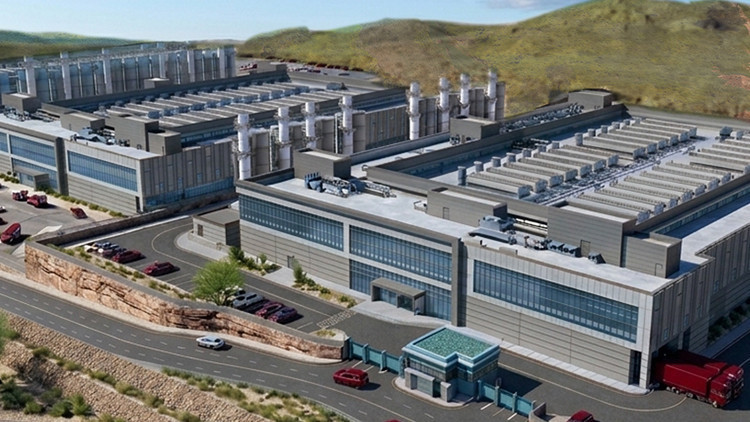
The joint venture has officially broken ground on the first phase of its initial data center campus, situated in the Temelli district of Ankara. Under the development plan, the initial phase in Ankara is engineered to deliver over 22 megawatts (MW) of critical IT capacity and will feature more than 10,000 square meters of operational white space. The facility is scheduled to complete construction and commence commercial operations in 2028. Following the deployment of the Ankara campus, the partnership plans to expand its footprint to Istanbul with an additional major data center campus investment.
Over the long term, the collaborative platform is projected to scale up to an aggregate IT capacity of 200 MW, with total investment potential estimated at up to $3 billion across the country.
Ankara Temelli Campus: Groundwork for Next-Generation IT Capacity
The commencement of construction at the Temelli site in Ankara marks the initial operational milestone of the joint venture. Ankara, as Turkey’s capital and administrative core, is experiencing a growing requirement for secure, high-density data storage, enterprise connectivity, and digital infrastructure capable of serving both public institutions and private enterprises.
Phase one of the Temelli project has been engineered to meet the stringent power, cooling, and network redundancy standards required by modern hyperscale cloud platforms and large-scale enterprise workloads. With over 22 MW of designated IT load and an expansive white space footprint exceeding 10,000 square meters, the campus is designed to accommodate high-density computing clusters that are increasingly standard in contemporary data center architecture.
The project timeline targets full operational readiness by 2028. This multi-year development cycle includes the construction of specialized building shells, the installation of high-efficiency electrical distribution systems, advanced cooling architectures capable of managing dense computational heat loads, and multi-layered physical and operational security measures.
By initiating the investment program in Ankara, the partnership creates a secondary geographic hub outside the traditional commercial center of Istanbul. This dual-market focus supports business continuity, disaster recovery planning, and low-latency network routing within Turkey’s national borders.
Expansion Strategy: Extending the Footprint to Istanbul
While initial construction is concentrated on the Ankara campus, the strategic roadmap developed by Digital Realty and Rönesans Altyapı outlines a fast-following expansion into Istanbul. As Turkey’s primary commercial, financial, and telecommunications nexus, Istanbul represents the core destination for domestic and international network traffic, hosting the headquarters of major corporations, financial institutions, and service providers.
The planned Istanbul campus is intended to complement the Ankara facility, creating a synchronized digital corridor that connects the country’s political and financial centers. By establishing modern, interconnected campuses in both metropolitan regions, the joint venture aims to offer enterprise and hyperscale clients flexible deployment options, distributed workload management, and enhanced network resilience.
In aggregate, the long-term vision for the partnership encompasses up to 200 MW of available IT capacity. Reaching this capacity benchmark is expected to involve a progressive capital deployment program with an estimated total investment envelope of up to $3 billion. This scale of capital commitment underscores the joint venture’s intent to build out an expansive, multi-campus platform that can support Turkey’s digital infrastructure demands over the coming decades.
Executive Leadership on Strategic Value and Long-Term Confidence
Leadership from both organizations highlighted the strategic significance of the joint venture, pointing to the structural demand drivers within Turkey and the broader regional digital economy.
Dr. Erman Ilıcak, Honorary President of Rönesans Holding, emphasized the long-term perspective underpinning the collaboration:
"We have always believed in Turkey’s potential. The decision by global companies such as Digital Realty to invest in Turkey serves as a significant indicator of confidence in our country’s long-term potential."
From the perspective of global investment strategy, Greg Wright, Chief Investment Officer at Digital Realty, emphasized Turkey’s unique market characteristics and regional relevance:

"Turkey presents significant opportunities as one of the most compelling digital infrastructure markets in the region. This joint venture is well positioned to meet the accelerating demand for cloud, artificial intelligence, and enterprise infrastructure, while establishing a foundational platform for long-term growth across Turkey."
The statements reflect a shared view that the Turkish market is experiencing an inflection point, characterized by rising data consumption, digital transformation initiatives across industrial and financial sectors, and the necessity for carrier-neutral, globally integrated infrastructure facilities.
Positioning Turkey as a Regional Cross-Continental Digital Hub
Geographically positioned at the intersection of Europe, Asia, and the Middle East, Turkey has historically served as a vital trade, transport, and energy corridor. The investment by Digital Realty and Rönesans Altyapı aims to translate that traditional geographic advantage into the digital domain by enhancing the country’s role as a regional connectivity and data transit hub.
International internet traffic moving between Western Europe, the Middle East, Central Asia, and South Asia relies on an expanding web of terrestrial fiber routes
and subsea cable systems. Establishing robust, cloud- and carrier-neutral data centers provides critical interconnection points where multiple telecommunications carriers, internet service providers (ISPs), and content delivery networks can interface with low latency.
By providing neutral facilities—where customers are not locked into a single network operator—the joint venture encourages open interconnection and network density. This open ecosystem model lowers connectivity costs, improves routing efficiency, and provides international enterprise customers with seamless access to domestic end-users, while enabling Turkish businesses to connect efficiently to global digital networks.
Meeting the Surging Demands of AI, Cloud, and Data-Intensive Workloads
The rapid advancement of artificial intelligence technologies, modern cloud computing platforms, and data-intensive applications has redefined the technical requirements for physical data center infrastructure. The facilities being developed by the joint venture are specifically planned to address the sharp escalation in domestic capacity requirements driven by these emerging workloads.

Artificial intelligence training and inference workloads require significantly higher electrical power densities per server rack compared to traditional IT hosting. These high-density compute environments generate substantial thermal output, requiring advanced cooling technologies, robust power delivery architectures, and uninterrupted grid stability.
By designing new-generation facilities from the ground up, the joint venture can incorporate energy-efficient cooling solutions, scalable electrical topologies, and optimized floor layouts designed to support the specialized hardware required for machine learning models, big data analytics, and real-time data processing.
Furthermore, enterprise adoption of hybrid and multi-cloud architectures continues to accelerate across various economic sectors, including banking, retail, logistics, manufacturing, and telecommunications. As corporate enterprises modernize legacy IT systems, the requirement for scalable, secure, and compliant colocation space becomes critical. The campuses in Ankara and Istanbul are planned to provide the necessary physical capacity, power redundancy, and high-performance connectivity required to support both local data storage mandates and complex cross-border cloud environments.
Data Centers as Critical Strategic and Economic Infrastructure
Data centers are increasingly recognized as essential infrastructure that underpins modern economic and technological competitiveness. Just as transportation networks, power grids, and maritime ports facilitate the physical movement of goods and commerce, data center networks form the physical foundation for the digital economy.
The continuous development of digital services—ranging from enterprise resource planning and electronic payments to automated industrial systems and real-time consumer applications—relies directly on the availability, reliability, and security of modern data centers. Countries that develop substantial, reliable, and well-connected digital infrastructure can better support domestic technological innovation, attract foreign direct investment, and retain high-value digital operations within their borders.
The joint venture between Digital Realty and Rönesans Altyapı represents a major step in expanding Turkey’s national digital backbone. By combining Digital Realty’s international operational expertise and global customer relationships with Rönesans’ extensive local infrastructure development capabilities, the partnership establishes a substantial framework to support Turkey’s digital infrastructure requirements as the global demand for compute, cloud, and AI capacity continues to accelerate.