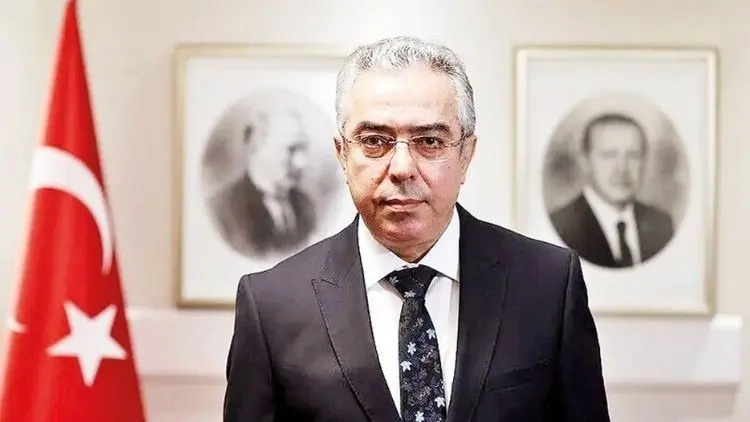
This development comes as part of a broader institutional framework designed to bring a definitive end to decades of conflict and to foster national reconciliation. According to Uçum, the subcommittee is one of four specialized bodies operating under the "Monitoring and Evaluation Board," a high-level entity recently established by the "Law on Strengthening National Solidarity and Social Integration."
The announcement has immediately become the focal point of political discourse in Ankara, as it outlines a structured, legal, and strategic roadmap for the disarmament of the PKK and the integration of various social segments into a unified national fabric. Uçum’s remarks provided clarity on the administrative nature of the process, the physical conditions of Öcalan’s detention, and the broader geopolitical maneuvers currently underway in Iraq and Syria that support this domestic initiative.
The Institutional Framework of the Monitoring and Evaluation Board
During his address to the Turkish Press Federation, Mehmet Uçum emphasized that the "Terror-Free Turkey" initiative is not merely a political slogan but a statutory process grounded in the "Law on Strengthening National Solidarity and Social Integration." This legislation serves as the foundation for the Monitoring and Evaluation Board, which is tasked with overseeing the multifaceted aspects of the transition toward a society free of terrorism.
Uçum explained that the Board has been organized into four distinct subcommittees, each with a specific mandate. The most notable among these is the Disarmament and Strategic Coordination Subcommittee. It is within this specific body that Abdullah Öcalan is expected to play a role. Uçum clarified that this role is strictly technical and strategic, aimed at facilitating the communication necessary to convince armed elements to lay down their weapons and transition into a peaceful political or social life.
The Chief Advisor urged the public and political observers not to misinterpret the nature of this assignment. He stressed that the move is a pragmatic step within a legal framework designed to achieve a specific national security objective: the total disarmament of the PKK. By situating this role within a subcommittee, the government aims to create a controlled environment where strategic coordination can occur under the strict supervision of the state.
Clarification on the Status of İmralı and Detention Conditions
One of the most sensitive aspects of Uçum’s announcement concerned the living conditions and legal status of Abdullah Öcalan at the İmralı Island prison. In recent weeks, rumors and speculations regarding a potential release or a change in detention status have circulated in various media outlets. Uçum moved decisively to address these claims, providing a detailed explanation of the recent construction activities on the island.
He confirmed that a new residential unit has been constructed in İmralı, but he was quick to specify that this facility was built as an "additional unit" (ek ünite) annexed to the existing prison. Uçum described the unit as a functional space designed to allow Öcalan to better execute his role in the disarmament process. The facility is intended to provide the necessary environment for the strategic coordination and communication required by the subcommittee’s mandate.
"One should not draw the conclusion that he has been ‘released’ or that his sentence has been commuted," Uçum stated. He reiterated that Öcalan remains a prisoner under the jurisdiction of the penal system, and the new unit is simply a tool to facilitate the state’s broader objective of ending terrorism. The advisor framed this as a "functional opportunity" provided to ensure that the process of disarmament is handled with the necessary strategic depth and direct communication.
The National Security Council and the Six-Month Timeline
A critical component of the "Terror-Free Turkey" process involves the legal and administrative window for PKK members to apply for integration or surrender. Uçum indicated that the National Security Council (MGK) is expected to issue a formal decision regarding this process in the coming months, likely in October or November.
This MGK decision will effectively trigger a six-month application period for individuals associated with the PKK. During this window, the state will evaluate applications under the parameters set by the Law on Strengthening National Solidarity and Social Integration. Uçum noted that the timing of the MGK decision is contingent upon the assessment that the process is moving forward and that tangible progress is being made on the ground.
"We have the impression that the practical processes are advancing," Uçum said, pointing to various indicators both domestically and regionally. The six-month period is seen as a crucial "window of opportunity" for the cessation of hostilities and the formalization of the disarmament phase. The Chief Advisor’s comments suggest that the government is looking for a structured "off-ramp" for those willing to abandon armed struggle, supported by the highest security body in the country.

Regional Diplomacy: The Roles of Iraq and Syria
The "Terror-Free Turkey" process is not being conducted in a vacuum; it is deeply intertwined with Turkey’s regional diplomacy. Uçum highlighted recent diplomatic movements in Iraq and Syria as evidence that the external conditions for a domestic resolution are becoming more favorable.
He specifically referenced recent statements made by the Iraqi Prime Minister, suggesting a growing alignment between Baghdad and Ankara regarding the presence of the PKK on Iraqi soil. "The Iraqi Prime Minister made a statement; a result can emerge from there," Uçum noted, hinting at potential cooperation in neutralizing the PKK’s operational bases in northern Iraq.
Furthermore, Uçum pointed to the recent visit of the Turkish Foreign Minister to Syria as another sign of progress. The normalization of ties or at least the establishment of a working dialogue with the Syrian administration is seen as vital for addressing the presence of the YPG/PKK in northern Syria. Uçum’s remarks suggest that the Turkish government is pursuing a "pincer movement" strategy—combining domestic legislative and social integration efforts with regional diplomatic pressure to isolate armed groups and force a strategic shift toward disarmament.
Political Forecast: The April 16, 2028, Election Date
In addition to the security and social aspects of his briefing, Mehmet Uçum shared significant insights into the government’s political calendar. He addressed the ongoing discussions regarding the timing of the next general elections, providing a specific date based on constitutional requirements and political strategy.
Uçum stated that if the Turkish Grand National Assembly (TBMM) decides to renew the elections with a majority of 360 deputies, the projected date for the vote would be April 16, 2028. This date holds significant symbolic value for the current administration, as April 16 marks the anniversary of the 2017 referendum that paved the way for the transition to the Presidential Government System.
"April 16 is the anniversary of the transition to the Presidential Government System," Uçum reminded the audience. By linking the election date to this anniversary, the advisor underscored the government’s commitment to the current system of governance. The mention of the 360-deputy requirement also highlights the need for a degree of parliamentary consensus or a strategic alignment among political parties should there be a move toward an early or "renewed" election cycle.

Conclusion of the Strategic Briefing
Mehmet Uçum’s comprehensive briefing at the Turkish Press Federation paints a picture of a government that is moving toward a highly structured and institutionalized conclusion to the conflict with the PKK. By embedding the disarmament process within a legal framework and assigning specific roles within subcommittees, the administration is attempting to manage a historically volatile issue through administrative and strategic means.
The emphasis on national solidarity and social integration suggests that the "Terror-Free Turkey" process is intended to be more than just a security operation; it is being framed as a foundational effort to strengthen the social fabric of the country. With the MGK decision looming in the autumn and the diplomatic landscape in Iraq and Syria shifting, the next six months are poised to be a defining period for Turkey’s domestic and regional stability.
As the state prepares for the potential April 2028 elections, the success or failure of this "Terror-Free Turkey" initiative will likely become a central pillar of the political narrative. For now, Ankara remains focused on the practical implementation of the subcommittees and the coordination of the disarmament phase, while maintaining a firm stance on the legal status of those involved in the process.