The rapid evolution of the global digital marketplace has fundamentally altered the priorities of modern commerce. For e-commerce businesses, marketplace sellers, and any enterprise engaged in regular shipping, the management of logistics has transitioned from a back-office concern to a primary pillar of strategic success. In an era where consumers demand not only quality products but also rapid, transparent, and affordable delivery, the ability to manage shipping processes quickly, economically, and systematically has become a critical competitive differentiator. The operational efficiency of these businesses is now directly tied to the precision with which orders are prepared, the strategic selection of cargo providers, the rigor of shipment tracking, and the continuous oversight of logistical expenditures.
Within this complex environment, Porego has emerged as a significant digital solution provider, offering a platform designed to simplify and modernize the logistical workflows of businesses operating in Turkey’s vibrant e-commerce sector. By providing a suite of digital tools—ranging from sophisticated Application Programming Interfaces (APIs) to comprehensive carrier integrations—the platform addresses the systemic bottlenecks that frequently hinder growth for small and medium-sized enterprises (SMEs) and high-volume marketplace sellers alike.
The Role of API Technology in Logistics Automation
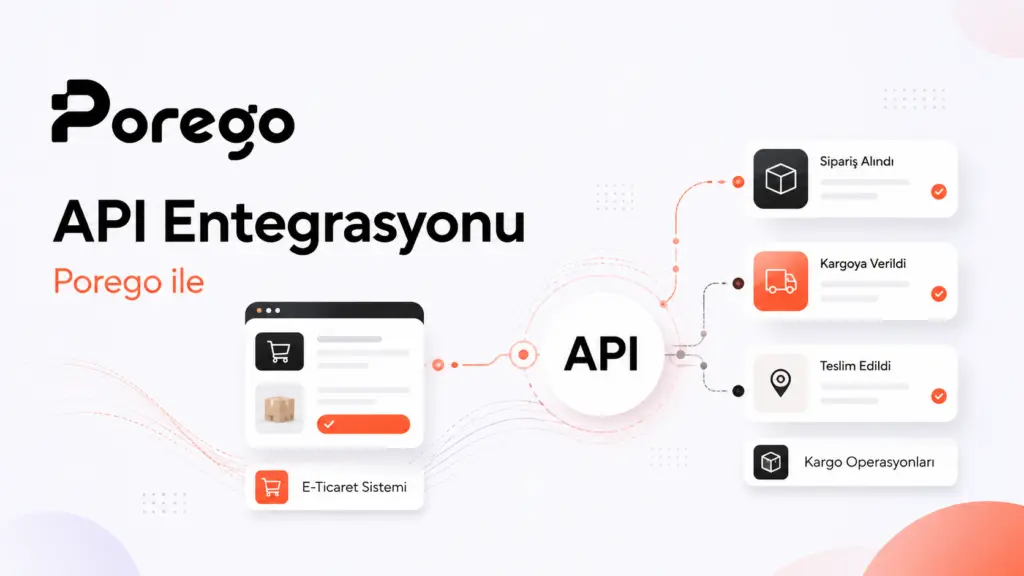
One of the most significant hurdles in scaling an online business is the manual labor associated with processing shipments. Traditionally, as order volumes increased, so did the potential for human error. For businesses aiming to move beyond manual entry, the implementation of cargo API solutions represents a fundamental shift toward automation. Porego’s API infrastructure serves as a digital bridge between a seller’s e-commerce platform and the carrier’s internal systems. This connectivity allows for the automated generation of shipping labels, the seamless transfer of shipment data, and the immediate acquisition of tracking numbers.
By automating these steps, businesses can move away from the time-consuming and error-prone process of manually typing customer addresses and order details into various carrier portals. Instead, the system handles the data transfer in real-time, ensuring that the information provided to the cargo company is identical to the information provided by the customer. This systematic approach not only reduces the operational burden on staff but also significantly minimizes the risk of delivery failures caused by incorrect data entry. For Porego, the objective is clear: to transform shipping from a manual chore into a streamlined, background process that allows business owners to focus on product development and marketing.
Centralizing Operations through Carrier Integration
In the modern e-commerce landscape, relying on a single shipping provider is often insufficient. Different carriers have varying strengths; some may offer superior coverage in specific rural regions, while others might provide faster delivery in major metropolitan hubs or better pricing for heavy-volume shipments. However, managing multiple carrier relationships independently can lead to fragmented operations and administrative chaos.
Porego’s integration services offer a solution to this fragmentation by centralizing management into a single, unified panel. Through this integration, e-commerce sites and marketplace sellers can oversee all their orders from one interface, regardless of which shipping company is handling the final mile. This centralized control allows for faster shipment creation and provides a bird’s-eye view of the entire logistical operation. When a business can monitor all its shipments from a single dashboard, the ability to identify delays, manage returns, and respond to customer inquiries becomes significantly more efficient.
Navigating the Economic Challenges of Shipping Costs
For many e-commerce enterprises, particularly those operating on thin margins, shipping costs represent one of the largest variable expenses. As fuel prices and labor costs fluctuate, maintaining a profitable shipping strategy is a constant challenge. This is where the concept of a shipping agreement becomes an essential tool for cost control. Businesses that maintain regular shipping volumes are often in a position to leverage their volume for better rates, but negotiating these terms with multiple carriers can be a daunting task for a single SME.
Porego assists businesses by facilitating access to more favorable shipping solutions that align with their specific volume and needs. By evaluating different cargo options through the platform, businesses can identify the most cost-effective routes for their packages. Reducing these overheads is not merely about saving money; it is about reinvesting those savings into the business to improve product pricing or enhance the overall customer experience.
For small and medium-sized businesses, the ability to secure "cheap shipping agreements" is often the factor that allows them to compete with larger, more established retailers. Lower shipping costs can be passed on to the consumer in the form of free shipping offers or lower product prices, both of which are proven drivers of customer loyalty and conversion rates in the digital marketplace. Porego’s role in providing a gateway to these economical solutions makes it a vital partner for businesses looking to optimize their financial health while maintaining high service standards.
The Impact of Logistics on the Customer Experience
In the world of online shopping, the "moment of truth" occurs not when the customer clicks the "buy" button, but when the package arrives at their door. Any friction in the shipping process—be it a delay, a lost package, or a lack of tracking information—can tarnish a brand’s reputation instantly. Consistent and organized cargo management is therefore paramount to ensuring that orders reach customers on time and in good condition.
Porego’s platform is designed to mitigate the risks associated with manual processing errors and tracking inconsistencies. By providing a transparent and manageable workflow, the platform helps ensure that the customer is kept informed throughout the delivery journey. When a business uses a system that provides accurate, real-time tracking data, it builds trust with its clientele. Conversely, failures in the shipping cycle can lead to an influx of customer support requests and negative reviews, which can have long-term detrimental effects on a business’s growth.
Integrating with Turkey’s Leading Carriers
The Turkish logistics market is characterized by several major players, each with its own technical requirements and service models. Porego’s strength lies in its ability to offer tailored integration solutions for these specific carriers, ensuring that sellers can utilize the full range of services available in the domestic market.
For instance, Aras Kargo is a widely used provider in Turkey, and for businesses utilizing their services, digital integration is a necessity for speed. By managing Aras Kargo shipments through a digital environment, sellers can accelerate their preparation and tracking cycles. Similarly, for businesses that prioritize the rapid delivery models offered by Hepsijet, Porego’s integration allows for organized tracking from the same central panel, ensuring that the speed of the carrier is matched by the speed of the seller’s internal processing.
The platform also provides robust support for Sürat Kargo, a carrier often favored by high-volume shippers. By simplifying the transfer of shipment data and the generation of labels for Sürat Kargo, Porego helps businesses save valuable time during peak periods. Furthermore, for those who rely on Yurtiçi Kargo—one of the most established names in both corporate and individual shipping—Porego’s digital management tools offer a significant advantage in terms of speed and tracking accuracy.
In recent years, customer-centric delivery services like Kolay Gelsin have gained popularity by focusing on the recipient’s experience. Integrating such services into a business’s workflow can significantly boost customer satisfaction scores. Porego’s ability to bring these diverse delivery options into a single management ecosystem ensures that businesses can offer a variety of delivery experiences to their customers without increasing their own operational complexity.
A Strategic Partner for E-commerce Growth
As the e-commerce sector continues to expand, the divide between businesses that embrace digital logistics and those that rely on legacy manual processes will only widen. The modern merchant requires more than just a way to send packages; they require a comprehensive ecosystem that provides data, cost-efficiency, and automation.
Porego stands as a powerful platform that meets these needs for e-commerce businesses, marketplace sellers, and regular shippers. By offering a sophisticated cargo API, diverse integration options, and access to economical shipping agreements, the platform empowers businesses to manage their shipping operations with a level of professionalism that was previously reserved for large-scale corporations. Through the digitalization of the shipping process, Porego not only helps businesses reduce their costs and errors but also enables them to provide the reliable, fast, and transparent delivery experience that modern consumers have come to expect. In the final analysis, by turning logistics from a challenge into a streamlined asset, Porego plays a vital role in the continued growth and success of the digital commerce landscape.