

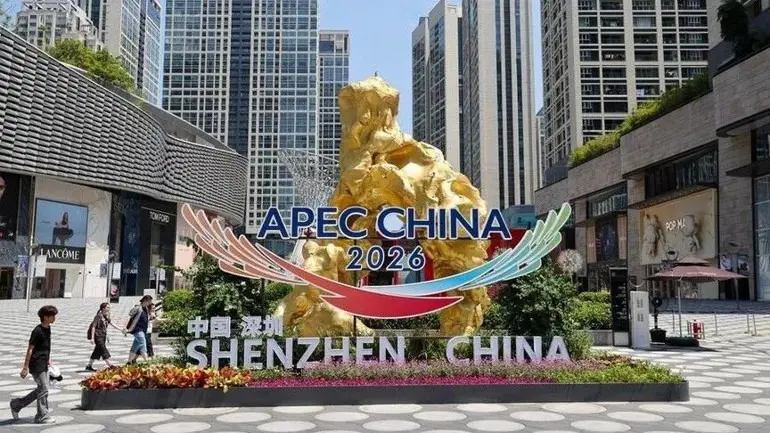
In a development that marks a significant turning point in contemporary international relations, the three most influential figures in global politics are scheduled to convene at the same table for the first time in history. U.S. President Donald Trump, Russian President Vladimir Putin, and Chinese President Xi Jinping are slated to hold a high-stakes trilateral meeting on the sidelines of the Asia-Pacific Economic Cooperation (APEC) Summit in Shenzhen, China. This unprecedented gathering comes at a moment of profound geopolitical tension, promising a dialogue that could reshape the strategic landscape of the 21st century.
The agenda for this historic encounter is as dense as it is consequential. Central to the discussions will be the future of nuclear arms control, the volatile situation in Iran, and the ongoing conflict in Ukraine—a topic President Trump has signaled he intends to approach with a strategy of "applied pressure." The mere announcement of the meeting has sent ripples through diplomatic circles, with some observers drawing parallels to the 1945 Yalta Conference, where the post-war spheres of influence in Europe were famously delineated. However, as the world watches these three leaders prepare for their encounter in Shenzhen, experts suggest that while the meeting is momentous, the comparison to Yalta may be more complicated than it appears.
The Debate Over "Yalta 2.0"
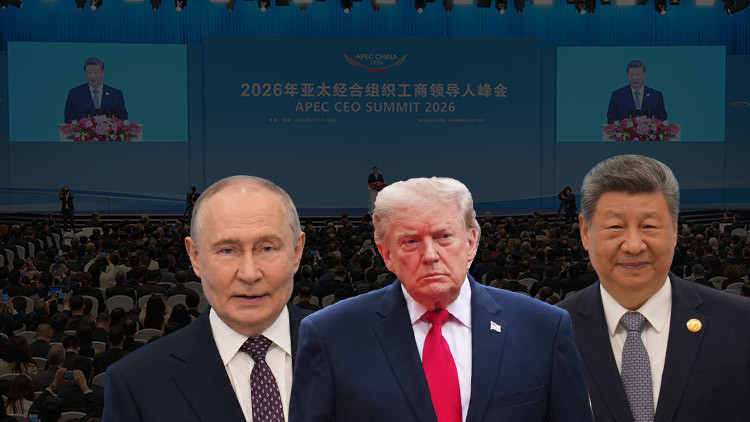
The suggestion that the Shenzhen meeting represents a "Yalta 2.0" stems from the fact that three major powers are meeting to discuss the fates of regions and actors who are not present at the table. Just as Roosevelt, Churchill, and Stalin decided the future of Europe in 1945, the perception is that Trump, Putin, and Xi may be attempting to redraw the global map. Yet, prominent academic voices are quick to point out the fundamental differences between the two historical moments.
Dr. Barış Adıbelli, a faculty member at Kütahya Dumlupınar University’s Department of International Relations, has been vocal in his criticism of the Yalta comparison. He argues that the current geopolitical reality does not support such a characterization. According to Adıbelli, the 1945 conference involved allies—the United States and the United Kingdom—working alongside the Soviet Union to manage the defeat of Nazi Germany and Imperial Japan. They shared a common enemy and a unified goal of ending a global war.
In contrast, the leaders meeting in Shenzhen represent states that are primarily rivals rather than allies. The United States has historically categorized both Russia and China as adversaries or strategic competitors. Therefore, the upcoming meeting lacks the foundational alliance that defined Yalta. Adıbelli emphasizes that this is not a specialized summit designed to overhaul the international system or partition Europe; rather, it is a high-level dialogue occurring within the framework of the APEC Summit. He cautions against expecting immediate, world-altering results from a session that may last only thirty minutes to an hour, noting that its primary value lies in the initiation of a direct trilateral dialogue process.
Sharing this skepticism is Dr. Murat Jane from Istanbul Aydın University’s Department of Political Science and International Relations. Dr. Jane asserts that labeling the meeting as "Yalta 2.0" is an overly ambitious claim under current conditions. He highlights that in 1945, the leaders were negotiating a post-war order because the defeat of their common enemies was already certain. Today, there is no such shared objective or common foe. Each of the three leaders enters the room with distinct, often conflicting, national interests and visions for the world.

Nuclear Security and the Shadow of Iran
One of the most pressing items on the Shenzhen agenda is the management of nuclear proliferation and regional stability, particularly concerning Iran. The trilateral talks are expected to cover the limitation of nuclear weaponry, the prevention of Iran’s acquisition of nuclear weapons, and the curtailing of Tehran’s ballistic missile capabilities.
A particularly sensitive point of discussion involves the military support provided to Iran and the indirect support for Houthi rebels in Yemen. The inclusion of the Houthi issue suggests that Washington believes Russia and China may be facilitating or supporting these regional actors in ways that frustrate U.S. interests. Dr. Adıbelli notes that the U.S. perspective seems to be that Moscow and Beijing hold significant leverage over these groups, and Trump likely intends to use this meeting to demand a cessation of such support.
The broader issue of nuclear arms control is also fraught with difficulty. Dr. Jane points out that the New START Treaty, which limits strategic nuclear weapons between the U.S. and Russia, expired in 2026, leaving a vacuum in the formal architecture of nuclear diplomacy. The risk of escalation is palpable; recent rhetoric has even touched upon the potential use of nuclear weapons in the context of the Iran crisis and the Ukraine war.

For Putin, maintaining Russia’s status as a strategic nuclear power is vital, even if the country’s economic weight does not match that of the U.S. or China. However, reaching a comprehensive agreement is hindered by China’s rising nuclear profile. Beijing, while still possessing a smaller arsenal than Washington or Moscow, is rapidly expanding its capabilities. Consequently, China is unlikely to accept the same limitations as the two traditional nuclear superpowers, making a three-way arms control agreement one of the most complex puzzles for the leaders to solve.
Russia’s Diplomatic Maneuvers and the Ukraine Question
For Vladimir Putin, the Shenzhen meeting serves as a powerful symbol of the failure of Western efforts to isolate Russia diplomatically following the invasion of Ukraine. Since the start of the conflict, Russia has faced exclusion from international financial systems, credit markets, and even global sporting events. However, sitting at a table with Trump and Xi demonstrates that Russia remains an indispensable actor in global politics.
Dr. Jane observes that Russia’s diplomatic isolation is losing its efficacy. Putin’s goal in Shenzhen is not merely to be seen on the world stage but to ensure that Russia’s security demands are taken seriously. Specifically, Putin seeks to protect Russia’s territorial gains in Ukraine and integrate his vision for European security into any future peace negotiations.

The question of whether Ukraine will be a formal part of the trilateral agenda remains a point of contention. While Washington has indicated that the APEC framework may not be the appropriate venue for Ukraine discussions, President Trump has hinted that he is willing to bring the topic to the table with his Russian and Chinese counterparts. Dr. Jane suggests that for Putin, the primary objective is strengthening a direct channel of communication with the United States. In Moscow’s view, the most important negotiations are those held with Washington, rather than with Kyiv, as the U.S. is seen as the ultimate arbiter of Western policy.
Trump’s Eurasian Strategy and the Pivot from Europe
Perhaps the most provocative analysis of the upcoming meeting comes from Dr. Adıbelli, who suggests that Trump’s approach reflects a fundamental shift in American foreign policy—one that moves away from traditional European alliances toward a new engagement with Eurasia. Adıbelli argues that Trump has recognized the decline of the post-WWII, U.S.-led international order and is looking for a way to manage this transition.
In this view, Trump’s interest in meeting with Putin and Xi is part of a broader desire to join or influence the "Greater Eurasian Partnership," a strategic concept championed by Russia and China that has already expanded to include nations like North Korea and Vietnam. Trump’s willingness to engage with leaders like Kim Jong-un is seen as part of this strategy.
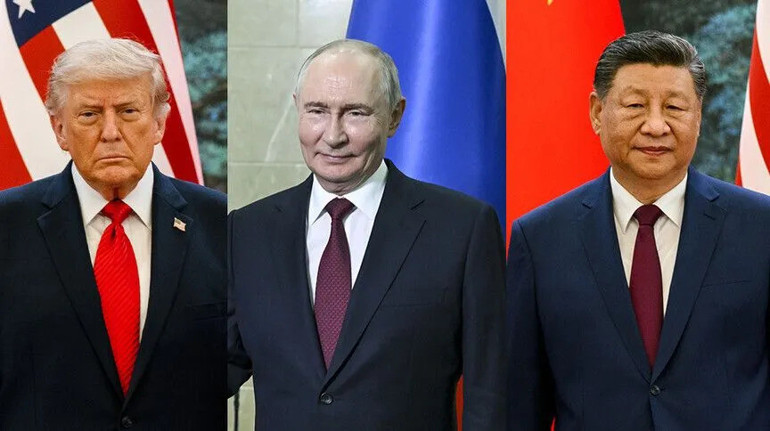
"Trump essentially wants to say, ‘Let’s manage the world together,’" Adıbelli explains. "He is proposing a three-polar world order where the U.S., Russia, and China are equals, though he still hopes to be the ‘first among equals.’"
However, this vision faces significant hurdles. Russia and China have consistently advocated for a multipolar world centered on a strengthened United Nations and the inclusion of the Global South. Xi Jinping’s vision for global governance emphasizes a system that does not rely on a single leading power. While Trump may be trying to "repackage" the old system to maintain American influence, Moscow and Beijing are pushing for a fundamentally different global architecture.
The Economic Battlefield: Tariffs, Trade, and Taiwan
While the trilateral meeting focuses on grand strategy, the bilateral relationship between the United States and China remains dominated by economic competition. The issues of trade tariffs and the "Phase One" trade deal remnants continue to loom large.
Beijing has expressed frustration over the lack of progress in tariff reductions. There were expectations for a reciprocal $60 billion tariff cut and a commitment from China to purchase $17 billion in American agricultural products, neither of which has fully materialized. China’s stance remains firm: Washington must take the first step in lowering trade barriers before Beijing fulfills its purchasing promises.
Furthermore, the issue of rare earth elements—critical for high-tech manufacturing and defense—remains a point of leverage for China. In any bilateral session between Trump and Xi, the removal of restrictions on these elements will be a top priority for the U.S., while China will demand a cessation of arms sales to Taiwan. Xi’s position on Taiwan remains a "red line," and he is expected to reiterate that Beijing will not tolerate Taiwan being treated as an independent sovereign state.
A Dialogue of Rivals
As the three leaders prepare for their historic encounter in Shenzhen, the prevailing sentiment among experts is one of cautious observation. While the meeting breaks historical precedents and signals a shift in the way the world’s most powerful nations interact, it is unlikely to produce a sudden "Grand Bargain."
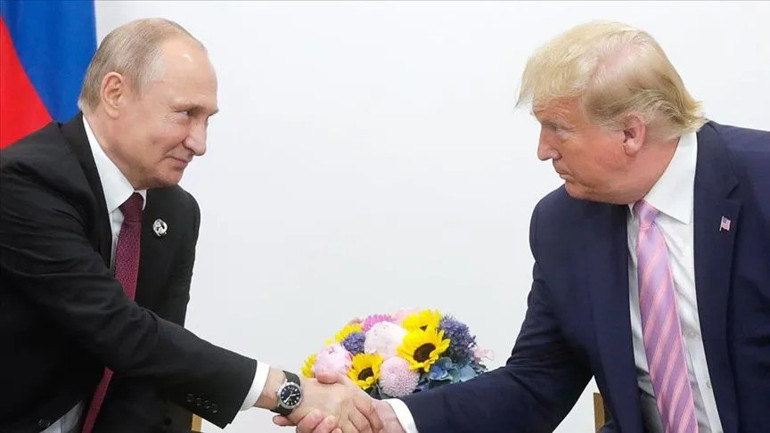
The reality of modern diplomacy is that being at the same table does not equate to sharing the same vision. As Dr. Jane concludes, Russia, China, and even India continue to critique the U.S.-centric world order. Expecting a single meeting to resolve decades of systemic competition and deep-seated mistrust is unrealistic. Instead, the Shenzhen summit should be viewed as a high-stakes attempt to manage competition and prevent open conflict in an increasingly fragmented world.
The outcome of this meeting will likely determine whether the coming years will be defined by a structured "three-polar" management of global crises or a continued descent into fragmented, unpredictable rivalry. Regardless of the immediate results, the image of Trump, Putin, and Xi at a single table in Shenzhen will undoubtedly be remembered as a defining moment of this era.