Timed to coincide with November 10 Atatürk Commemoration Day and Atatürk Week, a high school principal in Istanbul has completed an ambitious digital initiative designed to bring Anıtkabir—the mausoleum of Mustafa Kemal Atatürk, the founder of the Republic of Türkiye—directly to students across the country. Developed over two years of intensive design and programming work, the interactive three-dimensional project allows young people, particularly those who lack the financial or geographical means to visit Ankara in person, to explore the historic complex through immersive virtual reality and computer-based navigation.
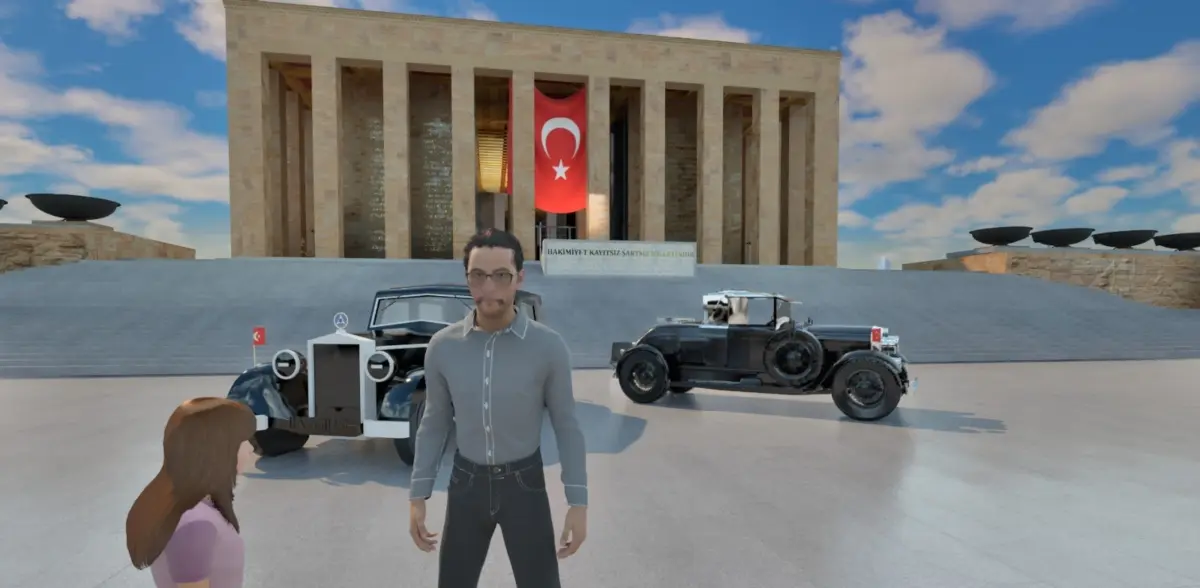
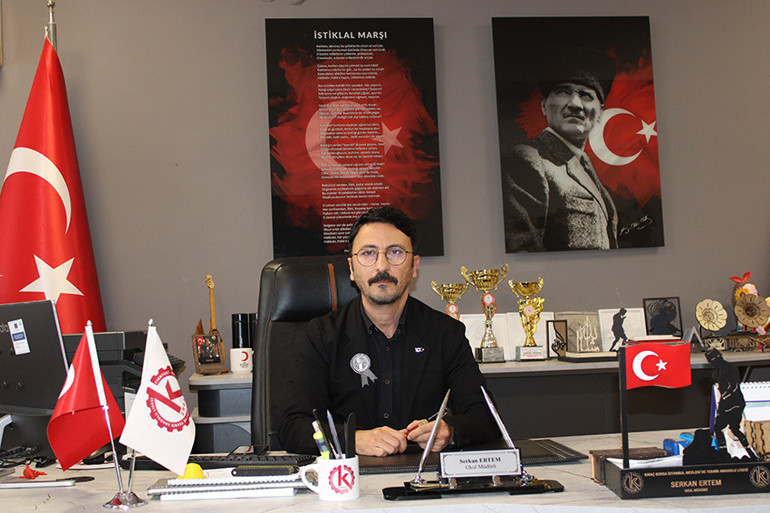
Serkan Ertem, the principal of Kıraç Borsa İstanbul Vocational and Technical Anatolian High School, created the platform under the project title "Discover a Heritage" (Bir Mirası Keşfet). The platform offers a realistic, interactive exploration of Anıtkabir’s grounds, spanning key architectural landmarks such as the Lion Road (Aslanlı Yol), Liberty Tower (Hürriyet Kulesi), and the Hall of Honor (Şeref Holü). Accompanied by historical narration and the recorded voice of Atatürk himself, the project combines technical modeling, historical education, and interactive elements to create an engaging learning experience for students.
Ertem expressed immense pride and enthusiasm for the project, noting that it was crafted to provide students with a meaningful connection to Republic values and the historical legacy of Atatürk, regardless of their physical distance from the capital.
A Dynamic Alternative to Traditional Virtual Tours
The conceptual framework for "Discover a Heritage" originated roughly two years ago through a research initiative linked to TÜBİTAK, the Scientific and Technological Research Council of Türkiye. Drawing upon his personal professional background in construction and technical drawing, Ertem set out to build a digital model that went beyond the standard virtual tours commonly available online.
While many existing virtual museum projects and historical site tours rely on 360-degree static photographic spheres that users jump between, Ertem’s project was constructed as a fully realized, three-dimensional digital space. Users are not restricted to looking at fixed images; instead, they move continuously through a recreated physical environment, experiencing spatial dimensions and architectural details in real time.
"My field is construction, which means I deal with drawings and spatial design regularly," Ertem explained regarding the project’s inception. "About two years ago, through a TÜBİTAK project, I began working on a digital Anıtkabir visit. I wanted those who do not have the opportunity to physically travel there to be able to tour Anıtkabir using virtual reality goggles. That way, students could visit the relevant areas as if they were truly at Anıtkabir, receive detailed information, and feel themselves in the presence of Atatürk."

As the project evolved, Ertem realized that passive viewing alone was insufficient to hold the attention of younger generations. To make the learning process more effective, he integrated gamification mechanics and interactive tasks into the software. Rather than simply observing historical structures, students are given goals and activities to complete as they navigate the grounds, ensuring that educational information about the complex is absorbed naturally through active exploration.
"There are various existing platforms where historical sites and museums can be visited via 360-degree imagery, but those environments move across static visuals," Ertem noted. "The project I developed is both interactive and free of static image limitations. In a space where I modeled Anıtkabir piece by piece, children can experience the site as if they were touring it alongside a personal guide."
Recreating Anıtkabir’s Architecture and Historic Atmosphere
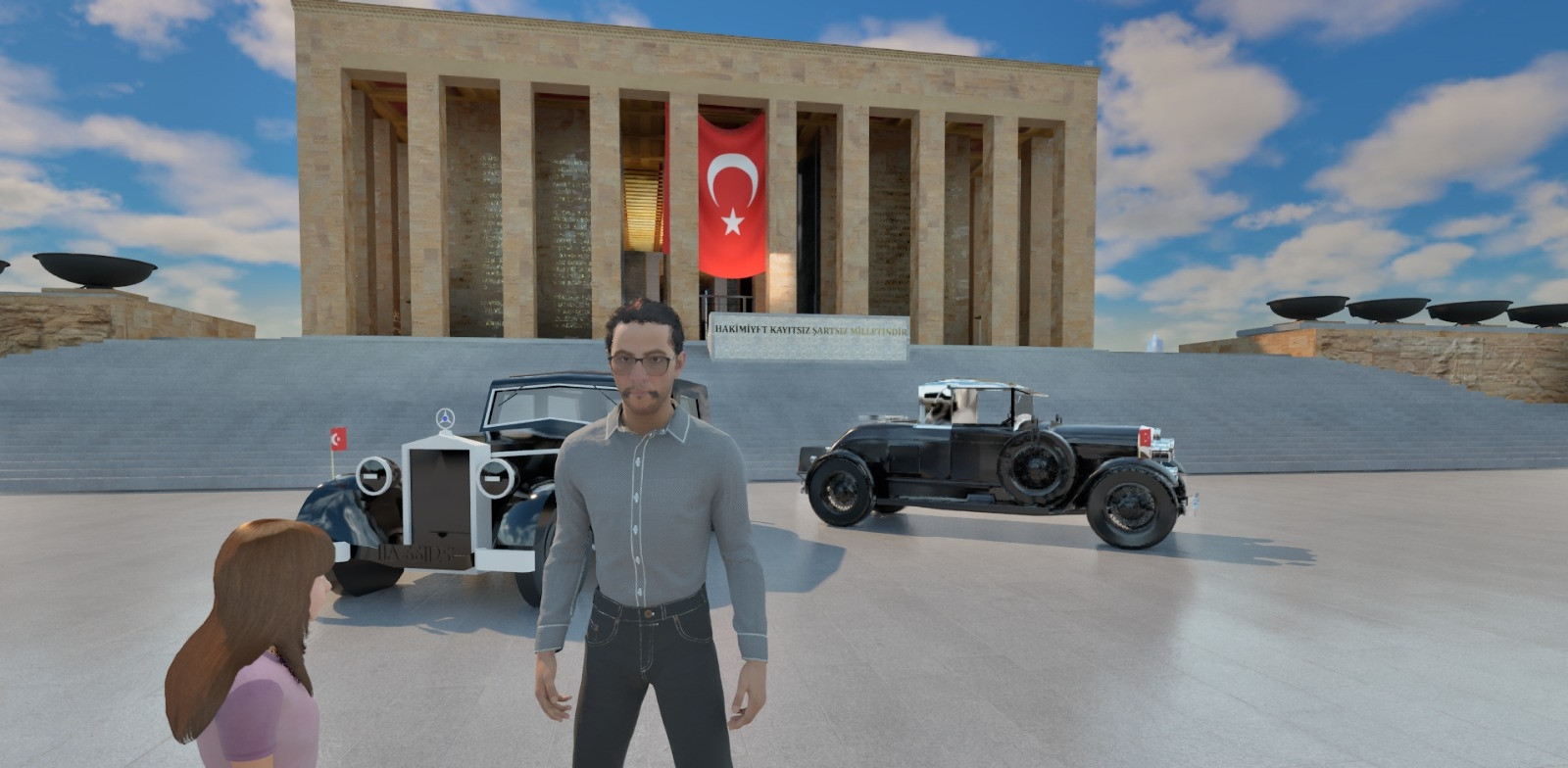
The virtual journey begins on the famous Lion Road (Aslanlı Yol), the ceremonial walkway lined with Hittite-style lion statues leading visitors toward the main courtyard of Anıtkabir. As the user enters the platform, the audio system plays the recorded voice of Mustafa Kemal Atatürk delivering his historic address during the 10th Anniversary celebrations of the Republic of Türkiye, establishing an immediate historical context for the experience.

Every major section of the mausoleum complex has been recreated to scale. Users navigate the space alongside digital guide avatars—currently represented by a 3D character modeled after Ertem himself accompanied by his young daughter. As the characters approach specific structures, such as Hürriyet Kulesi or the surrounding ceremonial walkways, an automated audio guide provides narrated information explaining the architectural design, symbolic meanings, and historical background of the specific location.
The software incorporates several interactive features designed to enhance immersion:
- Interactive Lighting: Users can interact with environmental objects, such as lighting or extinguishing ceremonial torches situated along the route.
- Ceremonial Participation: Visitors can walk alongside virtual honor guards during traditional ceremonial marches across the main parade grounds.
- Architectural Learning: Detailed historical narratives explain the architectural thought processes and engineering decisions behind the construction of Anıtkabir, which took place between 1944 and 1953.
- Full Spatial Exploration: Users can enter key interior spaces, including the Hall of Honor (Şeref Holü), where Atatürk’s symbolic marble sarcophagus is located.
"I modeled Anıtkabir in three dimensions to match the original structure exactly," Ertem explained. "When a character walks along Aslanlı Yol or enters Hürriyet Kulesi, information about that specific area is delivered aloud to the user. All the special architectural considerations that went into Anıtkabir’s construction process can be learned during the tour. Because children learn much more easily through interactive play, I gamified the project to help them absorb the material."

VR Student Testing and Future Development Roadmap
The platform currently operates as a downloadable software package that can be installed on standard desktop computers or paired with virtual reality (VR) headsets for full immersion. Following the completion of the core architectural environment, Ertem conducted initial testing with high school students at Kıraç Borsa İstanbul Vocational and Technical High School.
Students who tested the project using VR headsets reported a strong sense of presence, stating that the visual depth and realistic audio created a convincing feeling of being physically present at the national landmark in Ankara.
Looking forward, Ertem plans to expand "Discover a Heritage" beyond its current boundaries. While the primary exterior architecture, ceremonial paths, and main halls are fully modeled, work is ongoing to digitally render the detailed interior museum spaces housed within Anıtkabir, including the sections displaying Atatürk’s personal belongings, historical documents, and artwork depicting the Turkish War of Independence.
In addition to expanding the geographical scope of the digital model, upcoming software updates will introduce custom user avatars. This feature will allow students to create and personalize their own 3D digital personas before entering the virtual grounds, replacing the fixed guide characters currently built into the demonstration version.
Reflecting on the mission behind his work, Ertem emphasized the duty of educators to leverage modern technology in service of history and education.
"Inspired by Mustafa Kemal Atatürk’s principle of ‘Walk towards the target I have shown,’ I strive to continuously improve myself and fulfill my duties along the path he laid out," Ertem said. "My goal remains focused on ensuring that every student, regardless of their circumstances, has the opportunity to understand, learn, and feel connected to our national heritage."