KABUL — Surrounded by the snow-dusted peaks of the Hindu Kush, the Afghan capital of Kabul is quietly advancing toward a historic and unprecedented humanitarian emergency. The vast underground reservoirs that have sustained this arid basin for generations are being depleted at a rate far outstripping nature’s ability to replenish them, pushing the metropolis of nearly six million people toward an ecological breaking point.
According to findings by the United States-based humanitarian organization Prosper Global, initially reported by CNN, Kabul is on a trajectory that could make it the first modern capital city in the world to see its municipal and subterranean water reserves run completely dry by as early as 2030.
The mechanics of this gathering disaster are laid bare in the hydrologic data. Over the past decade alone, the city’s water table has plummeted by an estimated 30 meters. As water levels recede ever deeper into the valley floor, nearly half of all existing boreholes and extraction wells across the capital have already run dry. The crisis is no longer a distant theoretical forecasting model; specialists warn that so-called "Day Zero" conditions—the catastrophic threshold at which existing resources fail to meet basic domestic survival needs—have already taken hold in some of the capital’s hardest-hit districts.
Eighty Percent of the City Relies on Groundwater
At first glance, Kabul’s geography might seem ill-suited for such a swift and punishing drought. The city sprawls across a wide, high-altitude plateau enclosed by the towering Hindu Kush mountain range. Historically, the seasonal melting of winter mountain snowpack and glacial runoff fed the Kabul River, nourishing the surrounding plains and gradually filtering downward to recharge the vast subterranean aquifers lying beneath the valley floor.
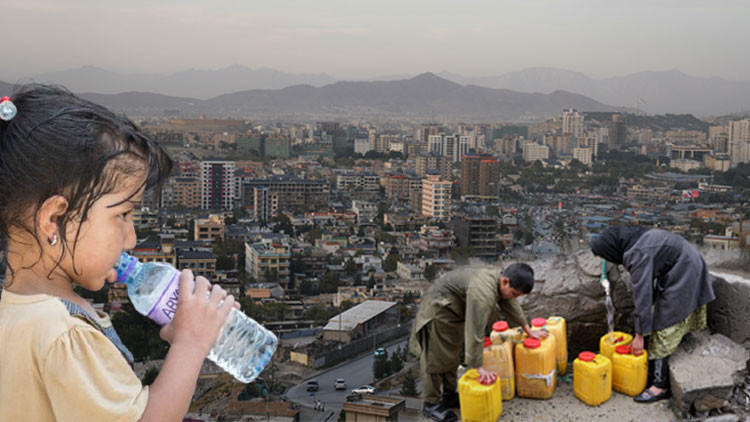
These natural underground storage basins are the true lifeblood of the capital. Approximately 80 percent of Kabul’s roughly six million inhabitants depend directly on groundwater for their daily cooking, cleaning, and drinking needs.
However, the equilibrium that once allowed the water table to regenerate has collapsed entirely. As extraction continues virtually unchecked across the urban basin, the deficit between the volume of water pumped from the ground and the volume naturally replenished through environmental precipitation has widened to an alarming chasm. Research indicates an annual groundwater deficit of approximately 43.9 million cubic meters.
This deep dependence on underground reserves is aggravated by the near-total absence of modern public utilities. Only about one-fifth of Kabul’s population has access to an integrated, piped municipal water network. The remaining 80 percent—amounting to millions of people—are left entirely at the mercy of private extraction wells, mechanical hand pumps, community distribution points, and commercial water tankers. When the underground reservoirs drop, the vast majority of the city has no backup infrastructure to cushion the blow.
Taps Run Dry in Neighborhoods Across the Capital
The looming deadline of 2030 often suggests a future event, but for large swaths of the city’s populace, the crisis has already arrived. The depletion of Kabul’s water sources is transforming the rhythms of daily existence across multiple residential quarters.

Professor Mohd Faizee of the United Nations University Institute for Water, Environment and Health has characterized the acute reality on the ground as an evolving "humanitarian disaster." According to Faizee, groundwater reserves have already been completely exhausted in several peripheral and hillside neighborhoods, leaving communities with virtually no direct local supply.
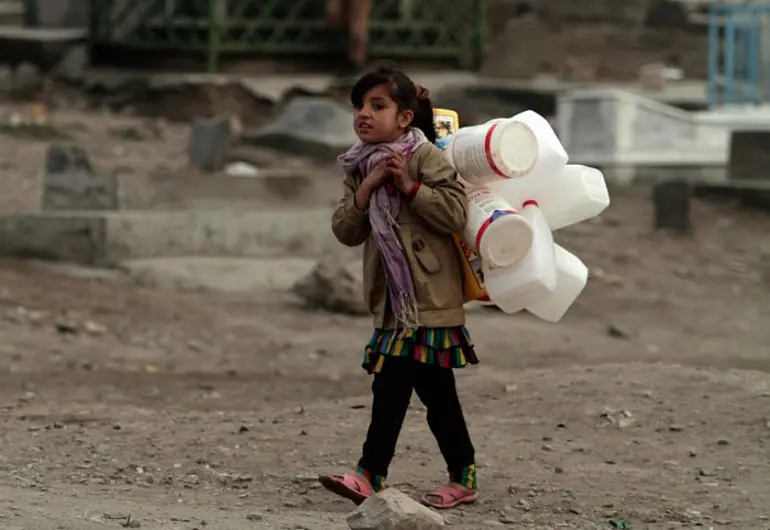
In these affected sectors, families must spend hours each day organizing basic water logistics. Where domestic or neighborhood wells have failed, residents congregate around private tanker delivery trucks or trek long distances to the few operational public taps. Long queues form before dawn, with children and adults waiting with plastic jerrycans to collect whatever minimal rations they can secure or afford.
The drying of wells has created a tiered crisis: wealthier households invest in drilling deeper, more expensive boreholes that reach past the failed upper strata, effectively draining what little remains of the shared water table and leaving impoverished households completely stranded without access.
Formidable Obstacles to Aquifer Replenishment
The drivers behind Kabul’s drying basin extend far beyond ordinary seasonal fluctuations in weather. The collapse of the water system is the cumulative result of explosive demographic pressure, decades of infrastructural neglect, and the accelerating impacts of climate change.

Over the past two decades, Kabul experienced an unprecedented population boom. Rapid, largely unregulated urbanization swept across the valley, transforming open agricultural tracts and natural drainage zones into densely packed residential settlements. This unchecked expansion generated an astronomical surge in daily water demand while simultaneously covering natural absorption zones in concrete and asphalt, preventing rainwater and seasonal snowmelt from soaking into the ground to recharge the depleted aquifers.
Coupled with this physical barrier is the sheer lack of legal oversight governing drilling. Tens of thousands of unregulated private boreholes have perforated the city basin over recent years, with individuals, private enterprises, and commercial water suppliers competing against one another in a race to pump from the deepest subterranean pockets.
Simultaneously, shifting global climate patterns have struck the Hindu Kush region with particular severity. Warmer baseline temperatures have altered the delicate rhythm of mountain precipitation. Instead of sustaining thick, long-lasting winter snowpacks that melt gradually through the spring and summer to steadily supply the Kabul River, the region faces prolonged heat, shifting rainfall dynamics, and intensified drought conditions. Without consistent, slow-melting runoff feeding the valley’s drainage networks, the primary natural engine required to replenish 43.9 million cubic meters of depleted groundwater each year has effectively broken down.
What ‘Day Zero’ Actually Means for a Modern Metropolis
In modern hydrologic discussions, the term "Day Zero" is frequently misunderstood as a single, apocalyptic morning when every tap in a metropolitan area simultaneously sputters out of water. In practice, hydrologists and disaster management experts define it as an extended, systemic breakdown of civic survivability.

Day Zero marks the tipping point where available and accessible water supplies fall below the bare minimum required to sustain an urban population. Rather than an instantaneous blackout, it operates as an expanding, slow-motion crisis. As the threshold is crossed, municipal supply networks lose adequate water pressure, suburban and urban wells dry up in sequential waves, and public distribution shuts down for days or weeks at a time.
Under these conditions, water ceases to function as a predictable public utility and becomes an expensive, rationed commodity. Residents are forced to redirect substantial portions of their meager household incomes toward purchasing water from commercial tanker operations, or spend valuable working hours searching for open distribution points. The resulting scarcity elevates public health risks, as desperate families are often driven to rely on untreated, contaminated, or low-quality alternative sources, triggering waterborne illnesses and compounding the strain on basic healthcare systems.
Kabul illustrates this incremental progression. While residents in a handful of lower-lying areas connected to residual municipal lines or exceptionally deep boreholes still maintain temporary access, hundreds of thousands in adjacent districts are already living under acute Day Zero conditions. For these communities, the catastrophic future warned of for 2030 is already their present reality, with the gap between available water and daily human survival widening by the day.