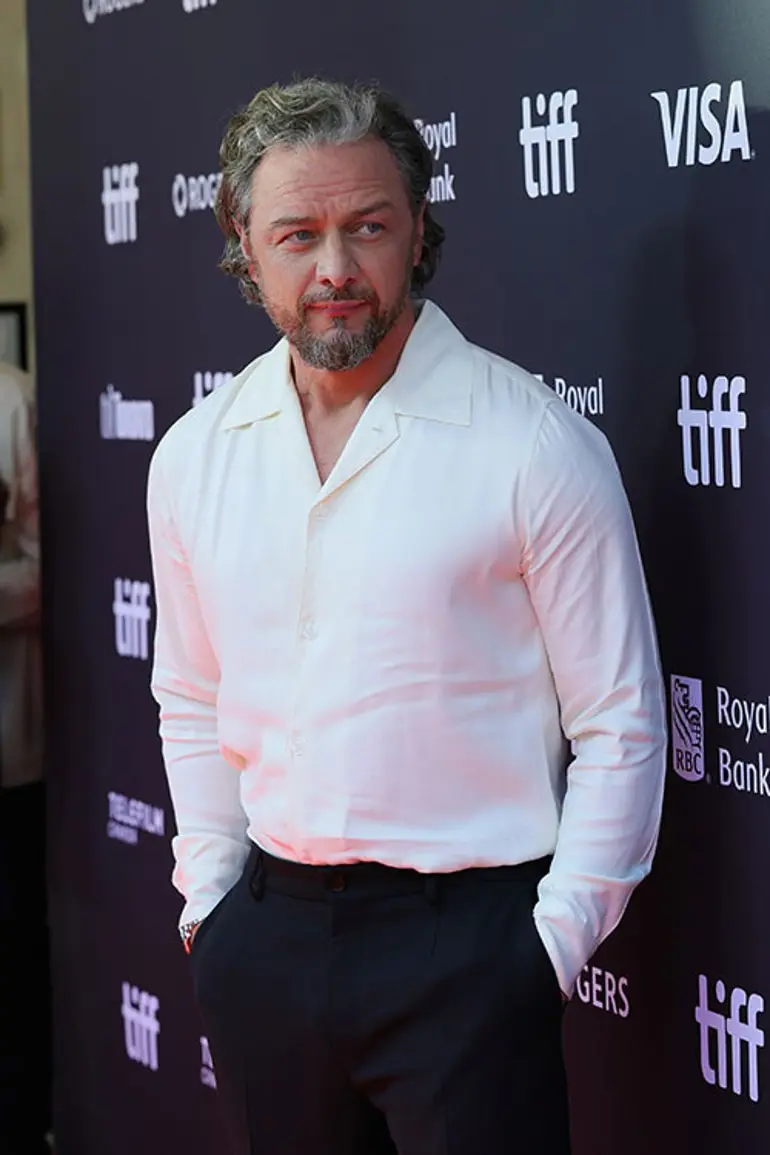
The inner financial mechanics of Hollywood have long fascinated audiences and industry observers alike. While multi-million-dollar upfront salaries for A-list actors routinely dominate headlines, the long-tail economics of film royalties—commonly referred to in the entertainment industry as residuals—tell a far more complex and erratic story. For Scottish actor James McAvoy, those ongoing financial returns have yielded everything from absurdly small checks worth a mere 25 cents to steady, substantial payouts from unexpected places.
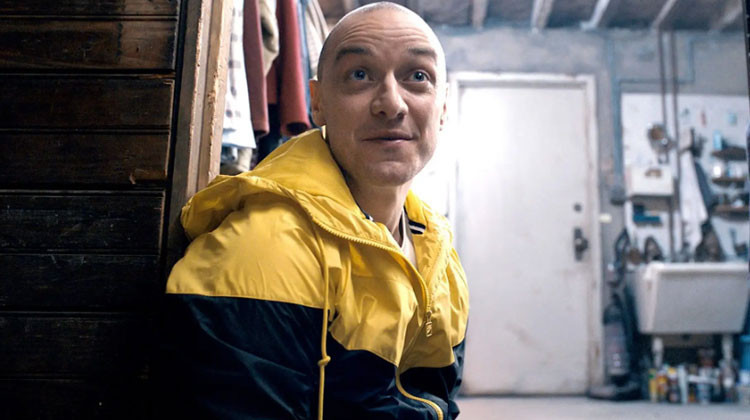
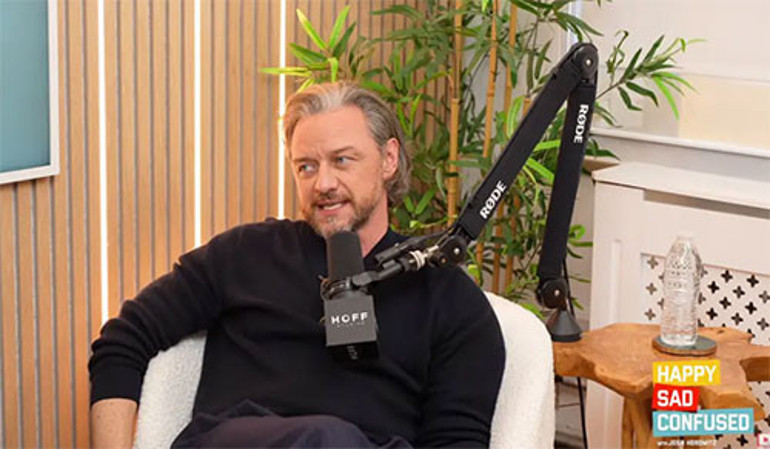
During an appearance on the podcast Happy Sad Confused, the Golden Globe-nominated actor opened up about the inner realities of residual income in the film industry. McAvoy revealed that despite featuring in massive studio productions throughout his career, it is director M. Night Shyamalan’s 2016 psychological thriller Split that continues to deliver reliable royalty checks nearly a decade after its release. In contrast, many of his other high-profile roles, including his lead performance alongside Angelina Jolie in the 2008 action hit Wanted, have generated far less long-term compensation than the public might assume.
For actors working in film and television, compensation structures typically consist of two distinct elements: an upfront fee for filming and ongoing backend royalties generated through television syndication, physical media sales, digital streaming licenses, and international distribution deals. However, as McAvoy explained, the arrival and size of these royalty checks can often seem arbitrary and unpredictable.
"Sometimes you might get a check for a few hundred pounds, but other times you get checks for as little as 25 cents," McAvoy noted during the interview, describing the wide disparity in residual payments across his career as "crazy."

While receiving a check for a quarter of a dollar might sound absurd to outsiders, it highlights a widespread reality of Hollywood accounting. Depending on how a contract is negotiated, distribution fees, marketing costs, and corporate accounting practices can pare down backend profits to microscopic levels. For McAvoy, whose broad filmography spans critically acclaimed television series like Band of Brothers and the original British version of Shameless to major superhero blockbusters, the vast majority of his projects yield little to no meaningful royalty income once their initial release window closes.
The Economics Behind M. Night Shyamalan’s ‘Split’
The notable exception in McAvoy’s catalog is Split, the 2016 psychological horror-thriller written, directed, and produced by M. Night Shyamalan. The film served as a masterclass in independent film financing and high-return theatrical distribution.

Explaining why Split continues to be an exceptionally profitable enterprise for those involved, McAvoy broke down the lean financial model that Shyamalan utilized to bring the project to life. According to the actor, the film was produced on a modest budget of approximately $6 million. Even when accounting for the global promotional and marketing expenditure—which McAvoy estimated at around $30 million—the total cost to bring the movie to theaters worldwide remained exceptionally low compared to standard studio offerings.
When Split made its theatrical debut, it far exceeded initial box office expectations. Driven by strong critical reviews, word-of-mouth buzz, and audience intrigue surrounding its narrative twists, the film pulled in an astounding $40 million during its opening weekend alone in North America. By covering its combined production and promotional expenses in just three days of release, the film immediately entered full profitability.

"The film cost about $6 million to make, and they spent $30 million on promotion," McAvoy recalled. "In its opening weekend, it grossed $40 million. Our very first residual checks arrived right at the end of that first week."
McAvoy credited this financial outcome directly to Shyamalan’s sharp business strategy, describing him as a "supremely intelligent director." By strictly controlling budgets and often self-financing his projects, Shyamalan retains creative control while establishing highly advantageous profit-sharing arrangements for key collaborators. Because the financial threshold for profitability was set so low, the backend profit pool was established almost immediately, allowing residual checks to flow continuously over the subsequent decade as the film transitioned through cable broadcasts, physical media, and digital streaming platforms.
Award Season Expectations and the Horror Genre Glass Ceiling
Beyond its commercial triumphs, Split represented one of the most demanding performance challenges of McAvoy’s career. In the film, he portrayed Kevin Wendell Crumb, a man living with Dissociative Identity Disorder who harbors 23 distinct personalities, alongside an impending 24th persona known as "The Beast." McAvoy’s performance required him to seamlessly switch between wildly different characters—ranging from a young boy named Hedwig to a sophisticated woman named Patricia—often within the same scene.
The sheer virtuosity of McAvoy’s work generated widespread critical acclaim and sparked intense conversation among critics and moviegoers during the film awards season. Many commentators argued that his multi-layered portrayal deserved serious consideration for major industry accolades, including an Academy Award nomination for Best Actor.

However, McAvoy remained thoroughly skeptical about the likelihood of receiving formal awards recognition during that period, pointing to the historical biases that persist within major voting organizations.
"I didn’t really believe it," McAvoy admitted regarding the award buzz surrounding his performance. "I didn’t think the film would get much traction during awards season. While performances in the horror genre are starting to gain more recognition these days, it’s still not very common."
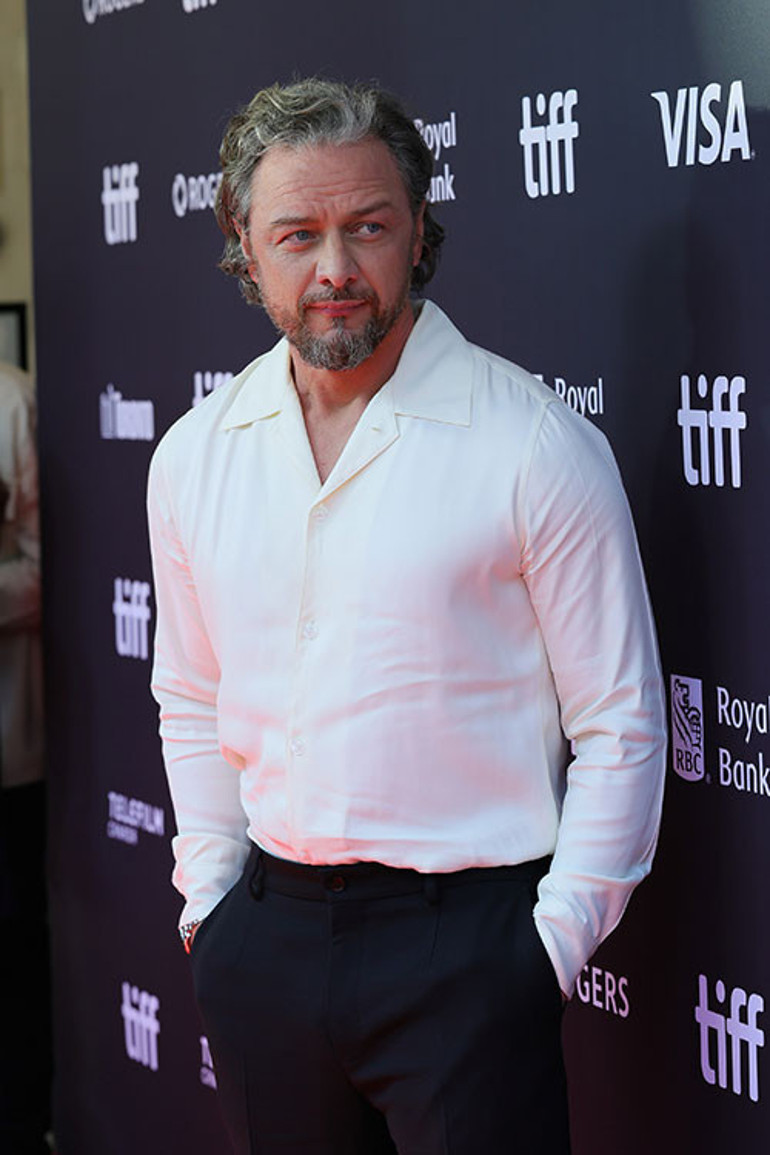
Historically, genre cinema—particularly horror films, psychological thrillers, and slashers—has faced an uphill battle when competing against traditional dramas and historical biopics at major industry events. Even when actors deliver extraordinary, physically demanding performances in thrillers, voting committees have traditionally favored grounded, dramatic stories.
Maintaining a lighthearted perspective on the matter, McAvoy shared a humorous anecdote about how he personally commemorated the role in the absence of formal trophies. "I had a gold bar lying around," McAvoy joked. "So I made myself an award out of it and held my own ceremony."

Big-Budget Blockbusters vs. Backend Realities
McAvoy’s experience with Split stands in sharp contrast to his work on traditional studio blockbusters. A prime example highlighted during his podcast discussion was the 2008 action hit Wanted, directed by Timur Bekmambetov, in which McAvoy starred alongside Angelina Jolie and Morgan Freeman.
On paper, Wanted was a massive box office success. Produced on a budget of roughly $75 million, the film grossed over $340 million worldwide and served as a major commercial vehicle that solidified McAvoy’s standing as a global leading man. Given its substantial theatrical returns and widespread television presence over the years, public logic might suggest that the film would generate continuous residual income for its lead actor.
However, McAvoy clarified that Wanted has not yielded significant long-term backend royalties for him. In large-scale studio filmmaking, backend profit participation is frequently diluted by complex distribution fee structures, high overhead expenses, and elevated profit thresholds that must be met before residual tiers become accessible to talent.
This contrast underscores a persistent reality in modern film economics: a tightly budgeted, smartly financed project like Split that quickly clears its production costs can prove far more financially rewarding over time than a high-grossing blockbuster bound to traditional studio accounting models. As distribution paradigms continue to shift across the entertainment landscape, McAvoy’s experiences illustrate how the long-term earnings of a project often depend far more on financial structure than on initial budget size.