In a major policy initiative aimed at transforming early childhood and basic education across Turkey, Minister of National Education Yusuf Tekin has officially announced the launch of the comprehensive "Game Policy Document" (Oyun Politika Belgesi). The policy framework is designed to systematically reintroduce traditional children’s games into preschools, primary schools, and middle schools across the country while actively incorporating families into the educational process.
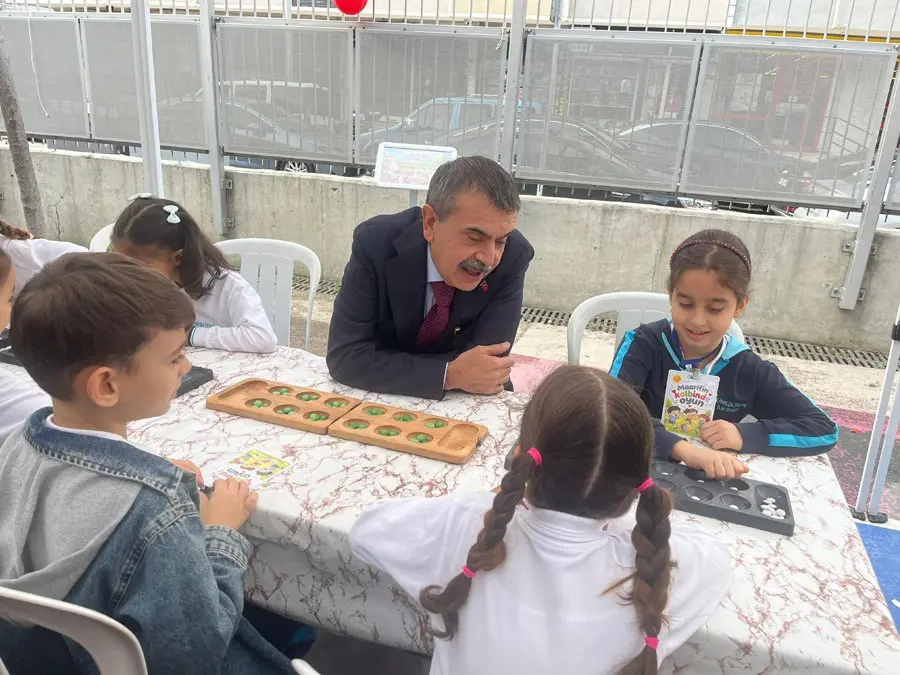
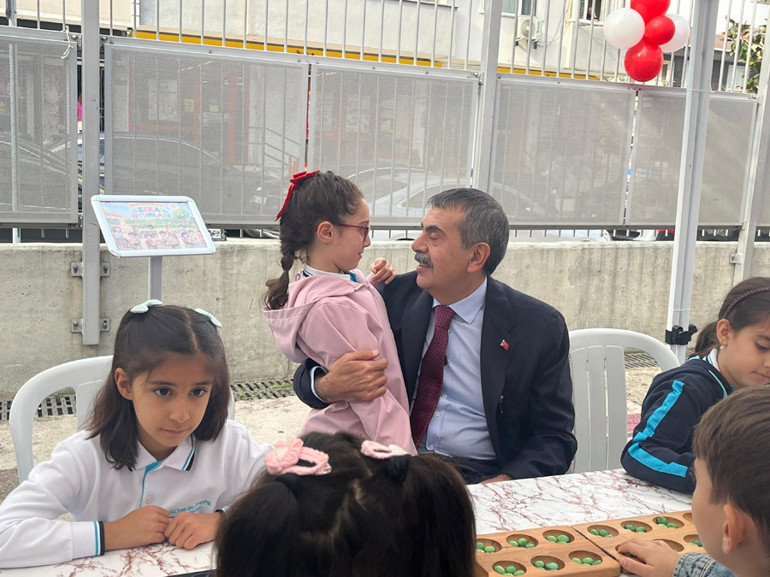
The official announcement was made during a high-profile visit by Minister Tekin to Güngören Güneştepe Primary School in Istanbul. The visit took place under the event theme "Play at the Heart of Education" (Maarifin Kalbinde Oyun), a campaign created to highlight the fundamental role of play in child development, cultural preservation, and academic achievement. During his time at the school, Minister Tekin engaged directly with students in various traditional outdoor activities, inspected physical education facilities, and held direct consultations with teaching staff regarding the practical rollout of the new policy.
The delegation accompanying Minister Tekin included key local and national administrators, notably Güngören District Governor Ayhan Terzi and the General Director of Basic Education at the Ministry of National Education, Ebubekir Sıddık Savaşçı. Their presence emphasized the coordinated operational effort between central ministry leadership and local authorities to ensure the effective implementation of the policy framework across all school districts.
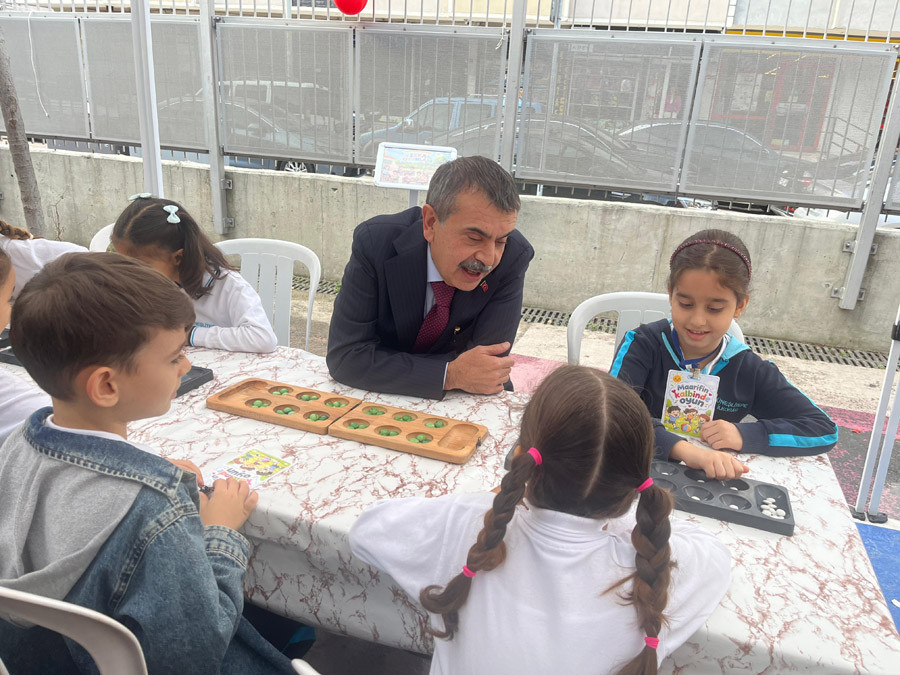
During his walkabout on the school grounds, Minister Tekin participated firsthand in several classic Turkish traditional games alongside young learners. He joined students on the playground for a tug-of-war competition, participated in face-painting sessions, and demonstrated top-spinning, a historic traditional game that has entertained generations of children in Turkey. Tekin also visited the school’s indoor sports hall to observe physical education routines and athletic exercises tailored for elementary students, reinforcing the ministry’s commitment to prioritizing active physical engagement within school environments.
Following his interactive sessions with the children, Minister Tekin moved to the school’s staffroom to conduct a consultation session with teachers and school administrators. The exchange provided an opportunity for educators to share their on-the-ground perspectives on play-based learning and offer direct feedback on how the ministry’s new directives can be seamlessly integrated into daily classroom schedules and school routines.
Play as an Essential Component of Learning and Cultural Transmission
Speaking to reporters and educators following his tour of the school facilities, Minister Yusuf Tekin detailed the core pedagogical philosophy behind the publication of the Game Policy Document. He pointed out that while educational tools, instructional technologies, and teaching methodologies continuously evolve over time, play has remained one of the most enduring, natural, and effective pedagogical instruments throughout human history.

Tekin stressed that traditional children’s games carry immense cultural weight and serve as crucial vehicles for intergenerational continuity. Far beyond simple entertainment or physical exertion, traditional games function as living transmitters of national culture, historical identity, and shared societal values. By embedding these traditional games directly into early childhood and basic education, the ministry aims to help young students internalize foundational social ethics, cultural roots, and collective principles naturally through lived experience rather than abstract classroom instruction.
To support this holistic approach, the Ministry of National Education has launched specialized initiatives to physically adapt school environments. Under this strategy, conventional schoolyards are being redesigned and transformed into dedicated play zones tailored for traditional games. The goal is to reshape concrete playground spaces into safe, inviting, and dynamic environments where children can play traditional games, engage in physical exercise, socialize with peers, and spend their break times in a meaningful and joyful manner.
Minister Tekin further noted that this initiative is fully aligned with the "Türkiye Yüzyılı Maarif Modeli" (Türkiye Century Education Model), a comprehensive reform framework officially introduced in 2024. Under this modernized national curriculum model, play is formally recognized not as an auxiliary activity or a mere break from academic study, but as an essential, integrated component of cognitive, social, and emotional learning. By formalizing play within the educational model, the ministry seeks to create a balanced environment where mental development and physical activity reinforce one another.

Combating Digital Addiction and Promoting Physical Health
Beyond its cultural and cognitive benefits, Minister Tekin emphasized that the Game Policy Document addresses critical public health challenges facing modern youth. He warned that contemporary lifestyles have increasingly exposed children to severe health and developmental risks, including childhood obesity, physical inactivity, and pervasive digital addiction stemming from excessive screen time.
The ministry views the systematic integration of organized, group-based traditional play as a direct and constructive countermeasure to these societal challenges. By drawing children away from digital screens and encouraging active outdoor movement, the policy aims to promote physical fitness, improve motor coordination, reduce sedentary habits, and foster healthy lifestyle routines from an early age. Furthermore, participating in group games builds essential interpersonal skills, teaching children empathy, sportsmanship, conflict resolution, and cooperation in a face-to-face setting.
The Game Policy Document, which was officially published and distributed to educational institutions at the start of the current academic year, establishes operational guidelines for preschools, primary schools, and middle schools (ortaokul). It provides a structured framework for educators to incorporate traditional games into daily lesson plans, recess periods, physical education classes, and extracurricular school activities.

Mobilizing Families and Strengthening Parent-School Partnerships
A central element of the Minister’s message in Güngören was the vital need to bring parents directly into the educational framework. Minister Tekin explained that the success of the Game Policy Document relies heavily on extending play-based learning beyond the physical boundary of the schoolyard and into the household environment.
Tekin emphasized that active parental involvement in learning processes and school-sponsored activities plays a direct role in elevating children’s academic motivation and overall educational success. When parents participate alongside their children in traditional games and school events, it strengthens emotional bonds, fosters a sense of security, and creates a supportive environment that enhances learning outcomes both at home and in the classroom.
Additionally, the ministry anticipates that involving families in structured game activities will yield broader social benefits by increasing societal awareness regarding positive parenting, child psychology, and the importance of healthy life habits. By encouraging parents to rediscover traditional play alongside their children, the ministry aims to foster a shared cultural literacy and counter the growing isolation associated with modern screen-centric family life.
The official visit to Güngören Güneştepe Primary School concluded in the teachers’ room, where Minister Tekin expressed his appreciation to the school’s teaching staff for their dedication to implementing the new pedagogical vision. The visit ended on a warm note, with Minister Tekin, local government officials, and educators gathering for a commemorative group photograph to mark the launch of the initiative, signaling a unified commitment to advancing the Game Policy Document across schools nationwide.