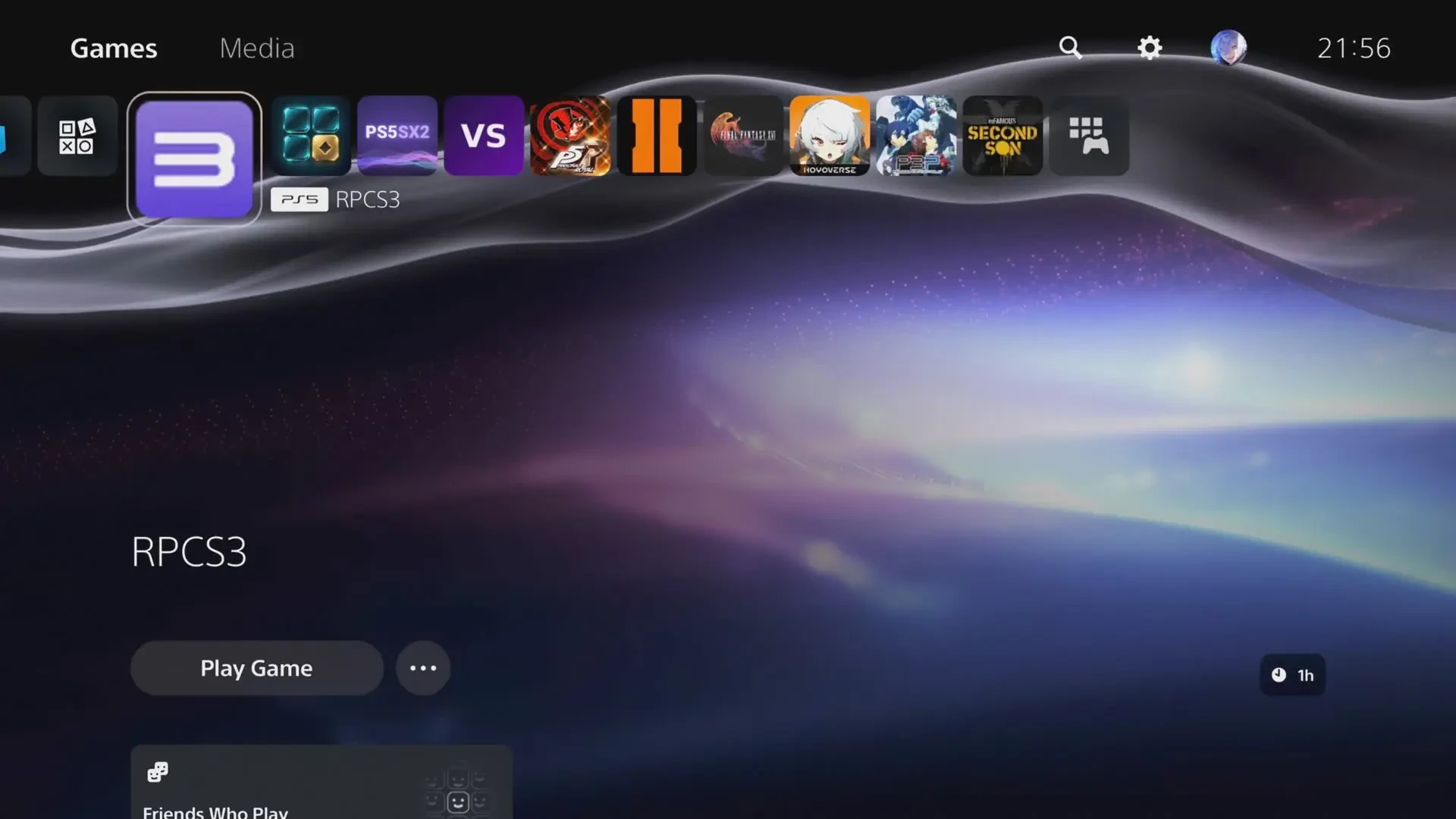
The debate surrounding video game preservation and backward compatibility has taken a dramatic turn. A group of talented console modders and independent developers has achieved what Sony Interactive Entertainment has long maintained was too technically complex: running PlayStation 3 games natively on PlayStation 5 hardware. By bypassing the manufacturer’s strict software restrictions, these developers have successfully ported a customized version of the acclaimed RPCS3 emulator to run directly on jailbroken PlayStation 5 consoles, shedding new light on the technical capabilities of modern console hardware.
For years, PlayStation 5 owners wishing to revisit classic titles from the PlayStation 3 era have been forced to rely on cloud streaming. This service, locked behind the most expensive tier of Sony’s subscription model, PlayStation Plus Premium, has often been criticized for latency issues, visual compression, and the requirement of a constant, high-speed internet connection. The successful execution of native emulation on the console itself demonstrates that the barriers preventing local playback of legacy titles may be more aligned with corporate strategy and software development priorities than absolute hardware limitations.
Breaking the Compatibility Barrier on PlayStation 5
The breakthrough was made public following the release of a specialized RPCS3-PS5 port on GitHub. Unlike previous attempts to run emulators on modern consoles, which frequently required installing an entire secondary operating system like Linux, this new project is designed to run directly within the PlayStation 5’s native software environment. By utilizing a jailbroken console, developers were able to gain low-level access to the system’s APU (Accelerated Processing Unit), allowing the emulator to communicate directly with the console’s custom AMD Zen 2 processor and RDNA 2-based graphics architecture.
This native execution yields massive performance benefits. The software utilizes the Vulkan graphics API, a modern, low-overhead cross-platform graphics toolset that maps efficiently to the PlayStation 5’s GPU. Furthermore, the emulator features full integration with the DualSense wireless controller, allowing players to experience these legacy titles with modern input devices. The project has sent waves of excitement through the homebrew and console-modding communities, serving as a proof-of-concept that the current generation of console hardware possesses more than enough processing power to handle the demanding task of simulating the PlayStation 3’s notoriously complex architecture.
The Complex Legacy of the PS3 Cell Processor
To appreciate the scale of this achievement, one must understand why PlayStation 3 emulation has historically been regarded as a monumental technical hurdle. Released in 2006, the PlayStation 3 was built around the Cell Broadband Engine, a proprietary microprocessor architecture co-developed by Sony, Toshiba, and IBM (commonly referred to as the STI alliance). The Cell processor was highly unconventional, featuring a single power-efficient PowerPC-based core known as the Power Processing Element (PPE) alongside eight specialized co-processors called Synergistic Processing Elements (SPEs).
While the Cell engine was incredibly powerful for its time—often outperforming contemporary PC hardware in raw floating-point calculations—it was notoriously difficult for game developers to program for. Managing data flow across the SPEs required meticulous manual optimization. When Sony transitioned back to a standard x86-64 computer architecture for the PlayStation 4 and subsequently the PlayStation 5, the structural differences made direct backward compatibility virtually impossible without specialized emulation software.

For over a decade, the industry consensus—often reinforced by statements from Sony executives—was that emulating the unique asymmetric design of the Cell processor on modern consumer consoles required too much computational overhead. The heavy lifting required to translate the instruction sets of the SPEs to standard x86 processors meant that even powerful PCs struggled with PS3 emulation for years. However, as PC-based emulators like RPCS3 matured, they proved that smart software engineering could bridge the architectural gap. The transition of this technology to the PlayStation 5 proves that the console’s custom 8-core AMD CPU has reached a performance threshold where it can successfully absorb the emulation overhead.
Technical Performance and the PS5 Pro Factor
Early testing of the native RPCS3 port on PlayStation 5 hardware has yielded highly promising results, particularly when tested on the newly released PlayStation 5 Pro. The upgraded console, which features an enhanced GPU with greater compute units and slightly higher CPU boost clocks, provides an ideal environment for testing the upper limits of homebrew emulation.
During benchmark tests conducted by the modding community, several PlayStation 3 titles achieved a stable 60 frames per second (FPS). While not every game in the vast PS3 library runs perfectly—many still require game-specific patches, configuration tweaks, and further optimization—the fact that commercial games can boot and run at high frame rates without the aid of official developer tools is a remarkable milestone.
The success of these tests directly challenges the narrative that local emulation is an unfeasible task for modern consoles. It demonstrates that with dedicated software optimization, the PlayStation 5 hardware is capable of translating and executing the complex instructions of the Cell processor in real-time, delivering a gameplay experience that matches or even exceeds the performance of the original 2006 hardware.
Corporate Strategy vs. Community Innovation
The realization that native PlayStation 3 emulation is technically viable on the PlayStation 5 reopens a long-standing debate regarding Sony’s backward compatibility policies. When Microsoft launched its extensive backward compatibility program for the Xbox One and Xbox Series X/S, it won widespread praise from gamers and industry advocates alike. Microsoft invested heavily in engineering custom emulation profiles for hundreds of original Xbox and Xbox 360 games, allowing users to insert their original discs or download digital purchases at no additional cost, often with automatic resolution and frame rate boosts.
In contrast, Sony’s approach to legacy software preservation has been more conservative and monetization-driven. Rather than developing a local emulator for the PlayStation 5, the company chose to relegate the PlayStation 3 library to its cloud servers. This decision minimized the engineering costs associated with developing a highly optimized local emulator, while simultaneously creating a recurring revenue stream by locking the feature behind the premium subscription tier.
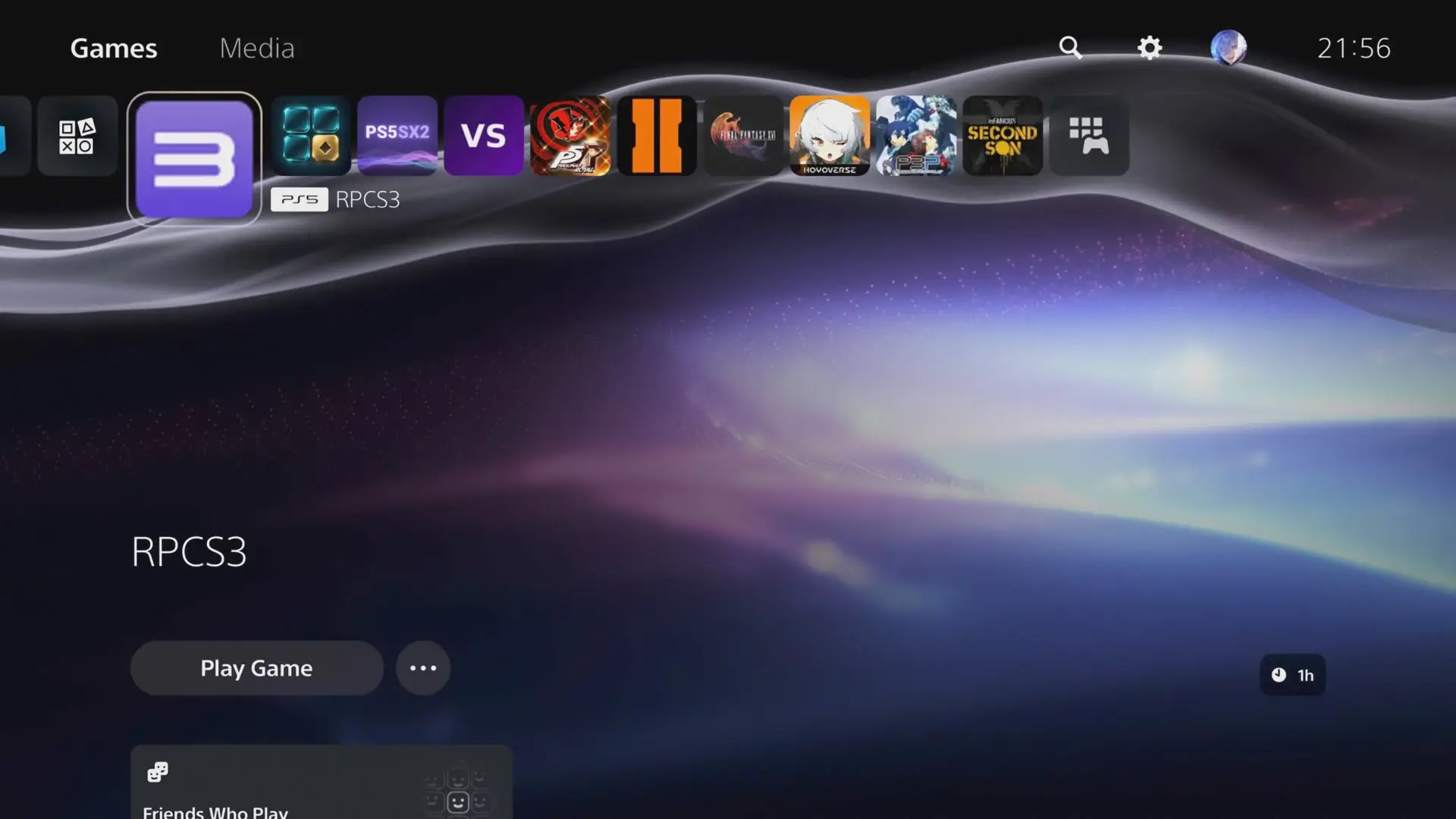
The efforts of the modding community suggest that Sony’s decision was ultimately a business choice rather than a technical impossibility. While developing a commercial-grade emulator that guarantees compatibility across the entire PS3 library is undoubtedly an expensive and time-consuming software engineering task, the RPCS3-PS5 port proves that the hardware itself was never the limiting factor. For consumer advocacy groups and game preservationists, this development highlights the vital role that independent modders play in keeping gaming history alive when manufacturers choose not to support their older libraries.
Looking Ahead: Game Preservation and the PlayStation 6
As the homebrew community continues to refine the RPCS3 port for the PlayStation 5, attention is already turning to what the future holds for the next generation of console hardware. Industry analysts predict that by the time the PlayStation 6 is designed and brought to market, the gap in raw processing power will have widened to the point where emulating the Cell architecture will require minimal specialized optimization.
With more advanced CPU architectures and dedicated machine-learning hardware expected to define the next generation of consoles, the computational overhead that once made PS3 emulation a daunting prospect will likely become negligible. If the community can achieve playable frame rates on current-generation hardware through unofficial ports, a fully funded, official emulation project on future hardware should, in theory, be entirely within Sony’s capabilities.
For now, the native RPCS3-PS5 project remains restricted to the realm of jailbroken consoles, meaning the vast majority of mainstream PlayStation 5 users will not have access to local PS3 playback anytime soon. Modding modern consoles carries significant risks, including the voiding of warranties, potential system instability, and the risk of permanent bans from the PlayStation Network. However, the intellectual and technical victory achieved by these developers cannot be understated. They have successfully rewritten the narrative surrounding one of the most controversial hardware architectures in gaming history, proving that where there is a dedicated community, technical limitations can indeed be overcome.