

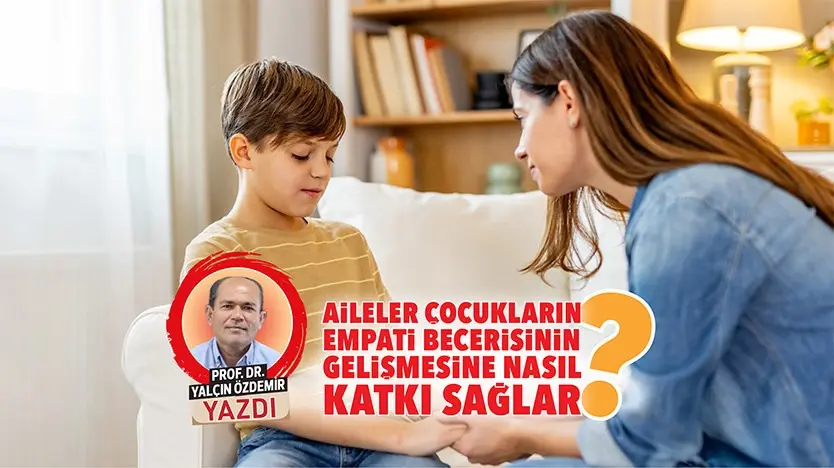
The development of empathy in early childhood has emerged as a cornerstone of social-emotional learning, with educational experts stressing that the foundations of this vital human capacity are predominantly laid during the preschool years. According to psychological and educational research, empathy—defined fundamental as the ability to understand what another person is feeling and to remain sensitive to their emotional experiences—is not merely an innate trait, but a complex skill that is learned, practiced, and refined through early life experiences and social interactions.
In an analysis published by the Hürriyet Education Desk, specialists underscored that the preschool period serves as the most decisive developmental window for cultivating empathetic understanding. During these formative years, young children undergo rapid cognitive and emotional growth, transitioning from self-centered perceptions of the world toward an expanding awareness of the feelings, needs, and perspectives of those around them.
Highlighting the profound impact of the domestic environment during this stage, Prof. Dr. Yalçın Özdemir, a faculty member in the Department of Guidance and Psychological Counseling at Aydın Adnan Menderes University, emphasized that parental behavior plays a paramount role in shaping a child’s capacity for empathy. Writing for Hürriyet’s education platform, Prof. Dr. Özdemir detailed the specific ways families can actively foster empathetic traits in young children, pointing out that the attitudes, responses, and communication styles modeled by parents directly influence how children process emotions and interact with others.
Understanding Empathy in Early Childhood Development
Empathy is broadly conceptualized as a dual-component process involving both cognitive and affective elements. At its core, it requires an individual to mentally step outside of their own immediate experience to perceive a situation from another person’s point of view, while simultaneously experiencing an appropriate emotional response to that person’s state. For a young child, acquiring this capability is a gradual process that relies heavily on their ongoing psychological maturity and social learning.
In early childhood, empathy begins with emotional recognition. Before children can understand what someone else is going through, they must first build an initial awareness of human emotions in general. This includes learning to identify basic feelings such as joy, sadness, anger, fear, and frustration, both within themselves and in others. As children observe facial expressions, tone of voice, body language, and situational contexts, they start to map these external cues to specific internal emotional states.
The preschool years—typically covering ages three through six—represent a dynamic period where these foundational emotional competencies take shape. During this stage, children begin to break free from the natural egocentrism that characterizes infancy and early toddlerhood. While toddlers often operate under the assumption that everyone shares their immediate thoughts, desires, and feelings, preschoolers gradually begin to realize that other individuals possess distinct inner worlds, complete with unique emotions, preferences, and reactions.
This cognitive shift lays the groundwork for perspective-taking, which is the mental ability to imagine another person’s thoughts and feelings. As perspective-taking develops, children become increasingly capable of emotional sensitivity. They no longer simply react to their immediate surroundings; instead, they start to tune in to the distress, happiness, or comfort of peers and family members, forming the initial building blocks of prosocial behavior and compassionate interaction.
The Unique Significance of the Preschool Stage
Educational psychologists and early childhood specialists consistently point to the preschool period as the ideal window for nurturing empathy due to the heightened plasticity of the developing brain and the rapid expansion of a child’s social environment. During these years, children are frequently introduced to new social settings, such as daycare, preschool classrooms, playgroups, and neighborhood interactions, where they encounter diverse peer dynamics for the first time.
Within these settings, children are presented with continuous opportunities to practice emotional navigation. They must learn to share toys, wait for their turn, navigate conflicts over space or activities, and respond to playmates who may be crying or upset. The preschool period is critical because it is during these exact micro-interactions that children learn three essential emotional milestones: identifying their own feelings, distinguishing the feelings of others, and understanding the direct consequences of their own actions on those around them.
The first milestone—identifying one’s own feelings—serves as the anchor for all subsequent emotional development. A child who cannot name or understand their own frustration or sadness will struggle to comprehend similar feelings when displayed by a playmate. Preschoolers require guidance to articulate their emotional states, transforming raw physical impulses into verbal expressions.
The second milestone involves learning to differentiate one’s own emotional state from that of another person. For instance, a child who feels energetic and playful must learn to recognize that a peer who has fallen or lost a toy feels sad or hurt. Distinguishing these contrasting emotions requires subtle observational skills and reflection, which are refined throughout early childhood.
The third milestone—grasping cause-and-effect in social dynamics—is where empathy translates into practical behavior. Preschoolers begin to connect their own actions with the emotional reactions of those around them. They start to realize that taking a toy without asking causes distress to a friend, whereas offering a comforting gesture or sharing a snack can restore happiness. Recognizing this cause-and-effect relationship forms the absolute basis for moral development, self-regulation, and positive peer relationships.
The Pivotal Influence of Ebeveyn Behaviors and Home Environment
While educational institutions and peer interactions play significant roles in a child’s development, the primary site for empathy learning remains the home. Prof. Dr. Yalçın Özdemir of Aydın Adnan Menderes University highlights that parent-child interactions provide the foundational framework through which children learn to perceive, interpret, and respond to emotional experiences.
Parents serve as the principal role models for emotional behavior. Young children continuously observe how their primary caregivers express happiness, handle stress, manage anger, resolve disputes, and respond to the distress of others. When parents demonstrate empathy in their everyday lives—whether by listening attentively to family members, displaying kindness to neighbors, or handling household conflicts with patience and understanding—children naturally absorb and internalize these behaviors as standard social norms.
Furthermore, the emotional climate created by parents directly affects a child’s capacity for empathetic development. A home environment characterized by emotional warmth, open communication, and psychological safety allows children to feel secure in expressing their own vulnerabilities. When children feel heard, validated, and emotionally supported by their parents, they develop a secure base that enables them to extend similar empathy and care to external individuals.
Conversely, environments where emotions are routinely dismissed, suppressed, or met with harsh criticism can hinder a child’s emotional growth. If a child’s own feelings are invalidated, they may develop defensive coping mechanisms that make it difficult to pay attention to or care about the feelings of others. Therefore, responsive and emotionally attuned parenting is widely considered a fundamental prerequisite for cultivating empathy in young minds.
Parental Strategies for Fostering Empathy in Everyday Life
In his analysis, Prof. Dr. Özdemir outlines practical frameworks that families can adopt to support the healthy emotional and empathetic development of preschool children. These strategies focus on integrating emotional awareness into daily routines, conversations, and play activities, creating continuous learning opportunities for the child.

One central approach involves emotion coaching and active labeling of feelings. Parents are encouraged to help children build a broad emotional vocabulary by naming feelings as they occur in real-time. By labeling emotions—such as stating, "I see that you feel frustrated because your tower fell over," or "You look very happy that we are going to the park"—parents assist children in building a clear mental dictionary of emotional experiences. This explicit naming process demystifies complex feelings and allows children to recognize those same emotions when observed in others.
Another key method is encouraging perspective-taking through dialogic storytelling and everyday reflective questions. When reading books or watching children’s programming together, parents can pause to ask open-ended questions about the characters’ internal experiences. Inquiries such as, "How do you think the little bear feels right now?" or "Why do you think he is sad?" invite children to step into another perspective within a safe, imaginative context. Similarly, when real-life peer conflicts arise, parents can guide children toward reflection rather than simple punishment, asking them to consider how their actions made their playmate feel.
Modeling compassionate conflict resolution within the household is equally vital. Children learn how to navigate disagreements by watching the adults around them. When parents resolve conflicts calmly, show respect for differing opinions, and apologize when appropriate, they demonstrate that interpersonal differences can be managed with empathy and mutual respect rather than aggression or avoidance.
Additionally, assigning age-appropriate social responsibilities and opportunities for caregiving within the family can reinforce empathetic behaviors. Involving young children in tasks that benefit others—such as helping care for a family pet, assisting in preparing a gift for a relative, or offering comfort to an injured sibling—gives them practical experience in translating empathetic feelings into tangible prosocial actions.
Long-Term Benefits of Early Empathy Development
The benefits of establishing robust empathy skills during the preschool years extend far beyond early childhood, creating a positive trajectory that influences a child’s academic, social, and psychological well-being throughout their life course. Research in educational psychology consistently demonstrates that empathetic children are better equipped to navigate the complexities of formal schooling and broader social life.
Socially, children who possess strong empathy skills build healthier, more enduring peer friendships. They are more effective communicators, exhibit superior cooperation skills, and are less likely to engage in aggressive or bullying behaviors. Because they are capable of reading social cues accurately, empathetic children can navigate group dynamics with greater ease, earning positive peer acceptance and developing a strong sense of social belonging.

Academically, empathy is closely linked to enhanced emotional self-regulation and classroom engagement. Children who understand and manage their own emotions are better able to focus on educational tasks, follow instructions, and collaborate effectively with teachers and classmates. Furthermore, the perspective-taking skills honed through empathy development enhance critical thinking, reading comprehension, and analytical skills as children progress through formal education.
From a psychological perspective, early empathy development fosters high levels of emotional intelligence, resilience, and self-worth. By learning to navigate the emotional landscapes of both self and others early in life, children develop robust coping mechanisms that protect against mental health challenges later in adolescence and adulthood.
As highlighted by academic experts like Prof. Dr. Yalçın Özdemir, fostering empathy is not a one-time lesson but an ongoing educational journey rooted in the family dynamic. By recognizing the critical importance of the preschool years and actively modeling empathetic behavior, parents lay an essential foundation that empowers children to grow into compassionate, emotionally intelligent, and socially capable individuals.