In an ambitious move designed to institutionalize culinary education and safeguard the nation’s deep-rooted food culture, Turkey’s Ministry of National Education has officially launched the "Turkey Gastronomy High Schools Project." Designed to cultivate highly qualified human resources across seven distinct geographical regions, the comprehensive educational initiative begins its nationwide implementation in the eastern province of Erzurum.
The overarching mission of the project is to preserve Turkey’s extraordinarily rich and varied culinary heritage while systematically raising a new generation of professional chefs and culinary artisans. By establishing specialized gastronomy high schools across seven key provinces, the Ministry of National Education aims to merge traditional culinary wisdom with modern international standards, laying a solid foundation for the future of the nation’s food and hospitality sectors.
Strategic Culinary Specializations Across Seven Provinces
Under the newly created nationwide framework, the Ministry of National Education has mapped out a specialized educational focus for each participating region. Rather than applying a uniform curriculum across the country, the project explicitly links educational specialization to the distinct agricultural, historical, and cultural characteristics of each target province.
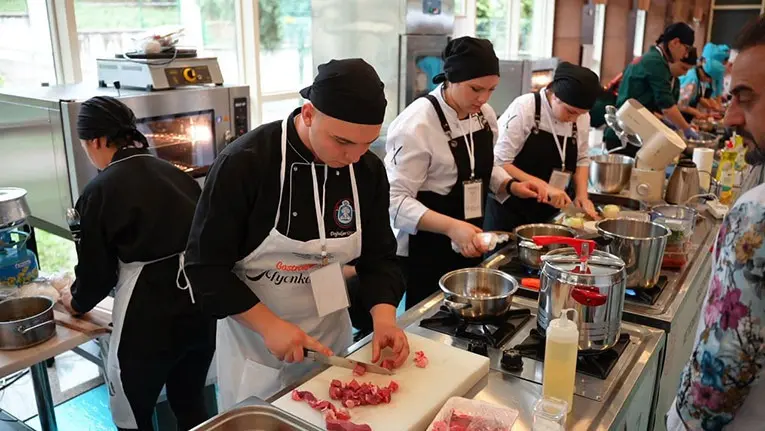
In Erzurum, representing the mountainous interior of Eastern Anatolia, the curriculum is fundamentally centered on meat processing, butchery techniques, and dairy production. The region’s long-standing traditions in livestock farming and artisanal dairy crafting make it the ideal hub for practical education in these critical primary culinary sectors.
In Istanbul, the historic heart of the Marmara region, the focus shifts toward the refined traditions of Ottoman palace cuisine. Students in Istanbul will receive specialized training in classical palace dishes, traditional halva-making, the historic craft of sherbets, and classical Ottoman confectionery and dessert arts. This specialization ensures that centuries-old imperial recipes and delicate sugar arts are systematically preserved and passed on to future culinary professionals.
Further south, in the province of Gaziantep—widely recognized as a global capital of gastronomy—the curriculum focuses heavily on the world-renowned craft of baklava making and the intricate regional flavors of Southeastern Anatolia. Gaziantep’s deep expertise in pastry production, spice blending, and regional meat dishes will serve as a living laboratory for secondary school students pursuing mastery in Southeastern gastronomy.
In Central Anatolia, the historic city of Konya will host a school focused on traditional oven craftsmanship, commercial baking, and the culinary legacy of the Seljuk Empire. The curriculum combines ancient Central Anatolian grain usage and traditional baking methods with modern bakery techniques.
Along the Aegean coast, the city of Izmir will concentrate on Aegean culinary arts and specialized bakery techniques. The focus in Izmir will highlight olive oil-based dishes, coastal and wild herb gastronomy, light Mediterranean-style baking, and health-focused culinary concepts that define the Western coastal culture.
In the Mediterranean province of Hatay, celebrated for its unique historical position at the crossroads of diverse civilizations, the educational focus centers on Mediterranean culinary arts and classic regional desserts. Students will explore complex flavor combinations, traditional mezze preparation, and iconic regional sweets that have gained international acclaim.
Finally, in the Black Sea coastal province of Trabzon, the specialized curriculum will focus on Black Sea regional delicacies and traditional regional baking practices. The school will place strong emphasis on local ingredients, cornmeal-based baking arts, regional seafood preparation, and the distinct oven crafts characteristic of the northern coast.

Flagship School Inaugurated in Erzurum with Ministerial Presence
The practical realization of this multi-province initiative begins with the official inauguration of the Erzurum Ülker Gastronomy Vocational and Technical Anatolian High School. The opening ceremony takes place with the personal participation of the Minister of National Education, Yusuf Tekin, highlighting the strategic importance that the national government places on vocational specialization within the culinary domain.
Located in the historic Yakutiye district of Erzurum, the flagship institution will operate within a newly restored concept building that has been specifically converted and equipped to meet the precise technical needs of contemporary gastronomy education. The restoration process was meticulously designed to adapt a site of historical character into a state-of-the-art educational facility without compromising its structural integrity.
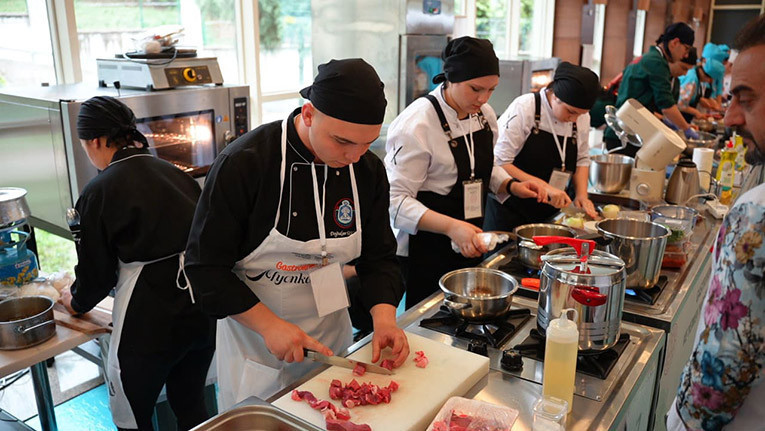
The campus in Yakutiye features custom-built, highly specialized technical training areas designed to provide immersive practical experience. Among these facility features are professional meat cutting and butchery workshops, dedicated dairy processing and analysis spaces, and fully equipped industrial cooking laboratories. Rather than relying solely on conventional classroom environments, the school prioritizes hands-on technical training where students directly handle raw ingredients, master specialized tools, and execute culinary processes from start to finish.
Five-Year Educational Model Integrating Language Mastery and Culinary Science
To prepare students for both high-level national careers and international opportunities, the Erzurum Ülker Gastronomy Vocational and Technical Anatolian High School—along with the subsequent schools planned under the national project—will offer an extended five-year program.
A key component of this structure is a mandatory one-year English preparatory program prior to four years of intensive academic and technical study. The incorporation of rigorous foreign language training aims to give Turkish culinary students a competitive edge globally. Language proficiency will allow graduates to comfortably navigate international culinary literature, participate in cross-border professional exchanges, communicate with international guests in high-end hospitality venues, and represent Turkish cuisine at international culinary platforms.

Following the preparatory year, the theoretical and practical curriculum spans a broad spectrum of fundamental and advanced subjects. Alongside intensive practical training in traditional Turkish cooking methods, students will gain comprehensive instruction in world cuisines, giving them a broad global perspective on contemporary food preparation techniques.
In addition to practical culinary creativity, the educational program places paramount emphasis on scientific and technical discipline. Students will undergo mandatory, structured coursework in hygiene management, rigorous food safety protocols, nutritional principles, and modern culinary arts management. By integrating food science and safety compliance directly into kitchen training, the program ensures that graduates possess the operational rigor required by modern commercial kitchens and international food service standards.
Through the strategic combination of historical preservation, localized specialization, technical facility design, and comprehensive language instruction, the Ministry of National Education’s project establishes a novel framework for vocational learning in Turkey. The opening of the restored campus in Yakutiye marks the first step in a broader national vision to establish culinary arts as a cornerstone of secondary technical education across all seven geographical regions of the country.