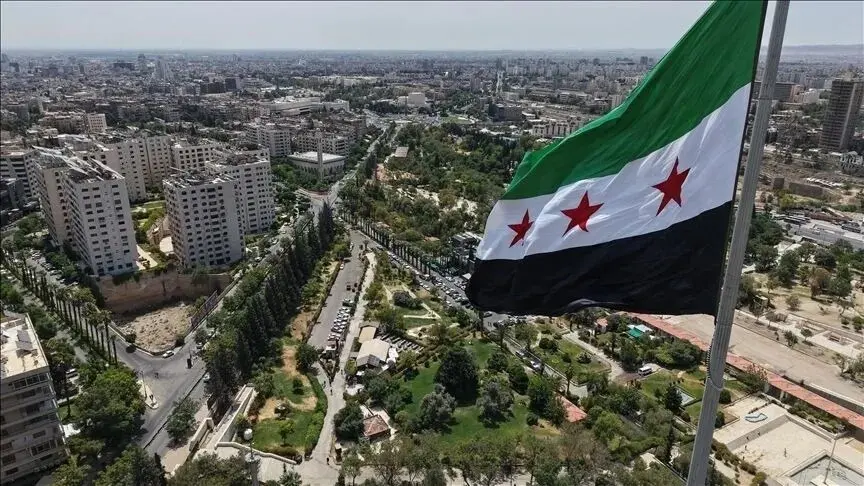
In a significant development for regional education and bilateral relations, the newly established International Recep Tayyip Erdoğan Turkish School in the Syrian capital of Damascus is preparing to officially open its doors to students. The school is scheduled to begin its educational activities on Sunday, October 4, 2026, marking a new chapter in Turkey’s academic and cultural outreach in the region.
International Recep Tayyip Erdoğan Turkish School in Damascus to Welcome First Students on October 4
The official announcement regarding the school’s opening was made public by the Damascus Education Counsellor’s Office (Şam Eğitim Müşavirliği). The office shared the update through its official account on the US-based social media platform X (formerly Twitter). In its statement, the Damascus Education Counsellor’s Office expressed great enthusiasm about welcoming the very first cohort of students to the newly constructed campus, emphasizing that the institution’s primary objective is to deliver high-quality, qualified education in the region.
The establishment of the International Recep Tayyip Erdoğan Turkish School represents a highly coordinated effort to expand academic opportunities and foster cultural exchange. By offering a rigorous curriculum and modern educational facilities, the school aims to become a center of academic excellence in Damascus, serving both the local population and the international community residing in the Syrian capital.
The Institutional Framework of Turkish Education Abroad
The launch of this flagship school in Damascus is part of a broader, structured effort by the Republic of Turkey to establish and support educational institutions worldwide. These initiatives are typically coordinated through the Ministry of National Education (Millî Eğitim Bakanlığı – MEB) and its diplomatic representations, such as education counsellor offices (Eğitim Müşavirlikleri) and educational attaché offices (Eğitim Ataşelikleri) operating under Turkish embassies and consulates around the globe.
Education counsellor offices play a vital role in bridging the educational systems of Turkey and host nations. They oversee the administration of Turkish schools abroad, support the educational needs of Turkish citizens living in foreign countries, and promote Turkish language and culture. The active involvement of the Damascus Education Counsellor’s Office in the establishment and launch of the International Recep Tayyip Erdoğan Turkish School underscores the institutional weight and long-term planning behind this project.
Such educational institutions are designed to meet international standards while maintaining a strong connection to Turkish educational values. They provide students with a comprehensive learning environment, utilizing modern pedagogical methods, state-of-the-art classrooms, and qualified teaching staff recruited from Turkey and locally.
Contextualizing Turkey’s Educational Initiatives in the Region
To understand the significance of opening an international school in Damascus, it is helpful to look at the historical context of Turkey’s educational initiatives in the region. Over the past decade, Turkey has actively supported the rehabilitation and operation of educational institutions in various parts of northern Syria. In areas such as Jarabulus, Al-Bab, Afrin, and Azaz, the Turkish Ministry of National Education, in collaboration with local councils, has restored hundreds of schools, provided training for local teachers, and supplied educational materials to ensure that children affected by years of instability could continue their education.
Furthermore, Turkish higher education institutions, most notably Gaziantep University, established vocational schools and faculties in northern Syrian towns to provide local youth with pathways to higher education and professional careers. These efforts have been widely recognized as crucial for regional stabilization, community rebuilding, and offering hope to the younger generation.
However, the opening of the International Recep Tayyip Erdoğan Turkish School directly in the capital city of Damascus marks a distinctive and highly symbolic step. Unlike the localized, emergency-response educational support provided in northern border regions, the establishment of a premier international school in the capital indicates a structured, state-level educational engagement. It reflects a mutual interest in fostering long-term educational cooperation and building cultural bridges directly through the heart of Syria.
The Role of Educational Diplomacy and Soft Power
In international relations, educational and cultural institutions are recognized as powerful instruments of soft power and "educational diplomacy." By establishing schools, universities, and cultural centers abroad, countries can foster mutual understanding, build lasting friendships, and create positive narratives that transcend political differences.
The naming of the institution after Turkish President Recep Tayyip Erdoğan highlights the high-level diplomatic and political significance attached to the school. It underscores Turkey’s commitment to playing an active, constructive role in the future of the region by investing in its most valuable asset: its youth.
Educational diplomacy often serves as a precursor or companion to broader diplomatic engagement. By focusing on shared goals—such as providing children with safe, high-quality learning environments and preparing them for global opportunities—nations can find common ground even during periods of diplomatic transition. The opening of this school in Damascus could serve as a platform for increased cultural dialogue and academic collaboration between Turkish and Syrian educators, researchers, and institutions.

Delivering "Qualified Education" in a Modern Environment
The Damascus Education Counsellor’s Office explicitly stated that the school’s core mission is to offer "qualified education" (nitelikli eğitim). In the context of Turkish international schools, this term encompasses several key academic and administrative standards:
- Bilingual and Multilingual Instruction: Students are typically offered instruction in Turkish, Arabic, and English. This multilingual approach ensures that graduates are well-equipped to navigate global academic and professional environments while maintaining deep connections to their local language and culture.
- Modern Curriculum: The curriculum is designed to align with both Turkish national educational standards and international academic frameworks. It places a strong emphasis on science, technology, engineering, and mathematics (STEM), alongside robust programs in the humanities, arts, and physical education.
- Advanced Facilities: International Turkish schools are generally equipped with modern science laboratories, computer labs, libraries, sports facilities, and creative arts studios, providing a holistic environment for student development.
- Pathways to Higher Education: Graduates of Turkish international schools often enjoy direct pathways to higher education. They are well-prepared to take international standardized tests and are uniquely positioned to apply for scholarships and admission to prestigious universities in Turkey, which hosts a rapidly growing population of international students.
By offering these advantages, the International Recep Tayyip Erdoğan Turkish School aims to attract a diverse student body. This includes the children of diplomatic staff, Turkish expatriates working in the region, and local Syrian families who desire an international-standard education that opens doors to global opportunities.
Administrative Readiness and the Road to October 4
The announcement that classes will commence on Sunday, October 4, 2026, indicates that a vast array of administrative, logistical, and diplomatic preparations have been successfully completed. Establishing an international school in a foreign capital is a complex undertaking that requires close coordination between multiple government ministries, municipal authorities, and educational experts.
In the months leading up to the launch, officials would have worked to secure suitable physical premises, ensure the safety and security of the campus, install advanced educational technology, and finalize the curriculum. Furthermore, recruiting a dedicated team of educators—including specialized teachers from Turkey and qualified local staff—is a meticulous process aimed at ensuring the highest standards of instruction from day one.

The successful completion of these steps, culminating in the public announcement on the social media platform X, reflects the determination of the organizers to meet their deadlines and begin the academic year smoothly. The date of October 4 aligns with the traditional start of the autumn academic season in the region, allowing students to integrate seamlessly into a standard yearly academic calendar.
As the opening date approaches, final touches are being put in place to welcome the inaugural class. The launch of the International Recep Tayyip Erdoğan Turkish School in Damascus stands as a testament to the enduring power of education to bring communities together, foster mutual respect, and invest in a brighter, more cooperative future for the entire region.