
The Ministry of National Education (MEB) has officially introduced its new Common Written Examination System (OYSS), marking a major structural shift in how student learning and academic achievement are evaluated across middle and high schools throughout Turkey. The inaugural administration of the new examination framework took place yesterday, ushering in a revised assessment model designed to modernize traditional classroom testing.
Rather than functioning as a single, uniform national test distributed on identical printed papers across every classroom in the country on the same day, OYSS operates as a centralized digital infrastructure. This system guides and standardizes the preparation, administration, and evaluation of written examinations directly within schools. The first phase of exams under the new system began yesterday, with middle school students sitting for their science assessments and high school students taking their biology examinations.
Initial feedback gathered from school administrators, teachers, and students in several provinces—most notably Istanbul, Mardin, and Hatay—indicates that the first day of implementation was completed smoothly. Early reports highlight that the system successfully shifts the primary focus of student evaluation away from simple memorization toward skill-based assessment. Rather than testing whether students have simply committed facts to memory, the new system measures how effectively learners can analyze, interpret, and apply their knowledge to solve practical problems.
Skill-Based Evaluation Takes Center Stage
Following the conclusion of the first exam day, educators and school principals shared their observations on the technical and pedagogical execution of OYSS. Administrators noted that despite variations in the exact number of questions across different subject areas, the exam papers were formatted strictly in accordance with ministry guidelines, ensuring that test documents did not exceed four pages in length.
The examination period is scheduled to run through November 13. Once the testing window closes, teachers will grade the physical exam papers and enter the student scores into the digital platform on a question-by-question basis. This itemized digital entry process is intended to provide both educators and parents with a clear, diagnostic view of each student’s specific academic strengths and learning gaps.
A principal at a long-established school in Istanbul reported that the administrative rollout occurred without technical disruption. According to the principal, teaching staff prepared for the new framework by watching instructional training videos provided within the digital examination system, allowing them to adapt quickly to the updated procedures.
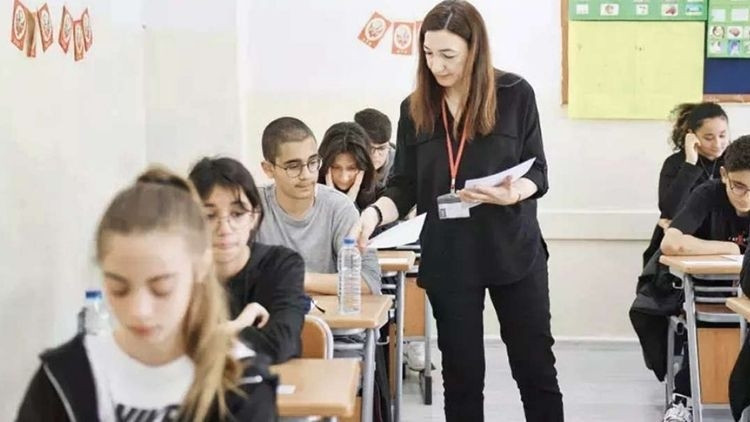
"We did not experience any issues with the OYSS platform," the Istanbul principal explained. "Our teachers learned and implemented the process by reviewing the instructional videos available in the system. Reading the exam papers and logging the itemized scores into the database will require extra dedicated work, and once that is completed, the full process will be wrapped up. While the ministry has not set a rigid, fixed number of questions for every subject, all the items included in the exam focus on skill-based evaluation. Students are asked to provide solution-oriented answers based on specific scenarios presented in the questions."
Ensuring Standardization Across Regions
In addition to streamlining classroom assessments, the new system aims to eliminate wide disparities in examination difficulty between different schools and regions. Educational leaders in eastern provinces noted that the framework offers sufficient operational flexibility to accommodate varying student backgrounds while maintaining national standards.
A middle school principal in Mardin highlighted how OYSS helped resolve historical inconsistencies in test design across different school levels. The principal acknowledged that the initial announcement of a nationwide common system had raised concerns among educators in economically or socially disadvantaged areas who worried that their students might be placed at a disadvantage.
"When the system was first introduced, there was widespread concern over whether it might create difficulties for students in disadvantaged regions," the Mardin school principal stated. "However, because the platform provides multiple scenario templates and allows teachers to construct two of the questions themselves, those concerns proved unfounded. Teachers were able to select appropriate question sets from the ministry’s offered scenarios based on the specific learning attainments achieved by their students. Furthermore, students were informed in advance about the exact topic areas that would be covered on the test, allowing them to prepare effectively and purposefully."
Questions Mirroring New-Generation Exam Styles
While the overall response to the first day of testing was largely positive, some administrators pointed out practical challenges related to the transition timeline. One school director overseeing both middle and high school levels noted that the initial implementation felt somewhat rushed due to the brief lead time provided prior to the exam dates.
According to the director, official announcements and detailed guidelines regarding OYSS were issued only two weeks before the start of the examination period, leaving teachers with a relatively narrow window to adapt their lesson plans and assessment strategies. Nevertheless, the director noted that giving teachers access to the question pools a few days prior to the test date helped ease the transition.

In terms of question design, the director observed that middle school exam items closely mirrored the "new-generation" question style characteristic of the High School Entrance System (LGS). These questions feature longer narrative texts, context-rich scenarios, and visual data interpretation rather than short, direct-recall prompts.
"For middle school grades, the questions were structured very much like the new-generation LGS items," the administrator explained. "They were explicitly designed to measure students’ higher-order skills and contained detailed reading passages. For example, at the fifth-grade level, one question presented a detailed paragraph accompanied by a data graphic, requiring students to analyze the information and interpret the movement of planets. Despite the complex format, students generally completed the exam with a sense of relief."
Equity, Curriculum Pace, and Assessment Concerns
The implementation of OYSS has also re-ignited broader discussions among educators regarding educational equity, curriculum management, and academic grading standards.
A middle school principal from Istanbul emphasized that teachers worked diligently to prepare their classes for the new format because of potential equity gaps between highly competitive, established schools and regular neighborhood institutions. The principal noted that when students across different categories of schools are evaluated using shared question pools, teachers naturally worry that regional disparities might reflect poorly on their instructional performance.
"Teachers made sure to familiarize students with the types of questions they would encounter before the exam period began," the Istanbul middle school principal observed. "Whether in elite, well-resourced schools or standard institutions, subjects like biology and science are part of the core curriculum. However, presenting identical question pools can put students in standard schools at a comparative disadvantage if they are expected to compete on equal terms with peers in highly specialized schools. Consequently, educators worry about being unfairly judged by the ministry if their school’s overall performance appears lower."
Meanwhile, a high school principal suggested that one of the underlying motivations behind OYSS was the need to address grade inflation and unfair advantages stemming from how High School Success Points (OBP) are awarded in some private institutions. By establishing standardized assessment benchmarks, the ministry aims to create a more level playing field for university admissions.

The high school principal added that teachers in their school generally structured their exams to include three easy, three medium, and two difficult questions, though exact distributions varied by academic subject. The principal also pointed out that many schools struggled to cover all required curriculum topics prior to the test date.
"In many schools outside our own, teachers were pressed for time to finish the syllabus before the exam," the principal noted. "As a result, during the week leading up to the test, teachers had to simultaneously rush to complete missing course topics while helping students prepare for the standardized question formats."
Pedagogical Alignment with National Curricular Goals
Educators in eastern provinces also underscored the alignment between OYSS and Turkey’s updated overarching education framework, known as the "Maarif Model." This curriculum model prioritizes critical thinking, conceptual understanding, and practical application over passive memorization.
A high school teacher in Hatay reported that the transition to common exams was aided by previous ministry initiatives that had already introduced the concept of centralized assessments in prior academic years, creating a pre-existing "common exam culture" in schools.
"The first day of testing was completed in our school without any problems," the Hatay educator said. "Students did not experience significant anxiety prior to the exam because the concept of common testing was already familiar to them. The questions were carefully aligned with the Maarif Model, measuring how students apply knowledge in real-world contexts rather than testing rote recall."
The teacher emphasized that this shift represents a fundamental evolution in classroom instruction. "With these exams, we are no longer asking the student, ‘Did you memorize this factsheet?’ Instead, we are asking, ‘What can you actually do with the knowledge you have acquired?’ The questions were purposefully crafted to elevate students’ cognitive development, and over time, this system will encourage children to move away from learning by rote."

Student Perspectives: Initial Anxiety Turns to Relief
For students taking the exams, the experience was marked by a shift from pre-test nervousness to post-test confidence. Across both middle and high school levels, learners reported that while the new format appeared daunting at first, thorough classroom preparation and accessible study materials helped them navigate the papers effectively.
Middle school students in the 5th and 6th grades expressed happiness following their science examinations. Many admitted feeling nervous prior to the test because OYSS was an entirely new acronym and framework for them, and they were unsure what type of questions the ministry would present.
"The questions turned out to be very manageable, and we walked out of the exam room feeling happy," shared a group of middle school students. "Because OYSS was brand new to us, we were initially worried about what the test would look like. But over the past week, our teachers prepared us by going over sample question types and reviewing key topics. We also used the official MEBİ digital learning platform and solved the practice exercises in our textbooks. Because of that preparation, the longer text passages on the test didn’t intimidate us, and the exam went much better than expected."
High school students in the 10th and 11th grades shared similar impressions after completing their biology exams. They noted that the questions focused heavily on scenario-based problem solving and required active analytical thinking rather than straightforward recall.
"The exam questions usually presented a specific scientific scenario or problem and asked us to analyze and resolve it," a high school student explained. "It definitely required analytical thinking. Facing this style of assessment is helpful for us because it aligns well with the format we will encounter in the future on the university entrance exams (YKS). Even though the questions featured longer paragraphs and data charts, the standard 40-minute class period was more than enough time to finish. We had some worries before walking into the classroom, but as soon as we opened the exam booklets and read the questions, we felt relieved."