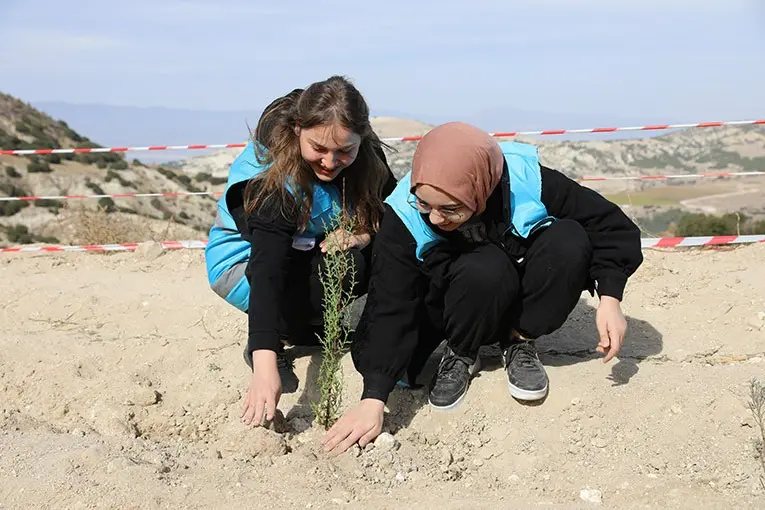
ANKARA — The Council of Higher Education (YÖK) and universities across Turkey are accelerating their development of comprehensive scientific solutions to tackle pressing global and local environmental challenges. According to an official statement released by YÖK on November 5, 2026, Turkish higher education institutions are leading an expansive array of initiatives spanning advanced water management, circular economy models, cutting-edge climate technologies, waste valorization, and biological diversity conservation.
The nationwide academic push comes at a pivotal moment as Turkey prepares to host the 31st Conference of the Parties to the United Nations Framework Convention on Climate Change (COP31). The international summit presents a major global stage for Turkish universities to showcase their scientific expertise, interdisciplinary research, and operational campus innovations. YÖK confirmed that all 208 universities operating across the country will actively participate in the COP31 framework, presenting a unified academic front in global climate action.
The strategic vision overseen by YÖK integrates systemic energy efficiency, resource conservation, and high-tech environmental research into campus infrastructure. Through targeted projects, universities are reducing their ecological footprints while simultaneously serving as living laboratories for green transformation, circular waste recovery, and carbon reduction technologies.
Global Stature Elevated in UI GreenMetric 2026 Rankings
The growing environmental commitment of Turkish higher education is receiving prominent international validation. According to the newly released UI GreenMetric 2026 world university rankings—an international benchmark evaluating campus sustainability and environmental management—a total of 150 Turkish universities successfully made the global list.
The 2026 metrics reveal that Turkey has secured the top position in Europe and second place globally for the number of higher education institutions ranking within the top 200, top 500, and top 1000 categories. A detailed breakdown of the international performance includes:
- Top 100: 5 Turkish universities
- Top 200: 21 Turkish universities
- Top 500: 53 Turkish universities
- Top 1000: 99 Turkish universities
Among the leading performers, Istanbul Technical University (İTÜ) achieved 28th place worldwide, while Yıldız Technical University (YTÜ) secured the 45th spot, placing both institutions firmly within the global top 50.
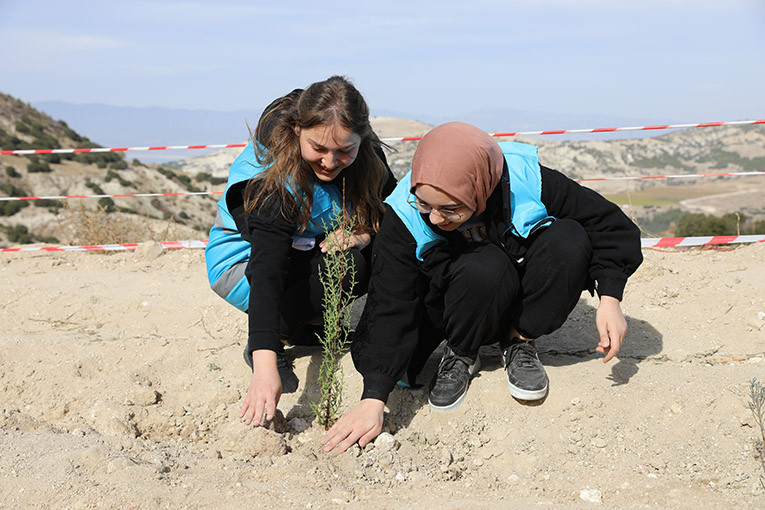
The annual UI GreenMetric assessment evaluates participating institutions across six key categories: campus infrastructure and setting, energy management and climate change mitigation, waste handling, water usage, eco-friendly transportation, and sustainability-focused education and research.
YÖK’s flagship "Sustainable and Climate-Friendly Campus Project" has provided the institutional framework for these achievements. The program aims to systematically optimize energy performance, incentivize green practices, and consolidate sustainable management protocols across all state and foundation universities in Turkey.
Innovative Water Conservation and Energy Efficiency Measures
Addressing regional water scarcity and climatic variability forms a core pillar of the sustainability agendas adopted by Turkish universities. Campuses across the nation have introduced high-efficiency infrastructure and structural conservation projects to drastically reduce reliance on municipal water supplies.
Sabancı University in Istanbul successfully reduced its campus water consumption by up to 55 percent, while Bolu Abant İzzet Baysal University achieved reductions reaching 40 percent through modern water auditing and efficiency retrofits. In Karabük, Karabük University implemented large-scale rainwater harvesting systems dedicated to maintaining campus green spaces. Meanwhile, Yozgat Bozok University completed the construction of the Bozok Water Pond—a major infrastructure project featuring a storage capacity of 125,000 cubic meters designed to collect surface runoff and secure non-potable water reserves.
Yıldız Technical University integrated greywater, rainwater, and drainage water recovery systems alongside automated smart irrigation networks, allowing the university to decrease its municipal mains water consumption by 15 percent in 2025.
Complementing water management efforts, universities are tackling energy inefficiency and plastic pollution through tailored operational strategies:

- Bursa Uludağ University: Implemented systematic building inspections utilizing thermal imaging technology and data analytics to pinpoint and eliminate structural heat losses.
- Plastics Reduction: Under its "Purify Your Water from Plastic" campaign, Bursa Uludağ University installed seven filtered drinking water stations across campus and distributed reusable steel flasks to students and staff to eliminate single-use plastic bottles.
Circular Economy Initiatives and Advanced Waste Valorization
Turkish academic institutions are increasingly aligning their campus operations with circular economy principles, shifting away from linear disposal methods toward zero-waste protocols and resource recovery.
Bilkent University demonstrated extraordinary waste diversion results during the 2024–2025 academic period. The university achieved a 100 percent recovery rate for 2,246 tons of generated organic waste. Furthermore, out of 516 tons of inorganic waste produced on campus, Bilkent successfully recycled 99.6 percent, directing virtually all recyclable materials away from landfills.
On the research and development front, universities are translating circular principles into industrial and technological solutions:
- E-Waste & Battery Recycling: Sakarya University is a key research participant in the international FREE4LIB project, which focuses on developing innovative processes to recover critical raw materials from end-of-life lithium-ion batteries to support the green energy transition.
- Industrial & Textile Waste: Istanbul Commerce University, Istanbul Rumeli University, and Izmir University of Economics are conducting specialized studies on upcycling and repurposing industrial waste, spent paper products, and textile scrap.
- Agricultural Waste Valorization: Siirt University is conducting applied research to transform agricultural byproducts from regional pistachio production into high-value secondary materials. Similarly, Hitit University is exploring methods to extract useful biochemical compounds and bio-based products from onion peels and other agricultural residues.
Climate Technologies, Carbon Sequestration, and Ecological Preservation
Beyond internal operations, Turkish universities are generating advanced technologies designed to mitigate climate change, capture carbon emissions, and safeguard biodiversity.
At Burdur Mehmet Akif Ersoy University, researchers are concentrating on microalgae cultivation systems optimized for biological carbon capture and sequestration, alongside biomass production. Hacettepe University in Ankara is advancing research in engineered carbon capture, utilization, and storage (CCUS) processes integrated with bioenergy generation systems.
To enhance forestry management and ecological monitoring, Kastamonu University has deployed advanced spatial mapping techniques to construct high-resolution three-dimensional digital maps of forest ecosystems. This spatial data allows researchers to assess canopy density, estimate carbon stock capacities, and monitor forest health against climate pressures.

In environmental protection and marine biology:
- Eskişehir Osmangazi University: Conducting multi-faceted environmental research targeting the remediation of microplastic contamination in aquatic ecosystems, the recovery of precious metals from discarded electronic components, and the preservation of overall freshwater quality.
- Izmir Institute of Technology (IZTECH): In partnership with NeSea—a technological startup operating within Teknopark Izmir—researchers are repurposing discarded mussel shells to engineer eco-friendly biomaterials. These materials are being used to construct artificial reefs designed to rehabilitate marine habitats, promote marine biodiversity, and restore coastal ecosystems.
Academic Mobilization for COP31 and Strategic Vision
Commenting on the comprehensive progress made across academia, Council of Higher Education President Prof. Dr. Erol Özvar emphasized that green transformation in Turkish higher education is no longer confined to isolated instances of excellence, but has expanded into a structural movement encompassing the entire university network.
Prof. Dr. Özvar highlighted Turkey’s leadership in the UI GreenMetric assessments, noting that securing first place in Europe for the number of institutions in the top 200, 500, and 1000 tiers demonstrates the structural impact of YÖK’s strategic directives. He reiterated that Turkey’s decisive policy stance on combating the global climate crisis will be strongly supported by academic research during the upcoming UN climate conference.
"We have fully integrated the scientific knowledge and research capacity of our 208 universities into the COP31 process," stated Prof. Dr. Özvar. "All 208 of our universities will play an active, direct role in this global climate action, showcasing Turkey’s academic contributions to international sustainability."
Özvar further explained that YÖK views green and digital skills as foundational components in modernizing higher education. He affirmed that the council will continue to expand its institutional support for campus energy efficiency, sustainable transport, zero-waste management, and eco-friendly infrastructure.
By translating academic research into practical environmental solutions and institutional policy, Turkish universities are positioning themselves as pivotal contributors to national climate targets and international sustainability goals as COP31 approaches.